Citadel of the Hồ Dynasty
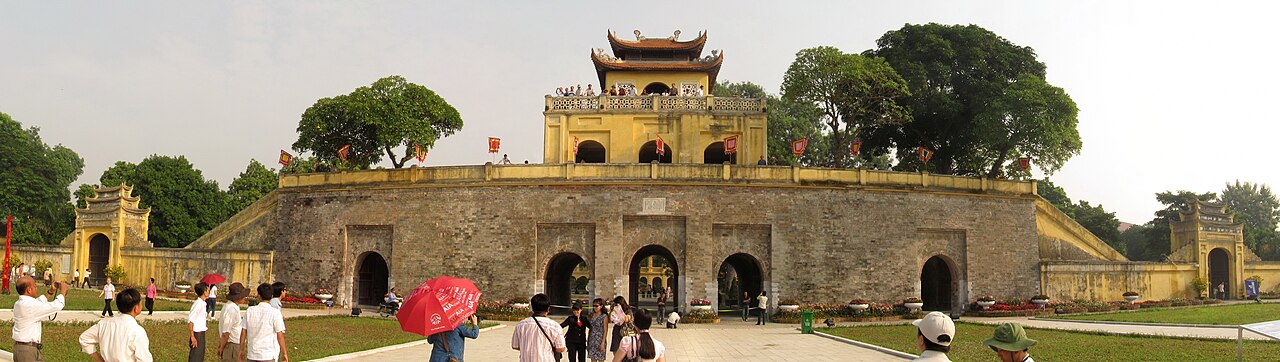
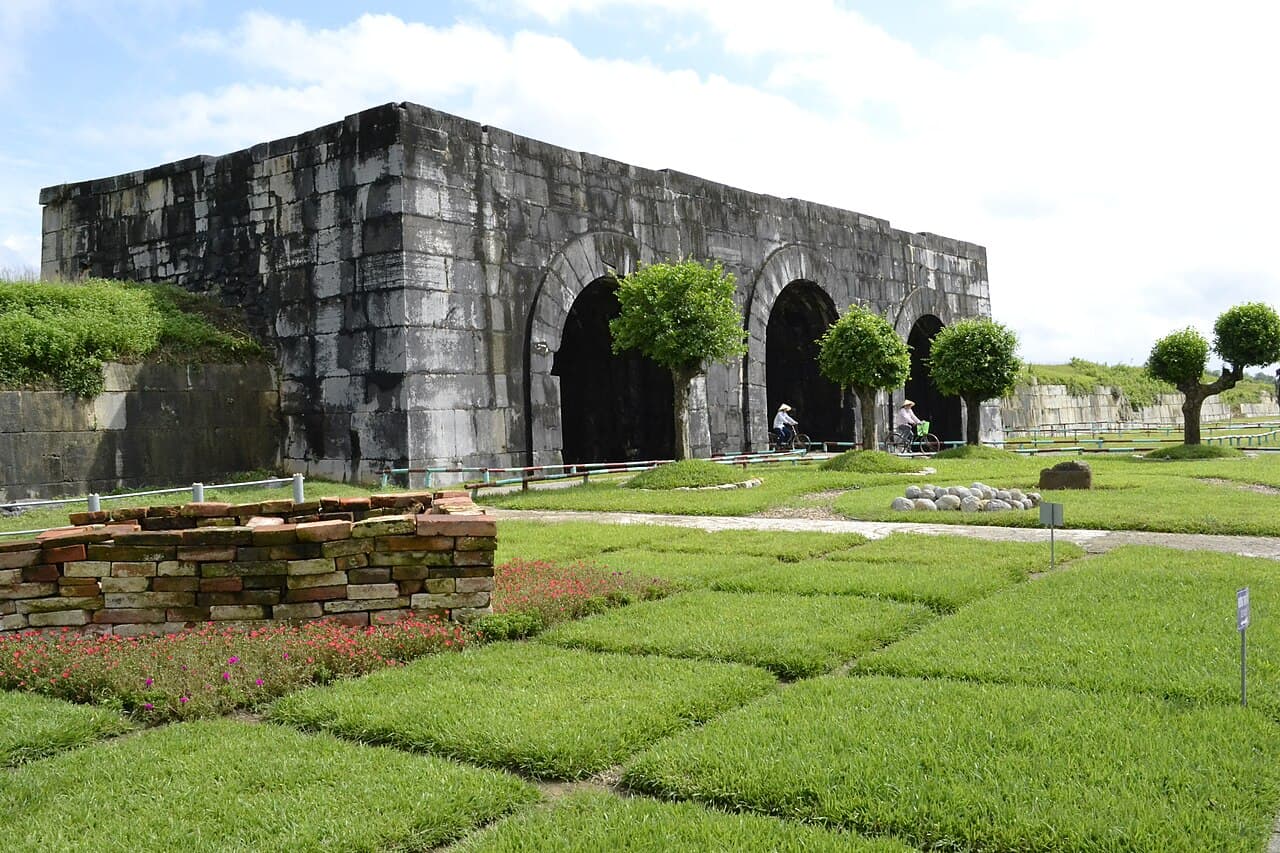
The citadel's design is notable for its rectangular layout, with the north-south side measuring approximately 870.5 meters and the east-west side about 883.5 meters. It features four main gates positioned on each side: the south gate (fore gate), north gate (back gate), east gate (left gate), and west gate (right gate). The southern gate is particularly imposing, standing 9.5 meters high and 15.17 meters wide. Constructed primarily from large limestone blocks averaging 2 by 1 by 0.7 meters, the fortress's walls exhibit impressive durability, although much of the structure, aside from the gates, has fallen into ruin over time.
Architectural features and construction
The Citadel of the Hồ Dynasty was built in 1397, marking a significant development in Vietnamese fortification architecture. It consists of an Inner Citadel constructed from carefully cut limestone blocks, surrounded by the La Thanh Outer Wall, and complemented by a large altar area spanning 155 hectares. The fortress's construction reflects a blend of military functionality and imperial symbolism, with its bastioned walls designed to withstand sieges and attacks common in the late medieval period.
The fortress's layout and architectural elements were carefully planned to embody a centralized imperial city, emphasizing royal authority rooted in Confucian principles combined with Buddhist cultural influences. The spatial organization and decorative motifs align with the fengshui principles, intended to harmonize the structure with its natural surroundings and spiritual beliefs.
Historical significance and cultural context
Serving as the western capital of the Hồ dynasty during its brief reign from 1398 to 1407, the citadel was a center of political power and administration. Despite the dynasty's short duration, the fortress remained influential as a cultural and economic hub in the region for several centuries afterward. Its strategic location in Thanh Hóa province underscored its importance in controlling the surrounding territories and trade routes.
The citadel's construction during the late medieval period reflects broader regional trends in fortification, where bastioned designs became prevalent to counter evolving military technologies. The Hồ dynasty's choice to build with massive stone blocks rather than traditional earthen walls marked a significant advancement in Vietnamese castle building techniques.
Preservation and recognition
Today, the Citadel of the Hồ Dynasty is mostly in ruins except for its well-preserved gates, which continue to demonstrate the fortress's original grandeur and engineering skill. Its historical and architectural value was internationally recognized when it was inscribed as a UNESCO World Heritage Site on June 27, 2011. This designation highlights its importance as a cultural monument and encourages ongoing preservation efforts.
The site offers valuable insights into the military architecture and urban planning of the Hồ dynasty era, as well as the integration of cultural and spiritual elements into fortress design. Visitors can explore the remains of the walls and gates, gaining an understanding of the scale and sophistication of this late medieval bastioned fortress.
Architectural details of gates and walls
The fortress's four gates are key architectural features, each serving both defensive and ceremonial functions. The southern gate, the most prominent entrance, is notable for its height and width, designed to impress and intimidate. The gates were constructed with strong stone blocks and featured defensive mechanisms appropriate for the period, including battlements and possibly portcullises.
The walls, built from large limestone blocks, were engineered for durability and defense. Their thickness and height would have provided protection against siege weapons. The use of stone rather than earth or wood was innovative for the region at the time, reflecting the Hồ dynasty's ambition to establish a lasting imperial capital.
Fengshui and symbolic design
The citadel's layout adheres to fengshui principles, a traditional practice aimed at harmonizing human constructions with natural forces. This approach influenced the positioning of gates, walls, and internal spaces to ensure auspicious energy flow and spiritual balance. The design also incorporated Confucian ideals of order and hierarchy, reinforcing the emperor's supreme authority.
Integration of Confucian and Buddhist elements
While primarily a military fortress, the citadel's architectural decoration and spatial arrangement reflect a synthesis of Confucian governance and Buddhist cultural values. This blend is evident in the altar area and ceremonial spaces, which were used for religious rites and state functions, underscoring the dual role of the fortress as both a defensive stronghold and a symbol of spiritual legitimacy.
Frequently asked questions (FAQ)
- What is the historical significance of the Citadel of the Hồ Dynasty?
- The Citadel of the Hồ Dynasty, built in the early 15th century, is a UNESCO World Heritage Site that showcases the unique architecture and urban planning of the Hồ Dynasty. It represents a significant period in Vietnamese history, marked by the establishment of a centralized state and innovative defense systems.
- When was the Citadel of the Hồ Dynasty constructed?
- The construction of the Citadel began in 1397 and was completed in 1406. It was established as the capital of Vietnam during the Hồ Dynasty and played a crucial role in the nation’s historical narrative.
- What are the opening hours for visiting the Citadel?
- The Citadel of the Hồ Dynasty is open daily from 7:30 AM to 5:30 PM. It is advisable to check for any seasonal changes in hours or special closures before planning your visit.
- Can I purchase tickets in advance for the Citadel?
- Yes, tickets for the Citadel can be purchased on-site or through various travel agencies. It is recommended to buy tickets in advance during peak tourist seasons to avoid long queues.
- Is the Citadel accessible for visitors with disabilities?
- The Citadel of the Hồ Dynasty has made efforts to improve accessibility for visitors with disabilities. However, some areas may still present challenges due to the historical nature of the site and its terrain.
- When is the best time to visit the Citadel?
- The best time to visit the Citadel is during the dry season, from November to April, when the weather is cooler and more pleasant for sightseeing. Visiting during these months allows for a more enjoyable exploration of the site.
- What nearby attractions should I consider visiting?
- In addition to the Citadel, visitors can explore the nearby temples, lakes, and the charming town of Thanh Hoa. The area is rich in history and natural beauty, offering a full day of exploration.
- What are the ticket prices for the Citadel of the Hồ Dynasty?
- As of the latest updates, ticket prices for the Citadel are approximately 20,000 VND for adults and discounted rates for children and students. It is advisable to check for any changes in pricing before your visit.
- How do I get to the Citadel of the Hồ Dynasty?
- The Citadel is located in Thanh Hoa Province, and can be reached by car, bus, or motorbike from major cities like Hanoi or Hue. Local transportation options are also available, making it convenient for visitors to access this historical site.
Photo gallery

Information
Loading map...
Visitor reviews
No reviews yet. Been here? Write the first review and help other travelers!
Write the first reviewVisited this castle? Share your experience
Your review helps other travelers and adds first-hand knowledge to our encyclopedia.