Citadel of Hai Duong
The Citadel of Hai Duong is a notable example of a bastioned fortress located in northern Vietnam. This fortress played a crucial role in the military defense strategies during the colonial and early modern periods of Vietnamese history. Its design reflects the influence of European military architecture, adapted to local conditions and strategic needs.
Historical background and significance
The citadel was constructed during the period when Vietnam was under French colonial rule, reflecting the era's military architectural trends. It served as a strategic defensive structure designed to protect the region against both internal uprisings and external threats. The fortress was part of a network of citadels and forts established by the French to consolidate their control over northern Vietnam.
Architectural features and design
The Citadel of Hai Duong is characterized by its bastioned fortress style, which incorporates angled bastions designed to provide overlapping fields of fire and eliminate blind spots. This style was influenced by the European star fort designs that became prevalent in the 17th and 18th centuries but adapted here for the local topography and military requirements.
The fortress includes thick defensive walls made from locally sourced materials, with earthen ramparts and stone or brick revetments. The bastions are positioned at the corners of the fortress, allowing defenders to cover adjacent walls with cannon and musket fire. The interior layout typically includes barracks, armories, command posts, and storage facilities, arranged to support prolonged defense and military operations.
Defensive structures
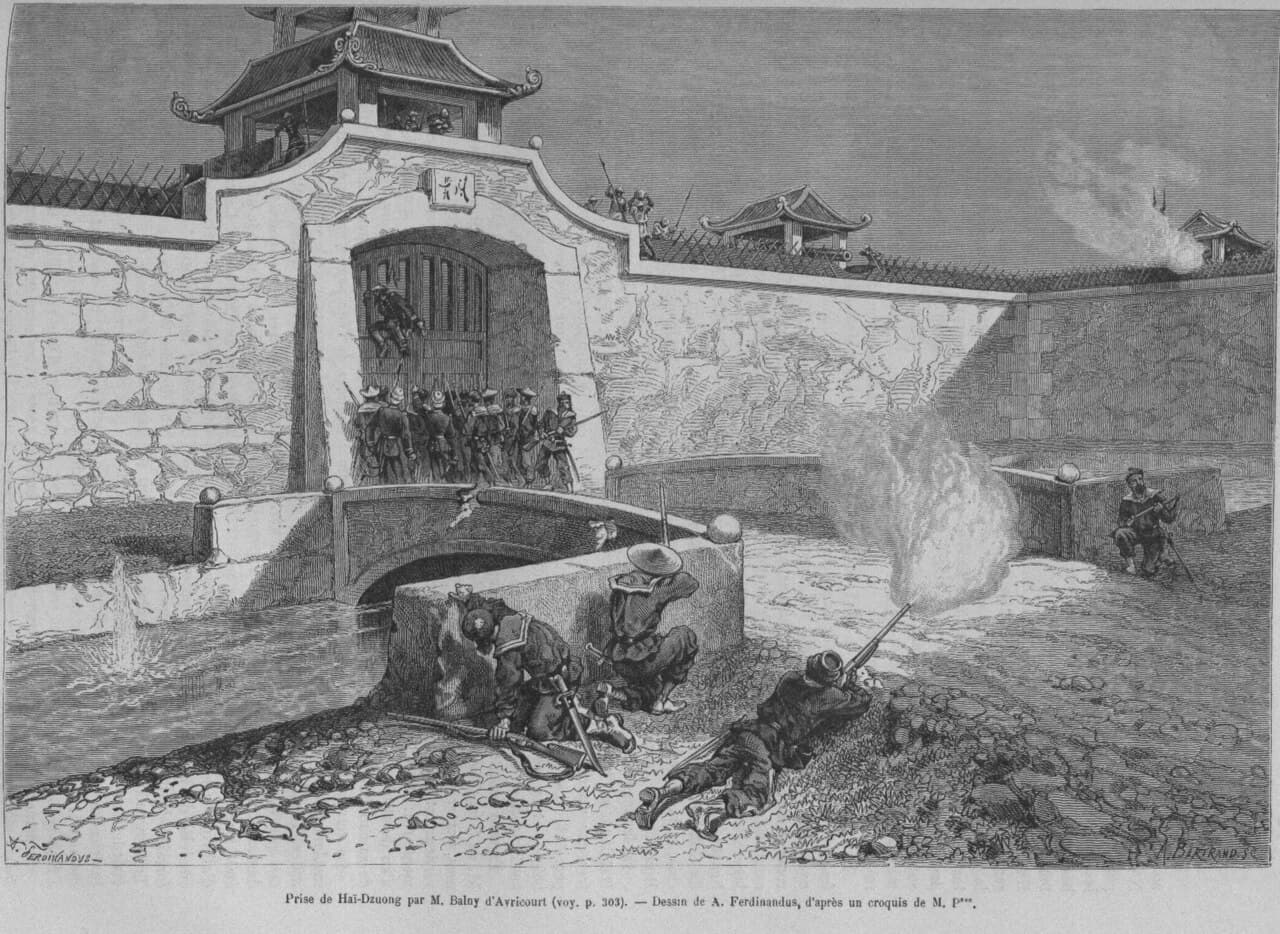
The walls are complemented by a moat or ditch, enhancing the fortress's defensive capabilities by hindering enemy approach. Gatehouses and drawbridges controlled access to the citadel, with additional outworks and trenches possibly surrounding the main structure to provide layered defense.
Role in Vietnamese history
Throughout its operational period, the Citadel of Hai Duong witnessed various military engagements and played a role in the complex history of colonial resistance and local governance. It was a focal point during conflicts involving French colonial forces, Vietnamese nationalists, and other regional powers.
Today, the citadel stands as a cultural and historical monument, reflecting the military architecture and colonial history of Vietnam. Its preservation offers insight into the defensive strategies and architectural adaptations of the period.
Current condition and accessibility
The fortress remains partially preserved, with some sections of the walls and bastions intact, while others have suffered from natural decay and urban development. Efforts have been made to maintain and restore parts of the citadel to promote heritage tourism and education.
Visitors to the site can explore the surviving ramparts and bastions, gaining an understanding of the fortress's strategic design and historical context. The citadel is an important destination for those interested in military history, colonial architecture, and Vietnamese heritage.
Frequently asked questions (FAQ)
- What is the historical significance of the Citadel of Hai Duong?
- The Citadel of Hai Duong is an important historical site in Vietnam, reflecting the architectural styles and military strategies of the Le Dynasty. It served as a defensive structure and a royal residence, playing a crucial role in various historical conflicts in the region.
- When was the Citadel of Hai Duong built?
- The Citadel of Hai Duong was constructed in the late 15th century, during the reign of the Le Dynasty. Its construction marked a significant period in Vietnamese history, showcasing the advancements in military architecture of that era.
- What are the opening hours for the Citadel of Hai Duong?
- The Citadel of Hai Duong is open to visitors daily from 8:00 AM to 5:00 PM. It is advisable to check for any special holiday hours or closures before planning your visit.
- Can I take photographs inside the Citadel of Hai Duong?
- Yes, visitors are generally allowed to take photographs inside the Citadel of Hai Duong. However, it is recommended to respect any signage and guidelines regarding photography to ensure a pleasant experience for all guests.
- Is it possible to access the Citadel of Hai Duong by public transport?
- Yes, the Citadel of Hai Duong is accessible by public transport, including buses and taxis from nearby cities. Local transportation options make it convenient for visitors to reach this historical site.
- What is the best time to visit the Citadel of Hai Duong?
- The best time to visit the Citadel of Hai Duong is during the dry season, from October to April, when the weather is cooler and more comfortable for exploring. Additionally, visiting during weekdays may help you avoid large crowds.
- Are there any nearby attractions to visit after the Citadel of Hai Duong?
- Yes, nearby attractions include the Hai Duong Museum and the local markets, which offer a glimpse into the culture and history of the region. Exploring these sites can enhance your experience and understanding of Hai Duong.
- What are the ticket prices for visiting the Citadel of Hai Duong?
- Ticket prices for the Citadel of Hai Duong are quite affordable, typically ranging from 20,000 to 30,000 VND for adults. Discounts may be available for students and children, making it an accessible destination for all visitors.
Photo gallery

Photo by Alexandre Ferdinandus•Public domain
Information
Loading map...
Visitor reviews
No reviews yet. Been here? Write the first review and help other travelers!
Write the first reviewVisited this castle? Share your experience
Your review helps other travelers and adds first-hand knowledge to our encyclopedia.