Comtal Castle
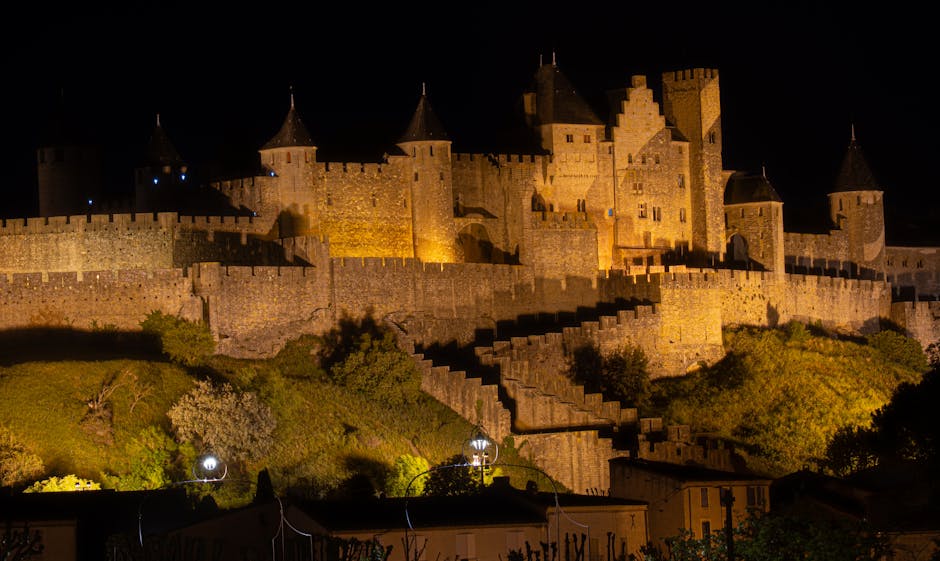
Comtal Castle, also known as the Count's Castle, stands as a remarkable example of a high medieval hill castle nestled within the fortified city of Carcassonne in the Occitanie region of France. This castle is an integral part of the Medieval Cité of Carcassonne, one of the largest and best-preserved fortified towns in Europe, renowned for its massive defensive walls and rich historical significance. The castle's origins date back to around 1130, and it has played a pivotal role in the turbulent history of the Languedoc region, especially during the Albigensian Crusade against the Cathars in the early 13th century.
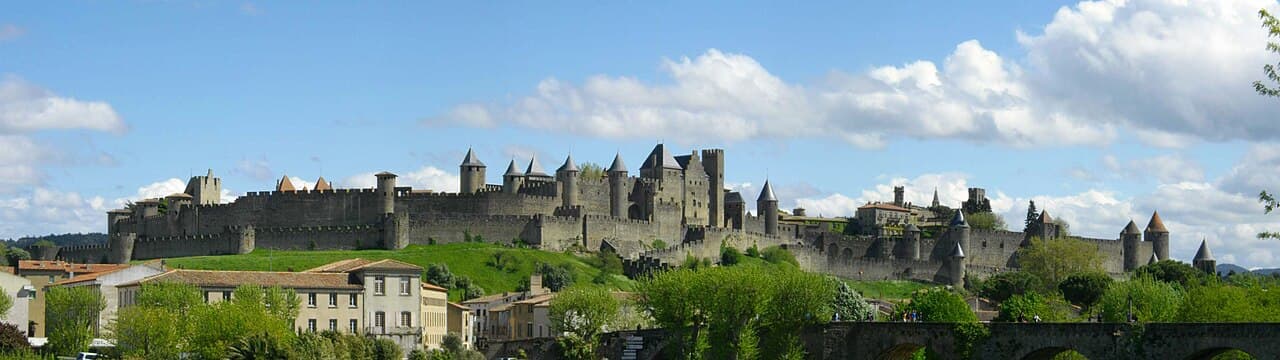
Located within the modern city of Carcassonne, the castle's strategic hilltop position allowed it to dominate the surrounding landscape and control the vital trade routes across southern France. The castle is separated from the city by a deep defensive ditch and fortified by two barbicans, with a curtain wall protected by six robust towers. This rectangular fortress exemplifies medieval military architecture with its well-planned defensive features designed to withstand sieges and assaults.
Historical significance and cathar connections
The Comtal Castle holds a strong association with the Cathar movement, a Christian dualist sect that flourished in the Languedoc region during the 12th and 13th centuries. In 1209, the castle was a key target during the Albigensian Crusade, when the Catholic crusading army besieged Carcassonne after devastating the nearby city of Béziers. The siege lasted from August 1 to 15, 1209, resulting in the capture of the city and the imprisonment of its ruler, Raymond-Roger Trencavel, Viscount of Carcassonne and Béziers, who was a protector of the Cathars.
This event marked a turning point in the crusade, as Carcassonne became a royal French stronghold and a symbol of the Catholic Church's efforts to suppress heresy in the region. The castle's association with the Cathars and the crusade adds a dramatic historical layer to its legacy, making it a site of great cultural and religious significance.
Architectural features and defensive structures
Layout and fortifications
Comtal Castle is characterized by its rectangular plan, surrounded by thick curtain walls that are reinforced by six towers, primarily circular in design, which provided excellent vantage points for archers and lookouts. The castle's defenses are further enhanced by two barbicans guarding the main entrances, and a deep moat-like ditch that separates the castle from the rest of the city, creating a formidable barrier against attackers.
Towers and walls
The six towers along the curtain walls vary in height and diameter, designed to allow overlapping fields of fire and to cover all approaches to the castle. These towers are equipped with battlements and arrow slits, typical of the high medieval military architecture. The walls themselves are constructed of local stone and have been carefully restored to preserve their original defensive purpose and aesthetic.
Interior and functional spaces
Inside the castle walls, visitors can explore the courtyards, residential quarters, and defensive chambers that illustrate the daily life of medieval nobility and soldiers. The castle also includes storerooms, armories, and a chapel, reflecting its role as both a military fortress and a noble residence.
Restoration and preservation efforts
By the mid-19th century, the fortress had fallen into disrepair, and there was even a governmental proposal to demolish the fortifications. However, thanks to the efforts of local advocates like Jean-Pierre Cros-Mayrevieille and the intervention of the renowned archaeologist and historian Prosper Mérimée, the decision was reversed. In 1853, the celebrated architect Eugène Viollet-le-Duc was commissioned to restore the castle and the surrounding city walls.
Viollet-le-Duc's restoration was extensive and controversial, as he often incorporated imaginative reconstructions alongside historical elements. His work included rebuilding towers, walls, and the castle's distinctive conical roofs, which have become iconic features of Carcassonne's silhouette. After his death, restoration continued under his pupils, ensuring the preservation of the castle's medieval character.
Today, Comtal Castle is classified as restored and remains a major tourist attraction. It was inscribed on the UNESCO World Heritage List in 1997 as part of the fortified city of Carcassonne, recognizing its outstanding universal value as a symbol of medieval military architecture and history.
Carcassonne's broader historical context
The site of Carcassonne has been fortified since the pre-Roman period, with successive layers of fortifications built by the Romans, Visigoths, and medieval rulers. The original Roman walls, constructed by 333 AD, featured numerous semicircular towers and multiple gates, establishing the town's early defensive capabilities.
During the Visigothic period in the 5th and 6th centuries, the walls were rebuilt, preserving much of the Roman structure. The medieval period saw the addition of a second line of fortifications outside the Roman walls after 1226, which enhanced the city's defenses and reflected advances in military architecture.
Carcassonne's fortifications were further strengthened under the reign of King Philip IV in the early 14th century. However, following the Treaty of the Pyrenees in 1659, which shifted the French border southward, the city's military importance declined. The fortifications were neglected, and the city evolved into a center for the woolen textile industry.
Visiting Comtal Castle today
Visitors to Comtal Castle can explore the fortress and the surrounding Medieval Cité, which is freely accessible. Entry to the castle itself requires a ticket, offering access to the well-preserved battlements, towers, and interior rooms. The site provides a vivid window into medieval life, military strategy, and the turbulent history of the Languedoc region.
The castle's location within the fortified city allows visitors to appreciate the full scale of Carcassonne's defenses, including the double ring of walls and numerous towers that have remained intact for centuries. Guided tours and exhibits provide detailed information on the castle's history, architecture, and role during the Cathar Crusade.
Comtal Castle remains a testament to the resilience and strategic importance of medieval fortifications and continues to captivate historians, architects, and tourists alike with its rich heritage and imposing presence.
Frequently asked questions (FAQ)
- What is Comtal Castle known for?
- Comtal Castle, located in the historic city of Carcassonne, is famous for its well-preserved medieval architecture and its role in the Cathar Wars. The castle features impressive ramparts, towers, and a scenic view of the surrounding landscape, making it a prime example of fortified architecture from the 12th century.
- When was Comtal Castle built?
- Comtal Castle was constructed in the early 12th century, with significant expansions and fortifications occurring throughout the Middle Ages. It played a crucial role in the defense of Carcassonne against various sieges, particularly during the Albigensian Crusade.
- Can I visit Comtal Castle?
- Yes, Comtal Castle is open to visitors throughout the year. Visitors can explore the castle's ramparts, towers, and interior, allowing them to immerse themselves in the rich history of this UNESCO World Heritage Site.
- What are the opening hours of Comtal Castle?
- Comtal Castle typically opens at 9:30 AM and closes at 6:00 PM, with extended hours during the summer months. It is advisable to check the official website for any seasonal changes or special events that may affect opening hours.
- Is there an admission fee to enter Comtal Castle?
- Yes, there is an admission fee to enter Comtal Castle, which helps maintain the site. Ticket prices may vary depending on the season, with discounts available for children, students, and seniors.
- What is the best time to visit Comtal Castle?
- The best time to visit Comtal Castle is during the spring and fall when the weather is mild and the tourist crowds are smaller. Visiting during these seasons allows for a more enjoyable experience while exploring the castle and its surroundings.
- Is Comtal Castle accessible for visitors with disabilities?
- Comtal Castle has made efforts to enhance accessibility for visitors with disabilities, including wheelchair access to certain areas. However, due to the historical nature of the castle, some parts may still pose challenges, so it's best to inquire ahead of your visit.
- What nearby attractions can I visit while in Carcassonne?
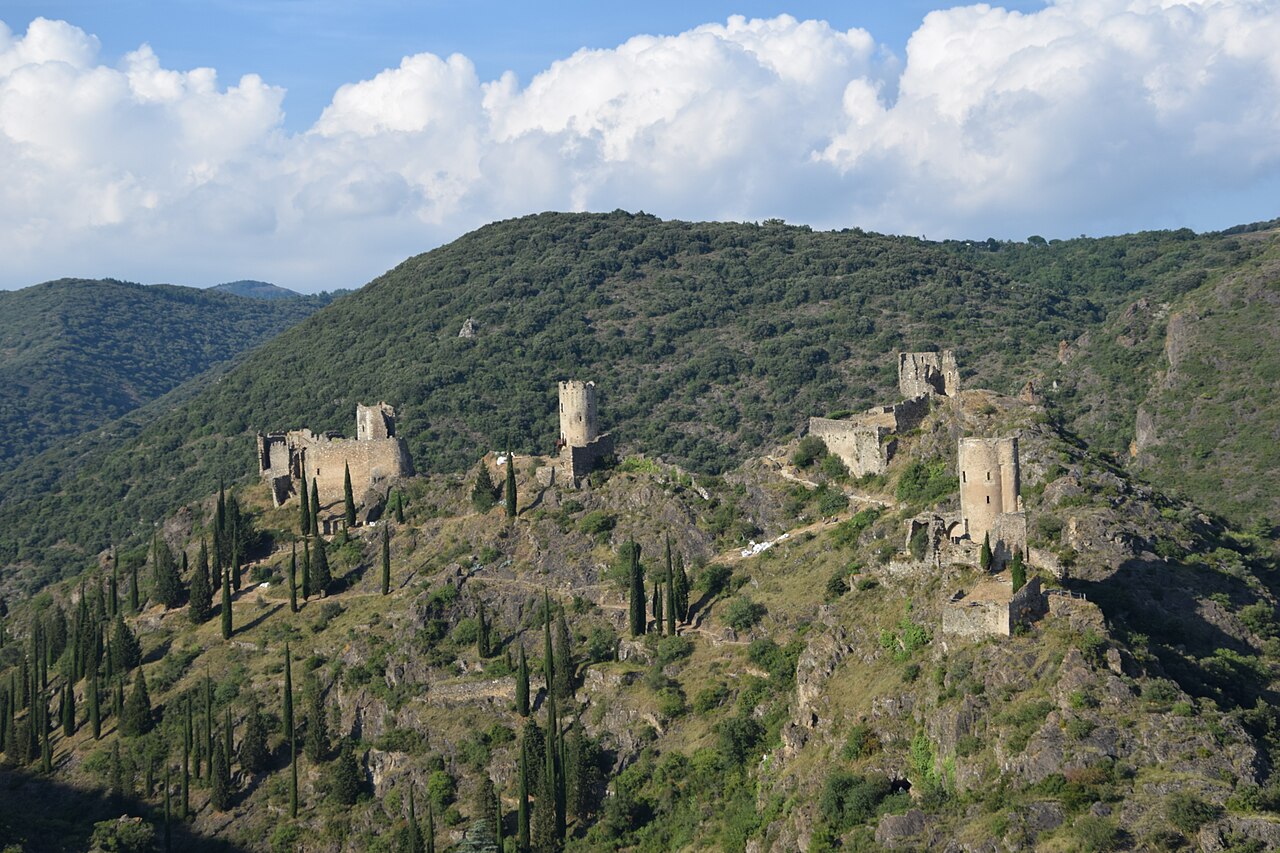
- While visiting Comtal Castle, you can also explore the stunning medieval city walls, the Basilica of Saint-Nazaire, and the charming streets filled with shops and cafes. Additionally, nearby attractions include the Canal du Midi and the Cathar castles scattered throughout the region.
Photo gallery

Information
Website
Visit websiteSources & official resources
Verify the information above using these authoritative references.
Loading map...
Visitor reviews
No reviews yet. Been here? Write the first review and help other travelers!
Write the first reviewVisited this castle? Share your experience
Your review helps other travelers and adds first-hand knowledge to our encyclopedia.