Chynadiiovo Castle — Ukraine castle

Chynadiiovo Castle

Chynadiiovo Castle: a late medieval hill castle in Ukraine
Late Medieval (14th–15th c.)
Partially Preserved

Chynadiiovo Castle, located in western Ukraine, is a notable example of a late medieval hill castle dating back to the 14th century. Perched strategically on elevated terrain, this castle was constructed to provide defense and control over the surrounding region. Its location on a hilltop allowed for natural fortification advantages, making it a formidable stronghold during its time.

Historical context and significance

The castle was built during a period marked by frequent conflicts and territorial disputes in the region that is now modern Ukraine. The 14th century saw a rise in the construction of fortifications as local rulers and feudal lords sought to protect their lands from invaders and rival factions. Chynadiiovo Castle served as a military fortress and a noble residence, reflecting the dual role of castles in the medieval period.

Throughout its history, the castle witnessed various ownership changes and played a role in the defense strategies of the region. Its position on a hill made it a key lookout point and a defensive bastion against enemy advances.

Architectural features

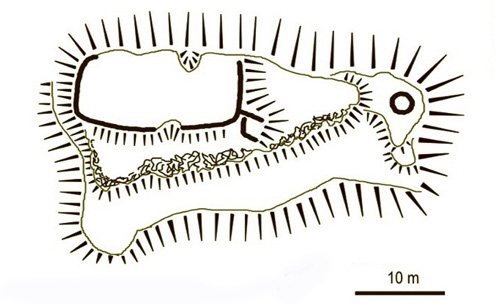
As a hill castle, Chynadiiovo Castle was designed to maximize the natural topography for defense. The castle's layout typically includes thick stone walls, battlements, and towers positioned to cover all approaches. The elevated position allowed defenders to spot enemies from a distance and launch counterattacks effectively.

The castle likely featured a keep or donjon as its central stronghold, surrounded by curtain walls and possibly a moat or ditch to hinder attackers. The presence of defensive towers provided vantage points for archers and lookouts. The architecture reflects the practical needs of medieval fortification rather than elaborate ornamental design.

Construction materials and techniques

The builders used locally sourced stone and timber, common materials for fortifications in the region during the late medieval period. The masonry work would have focused on durability and resistance to siege weaponry, with walls several meters thick in critical areas.

Preservation and current condition

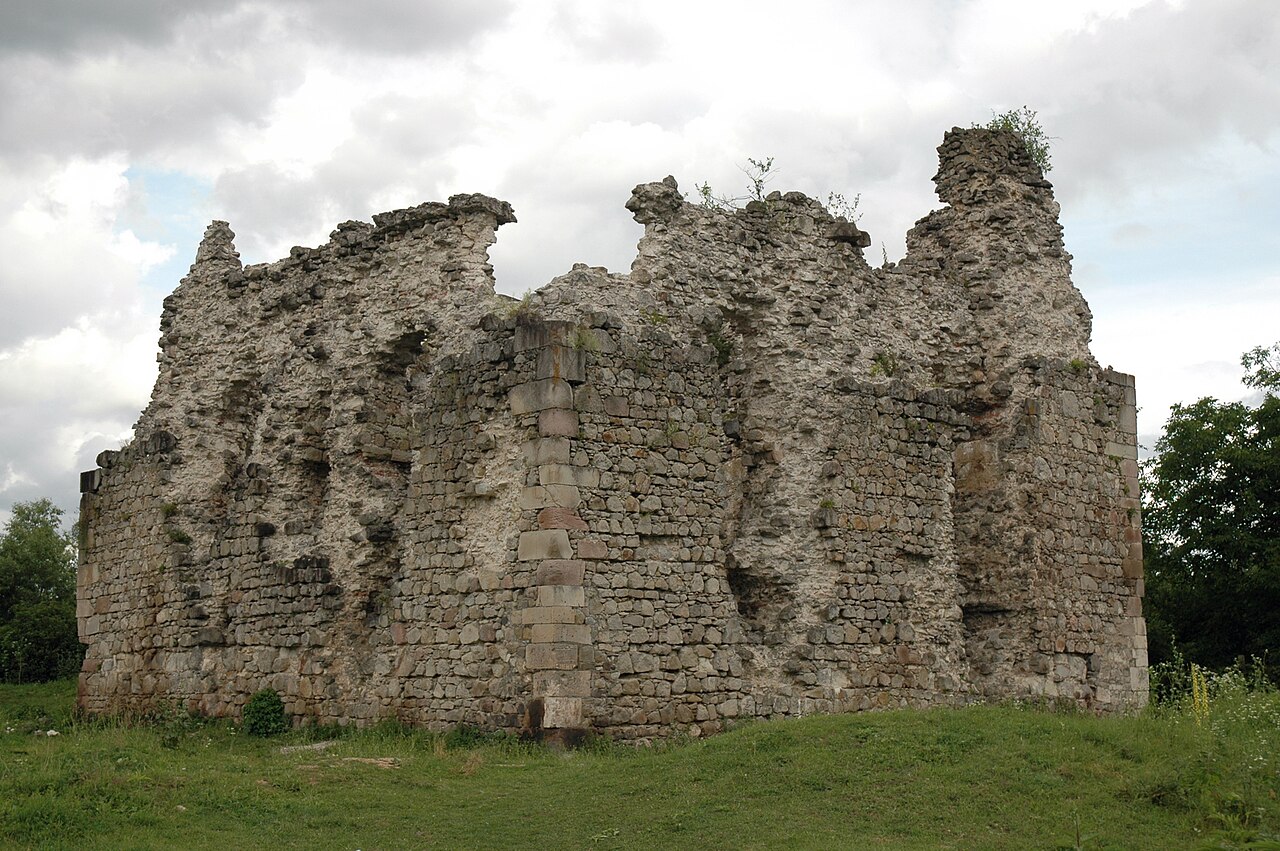
Today, Chynadiiovo Castle stands as partially preserved ruins. While some sections of the walls and towers remain intact, much of the original structure has deteriorated due to centuries of exposure to the elements and historical conflicts. Efforts to preserve and study the site have been ongoing, highlighting its cultural and historical importance.

The castle's ruins attract visitors interested in medieval architecture and history, offering panoramic views of the surrounding landscape from its elevated position.

Visitor information and cultural importance

Visitors to Chynadiiovo Castle can explore the remnants of its defensive structures and imagine the strategic significance it held in medieval times. The site provides insights into the military architecture of the late medieval period in Eastern Europe.

The castle is a symbol of the region's rich history and serves as a cultural landmark. It is often included in tours of historical sites in western Ukraine, contributing to the understanding of medieval fortifications and feudal society.

Access and tourism

The castle is accessible to the public, though facilities may be limited due to its ruinous state. Visitors are encouraged to wear appropriate footwear for uneven terrain and to respect preservation efforts while exploring the site.

Frequently asked questions (FAQ)

What is the historical significance of Chynadiiovo Castle?
Chynadiiovo Castle was built in the 14th century as a defensive hill castle in western Ukraine, serving as a military fortress and noble residence during a period of regional conflicts.
Can I visit Chynadiiovo Castle today?
Yes, visitors can explore the partially preserved ruins of Chynadiiovo Castle. It is open to the public, though facilities may be limited, and appropriate footwear is recommended for uneven terrain.
What architectural features are notable at Chynadiiovo Castle?
The castle features thick stone walls, defensive towers, and a central keep typical of late medieval hill castles, designed to maximize natural topography for defense.

Photo gallery

Chynadiiovo Castle
Click to view

Photo by VargaA•CC BY-SA 3.0

1 photo • Click any image to view in full screen

Information

Hill Castle

Loading map...

Visitor reviews

No reviews yet. Been here? Write the first review and help other travelers!

Write the first review

Visited this castle? Share your experience

Your review helps other travelers and adds first-hand knowledge to our encyclopedia.
Write a review

(5/5)

0/2000 characters

Your review will be visible after admin approval

Nearby castles

13.8 km
Palanok Castle — Ukraine castle

Palanok Castle

Mukachevo, Ukraine

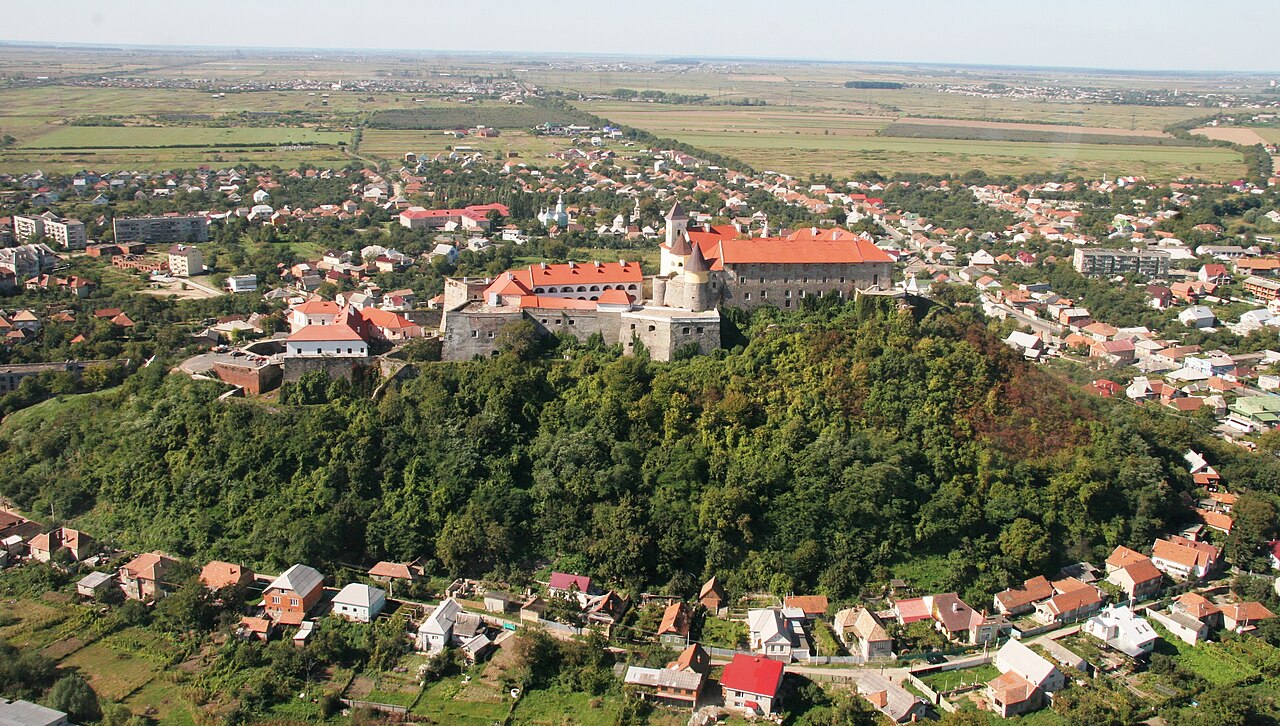
Palanok Castle, also known as Munkács Castle, stands majestically on a volcanic hill in Mukachevo, Ukraine, dominating the surrounding landscape with its formidable presence. This medieval hill castle is one of the most significant and best-preserved defensive complexes in Ukraine, attracting over one hundred thousand visitors annually who come to explore its rich history and architectural grandeur. The origins of Palanok Castle trace back to the early medieval period, with archaeological evidence indicating the site was inhabited from the Neolithic through the Bronze and Iron Ages. Initially, the fortress was a wooden stronghold established during the Hungarian conquest, first mentioned in written records in the 11th century. It played a crucial role in the defense of the Kingdom of Hungary, successfully withstanding attacks from the Pechenegs in 1086 and the Mongol invasion in 1241, highlighting its strategic frontier position. In the late 14th century, under the ownership of Prince Theodor Koriatovych, the castle underwent significant transformation from wood to stone. Koriatovych fortified the complex with new walls, deep ditches, and additional towers. He also commissioned the digging of a remarkable 85-meter deep well carved into the rock, which ensured a reliable water supply during sieges. A local legend surrounds the well's construction, involving a pact with the devil, which adds a layer of mystical allure to the castle's history. Architectural evolution and defensive features Palanok Castle's architecture reflects a blend of medieval fortification techniques and Renaissance military engineering, adapted over centuries to meet evolving military threats. The fortress is arranged on multiple terraces ascending the hill: the upper terrace houses the oldest part, the citadel, while the middle and lower terraces contain the main castle complex and outer defenses respectively. The castle's defensive system is notable for its thick walls, measuring up to 3.8 meters wide, and a series of bastions designed in the Italian style, including eight angular and three round bastions. Key bastions such as the German and Hajdú guard the lower castle entrance, while the Hussar and Wheelwright (Wagner) bastions protect the middle castle gate. Within the citadel, the Lorántffy, Rákóczi, and Freedom Tree bastions stand as critical defensive points, with the highest tower adjacent to the Lorántffy bastion linking to other fortifications. A distinctive architectural feature is the covered well within the citadel, 2.5 meters in diameter and 86 meters deep, with a secret tunnel at 71 meters connecting to the nearby Latorca River. This ingenious design provided a secure water source and potential escape route during sieges. The castle courtyard, known as Rákóczi Square, is enclosed by two to three-story buildings that historically served as barracks, ammunition storage, a knights' hall, and food supply depots. The palace within the citadel is a multi-story structure with arcaded galleries on three sides, serving as the residence and court for the castle's lords. Additional defensive measures included a dry moat between the lower and middle castles, approximately 10 to 12 meters deep, and a water-filled moat encircling the hill's base. The surrounding marshy terrain further enhanced the castle's natural defenses by limiting enemy approach routes. Historical significance and notable figures Throughout its history, Palanok Castle was a focal point of regional power struggles, especially between Austria and Transylvania from the 16th century onward. In 1633, it came under the rule of the Transylvanian prince György I Rákóczi, who made it the capital of his principality. Under his reign, the fortress saw extensive renovations and expansions, including the construction of the Upper, Middle, and Lower castles. Following György I, his widow Sophia Báthory took control and fortified the castle further by adding two defensive terraces and an outer defensive ring. Sophia is remembered for her ruthless reputation, with legends attributing to her bizarre practices such as drinking human blood to retain youth. The castle is also famously associated with Ilona Zrínyi, daughter of Sophia Báthory, who is celebrated for her valiant defense of Palanok during a prolonged siege by Austrian forces from 1685 to 1688. Despite the fortress enduring a grueling two and a half years under siege, it eventually fell due to a deceptive surrender agreement signed by Ilona Zrínyi. Her leadership remains a symbol of courage and resistance in Hungarian and Ukrainian history. During the early 18th century, Palanok Castle was a strategic stronghold in the anti-Habsburg uprisings, notably serving as the residence and military headquarters of Francis II Rákóczi during his War of Independence (1703–1711). After the defeat of these uprisings, the castle's military importance declined, and it was repurposed as a political prison by the Austrian monarchy until the late 19th century. Between December 1805 and March 1806, the castle safeguarded the Hungarian Holy Crown during the Napoleonic Wars, underscoring its continued symbolic significance. Modern usage and cultural heritage In the 20th century, Palanok Castle served various military functions under Czechoslovak, Hungarian, and Soviet control, including use as barracks and an agricultural machinery school. Restoration efforts commenced in the 1970s to preserve the fortress and transform it into a museum and cultural site. Today, the castle houses the Mukachevo Historical Museum, featuring exhibits on the region's history, the Lehoczky collection, and restored rooms displaying the castle's architectural and cultural legacy. The museum also includes galleries of Western Ukrainian paintings, ancient icons, and exhibitions dedicated to local wooden churches and art salons showcasing regional artists. The castle grounds formerly featured the Turul bird monument, a large bronze statue atop a 33-meter obelisk erected in 1896 as a symbol of Hungarian heritage. This monument underwent removal and reinstatement cycles throughout the 20th and early 21st centuries, reflecting shifting political landscapes. In 2022, it was replaced by the Ukrainian trident emblem, symbolizing the castle's integration into Ukrainian national identity. Visitors to Palanok Castle can enjoy the scenic views from its terraces, explore its extensive fortifications, and relax in the cozy cafés within the fortress, making it a vibrant cultural and historical destination. Legend of the devil's well A captivating local legend tells of the castle's deep well, which was initially dug without finding water. The devil allegedly appeared to the castle's owner, offering water in exchange for a bag of gold. The clever prince tricked the devil by giving him a small bag with only two coins. Enraged, the devil jumped into the well, and it is said that his anguished howls can still be heard from its depths, adding a mystical aura to the fortress.

Early Medieval (5th–10th c.)
Details
25.7 km
Serednie Castle — Ukraine castle

Serednie Castle

Serednie, Ukraine

Serednie Castle stands as a remarkable example of a late medieval hill castle located in the settlement of Serednie, within modern-day Ukraine. Constructed primarily in the late 15th or early 16th century by the Kingdom of Hungary, this fortress reflects the turbulent history and strategic importance of the region during the medieval period. Contrary to earlier beliefs linking the castle to the Knights Templar in the 12th century, modern archaeological research has firmly established its origins in the late medieval era. The castle's history is deeply intertwined with the noble families of the Hungarian Kingdom, particularly the Palóczy family in the 15th century and later the Dobó family following the pivotal Battle of Mohács in 1526. István Dobó, famed for his leadership during the defense of Eger against the Ottoman Empire, took stewardship of Serednie Castle, reinforcing its fortifications and fostering the local viticulture industry. The expansion of the castle's extensive underground wine cellars during this period stands as a testament to the economic activities that complemented its military function. Historical context and ownership The site of Serednie Castle was a focal point of regional power struggles throughout the 14th and early 15th centuries, contested by prominent Hungarian noble families such as the Drugeth and Palóczy. These conflicts mirrored the broader political dynamics of the Kingdom of Hungary and its borderlands. The castle's strategic location made it a valuable asset during the conflicts between the Habsburg Monarchy, the Ottoman Empire, and local insurgencies. During the early 18th century, Serednie Castle suffered significant damage amid the anti-Habsburg rebellion led by Ferenc II Rákóczi (1703-1711). The castle was subsequently abandoned, leading to its gradual decline into ruin. Archaeological excavations beginning in 2008 have unearthed coins, pottery, and structural remnants that confirm the castle's active use from the 15th through the 18th centuries. Architectural features of the donjon tower The core of Serednie Castle is its imposing quadrangular stone donjon tower, which served as the central stronghold and last line of defense. Measuring approximately 18.6 by 16.5 meters with walls about 2.6 meters thick, the tower rises to a height of roughly 20 meters. Constructed primarily from rubble stone with reinforced corners of squared stone, the tower's walls are clad both inside and out with finely dressed stone, lending a refined appearance uncommon in purely military structures. The tower's interior is divided into three stories supported by wooden beams. Notably, the main entrance is situated on the second floor of the eastern wall, accessible originally by a removable wooden ladder. This design allowed defenders to isolate the entry point during attacks effectively. The second floor houses three chambers, including a stairwell leading to the third floor, which retains partial walls and a flat wooden-beamed ceiling. Recent excavations revealed a stone staircase connecting the second floor down to the first floor, which is split by a thick stone wall into two large rooms measuring approximately 11 by 6 meters each. Of particular interest is a stone-filled pit in the eastern room's floor, believed to have functioned as a well, ensuring water supply during sieges. Defensive structures and surrounding fortifications Originally, the donjon tower was encircled by a circular system of defensive ramparts and moats. The inner ring of earthworks closely paralleled the tower's walls and was fortified by a stone wall featuring cylindrical corner towers. Although these outer defenses have mostly disappeared over time, historical documents and archaeological evidence confirm their existence and strategic role in the castle's defense. Influence of romanesque military architecture The architectural style of Serednie Castle exhibits clear influences from Romanesque military designs, drawing inspiration from ancient Roman watchtowers that once guarded the Rhine and Danube frontiers. This stylistic choice is evident in the robust masonry, the quadrangular tower form, and the emphasis on verticality and defensive solidity. Economic significance: the underground wine cellars One of the most remarkable features associated with Serednie Castle is the extensive network of underground wine cellars stretching approximately four kilometers. These cellars were significantly expanded in the 16th century under the guidance of the descendants of István Dobó and their associates. An ancient carved stone inscription over 550 years old honors the thousands of Turkish prisoners who labored to enlarge and fortify these vaults. The wine cellars not only served as storage for the local viticulture but also symbolized the economic vitality of the region during the castle's operational period. They represent an important aspect of the castle's multifunctional role, combining military, residential, and economic functions. Archaeological research and conservation efforts Following centuries of neglect and ruin, Serednie Castle became a subject of archaeological interest beginning in 2008. Excavations have uncovered valuable artifacts and structural details that have deepened understanding of the castle's construction phases, usage, and historical context. Conservation initiatives started as early as the 1970s, aiming to stabilize and preserve the remaining structures. Plans for comprehensive restoration have been proposed to safeguard this important example of late medieval fortification in the region, ensuring that Serednie Castle remains a vital cultural and historical landmark for future generations.

Late Medieval (14th–15th c.)
Details
34.4 km
Bronka Castle — Ukraine castle

Bronka Castle

, Ukraine

Bronka Castle is a historic hill castle located in Ukraine, notable for its medieval origins and strategic placement atop elevated terrain. While the exact city location remains uncertain, the castle's position on a hill provided significant defensive advantages, typical of such fortifications constructed during the medieval period. Historical context and significance The castle dates back to the high medieval period, a time when fortifications were essential for territorial control and defense against invasions. Castles like Bronka were often built by regional rulers or nobles to secure their domains and serve as administrative centers. Although specific historical records about Bronka Castle are limited, its architectural style and location suggest it played a role in local defense and governance. Architectural features and design As a hill castle, Bronka Castle takes advantage of natural elevation for defense. Such castles typically feature thick stone walls, watchtowers, and a keep or donjon serving as the last line of defense. While detailed architectural plans of Bronka Castle are not widely documented, hill castles of this type often include a courtyard surrounded by curtain walls, battlements for archers, and a fortified gatehouse. Defensive structures The elevated location would have allowed defenders to spot approaching enemies from a distance. The castle likely included moats or ditches carved into the hillside to hinder attackers, along with arrow slits and murder holes to repel assaults. The gatehouse would have been heavily fortified to control access. Cultural and heritage importance Bronka Castle stands as a representation of medieval military architecture in Ukraine, reflecting the strategic importance of hilltop fortifications in the region's history. Although it may not be as famous as other Ukrainian castles, it contributes to understanding the defensive networks and feudal systems of the time. Current condition and preservation The present condition of Bronka Castle is not well documented, but many similar hill castles in Ukraine exist as ruins or partially preserved structures. Preservation efforts vary depending on local interest and resources. Visitors to such sites often find remnants of walls, foundations, and occasional towers, offering insight into medieval construction techniques. Visiting information and accessibility Due to the uncertain location and limited documentation, specific visiting hours or ticket prices for Bronka Castle are not available. Visitors interested in exploring medieval castles in Ukraine should research local historical sites or contact regional tourism offices for guidance on accessible castles and preserved ruins.

High Medieval (11th–13th c.)
Details