Chrysocheria Castle
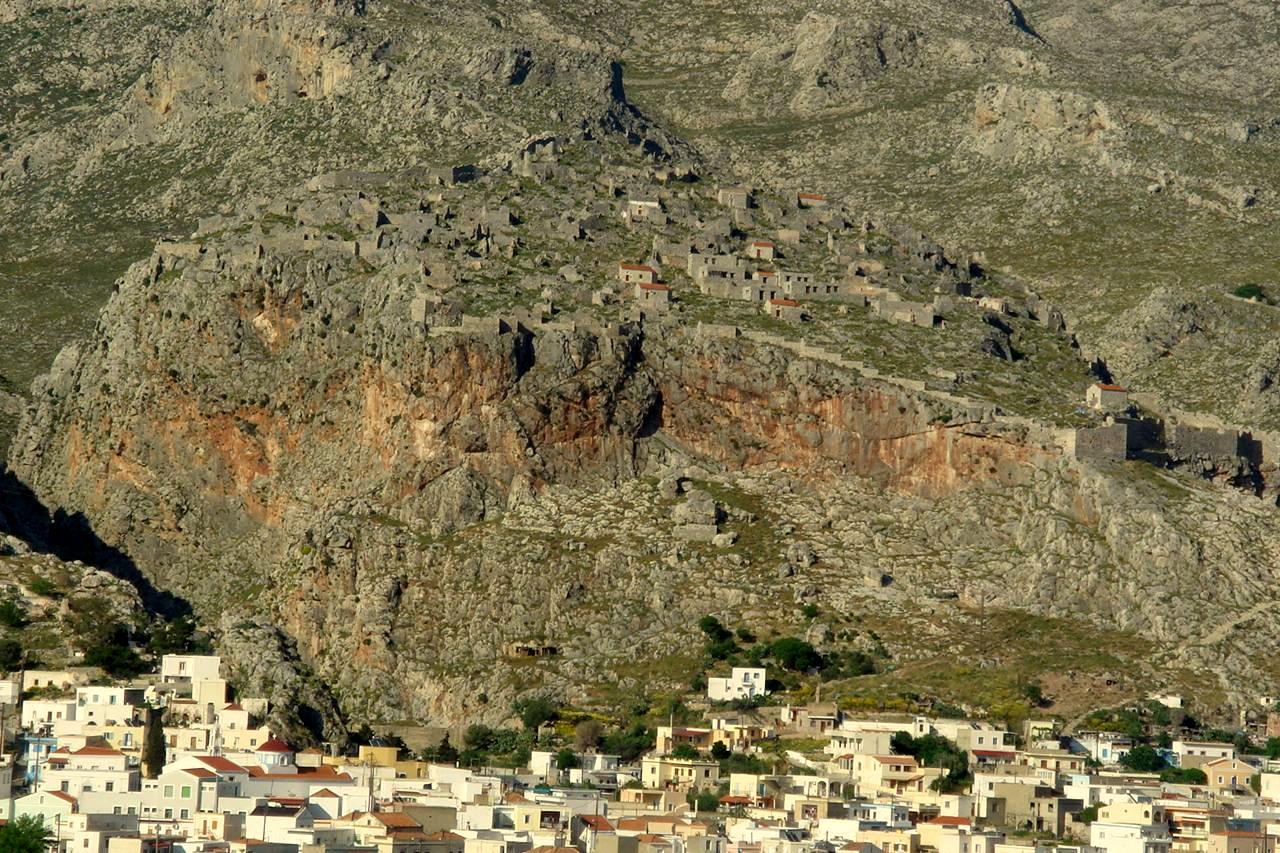
Chrysocheria Castle stands as a significant historical monument on the island of Kalymnos, Greece. This hill castle was constructed in the 15th century by the Knights Hospitaller, a medieval Christian military order renowned for their defensive fortifications across the Aegean Sea. The castle's location on Kalymnos reflects its strategic importance in controlling maritime routes and protecting the island from frequent pirate raids and Ottoman incursions during the late medieval period.
The site of Chrysocheria Castle has a rich history of continuous human occupation dating back to the Neolithic era. Archaeological evidence reveals that before the castle's construction, the area held religious significance, underscored by the nearby church of Panagia Chrysocheria (Virgin Mary of the Golden Hands). This church was famous for an icon of the Virgin Mary adorned with golden leaf on the hands, which inspired the castle's name and highlights the intertwining of spiritual and military roles at the site.
Construction and historical context
The castle was built around 1445 under the supervision of Fantino Quirini, a knight commander acting on behalf of Jean de Lastic, the Grand Master of the Knights Hospitaller. This construction was part of a broader effort by the order to fortify their holdings in the eastern Aegean islands against the rising threat of Ottoman expansion and pirate attacks. The castle's design reflects the military architecture of the late medieval period, emphasizing robust defensive features suited to the rugged island terrain.
Initially, local inhabitants resisted the forced labor required to build the fortress, but after legal enforcement by Quirini, they were compelled to contribute to its construction. Despite these efforts, the castle's defensive capabilities were ultimately insufficient to repel sustained Ottoman pirate assaults, leading to its abandonment by the mid-15th century.
Architectural features and layout
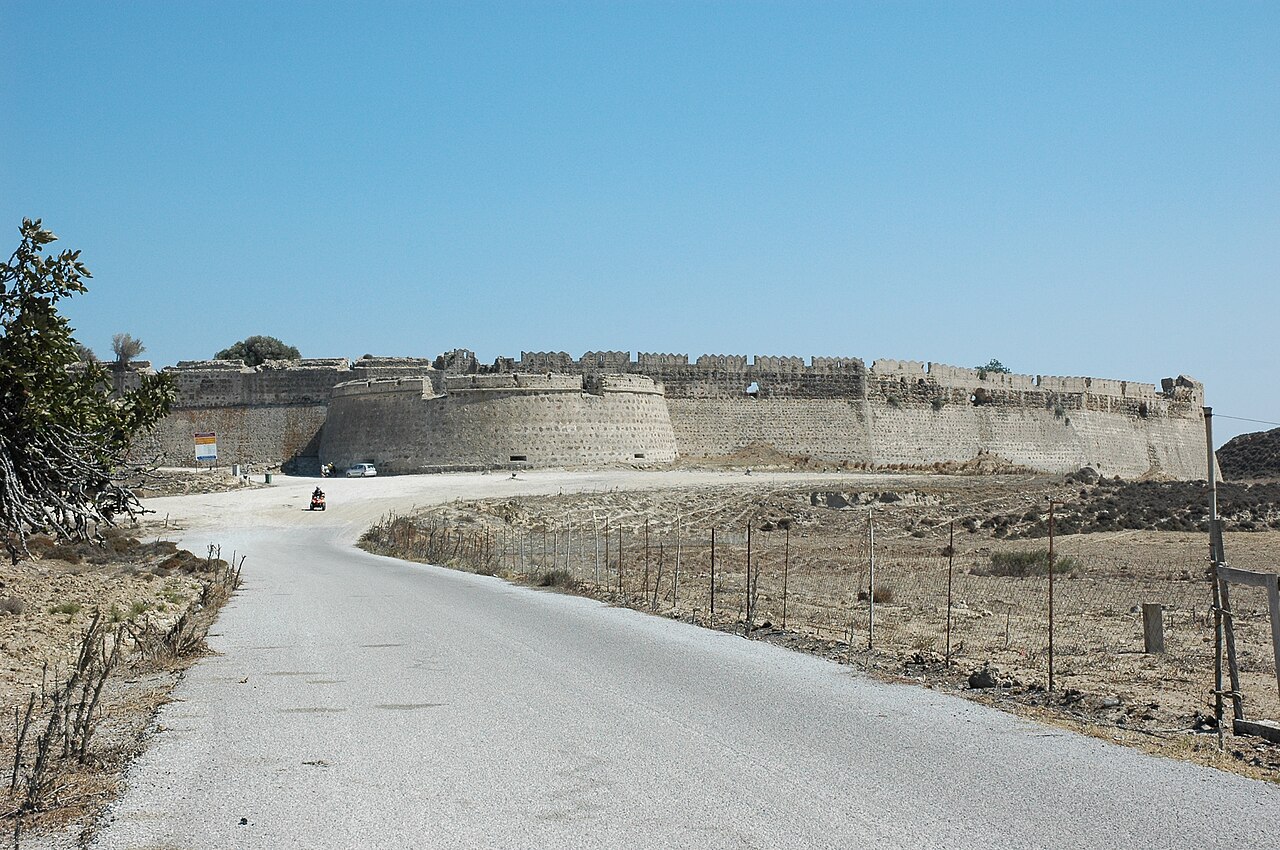
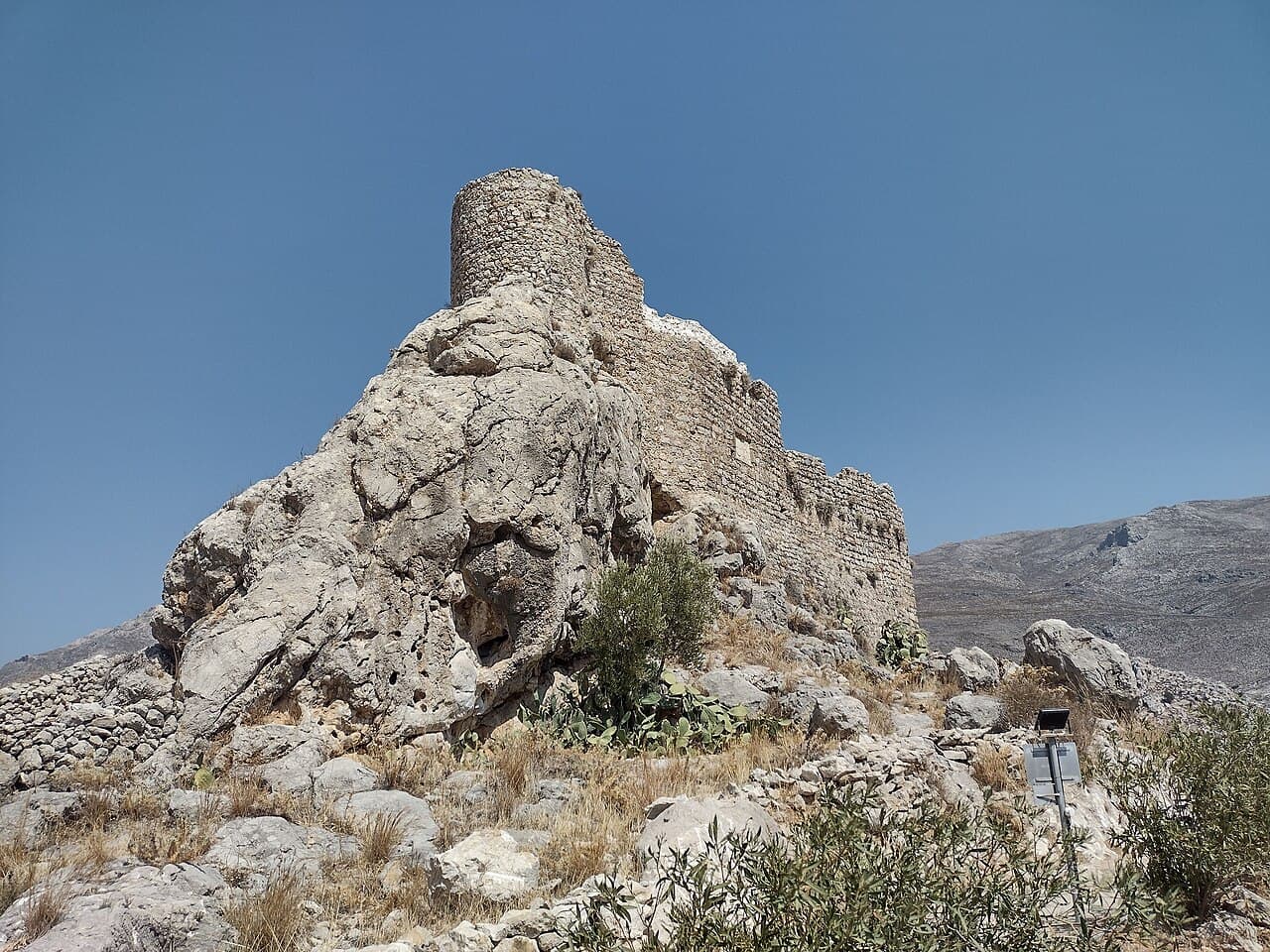
Chrysocheria Castle is characterized by its distinctive rhomboid (diamond-shaped) ground plan, which optimizes the natural topography for defense. The fortress includes two towers and two main gates located on the northern and eastern sides, controlling access and providing vantage points for surveillance and defense. The castle is naturally protected by steep cliffs on all sides except the southern face, where a constructed defensive rampart extends the fortification.
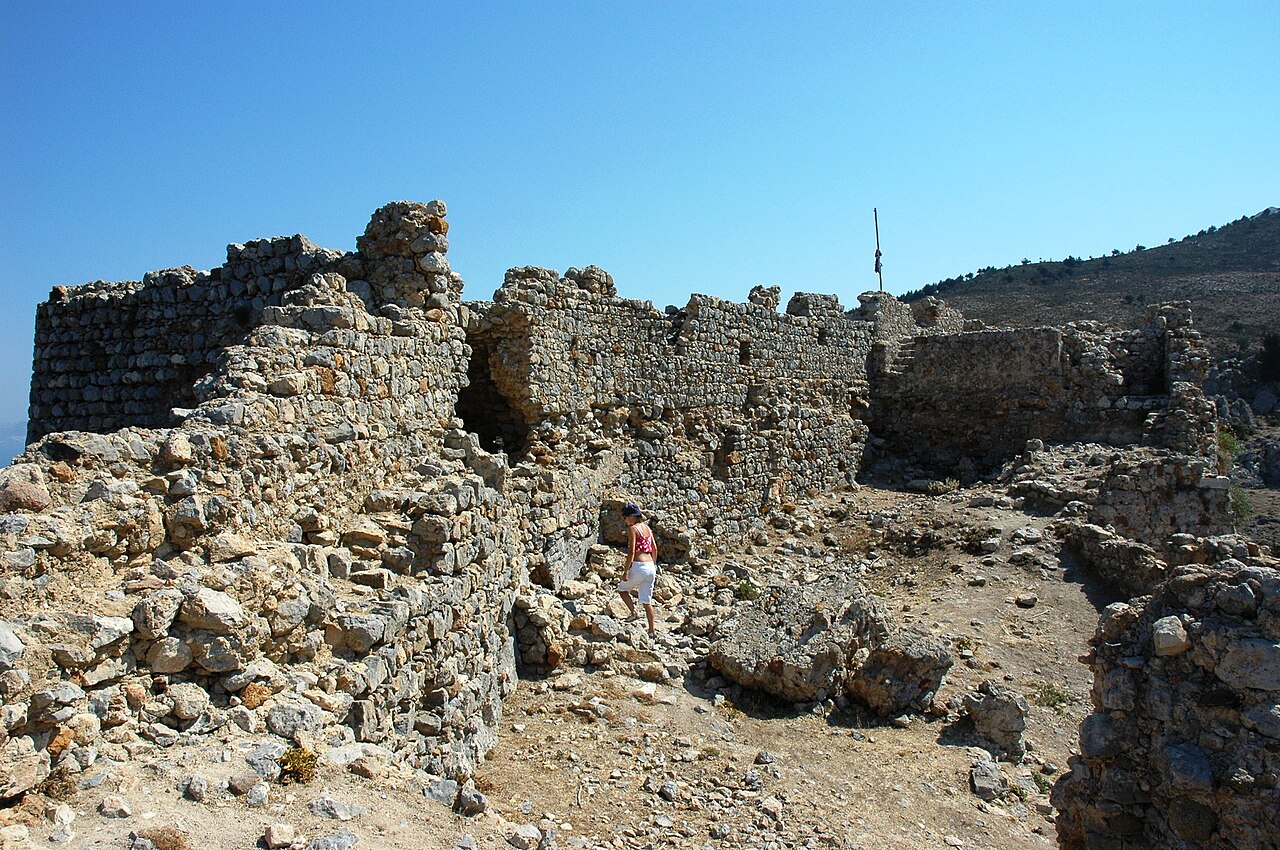
Within the castle walls, several buildings are identifiable, including the remains of an ancient temple integrated into the structure, indicating the site's long-standing religious and cultural importance. There are also two churches inside the fortress: one dedicated to Saint George and another to the Virgin Mary. Both churches contain fragments of frescoes, which offer valuable insights into the religious life and artistic expressions of the castle's occupants.
Defensive structures
The castle's walls and towers were constructed using local stone, designed to withstand sieges and provide a stronghold against attackers. The positioning of the gates and towers allowed defenders to control key approaches and monitor maritime activity around Kalymnos. The eastern gate notably features the coats of arms of Fantino Quirini, Jean de Lastic, and Fra Juan Geltru, the governor of Kos island, symbolizing the key figures who played roles in the castle's history.
Post-military use and windmills
After the castle's decline as a military fortress, the site continued to serve the local community in other capacities. Following the year 1522, three windmills were constructed outside the eastern walls. These windmills are among the best-preserved features associated with the castle complex and illustrate the adaptation of the site for agricultural and economic purposes.
While primarily used for milling grain, historical accounts suggest that these windmills occasionally contributed to the island's defense, possibly serving as lookout points or signaling stations. Their presence underscores the multifaceted role of the castle site, blending military, religious, and daily life functions.
Cultural significance and preservation
Chrysocheria Castle is an important cultural landmark that reflects the complex history of the Aegean islands during the late medieval period. Its combination of military architecture, religious structures, and later agricultural installations provides a unique window into the layered history of Kalymnos.
Today, the castle remains partially preserved, with visible ruins that attract visitors interested in medieval fortifications and Greek island history. The site offers a tangible connection to the Knights Hospitaller and their role in the defense of Christian territories against Ottoman expansion.
Visitors can explore the castle's walls, towers, and churches, as well as the surrounding landscape that once made this fortress a strategic defensive position. The nearby windmills add to the historical ambiance, offering insight into the evolving uses of the site over centuries.
Efforts to preserve and study Chrysocheria Castle continue, emphasizing its value as a heritage site that embodies the intersection of military, religious, and community life on Kalymnos.
Frequently asked questions (FAQ)
- What is the historical significance of Chrysocheria Castle?
- Chrysocheria Castle, built in the 15th century, served as a crucial defensive stronghold against pirates and invaders. Its strategic location on Kalymnos Island allowed it to control maritime routes and protect the local population. The castle is an important example of medieval architecture in the Dodecanese region.
- When was Chrysocheria Castle constructed?
- Chrysocheria Castle was constructed in 1457 by the Knights of Saint John. It was built during their rule over the Dodecanese islands, reflecting the military architectural style of the time. Over the centuries, it has witnessed numerous historical events and changes in governance.
- Can I visit Chrysocheria Castle?
- Yes, Chrysocheria Castle is open to visitors who wish to explore its historical grounds. Visitors can walk through the castle's ruins, enjoy panoramic views of the island, and learn about its rich history. It's advisable to check local guidelines for any specific visiting requirements.
- What are the opening hours for Chrysocheria Castle?
- Chrysocheria Castle is typically open to visitors from 9 AM to 7 PM during the summer months. In the off-season, opening hours may vary, so it's best to verify before your visit. Be sure to plan your trip accordingly to fully enjoy the site.
- Is it possible to access Chrysocheria Castle by public transport?
- While public transport options are somewhat limited on Kalymnos, you can reach Chrysocheria Castle by local buses or taxis from the main town. Many visitors also choose to rent scooters or bicycles for more flexibility in exploring the island. Make sure to check the schedule for local transport services.
- What is the best time to visit Chrysocheria Castle?
- The best time to visit Chrysocheria Castle is during the spring (April to June) and fall (September to October) when the weather is mild and pleasant. These seasons offer fewer crowds and a more enjoyable experience while exploring the castle and its surroundings. Summer can be quite hot, so plan accordingly.
- Are there any nearby attractions to visit after Chrysocheria Castle?
- Yes, after visiting Chrysocheria Castle, you can explore nearby attractions such as the charming village of Chora and the beautiful beaches of Kalymnos. The island is also known for its excellent climbing spots and traditional tavernas, where you can enjoy local cuisine. Make a day of it by experiencing the rich culture and natural beauty of Kalymnos.
- What are the ticket prices for visiting Chrysocheria Castle?
- Entrance to Chrysocheria Castle is generally free, allowing visitors to explore its grounds without any cost. However, guided tours or special events may have associated fees. It's a good idea to check for any updates on pricing or special offers before your visit.
Photo gallery

Information
Loading map...
Visitor reviews
No reviews yet. Been here? Write the first review and help other travelers!
Write the first reviewVisited this castle? Share your experience
Your review helps other travelers and adds first-hand knowledge to our encyclopedia.