Antimachia Castle — Greece castle

Antimachia Castle

Antimachia Castle: a medieval hill fortress in Kos, Greece
Kos, Greece
Late Medieval (14th–15th c.)
Partially Preserved

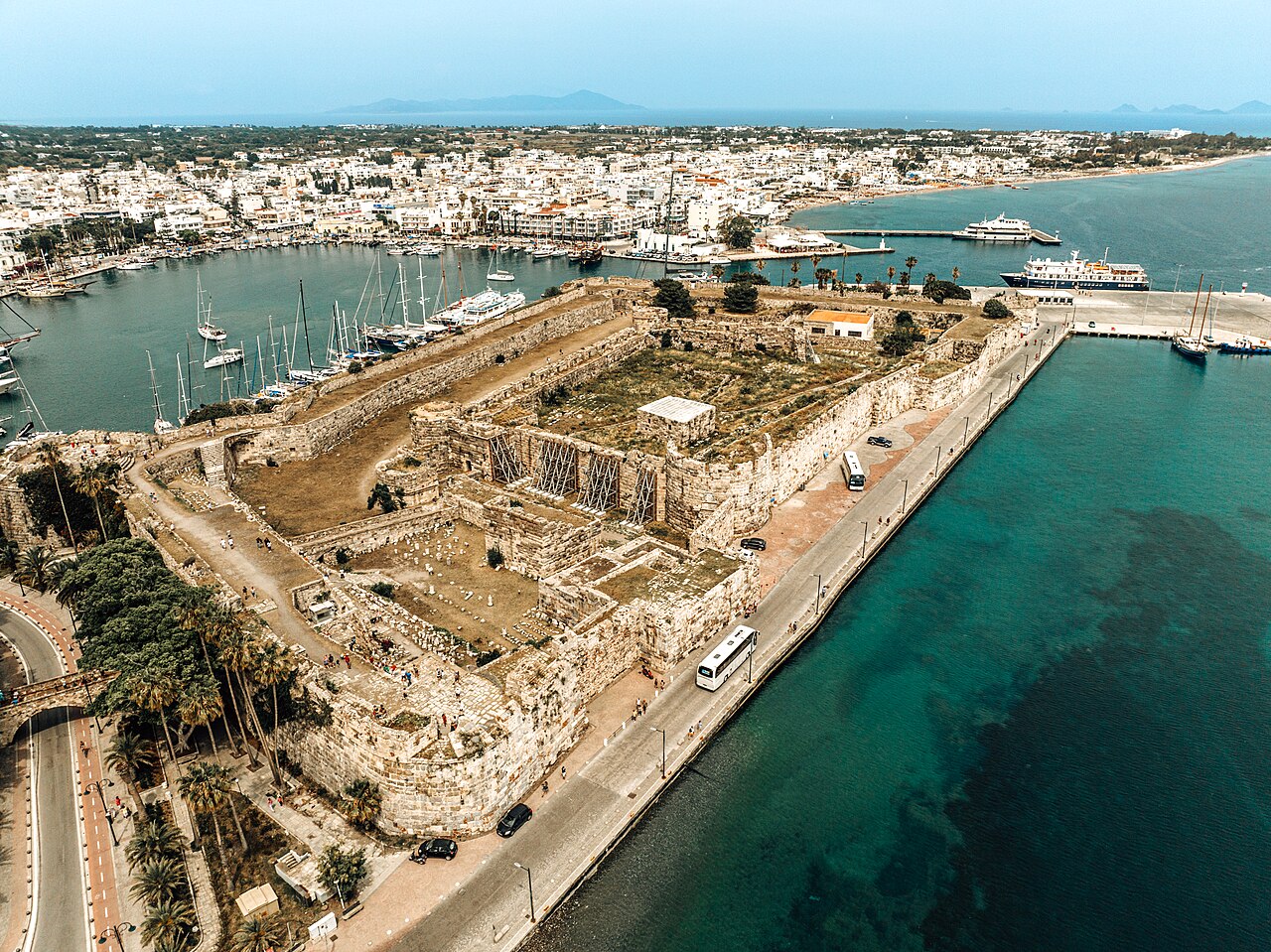
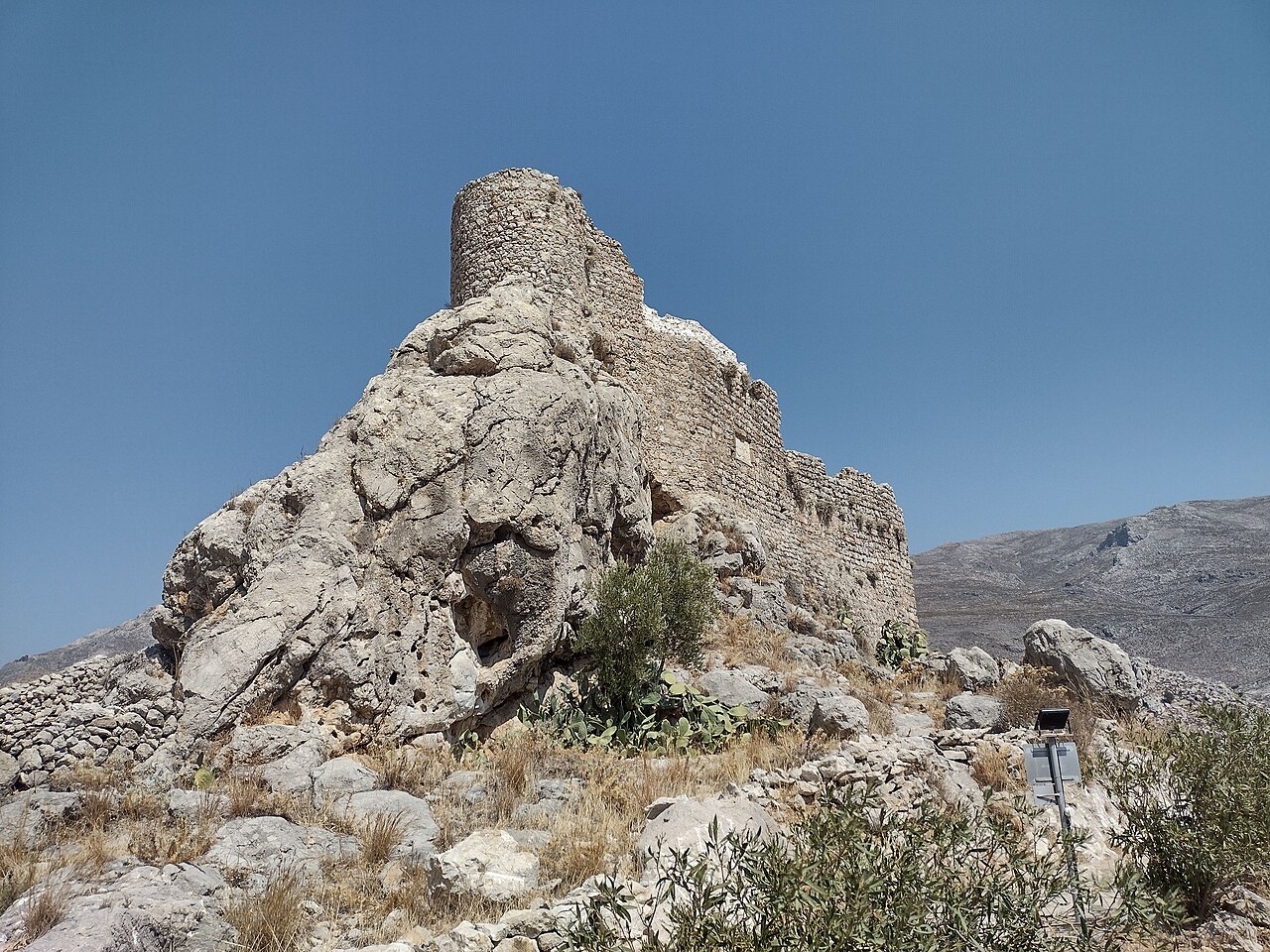
Antimachia Castle is a prominent medieval hill castle located on the Greek island of Kos in the southeastern Aegean Sea. This fortress is a significant example of Byzantine and medieval military architecture in the region, strategically positioned on a hill to oversee the surrounding landscape and protect the island from invaders.

Historical background and strategic importance

The castle was constructed during the medieval period, likely in the 14th century, although some sources suggest earlier origins tied to the Byzantine era. It was built primarily by the Knights of Saint John (also known as the Knights Hospitaller) who controlled Kos and other Dodecanese islands during the late medieval period. The fortress served as a defensive stronghold against pirate raids and Ottoman incursions, reflecting the turbulent history of the Aegean Sea region.

Antimachia Castle played a vital role in the island's defense system, acting as a refuge for local inhabitants during attacks and as a military base for the knights. Its elevated position allowed for extensive surveillance of the sea and land routes, providing early warnings of approaching enemies.

Architectural features and layout

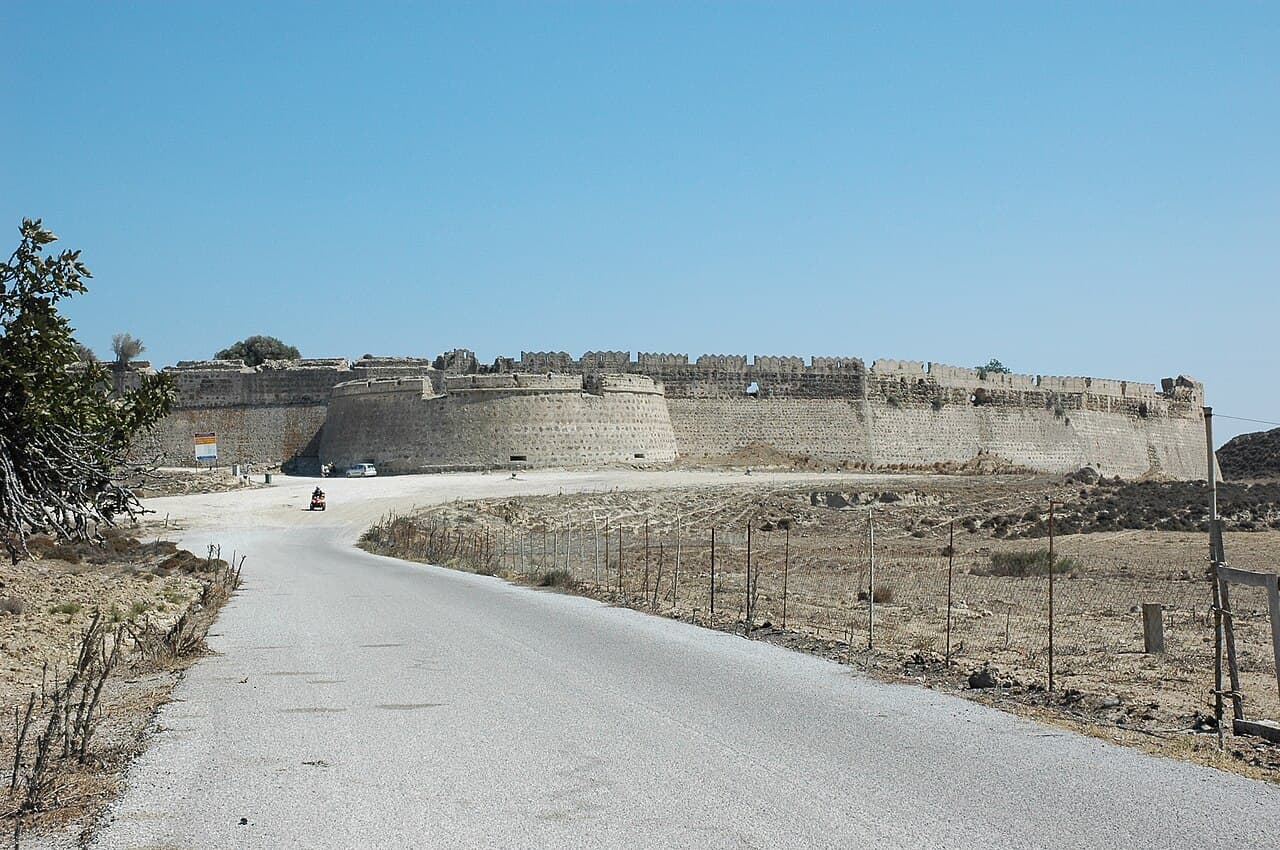
The castle is characterized by its robust stone walls, which enclose a roughly rectangular area atop a hill. The walls are punctuated by towers and battlements designed for archers and artillery, typical of medieval fortifications. The fortress includes a main gate fortified with defensive mechanisms such as a portcullis and murder holes.

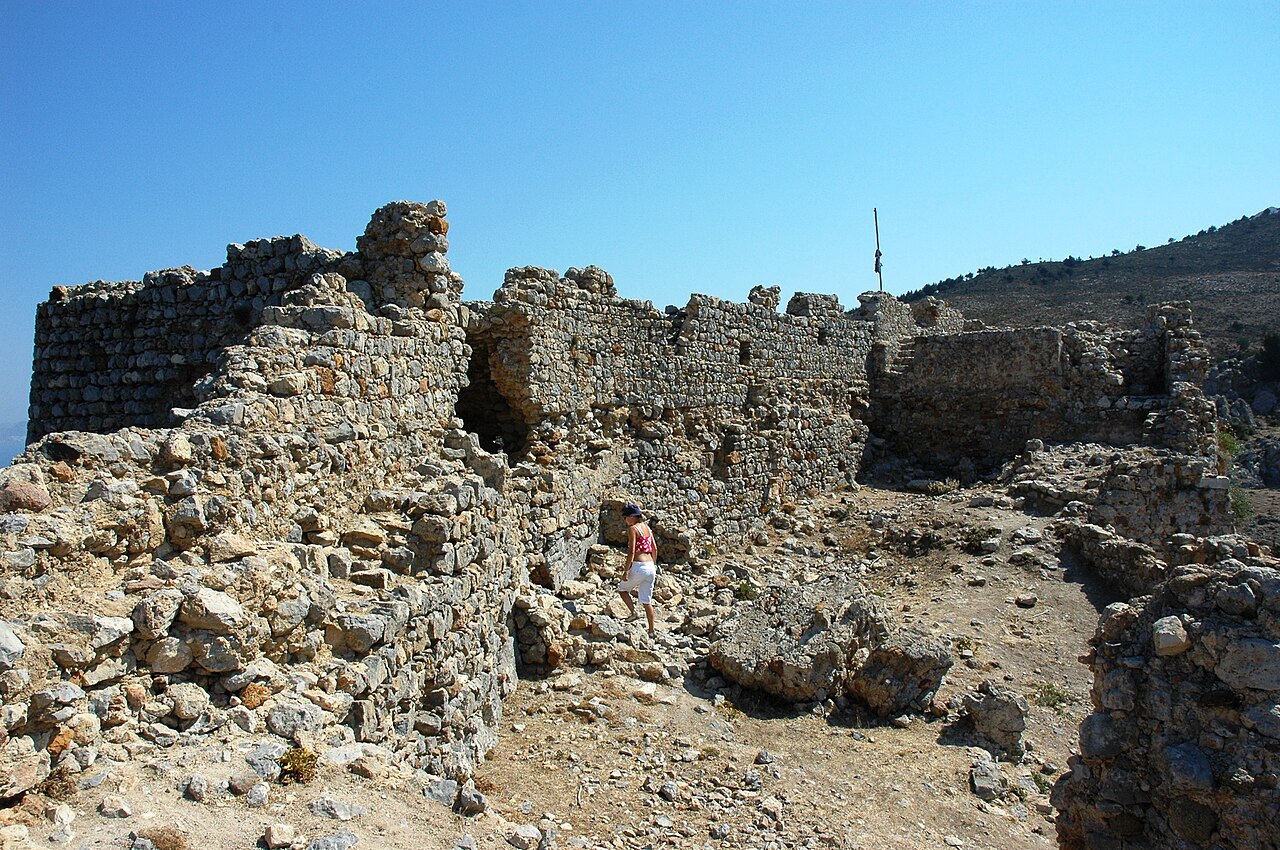
Inside the walls, remnants of living quarters, storerooms, and a chapel can be found, indicating the castle's role as a self-sufficient military settlement. The interior layout reflects practical design for defense and daily life during sieges. The use of local stone and traditional masonry techniques is evident throughout the structure.

Defensive elements

The castle's design incorporates multiple layers of defense. The thick walls and elevated position made direct assaults difficult. The towers provided vantage points for lookouts and archers, while the battlements allowed defenders to repel attackers effectively. The castle also features a cistern system to collect and store rainwater, essential for withstanding prolonged sieges.

Cultural and heritage significance

Antimachia Castle is an important cultural landmark on Kos, reflecting the island's complex history of Byzantine, medieval, and Ottoman influences. It is a symbol of the island's resilience and strategic importance in the eastern Mediterranean. The castle attracts visitors interested in history, architecture, and panoramic views of the surrounding countryside and sea.

Efforts have been made to preserve the castle, although parts remain in ruins. It is accessible to the public, offering educational opportunities about medieval fortifications and the Knights of Saint John's role in the region.

Visiting Antimachia Castle

The castle is located near the village of Antimachia on Kos island. Visitors can explore the ruins, walk along the battlements, and enjoy views of the island's landscape. The site is open year-round, with no formal entrance fee, making it an accessible destination for tourists and history enthusiasts.

Nearby attractions

While visiting Antimachia Castle, tourists often explore other historical sites on Kos, including the ancient city of Kos, the Castle of Neratzia in Kos town, and various archaeological museums that showcase the island's rich past.

Preservation status

The castle is currently classified as partially preserved, with ongoing conservation efforts to stabilize the ruins and protect the remaining structures from further decay. Visitors should be cautious when exploring due to uneven surfaces and exposed masonry.

Frequently asked questions (FAQ)

How do I get to Antimachia Castle on Kos island?
Antimachia Castle is located near the village of Antimachia on Kos island. It is accessible by car or local bus services from Kos town, with clear signage directing visitors to the site.
What is the historical significance of Antimachia Castle?
Antimachia Castle was built in the 14th century by the Knights of Saint John as a defensive fortress against pirate and Ottoman attacks, reflecting the island's strategic importance in the medieval Aegean.
Is Antimachia Castle open to visitors year-round?
Yes, the castle ruins are open to the public throughout the year with no formal entrance fee, allowing visitors to explore at their own pace.
What architectural features are notable at Antimachia Castle?
The castle features thick stone walls, defensive towers, battlements, a fortified main gate, and remnants of living quarters and a chapel, showcasing medieval military architecture.
Are there safety concerns when visiting Antimachia Castle?
Visitors should be cautious of uneven ground and exposed masonry within the partially preserved ruins. It is advisable to wear sturdy footwear and supervise children closely.

Photo gallery

Antimachia Castle
Click to view

Photo by ich selbst•CC BY-SA 3.0

1 photo • Click any image to view in full screen

Information

Hill Castle

Loading map...

Visitor reviews

No reviews yet. Been here? Write the first review and help other travelers!

Write the first review

Visited this castle? Share your experience

Your review helps other travelers and adds first-hand knowledge to our encyclopedia.
Write a review

(5/5)

0/2000 characters

Your review will be visible after admin approval

Nearby castles

6.5 km
Palaio Pyli — Greece castle

Palaio Pyli

Pyli, Greece

Palaio Pyli stands as a remarkable Byzantine fortress located on the northwestern slopes of Mount Dikaios in the municipality of Dikeo, Greece. This hill castle was primarily constructed during the 9th to 11th centuries with continued development into the 12th century, reflecting the strategic military and religious significance of the site throughout the medieval period. Its commanding position, approximately 300 to 360 meters above sea level, offers expansive views over the northern coastline of Kos island, underscoring its role as a critical defensive stronghold in the region. The site of Palaio Pyli has a history that extends far beyond the Byzantine era. Archaeological evidence traces its earliest fortifications back to the Mycenaean period, indicating the hilltop's longstanding importance as a fortified refuge. Throughout the medieval era, the fortress served as a sanctuary and military bastion, protecting inhabitants from invasions and pirate raids. Notably, in the 11th century, the monk Hosios Christodoulos was instrumental in enhancing the fortress and founding the nearby monastery of Panagia ton Kastrianon, linking the site's spiritual and martial functions. Architectural features and fortifications Palaio Pyli is distinguished by its complex defensive architecture, featuring three concentric layers of defensive walls that enclose the hilltop. The innermost wall tightly surrounds the summit, protecting the core area of the fortress. The second wall extends protection around a larger area on the east, south, and west sides, while a third outer wall is situated to the north of the upper enclosures. This layered defense system exemplifies Byzantine military engineering adapted to the rugged terrain. Seven towers remain today, with four positioned along the upper walls and three guarding the lower fortifications. The fortress's main entrance is marked by a square gate framed by semicircular arches, dating from the late 11th or early 12th century. This gate incorporates the regional construction technique known as the "hidden socle", where the base of the walls is concealed for both structural stability and aesthetic effect. The walls and internal structures are primarily built from limestone and local volcanic rocks, materials abundant in the region. Brickwork is also used in an unusual manner for the Dodecanese, reflecting a blend of local and Byzantine construction practices. Among the surviving buildings, one square structure in the northern corner of the upper enclosure stands out with a preserved wall segment measuring approximately six meters in height. Religious significance and buildings The fortress complex includes three notable Byzantine churches from the 11th century, which underscore the site's dual role as a military and spiritual center. These churches are the Church of Saint Anthony (Ágios Antónios), the Church of the Virgin Mary of the Castle (Panagía ton Kastrianón), and the Church of the Holy Unbodied Ones (Ágioi Asómatoi), dedicated to angels. Their presence within the fortress walls highlights the integration of religious life with the defensive functions of the castle. Central to the fortress's sustainability during sieges is a large underground cistern located on the upper level, designed to store water and ensure the inhabitants' survival during prolonged attacks. This feature is a testament to the thoughtful planning and self-sufficiency embedded in the fortress's design. Historical context and usage The fortress of Palaio Pyli played a pivotal role in the defense of Kos throughout the medieval period. In the 15th century, the fortress underwent significant reinforcements under the rule of the Knights Hospitaller, who governed Kos from 1315 until 1522. Despite sustaining damage during the earthquake of 1493, the fortress successfully withstood a Turkish siege in 1457, demonstrating its strategic resilience. Following the Ottoman conquest in 1523, the fortress saw partial repairs but gradually lost its military prominence. A settlement emerged near the fortress, offering protection from pirate raids and serving as a local community center. This settlement remained occupied until approximately 1830, when a devastating cholera epidemic led to its abandonment. Historical records dating back to 1085 mention Palaio Pyli, emphasizing its enduring strategic importance over centuries. The fortress's extensive ruins have earned it the nickname "Dodecanesian Mystras", reflecting its cultural and historical significance within the Dodecanese islands. Location and present condition Situated on a hilltop overlooking the northern coast of Kos, Palaio Pyli occupies a commanding position that allowed control over surrounding territories. The fortress and the remnants of the adjacent village extend between three and nine kilometers from the modern settlement of Pyli, nestled on the slopes of the Dikaios mountain range. Today, the fortress remains in a state of ruins, with many structures partially preserved or collapsed. The layered defensive walls, surviving towers, churches, and cistern provide invaluable insight into Byzantine military architecture and medieval life on Kos. The fortress is a significant archaeological and cultural heritage site, attracting scholars and visitors interested in Byzantine history and architecture.

High Medieval (11th–13th c.)
Details
17.7 km
Neratzia Fortress — Greece castle

Neratzia Fortress

Kos, Greece

Neratzia Fortress is a prominent medieval hill castle situated on the Greek island of Kos, within the municipality of Kos. Constructed primarily by the Knights Hospitaller, also known as the Order of St. John of Jerusalem, this fortress played a crucial role in controlling maritime routes between Constantinople and Alexandria. Its strategic position guarding the harbor of Kos made it a vital military stronghold from the early 14th century through the Ottoman period and beyond. Historical background and strategic importance The construction of Neratzia Fortress began shortly after the Knights Hospitaller acquired Kos in 1314. Initial building efforts are attributed to the leadership of Grand Master Helion de Villeneuve, with substantial fortification work continuing under Jean Fernandez de Heredia from around 1377 and extending into the early 1500s. This timeline reflects the fortress's development in response to evolving military threats, especially from the expanding Ottoman Empire and the Mamluk Sultanate. The fortress's location on a narrow peninsula east of Mandraki Harbor allowed it to oversee crucial sea lanes. It worked in tandem with the fortress at St. Peter in Bodrum, across the sea, to secure control over the Aegean maritime routes. This cooperation enhanced the defensive network of the Knights Hospitaller in the region. The earliest written record of the fortress dates to 1395, when traveler Nicolo de Martoni described it as nearly impregnable due to its natural and man-made defenses, including its position surrounded by sea and a nearby lake connected by a drawbridge. Despite its formidable design, Neratzia faced several sieges, notably in 1457 when an Ottoman force attacked. The defenders temporarily abandoned the fortress to regroup but ultimately held out until the wider defeat of the Knights at Rhodes. In 1523, Neratzia fell to the Ottomans following their victory over the Knights Hospitaller. Under Ottoman rule, the fortress remained a military garrison and the residence of the local governor. Though the Ottomans made limited structural changes, a significant explosion in 1816 damaged parts of the interior. The 20th century brought restoration efforts under Italian administration, which sought to emphasize the fortress's medieval character by removing many Ottoman modifications. During World War II, the fortress was used by German troops as a prison. It suffered earthquake damage in 2017 but partially reopened in 2021. Architectural features and layout Neratzia Fortress occupies what was once an island connected to the mainland by a stone bridge over a wide moat. This moat has since been filled and replaced by a street. The fortress consists of an inner castle dating from the 13th century, surrounded by outer defensive walls constructed between the late 15th century and 1514. Together, these elements form an almost rectangular plan. The inner castle is defined by four tall, round towers at its corners, which provided strong defensive positions. The outer walls were enhanced with large bastions, angular projections designed to withstand cannon fire, reflecting the fortress's adaptation to gunpowder artillery. Cannon openings are visible in these bastions, underscoring the fortress's military evolution. A broad moat, originally about six meters deep and nearly 38 meters wide, separated the inner and outer fortifications, adding another defensive layer. Materials and reused elements The builders made extensive use of local stones, including porous greenish varieties and softer types, alongside travertine limestone common in the Mediterranean. Notably, many architectural elements were repurposed from ancient structures on Kos and the nearby Asklepieion sanctuary. These include marble blocks, columns, altars, and carved stone fragments. Such reuse not only provided quality materials but also linked the fortress to the island's classical heritage. Decorative features survive, such as a marble frieze with garlands and theatrical masks above the main entrance, believed to originate from a temple dedicated to Dionysus, the god of wine and festivity. The fortress walls and towers bear carved coats of arms of various Grand Masters of the Knights Hospitaller, including Emery d’Amboise, highlighting the castle's historical connections and prestige. Interior and defensive structures The main gate was once flanked by two small towers, removed in the early 20th century. Access was via a stone bridge linking the fortress to the mainland. Inside, the fortress resembles an open-air museum, scattered with ruins of ancient columns, graves, altars, and stone carvings. No roofs or intermediate floors survive, and much of the interior is overgrown with native thorny plants. An arched structure near the gate is a remnant of the Ottoman period, likely part of a water storage system. A single sloping road connects the inner and outer sections along the eastern side, facilitating movement within the fortress. The layered design of Neratzia reflects centuries of adaptation to changing military technologies and strategic needs. Military significance and sieges Neratzia Fortress was a key defensive position in the eastern Aegean Sea, guarding the harbor of Kos and controlling maritime routes. Its fortifications evolved to meet the challenges posed by the introduction of gunpowder and cannon warfare. The addition of bastions and thick walls allowed the fortress to withstand artillery bombardments better than earlier medieval castles. The fortress endured multiple sieges, including the notable Ottoman attack in 1457. Although the defenders temporarily withdrew, the fortress was retaken and held until the eventual Ottoman conquest in 1523. This conquest marked a significant shift in regional power, ending the Knights Hospitaller's control over Kos. During Ottoman rule, the fortress's military role continued, though it gradually lost some of its strategic importance with changing political circumstances. The explosion in 1816 caused by a powder magazine accident significantly damaged the fortress's interior, but the structure remained in use as a garrison and administrative center. Modern restoration and current status In the 20th century, Italian authorities undertook restoration efforts to highlight the fortress's medieval origins by removing many Ottoman-era modifications. These restorations aimed to preserve the historical character and architectural integrity of the fortress. During World War II, the fortress served as a prison under German occupation. Recent decades have seen the fortress become a cultural and historical site open to visitors. However, an earthquake in 2017 caused damage, leading to a temporary closure. Partial reopening occurred in 2021, allowing tourists to explore much of the fortress and its surrounding ruins. Today, Neratzia Fortress stands as a significant monument reflecting the complex military history of the Aegean region, combining medieval fortification techniques with adaptations to early modern artillery. Its preservation offers insights into the Knights Hospitaller's architectural and military legacy on Kos.

Late Medieval (14th–15th c.)
Details
22 km
Chrysocheria Castle — Greece castle

Chrysocheria Castle

Kalymnos, Greece

Chrysocheria Castle stands as a significant historical monument on the island of Kalymnos, Greece. This hill castle was constructed in the 15th century by the Knights Hospitaller, a medieval Christian military order renowned for their defensive fortifications across the Aegean Sea. The castle's location on Kalymnos reflects its strategic importance in controlling maritime routes and protecting the island from frequent pirate raids and Ottoman incursions during the late medieval period. The site of Chrysocheria Castle has a rich history of continuous human occupation dating back to the Neolithic era. Archaeological evidence reveals that before the castle's construction, the area held religious significance, underscored by the nearby church of Panagia Chrysocheria (Virgin Mary of the Golden Hands). This church was famous for an icon of the Virgin Mary adorned with golden leaf on the hands, which inspired the castle's name and highlights the intertwining of spiritual and military roles at the site. Construction and historical context The castle was built around 1445 under the supervision of Fantino Quirini, a knight commander acting on behalf of Jean de Lastic, the Grand Master of the Knights Hospitaller. This construction was part of a broader effort by the order to fortify their holdings in the eastern Aegean islands against the rising threat of Ottoman expansion and pirate attacks. The castle's design reflects the military architecture of the late medieval period, emphasizing robust defensive features suited to the rugged island terrain. Initially, local inhabitants resisted the forced labor required to build the fortress, but after legal enforcement by Quirini, they were compelled to contribute to its construction. Despite these efforts, the castle's defensive capabilities were ultimately insufficient to repel sustained Ottoman pirate assaults, leading to its abandonment by the mid-15th century. Architectural features and layout Chrysocheria Castle is characterized by its distinctive rhomboid (diamond-shaped) ground plan, which optimizes the natural topography for defense. The fortress includes two towers and two main gates located on the northern and eastern sides, controlling access and providing vantage points for surveillance and defense. The castle is naturally protected by steep cliffs on all sides except the southern face, where a constructed defensive rampart extends the fortification. Within the castle walls, several buildings are identifiable, including the remains of an ancient temple integrated into the structure, indicating the site's long-standing religious and cultural importance. There are also two churches inside the fortress: one dedicated to Saint George and another to the Virgin Mary. Both churches contain fragments of frescoes, which offer valuable insights into the religious life and artistic expressions of the castle's occupants. Defensive structures The castle's walls and towers were constructed using local stone, designed to withstand sieges and provide a stronghold against attackers. The positioning of the gates and towers allowed defenders to control key approaches and monitor maritime activity around Kalymnos. The eastern gate notably features the coats of arms of Fantino Quirini, Jean de Lastic, and Fra Juan Geltru, the governor of Kos island, symbolizing the key figures who played roles in the castle's history. Post-military use and windmills After the castle's decline as a military fortress, the site continued to serve the local community in other capacities. Following the year 1522, three windmills were constructed outside the eastern walls. These windmills are among the best-preserved features associated with the castle complex and illustrate the adaptation of the site for agricultural and economic purposes. While primarily used for milling grain, historical accounts suggest that these windmills occasionally contributed to the island's defense, possibly serving as lookout points or signaling stations. Their presence underscores the multifaceted role of the castle site, blending military, religious, and daily life functions. Cultural significance and preservation Chrysocheria Castle is an important cultural landmark that reflects the complex history of the Aegean islands during the late medieval period. Its combination of military architecture, religious structures, and later agricultural installations provides a unique window into the layered history of Kalymnos. Today, the castle remains partially preserved, with visible ruins that attract visitors interested in medieval fortifications and Greek island history. The site offers a tangible connection to the Knights Hospitaller and their role in the defense of Christian territories against Ottoman expansion. Visitors can explore the castle's walls, towers, and churches, as well as the surrounding landscape that once made this fortress a strategic defensive position. The nearby windmills add to the historical ambiance, offering insight into the evolving uses of the site over centuries. Efforts to preserve and study Chrysocheria Castle continue, emphasizing its value as a heritage site that embodies the intersection of military, religious, and community life on Kalymnos.

Late Medieval (14th–15th c.)
Details