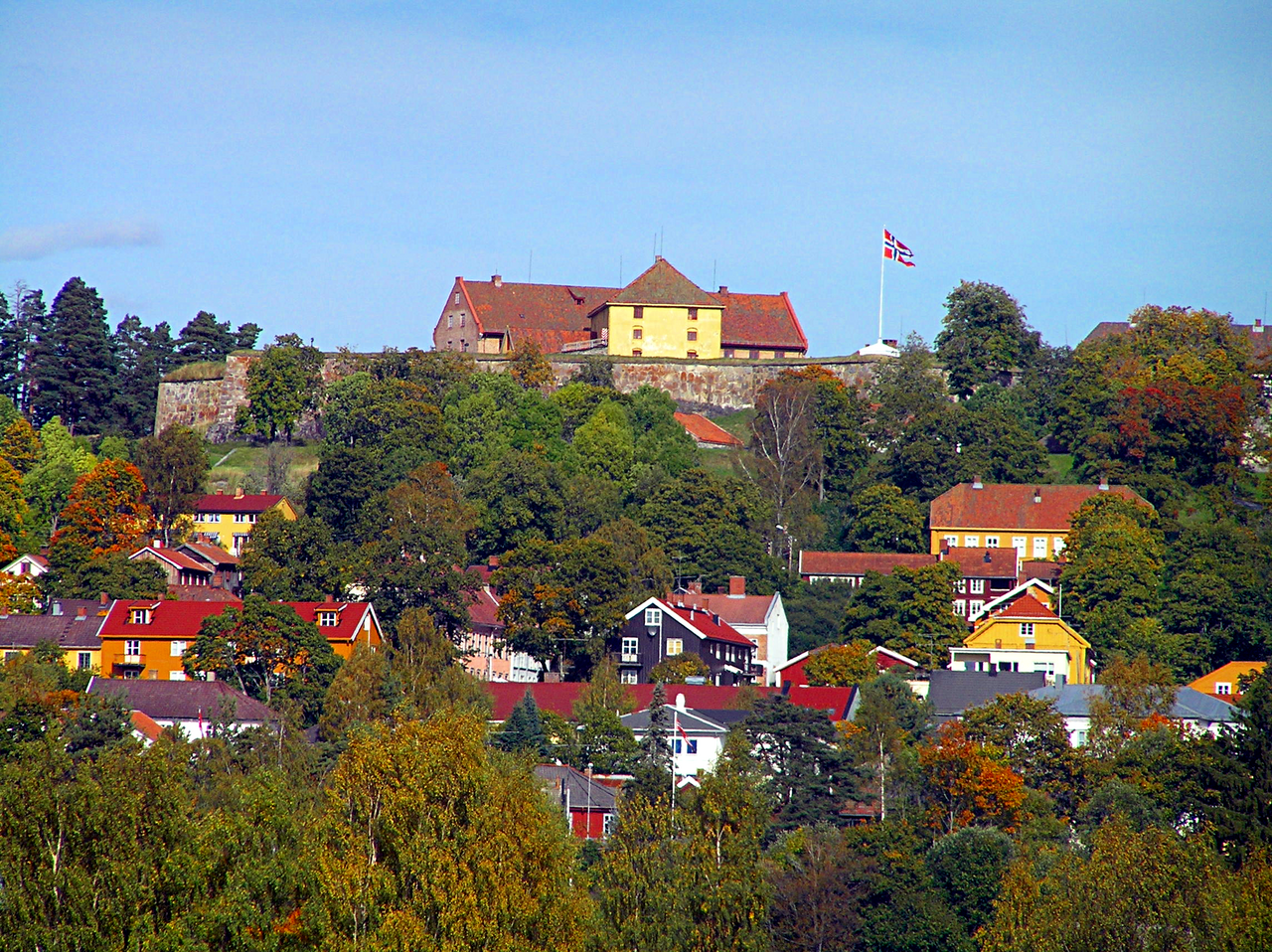
Christiansfjell Fortress Ruins

Christiansfjell Fortress ruins in Elverum, Norway
Elverum, Innlandet, Norway
Renaissance (15th–17th c.)
Ruins

Christiansfjell Fortress, located in Elverum, Norway, is a historic military site originally established in the late 17th century. Founded in 1683 by Count Wedel-Jarlsberg under the name Hammersberg Skanse, the fortress was strategically positioned near the Swedish border to serve as a defensive outpost during a period of frequent conflict in Scandinavia. The initial construction included a tower with a cellar powder magazine, essential for storing gunpowder safely and supporting the fortress's military function.

The fortress gained prominence when King Christian V of Denmark-Norway visited the site on June 14, 1685. Impressed by its location and potential, he renamed it Christiansfjell and ordered extensive improvements to strengthen its defenses. Contemporary reports from the king's visit provide valuable illustrations and descriptions of the fortress's layout and condition during this time, offering rare insight into 17th-century military architecture in Norway.

Architectural features and design

Christiansfjell Fortress was constructed in the Renaissance period, reflecting military architectural principles of the late 17th century. Its design included a fortified tower serving as a lookout and defensive stronghold, complemented by a powder magazine built underground to protect volatile supplies. The fortress's location on elevated terrain allowed for commanding views of the surrounding area, crucial for early warning and defense against Swedish incursions.

The fortress likely featured typical elements of Scandinavian border fortifications of the era, such as earthen ramparts, wooden palisades, and possibly stone walls, although much of the original structure has not survived. The strategic placement and construction techniques were influenced by the military engineering trends of the Renaissance, emphasizing both defense and control over key border routes.

Historical significance and military role

Christiansfjell Fortress played a role during a volatile period marked by the Great Northern War (1700–1721), which involved several Northern European powers including Sweden and Denmark-Norway. The fortress served as a border defense point, helping to monitor and deter Swedish military movements. However, after the war, military assessments concluded that maintaining smaller border fortifications like Christiansfjell was not cost-effective.

Consequently, on July 13, 1742, the fortress was officially closed. Its materials were salvaged and transported to Kongsvinger Fortress, a larger and more strategically important stronghold nearby. This decision reflected changing military priorities and the consolidation of defensive resources in the region.

Current condition and heritage status

Today, Christiansfjell Fortress exists as ruins, with remnants of its original structures visible at the site. The ruins provide valuable archaeological and historical insights into Norway's border defenses during the Renaissance and early modern period. Visitors can explore the site to appreciate the fortress's historical context and its role in Scandinavian military history.

The site is managed to preserve its remains and promote public understanding of Norway's military heritage. Interpretive materials and local historical research contribute to the appreciation of Christiansfjell as a significant cultural landmark in the Elverum region.

Visiting Christiansfjell fortress ruins

The fortress ruins are accessible to the public and offer a glimpse into the strategic military architecture of the late 17th century. Visitors interested in military history, architecture, and Norwegian heritage will find the site informative and evocative. The location near Elverum also allows for exploration of surrounding natural landscapes and other historical sites in the region.

Frequently asked questions (FAQ)

How do I get to Christiansfjell Fortress Ruins?
Christiansfjell Fortress Ruins are located in Elverum, Norway, and can be accessed by car or public transport. The nearest bus stop is a short walk from the site, making it convenient for visitors. Ample parking is available nearby for those driving.
What is the historical significance of Christiansfjell Fortress?
Christiansfjell Fortress was built in the late 17th century as a defense against Swedish invasions. It played a crucial role during the Great Northern War and is an important part of Norway's military history. The ruins serve as a reminder of Norway's strategic military past.
When was Christiansfjell Fortress constructed?
Construction of Christiansfjell Fortress began in 1682 and was completed in 1685. It was established under the reign of King Christian V of Denmark-Norway. The fortress has since become a significant historical monument in the region.
Can I explore the ruins on my own?
Yes, visitors are welcome to explore the ruins of Christiansfjell Fortress at their own pace. There are no guided tours, but informational signs are placed throughout the site to enhance your understanding of its history. Ensure to respect the site and follow any posted guidelines during your visit.
Why is Christiansfjell Fortress a popular tourist destination?
Christiansfjell Fortress attracts visitors due to its rich history and scenic views of the surrounding landscape. The ruins offer a unique glimpse into Norway's past and are perfect for photography and exploration. Additionally, the site provides a peaceful environment for nature lovers.
Is it possible to visit Christiansfjell Fortress year-round?
Yes, Christiansfjell Fortress is open year-round for visitors. However, accessibility may vary during the winter months due to snow and weather conditions. It's advisable to check local weather forecasts before planning your visit in winter.
What are the opening hours for Christiansfjell Fortress?
Christiansfjell Fortress is open to the public during daylight hours, allowing visitors to enjoy the site at their convenience. Since there are no specific hours, it’s best to plan your visit when there is ample daylight for exploration. Always check for any seasonal updates or events that may affect access.
Are there any nearby attractions to visit?
Yes, the Elverum area offers several attractions, including the Norwegian Forest Museum and the beautiful Glomma River. These sites provide additional cultural and outdoor experiences for visitors. Plan a day trip to fully enjoy what the region has to offer.
What are the ticket prices for visiting Christiansfjell Fortress?
Entry to Christiansfjell Fortress is free, making it accessible to everyone. Visitors can enjoy the historical site without any admission fees, allowing for an enriching experience without the cost. Donations for maintenance are always appreciated if you're able to contribute.

Information

Hill Castle

Loading map...

Visitor reviews

No reviews yet. Been here? Write the first review and help other travelers!

Write the first review

Visited this castle? Share your experience

Your review helps other travelers and adds first-hand knowledge to our encyclopedia.
Write a review

(5/5)

0/2000 characters

Your review will be visible after admin approval

Nearby castles

79.8 km
Kongsvinger Fortress — Norway castle

Kongsvinger Fortress

Kongsvinger, Norway

Kongsvinger Fortress stands as a prominent historical military structure in Kongsvinger, Innlandet, Norway. Perched on a strategic hill west of the Glomma River in the area known as Glommakneet near Tråstad, the fortress commands an extensive view of the surrounding landscape. Originally developed from the earlier Vingersundet fort dating back to 1658, Kongsvinger Fortress evolved into a key defensive installation along Norway's southeastern border. The fortress is often referred to as Tråstad Fort in historical documents, reflecting its location on Tråstadbjerget hill. The origins of the fortress trace back to the mid-17th century, during a period of military tension between Denmark-Norway and Sweden. Early fortifications in the area included a sconce near the ferry crossing and possibly a smaller fortification where the later Vinger church was built. However, these were superseded by the more formidable fortress constructed on higher ground to better control the vital river crossing and surrounding territory. Construction and architectural design Construction of the new fortification began in 1673 under the supervision of Lieutenant Anthony Coucheron. The initial design featured a keep surrounded by a square curtain wall with batteries positioned at three corners, enabling effective artillery coverage. This early phase was overseen by Governor Ulrik Frederik Gyldenløve, after whom the fort was colloquially named Gyldenborg. The first garrison, commanded by Captain Ole Ellingsen, was stationed there in 1674. Recognizing the need for stronger defenses against evolving siege artillery, plans were made in 1681 to transform the fortress into a more modern bastioned fortification. Initial proposals by Johan Caspar de Cicignon were deemed too costly, leading to a revised plan by Anthony Coucheron that was approved by King Christian V on October 8, 1681. The resulting fortress adopted an irregular star-shaped layout, a hallmark of Renaissance military architecture, designed to deflect and absorb artillery fire while maximizing defensive coverage. By January 1683, the fortress was officially named Kongens Vinger, later shortened to Kongsvinger, meaning "King's Vinger." The fortress was largely completed by 1684, with ongoing construction continuing for several years. The visit of Christian V in 1685 underscored its strategic importance. Fortress layout and features The fortress complex includes several key architectural features typical of star forts, such as bastions projecting outward to cover adjacent walls, curtain walls, and a central keep. The irregular star shape allowed defenders to cover all approaches with overlapping fields of fire. The fortress was surrounded by a moat formed naturally and enhanced by the proximity of the Glomma River, which acted as a natural defensive barrier. Within the fortress and its immediate surroundings, additional buildings were constructed over time, including barracks, storerooms, and command facilities. South of the fortress, a camp developed where soldiers, their families, and civilian suppliers lived, laying the foundation for the growth of the town of Kongsvinger. The urban area known as Øvrebyen features wooden buildings from the 18th and 19th centuries arranged in a grid pattern designed by Major General Johan Caspar von Cicignon, reflecting the military origins of the settlement. Historical significance and military role Kongsvinger Fortress played a significant role in the defense of Norway's border against Sweden during several conflicts from the 17th through the 19th centuries. Despite its strategic position and formidable design, the fortress was never directly besieged or captured in battle. Its powerful artillery coverage and the natural defense provided by the Glomma River deterred enemy crossings. Notably, during the Scanian War (1675-1679), the fortress fired upon Swedish reconnaissance units and served as a base for Norwegian incursions into Sweden, although these were limited by artillery capabilities. During the Great Northern War (1700-1721), Kongsvinger was heavily manned in anticipation of Swedish attacks, but the fortress was bypassed in favor of other targets. The closest military engagements occurred in 1808 during the Napoleonic Wars, when Swedish forces advanced to the Glomma River near Kongsvinger but refrained from crossing to assault the fortress. An armistice signed at Kongsvinger in 1809 marked a pause in hostilities. Following the dissolution of the union between Norway and Sweden in 1905, a demilitarized zone was established along the border, but Kongsvinger Fortress lay just outside this zone and was spared demolition. Although considered obsolete by the early 20th century, the fortress remained a symbol of Norway's military heritage. 20th-century history and world war ii In the lead-up to and during World War II, Kongsvinger Fortress assumed new roles. In 1939, it served as an internment site for the German crew of the "Deutschland" and German pilots, marking one of the earliest presences of uniformed German officers in Norway during the war. The fortress surrendered to German forces without resistance in April 1940, contrasting with nearby fortifications that saw combat. During the German occupation, the fortress housed both an SS school and a Gestapo training facility, embedding it deeply in the wartime history of Norway. The battles around the nearby Vardefort are noted among the most significant Norwegian engagements of 1940, with figures such as Max Manus participating in the defense efforts. Cultural heritage and preservation Today, Kongsvinger Fortress is owned and managed by the National Fortifications and is recognized as a well-preserved example of Renaissance star fort architecture in Norway. Its condition is well preserved, allowing visitors to explore the extensive ramparts, bastions, and internal structures. The fortress and the adjacent historic district of Øvrebyen offer insights into the military, urban, and social history of the region. The fortress is accessible to the public, serving both as a cultural landmark and a venue for events that celebrate Norway's heritage. Its strategic location continues to offer commanding views of the Glomma River valley, emphasizing the enduring significance of its original defensive purpose.

Renaissance (15th–17th c.)
Details
99 km

Blaker Fortress

Blaker, Norway

Blaker Fortress stands as a significant example of 17th-century military architecture in Norway, constructed during a period of intense rivalry among the Baltic powers including Denmark-Norway, Sweden, Russia, Poland, and the German states. This fortress was strategically positioned on the banks of the Glomma river in Blaker, a former township in Akershus, to control river access and serve both defensive and offensive military functions. Historical context and construction The fortress was commissioned in 1675 under the direction of Ulrik Frederik Gyldenløve, the Governor-general of Norway, as part of a broader initiative to upgrade Norwegian fortifications. Gyldenløve's program aimed to strengthen the kingdom's defenses against Swedish incursions and other Baltic powers vying for dominance in the region. The location at Blaker was chosen for its strategic importance along the Glomma river, Norway's longest river, which was a vital transportation and communication route. Blaker Fortress was designed as a bastioned fortress typical of the Renaissance military architectural style, characterized by angular bastions and low, thick walls adapted to withstand artillery fire. The fortress included a series of bastions, curtain walls, and a moat, providing a robust defensive perimeter. Its design allowed for both a strong defensive position and a base for launching offensive operations against invading forces. Military significance and engagements The fortress played a notable role during the Great Northern War in the early 18th century. In 1718, it was besieged by the Swedish army under King Charles XII during his campaign against Norway. However, the siege was lifted following the king's death at the nearby Fredriksten Fortress, which marked a turning point in the conflict. This event underscored Blaker Fortress's role as a key defensive installation in Norway's military network. Throughout its active military use, Blaker Fortress served as a garrison for troops prepared to defend the region or to participate in offensive operations. Its position on the Glomma river allowed control over river traffic and served as a deterrent to enemy advances. Architectural features and layout The fortress's layout reflects Renaissance principles of fortification, with bastions designed to cover each other with cannon fire and minimize blind spots. The walls were constructed with earth and stone, designed to absorb and deflect artillery fire rather than resist direct hits from cannonballs. The moat surrounding the fortress added an additional layer of defense, complicating any assault. Inside the fortress, buildings included barracks, storage facilities, and command structures essential for sustaining a military garrison. The design balanced functionality with the need for protection, ensuring that the fortress could operate independently during sieges or military campaigns. Post-military use and cultural significance After its military relevance declined, Blaker Fortress found new life in civilian use. From 1917 to 2003, it served as an educational center for craftsmen, art teachers, and designers, contributing to Norway's cultural and artistic development. Today, the fortress is a vibrant cultural venue hosting offices, exhibitions, weddings, parties, and conferences. It offers historical walks, theatrical performances, ghost tours, and reenactments featuring costumes from the 1700s and 1800s. The fortress also hosts ceremonial salutes with cannons, preserving its martial heritage while engaging the public in its rich history. Visiting Blaker Fortress Visitors to Blaker Fortress can explore the well-preserved bastions, walls, and moat, gaining insight into Renaissance military architecture and Norway's defensive strategies during the 17th and 18th centuries. The site provides an educational experience enriched by cultural events and guided tours that highlight its historical significance and architectural features.

Renaissance (15th–17th c.)
Details
117.8 km
Akershus Fortress — Norway castle

Akershus Fortress

Oslo, Norway

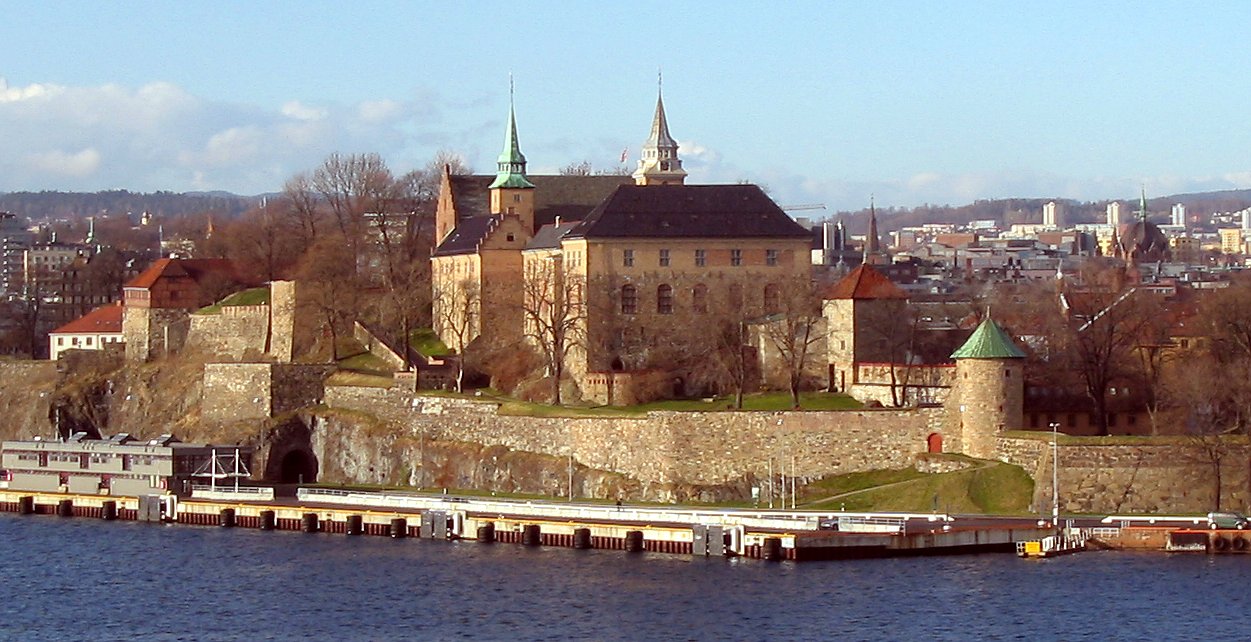
Akershus Fortress stands as a monumental medieval castle complex located on the Akersneset peninsula in Oslo, Norway. Constructed in the late 13th century, it was commissioned by King Håkon V Magnusson around the 1290s to serve as a royal residence and a strategic military stronghold protecting the capital city. The fortress's prime location near the Oslofjord made it a crucial defensive bastion, controlling access by sea and land to the heart of Norway's political power.The fortress has a remarkable history of resilience, having withstood numerous sieges by Swedish forces throughout the Middle Ages and early modern period, including notable attacks in 1308, 1449–1450, 1502, 1523, 1567, and the famous 1716 siege led by Charles XII. Despite these challenges, Akershus Fortress was never successfully captured in active combat, underscoring its formidable defensive design and strategic importance.Over the centuries, Akershus evolved architecturally and functionally. Originally a medieval hill castle featuring thick stone walls, towers, and a keep, it underwent significant transformation during the Renaissance period under the reign of King Christian IV in the early 17th century. Influenced by contemporary Italian military engineering, the fortress was remodeled with bastion fortifications, earthworks, and artillery batteries to adapt to the advent of gunpowder and cannon warfare. Notable engineers such as Hans van Pæschen and Hans van Steenwinkel contributed to these enhancements, which included the construction of bastions like Dronningens batteri (Queen’s Battery) and Kongens batteri (King’s Battery).Medieval origins and royal residenceThe core of Akershus Fortress is its medieval castle, built primarily of stone and brick. Key components include the Nordfløyen (North Wing) housing royal halls and chambers, the Vågehalstårnet keep tower, and the Knutstårnet defensive tower. The Sydfløyen (South Wing) contains the castle church and royal apartments, while the Romeriksfløyen served administrative and kitchen functions. The fortress also featured the Jomfrutårnet (Maiden Tower) gate tower with its original drawbridge and portcullis, emphasizing its role in access control and defense.Strategic military importanceThe fortress's proximity to the sea was vital for Norway's defense, as naval power dominated commerce and warfare. Whoever controlled Akershus controlled Oslo and, by extension, much of Norway. Its strategic importance was highlighted during the Operation Weserübung in 1940 when the fortress surrendered without combat to German forces during their invasion of Norway in World War II. Under German occupation, Akershus was used as a prison and execution site, where many resistance fighters and political prisoners were held and executed. The fortress was liberated on 11 May 1945 by the Norwegian resistance.Prison history and notable inmatesAkershus Fortress has a long history as a prison, dating back to medieval times. It earned a reputation as Norway's strictest correctional facility in the 19th century. Famous prisoners included the outlaw and folk hero Gjest Baardsen, the thief Ole Høiland, and early Norwegian socialists associated with Marcus Thrane. The prison section known as "The Slavery" allowed prisoners to be rented out for labor in the city. After the 1852 Laestadian Sámi revolt, many rebels were imprisoned here, with some dying in captivity. Among survivors was Lars Hætta, who translated the Bible into North Sámi during his imprisonment.Renaissance transformation and architectural featuresThe 16th and 17th centuries saw Akershus transformed into a Renaissance fortress with bastion fortifications designed to withstand artillery attacks. The addition of bastions such as Kronprinsens bastion (Crown Prince’s Bastion), Prins Carls Bastion, and the Hornverk (Hornwork) enhanced the defensive perimeter. The Skarpenort Bastion features a large powder tower used for storing gunpowder safely. Walls up to three meters thick and stone-faced casemates demonstrate the fortress's adaptation to evolving military technology.Outer fortifications and military buildingsThe outer area, known as Hovedtangen, includes additional bastions, earthworks, and military structures built mainly in the 18th and 19th centuries. These include stables for cavalry and artillery, barracks, arsenals, and specialized buildings like the Artilleribygningen (Artillery Building) and the Fengselskirke (Prison Church). The fortress gate, Festningsporten, completed in 1653, features a bridge and displays King Christian IV's monogram, reflecting its historical importance and architectural evolution.Royal mausoleum and cultural significanceThe castle church in the South Wing houses the royal mausoleum, where several prominent Norwegian monarchs are interred. These include King Sigurd I, King Haakon V, Queen Eufemia, King Haakon VII, Queen Maud, King Olav V, and Crown Princess Märtha. The mausoleum links the fortress intimately with Norway's royal heritage, symbolizing its role as a seat of power and national identity.Today, Akershus Fortress remains an active military site while also serving as a cultural landmark open to the public. It hosts the Norwegian Armed Forces Museum, the Resistance Museum, and various official government events. The fortress grounds, including Kontraskjæret park and Festningsplassen parade ground, continue to be venues for ceremonies and public gatherings.Restoration and preservation effortsFrom the late 19th century through the 20th century, Akershus underwent extensive restoration led by prominent architects such as Wilhelm von Hanno, Heinrich Ernst Schirmer, Peter Andreas Blix, Holger Sinding-Larsen, Arnstein Arneberg, and Johan Adolf Gerhard Fischer. These efforts preserved the fortress's medieval and Renaissance features while adapting it for contemporary use. Archaeological research has guided the reconstruction of walls, towers, and interiors, ensuring historical accuracy and structural stability.Despite its age, Akershus Fortress stands as a testament to Norway's medieval and modern history, military architecture, and royal legacy. Its combination of medieval stonework, Renaissance bastions, and cultural institutions make it a unique and invaluable heritage site in the heart of Oslo.

High Medieval (11th–13th c.)
Details