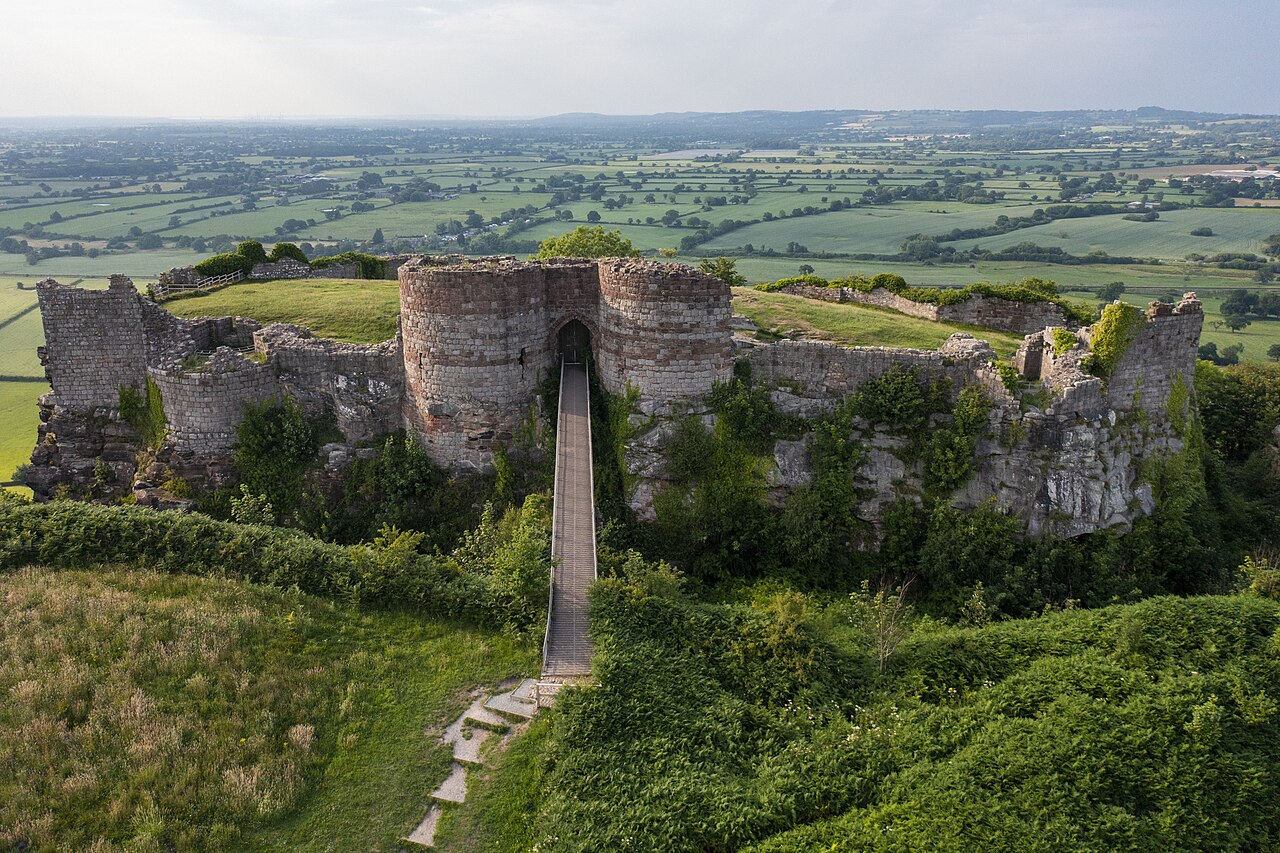
Cholmondeley Castle
Cholmondeley Castle stands as a remarkable example of a 19th-century country house designed in the style of a battlemented castle. Located in Cholmondeley, Cheshire, England, this grand residence has been the ancestral seat of the Cholmondeley family since the 12th century. The current structure was built to replace a nearby timber-framed hall and reflects the tastes and aspirations of the Georgian and Regency periods in British architecture.
The house was commissioned by George Cholmondeley, 1st Marquess of Cholmondeley, who took a personal interest in its design. Constructed at the start of the 19th century, the building was conceived as a battlemented castle with castellated features, embodying the romantic revival of medieval architectural forms that was popular among the British aristocracy during this era.
The historical legacy of the Cholmondeley estate
The Cholmondeley family has deep roots in English history, with their estate at Cholmondeley documented from the 12th century. The family's long tenure on the site reflects the continuity of landed aristocratic power in Cheshire and the broader northwest of England. The original manor, a timber-framed hall, was typical of medieval English country houses but was replaced as tastes and architectural technology evolved.
The decision to build a new house in the form of a castle was influenced by the Gothic Revival and the romantic interest in medieval chivalry and architecture that swept Britain in the late 18th and early 19th centuries. This trend saw many aristocratic families constructing or remodeling their homes to resemble castles, emphasizing their noble heritage and social status.
Architectural features and design
Battlemented castle style
Cholmondeley Castle is not a medieval fortress but a country house designed to evoke the appearance of a castle. Its battlemented parapets, towers, and turrets create a picturesque silhouette typical of the romanticized castle style popular in the early 19th century.
The building's layout and detailing reflect a careful blend of practicality and aesthetic appeal. The castellated walls and arrow slit windows are decorative rather than defensive. The house incorporates spacious living quarters, reception rooms, and service areas suited to the lifestyle of a wealthy noble family.
Construction materials and craftsmanship
The castle is constructed primarily of local sandstone, a durable and attractive material common in Cheshire architecture. The craftsmanship demonstrates the high quality of early 19th-century masonry and joinery, with detailed stonework on the battlements and window surrounds.
Inside, the house features period-appropriate interiors with ornate plasterwork, wood paneling, and fireplaces that reflect both the historicist style and the comfort expected in a noble residence of the time.
The castle in its landscape and estate
Cholmondeley Castle is set within an extensive estate that includes formal gardens, parkland, and woodlands. The landscaping complements the architecture, with carefully designed vistas that showcase the castle's battlemented silhouette against the natural surroundings.
The estate has been managed and developed over centuries, with successive generations of the Cholmondeley family maintaining the grounds and adapting them to changing tastes and uses. The castle remains a private residence but is a significant cultural landmark in Cheshire.
Cholmondeley Castle today
Today, Cholmondeley Castle is recognized for its architectural and historical significance as a 19th-century country house built in the form of a battlemented castle. It embodies the romantic ideals of the period and the enduring legacy of the Cholmondeley family in English history.
While it is a private residence, the castle and its estate occasionally open to the public for special events and tours, allowing visitors to appreciate its unique blend of historicism, architecture, and landscape design. The castle's preservation reflects ongoing efforts to maintain Britain's aristocratic heritage and architectural traditions.
Frequently asked questions (FAQ)
- What is the historical significance of Cholmondeley Castle?
- Cholmondeley Castle has been the seat of the Cholmondeley family since the 12th century, symbolizing centuries of aristocratic heritage and architectural evolution in Cheshire.
- Can visitors tour Cholmondeley Castle?
- While Cholmondeley Castle is primarily a private residence, it occasionally opens for public tours and special events, offering a chance to explore its historic interiors and gardens.
- What architectural style characterizes Cholmondeley Castle?
- The castle is designed in a battlemented, romantic revival style typical of the early 19th century, featuring castellated walls, towers, and decorative arrow slit windows.
- Where is Cholmondeley Castle located?
- Cholmondeley Castle is located in the village of Cholmondeley in Cheshire, England, set within extensive parkland and gardens.
- When was Cholmondeley Castle built?
- The current structure was built in the early 19th century, replacing an earlier timber-framed hall on the estate.
Information
Sources & official resources
Verify the information above using these authoritative references.
Loading map...
Visitor reviews
No reviews yet. Been here? Write the first review and help other travelers!
Write the first reviewVisited this castle? Share your experience
Your review helps other travelers and adds first-hand knowledge to our encyclopedia.