Chitradurga Fort
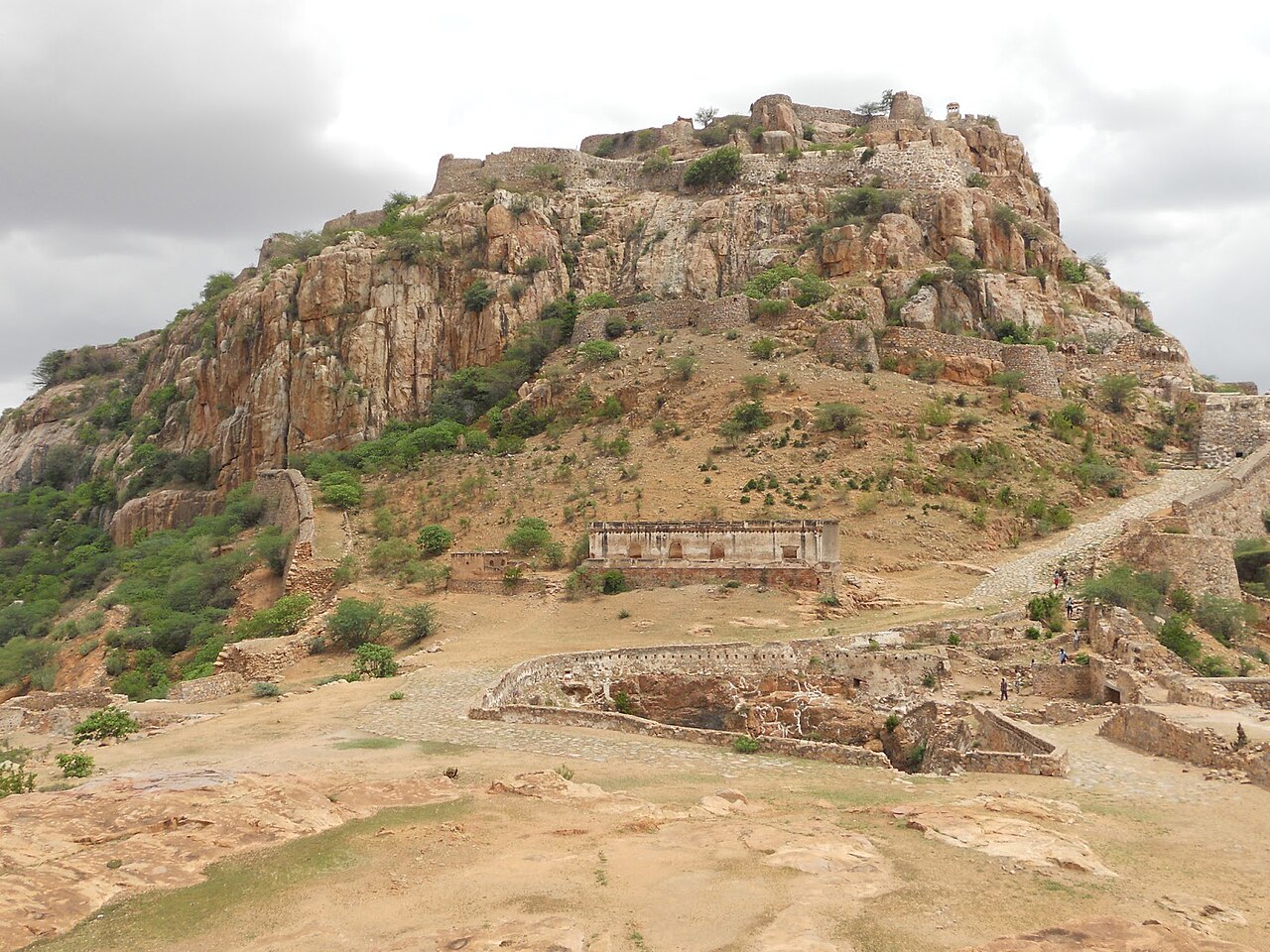
Chitradurga Fort, located in the Chitradurga District of Karnataka, India, is a remarkable example of a bastioned fortress that spans several hills and a peak overlooking a flat valley. Known locally as Chitrakaldurga, meaning 'picturesque fort' in Kannada, it has lent its name to the surrounding town and district. The fort's strategic hilltop position and extensive fortifications reflect its historical significance as a military stronghold in southern India.
The construction of Chitradurga Fort began in the 12th century, with the earliest phases attributed to the Chalukyas and Hoysalas, two prominent dynasties in the region during the high medieval period. These initial structures laid the foundation for what would become a sprawling defensive complex. The fort underwent significant expansion and reinforcement during the rule of the Nayakas of Chitradurga, also known as the Palegar Nayakas, who governed the area under the suzerainty of the Vijayanagar Empire. Their contributions between the 15th and 18th centuries transformed the fort into a formidable bastioned fortress with multiple layers of defense.
Architectural design and fortifications
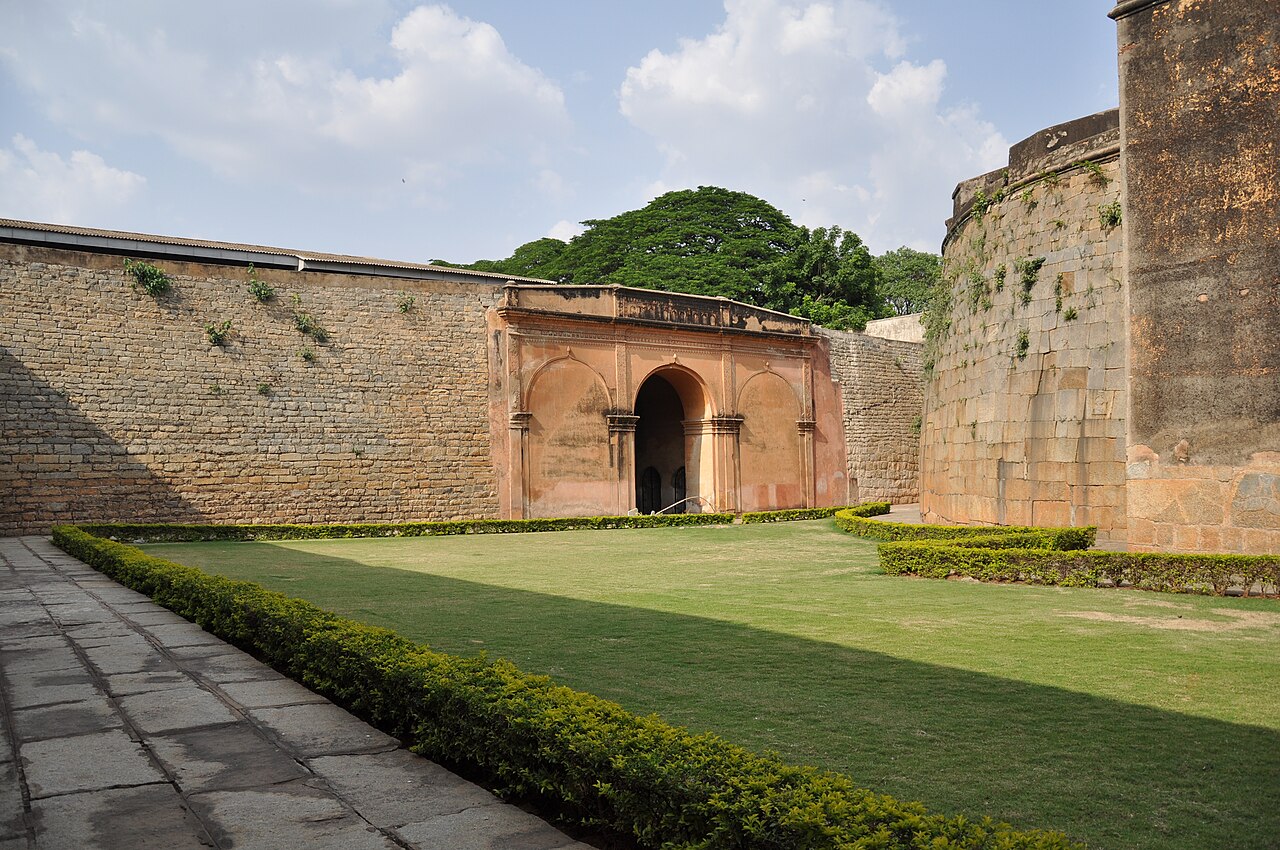
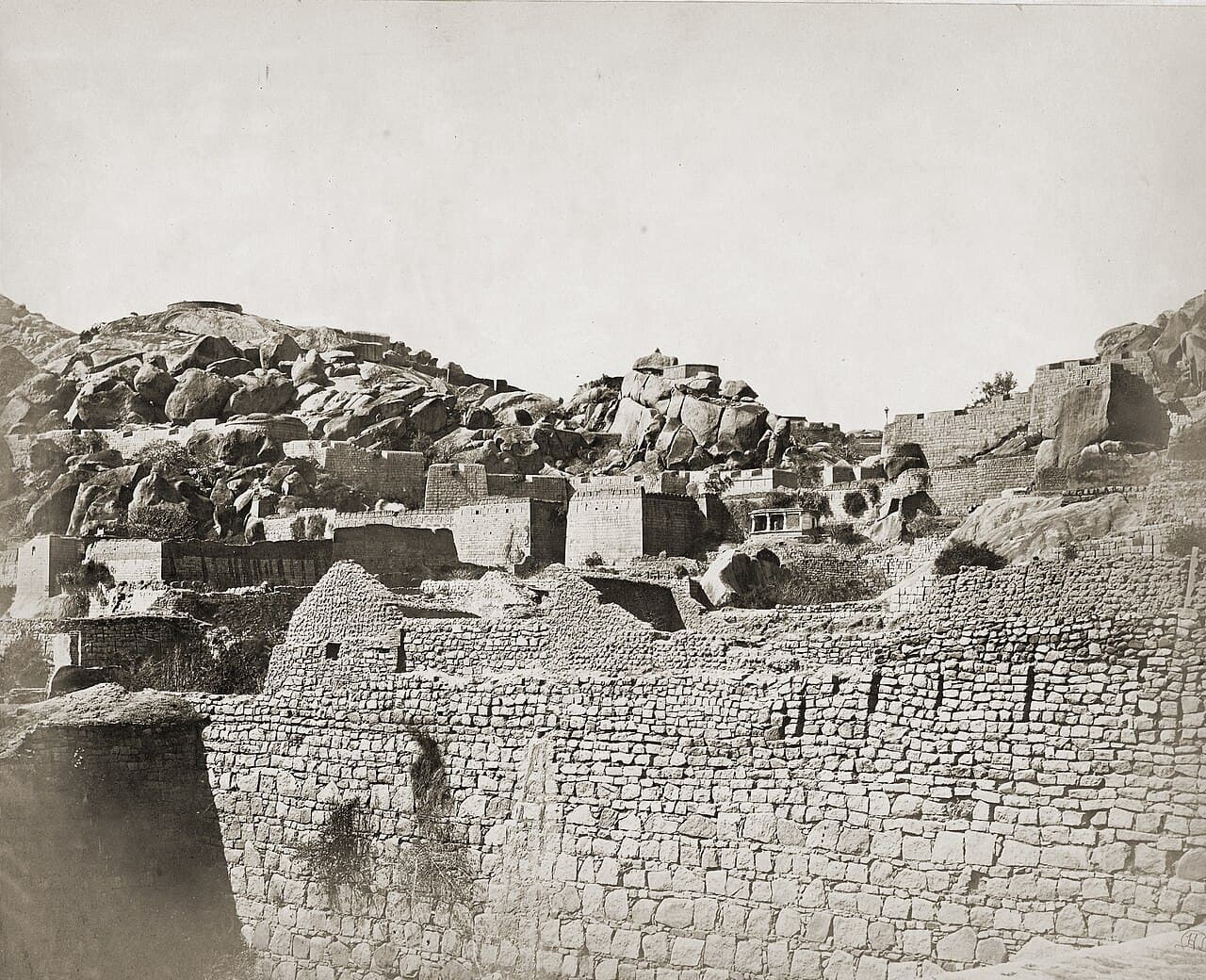
The fort is renowned for its impressive system of seven concentric fortification walls that snake across the rocky hills, creating a complex maze of defenses. These walls are punctuated by numerous bastions and gateways, designed to repel invaders and provide vantage points for defenders. The fort's layout takes full advantage of the natural terrain, using steep cliffs and rocky outcrops to enhance its defensive capabilities.
Within the fortifications, the citadel served as the last line of defense and the administrative center. The fort also contains a variety of functional structures including warehouses for grains and oil, essential for sustaining prolonged sieges. The presence of water reservoirs and a network of interconnecting tanks was a critical feature, ensuring that the fort never suffered from water shortages despite its hilltop location. These reservoirs collected and stored rainwater, demonstrating advanced water management techniques.
Religious and cultural structures
Chitradurga Fort houses numerous temples, reflecting the religious practices of its inhabitants. There are 18 temples in the upper fort and a significant temple in the lower fort area. Among these, the Hidimbeshwara temple stands out as the oldest and architecturally notable structure, dedicated to the deity Hidimba from Indian epic traditions. The temples feature typical South Indian architectural elements, including intricately carved pillars and sanctums.
During the rule of Hyder Ali in the late 18th century, a masjid was added to the fort complex, indicating the changing political and cultural influences. This mosque reflects the Islamic architectural style introduced during Hyder Ali's brief control of the fort in 1779.
Historical significance and military role
The fort's history is closely tied to the regional power struggles of southern India. Originally built and expanded by the Chalukyas, Hoysalas, and later the Nayakas of Chitradurga, it played a vital role in controlling trade routes and defending the region. The Nayakas were known for their military prowess and administrative skills, which are evident in the fort's complex defensive design.
In 1779, the fort fell briefly under the control of Hyder Ali, the ruler of Mysore, who recognized its strategic importance. His son, Tipu Sultan, later lost the fort to British forces about twenty years later during the Anglo-Mysore Wars. This marked the end of the fort's military significance as British colonial dominance expanded in the region.
Water management and sustainability
One of the most remarkable features of Chitradurga Fort is its sophisticated water harvesting system. The fort's designers created a network of interconnecting tanks and reservoirs that collected rainwater efficiently. This system ensured a continuous water supply even during extended sieges, which was a crucial factor in the fort's defensive success. The water management techniques reflect advanced engineering knowledge and adaptation to the local environment.
Engineering features
The reservoirs were strategically placed to capture runoff from the hills, channeling water through stone conduits into storage tanks within the fort. This not only supported the garrison but also irrigated the surrounding agricultural lands, sustaining the local population.
Current condition and heritage status
Today, Chitradurga Fort remains well preserved and is a major tourist attraction in Karnataka. Its extensive walls, bastions, temples, and waterworks offer insight into medieval military architecture and regional history. The fort is managed by local authorities and is accessible to visitors who can explore its various sections and appreciate its historical and architectural significance.
The fort's blend of natural landscape and human engineering continues to draw interest from historians, archaeologists, and tourists alike. It stands as a testament to the ingenuity and resilience of the rulers who built and defended it over several centuries.
Frequently asked questions (FAQ)
- When was Chitradurga Fort built and by whom?
- Chitradurga Fort was originally built in the 12th century by the Chalukyas and Hoysalas, with significant expansions by the Nayakas of Chitradurga between the 15th and 18th centuries.
- What architectural features make Chitradurga Fort unique?
- The fort is distinguished by its seven concentric bastioned walls, numerous temples, water reservoirs, and a citadel, all integrated into the natural rocky hills.
- Can visitors access all parts of the fort?
- Most parts of Chitradurga Fort are accessible to visitors, including the temples, water tanks, and fort walls, though some areas may be restricted for safety reasons.
- How did the fort manage water supply during sieges?
- The fort employed an advanced rainwater harvesting system with interconnected tanks and reservoirs that ensured a continuous water supply even during prolonged sieges.
- What is the best time to visit Chitradurga Fort?
- The best time to visit is during the cooler months from October to March when the weather is pleasant for exploring the extensive fort complex.
Photo gallery

Photo by Dixon, Henry•Public domain
Information
Current owner
Municipality
Loading map...
Visitor reviews
No reviews yet. Been here? Write the first review and help other travelers!
Write the first reviewVisited this castle? Share your experience
Your review helps other travelers and adds first-hand knowledge to our encyclopedia.