Bengaluru Fort
Bengaluru Fort is a significant historical bastioned fortress located in the city of Bengaluru, India. Originally constructed as a mud fort in 1537 by Kempe Gowda I, a chieftain under the Vijayanagara Empire and the founder of Bengaluru, the fort played a pivotal role in the region's military and political history. Kempe Gowda's establishment of the fort marked the foundation of the city itself, as it served both as a military stronghold and a center of administration.
Early construction and strategic importance
The original structure of Bengaluru Fort was a simple mud fortification, typical of many Indian forts of the period, designed primarily for defense against local rivalries and invasions. Its location was strategically chosen to oversee the surrounding plains and trade routes, helping to secure the growing settlement of Bengaluru. The fort's basic design included defensive walls, gates, and watchtowers, which laid the groundwork for later expansions.
Transformation under Hyder Ali and Tipu Sultan
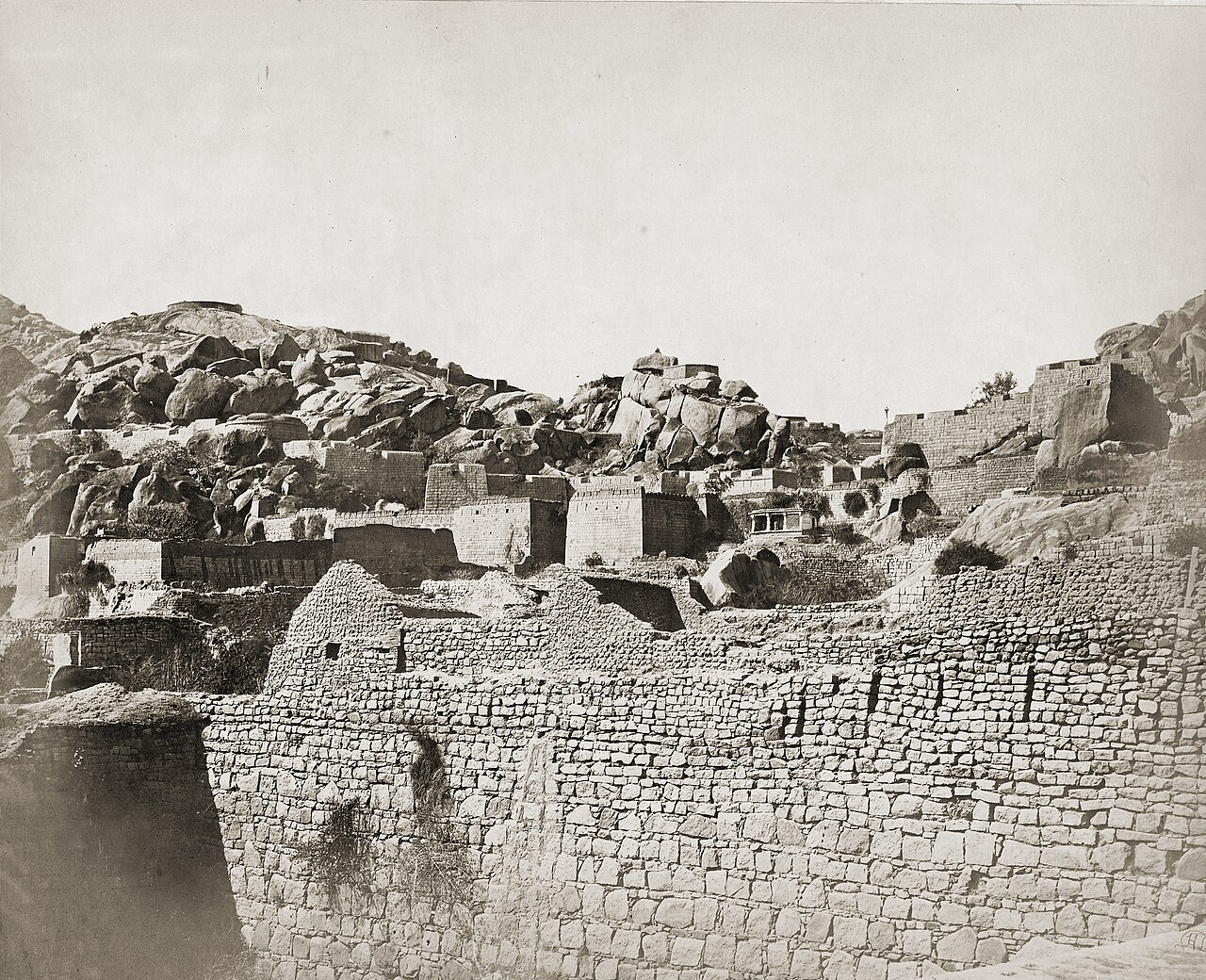
In the mid-18th century, the fort underwent a significant transformation under the rule of Hyder Ali, the Sultan of Mysore. Around 1761, Hyder Ali replaced the original mud walls with robust stone fortifications, enhancing its defensive capabilities to withstand artillery assaults and prolonged sieges. This upgrade reflected the increasing military threats from the British East India Company and other regional powers.
Hyder Ali's son, Tipu Sultan, continued to improve and expand the fort in the late 18th century, adding bastions, ramparts, and other military features that exemplify 18th-century bastioned fortress architecture. Tipu Sultan's enhancements included the construction of fortified gates and the integration of artillery positions, making Bengaluru Fort a formidable stronghold during the turbulent Anglo-Mysore Wars.
Architectural features and military design
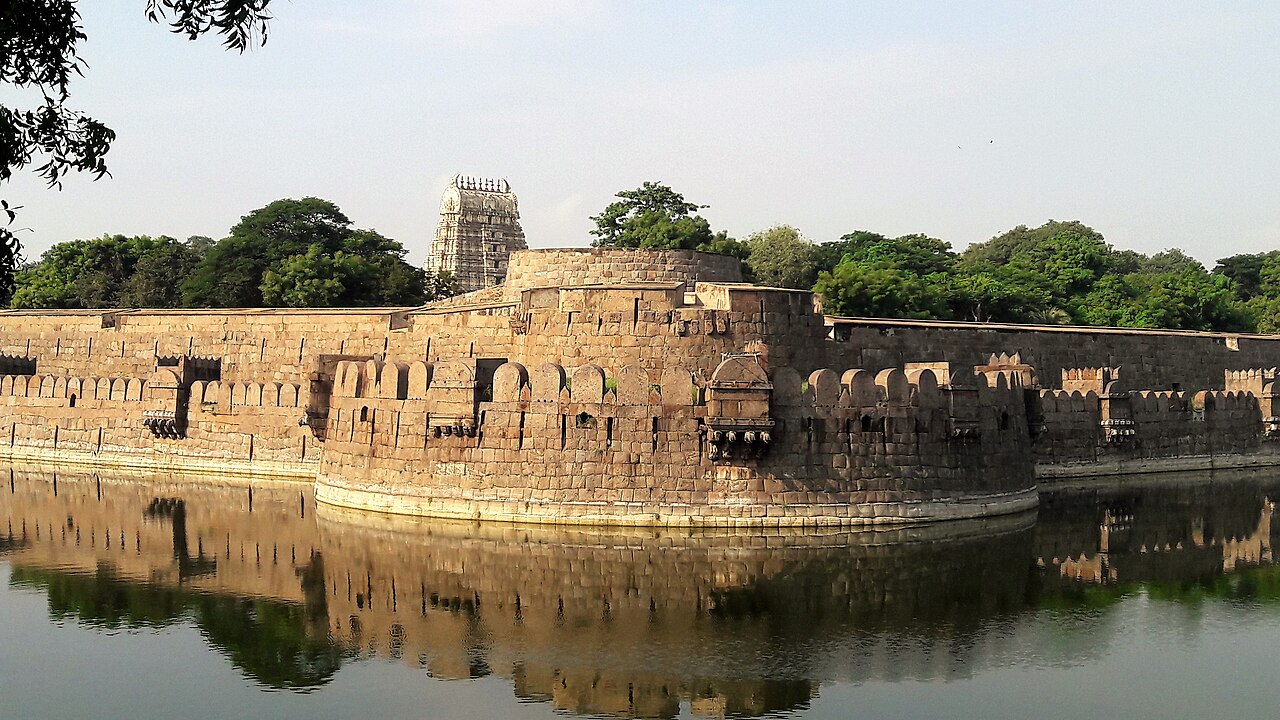
The fort's design during this period incorporated elements typical of bastioned fortresses, including angled bastions for enfilading fire, thick stone walls to resist cannon fire, and multiple defensive gates. The fort was surrounded by a moat and featured several watchtowers and guard posts. These features made it a key military asset in the defense of Mysore against British advances.
The siege of 1791 and British capture
During the Third Anglo-Mysore War (1790–1792), Bengaluru Fort was a strategic target for the British East India Company. On 21 March 1791, the British army under Lord Cornwallis launched a successful siege against the fort, breaching its walls and capturing it from Tipu Sultan's forces. This victory was a turning point in the war, weakening Tipu Sultan's hold over the region.
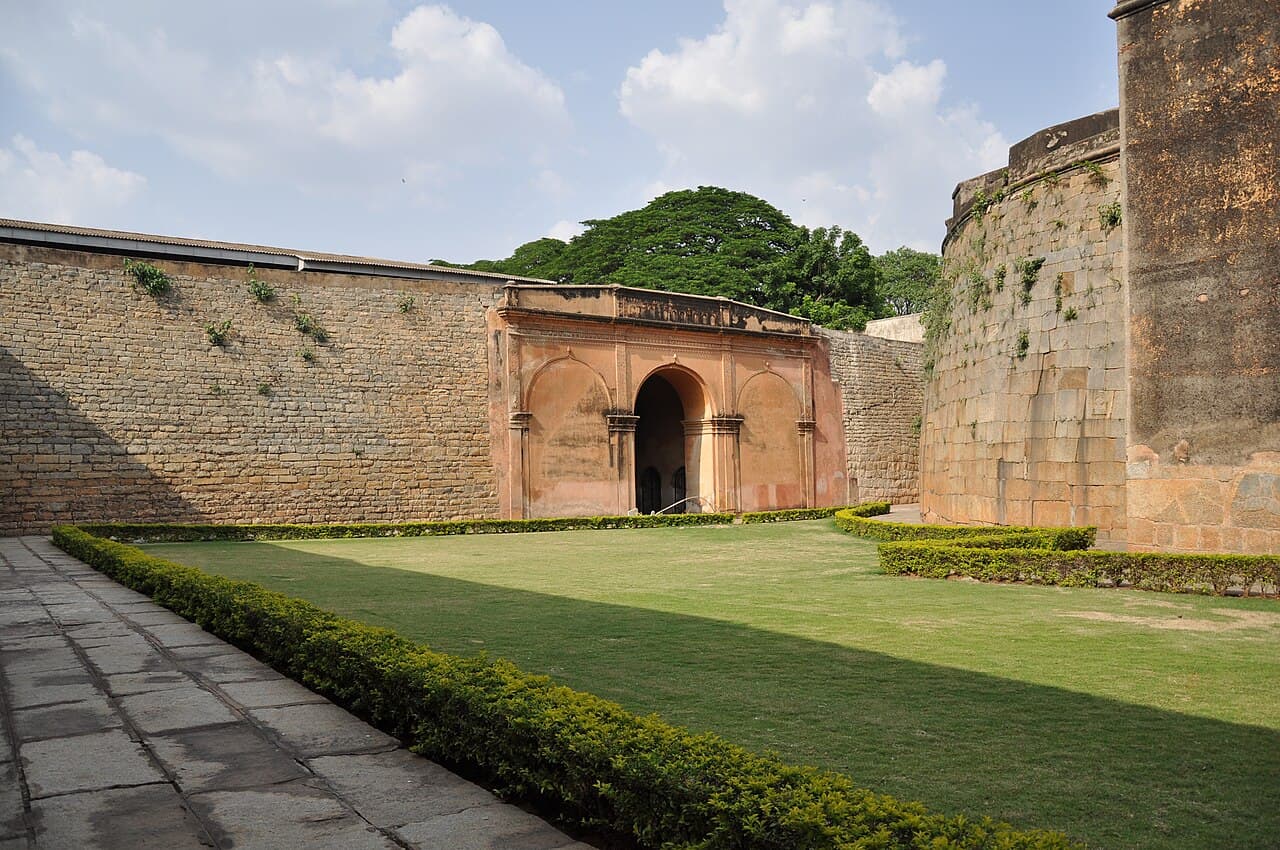
The fort sustained damage during the siege, but key structures such as the Delhi Gate on Krishnarajendra Road and two bastions remain today as prominent remnants. A marble plaque marks the exact location where the British forces breached the fort's defenses.
Legacy and present condition
Today, Bengaluru Fort stands as a partially preserved monument reflecting the military architecture and historical conflicts of 16th to 18th century South India. The site also includes Tipu Sultan's Summer Palace and his armoury, which are important cultural landmarks associated with the fort's history.
The fort area has cultural significance beyond its military past, having been featured in literary works such as the treasure hunt in the book Riddle of the Seventh Stone. Despite urban development around it, the fort's remaining bastions and gates continue to attract historians, tourists, and architecture enthusiasts interested in India's rich heritage of fortifications.
Architectural and cultural significance
Bengaluru Fort exemplifies the evolution of military architecture in South India, transitioning from simple mud fortifications to complex stone bastioned forts capable of withstanding modern artillery. Its association with prominent historical figures like Kempe Gowda I, Hyder Ali, and Tipu Sultan highlights its importance in regional power struggles and the broader history of resistance against colonial forces.
The fort's surviving structures provide valuable insights into the design principles of bastioned fortresses, including defensive geometry, strategic placement of bastions, and integration with the urban fabric of Bengaluru. Preservation efforts focus on maintaining these features while accommodating the city's growth.
Frequently asked questions (FAQ)
- What is the historical significance of Bengaluru Fort?
- Bengaluru Fort was originally built in 1537 by Kempe Gowda I and later fortified by Hyder Ali and Tipu Sultan, making it a key military stronghold in South Indian history.
- Can visitors see the original structures of Bengaluru Fort?
- Yes, visitors can see the Delhi Gate, two bastions, and other remnants that showcase the fort's 18th-century military architecture.
- When was Bengaluru Fort captured by the British?
- The British East India Company captured Bengaluru Fort on 21 March 1791 during the Third Anglo-Mysore War.
- Is Bengaluru Fort accessible to tourists?
- The fort area is accessible to the public, and it includes nearby historical sites like Tipu Sultan's Summer Palace, making it a popular destination for history enthusiasts.
Photo gallery

Information
Loading map...
Visitor reviews
No reviews yet. Been here? Write the first review and help other travelers!
Write the first reviewVisited this castle? Share your experience
Your review helps other travelers and adds first-hand knowledge to our encyclopedia.