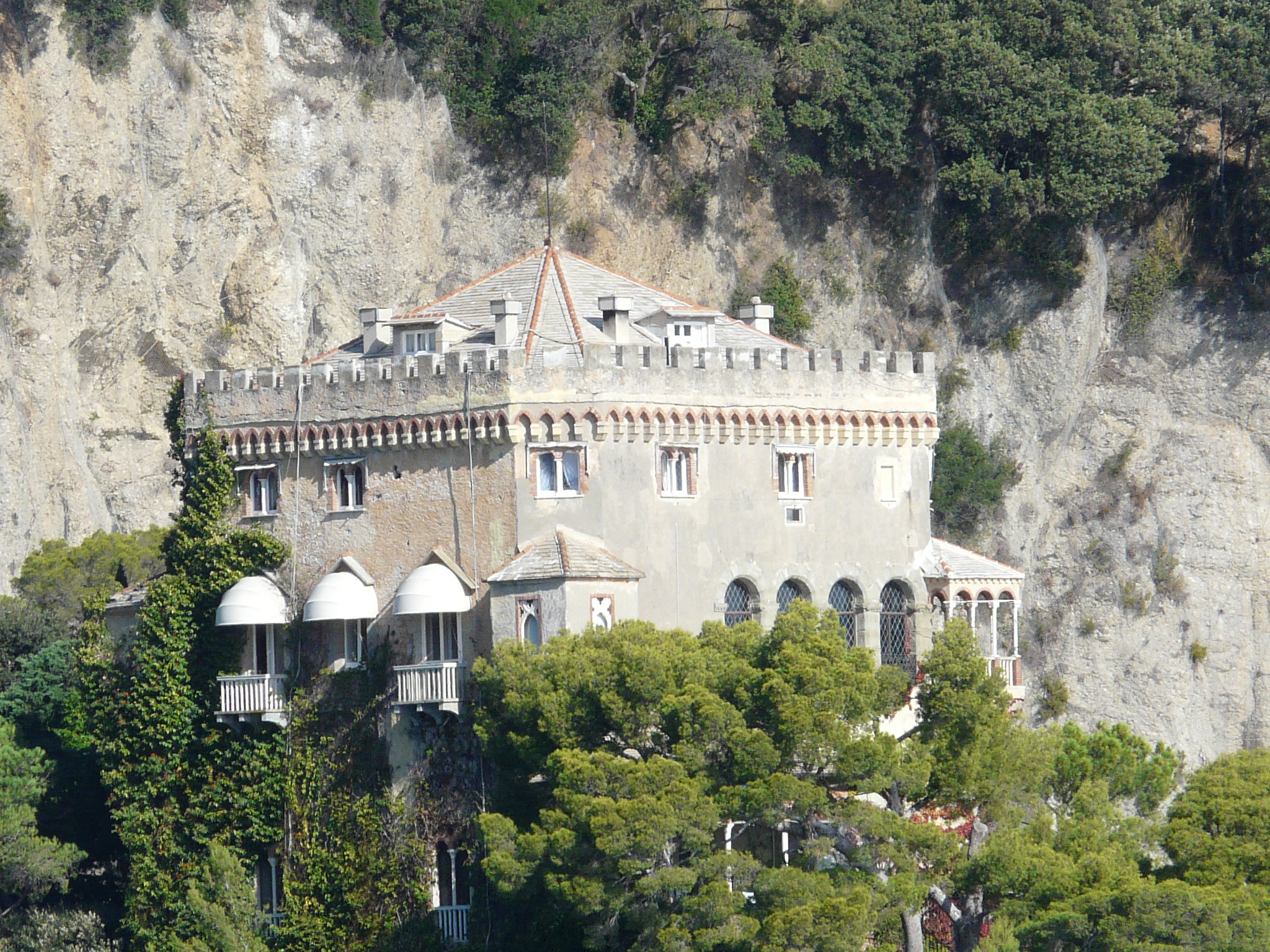
Chiavari Castle
Chiavari Castle is a significant medieval fortress located on a commanding hilltop overlooking the town of Chiavari, in the Ligurian region of Italy. Constructed in the 12th century, it was among the earliest castles built along the Italian Riviera, serving as a vital defensive stronghold for the seafaring village originally called Clavai. The castle's strategic position allowed it to oversee and protect both land and sea approaches, securing the surrounding valley and coastline from external threats during a turbulent period marked by frequent warfare.
The castle's construction began shortly after the 1138 perpetual league treaty between the Republic of Genoa and the powerful Fieschi family, with work commencing around 1140 and likely completing by 1147. This early phase established Chiavari Castle as a key military installation designed to assert control over the region and safeguard local maritime trade routes.
Early history and military significance
Chiavari Castle's history is deeply intertwined with the political and military conflicts of medieval Liguria. Its earliest recorded siege occurred in 1172 when it was attacked by Opizzone Malaspina, a notable nobleman of the period. Later, in 1278, the castle was briefly captured by Moruello Malaspina and Alberto Fieschi, who held it for only eight days before losing control, illustrating the volatile power struggles among local aristocratic families.
The castle and the village of Chiavari became a focal point during the ongoing conflicts between the Guelfs and Ghibellines in the early 14th century. This rivalry led to several reconstructions of the castle to repair and strengthen its defenses after repeated battles. During this period, the village itself was fortified with a substantial wall featuring seven gates and fourteen towers, enhancing the overall defensive network protecting the community.
Architectural features and fortifications
Chiavari Castle exemplifies high medieval military architecture typical of Ligurian hill castles. The fortress was built using local stone and traditional medieval construction techniques, emphasizing robust defensive capabilities rather than ornamental design. The castle's layout was strategically planned to maximize visibility and control over the surrounding territory.
The most prominent surviving feature is the torrione, a large hilltop tower that functioned as both a lookout and a last line of defense. This tower dominates the site and provides expansive views of the Gulf of Tigullio and the surrounding landscape.
Adjacent to the tower lies the fortified parade ground or piazza d’armi, which historically served as a staging area for troops and military operations. The surrounding village walls, although now largely in ruins, once formed a formidable barrier with their multiple gates and watchtowers, underscoring the importance of the settlement's defense.
Two ancient water cisterns remain in front of the main tower, highlighting the castle's preparedness for siege conditions by ensuring a reliable water supply for its defenders.
Later history and decline
By the early 15th century, the military importance of Chiavari Castle diminished as defensive strategies shifted. In 1404, the Republic of Genoa initiated a new fortification project focused on strengthening the nearby seaside citadel to protect against Barbary corsair raids. This project, led by Marshal Jean Le Meingre (known as Boucicault) and architect Martino della Torre, marked a strategic transition away from the hilltop castle.
From 1575 onward, the castle was gradually abandoned and partially dismantled, leading to its current state of ruin. Over the centuries, much of the original structure was lost, with only the hilltop tower, parade ground, fragments of the medieval walls, and the water cisterns surviving.
In the late 20th and early 21st centuries, efforts have been made to monitor and preserve the site. Between 2007 and 2008, engineers from the University of Genoa conducted structural stability assessments, detecting slow ground movements likely caused by nearby excavation activities. The castle remains under private ownership since 1993 and continues to be a subject of conservation interest.
Cultural and historical significance
Chiavari Castle is an important cultural landmark that offers valuable insights into medieval fortification techniques and the complex history of Liguria during the high medieval period. Its ruins stand as a testament to the region's strategic maritime and terrestrial defense systems and the turbulent political landscape shaped by noble families and factional conflicts.
Visitors to the site can explore the remains of the tower, walls, and cisterns, experiencing firsthand the scale and design of a medieval hill castle that once played a crucial role in protecting a vital coastal community. The castle's location also provides panoramic views of the Gulf of Tigullio, enhancing its appeal as both a historical monument and a scenic viewpoint.
Frequently asked questions (FAQ)
- How do I visit Chiavari Castle?
- Chiavari Castle is privately owned and not regularly open to the public, but visitors can view the ruins from nearby public areas and enjoy panoramic views of the Gulf of Tigullio.
- What is the historical significance of Chiavari Castle?
- Chiavari Castle was a key defensive fortress in the Italian Riviera during the 12th to 14th centuries, playing a central role in local power struggles and protecting the seafaring village of Clavai, now Chiavari.
- When was Chiavari Castle built?
- Construction of Chiavari Castle began around 1140 following the 1138 perpetual league treaty between Genoa and the Fieschi family, and it was likely completed by 1147.
- What architectural features remain at Chiavari Castle?
- The most prominent remains include the hilltop torrione (tower), a fortified parade ground, fragments of medieval walls, and two water cisterns essential for siege defense.
- Is Chiavari Castle accessible for photography and sightseeing?
- While access inside the castle is limited due to private ownership, the site can be photographed and appreciated from surrounding public vantage points offering excellent views.
Information
Website
Visit websiteSources & official resources
Verify the information above using these authoritative references.
Loading map...
Visitor reviews
No reviews yet. Been here? Write the first review and help other travelers!
Write the first reviewVisited this castle? Share your experience
Your review helps other travelers and adds first-hand knowledge to our encyclopedia.