Chester city walls
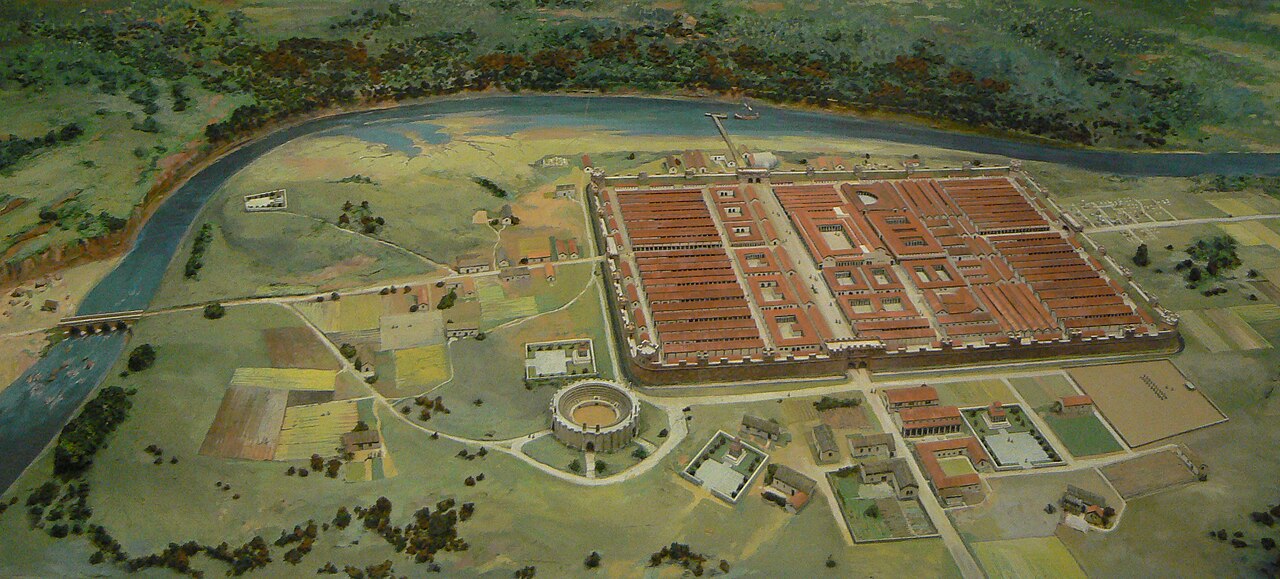
Chester city walls represent one of the most complete and well-preserved examples of Roman and medieval defensive architecture in England. These historic fortifications were originally constructed by the Romans between 70 and 80 CE as part of the fortress of Deva Victrix, marking the strategic importance of Chester within Roman Britain. The initial defenses consisted of a rampart of earth and turf topped by a wooden palisade, which was typical of early Roman military engineering. Around 100 CE, these earthworks were replaced by robust sandstone walls, a process that took over a century to complete, reflecting the fortress's growing permanence and significance.
Roman origins and construction
The Roman walls of Chester are among the few surviving Roman military walls in Britain that retain substantial sections of their original fabric. The use of sandstone blocks and the scale of the walls illustrate the fortress's role as a major military base. The walls enclosed the legionary fortress, providing protection for the garrison and the civilian settlement that developed alongside it. The walls included gates and towers typical of Roman fortifications, designed to control access and provide vantage points for defense.
Medieval modifications and expansion
Following the end of Roman rule, the condition of the walls during the early medieval period is not well documented. However, in 907 CE, Æthelflæd, Lady of the Mercians, refounded Chester as a fortified burgh, initiating improvements to the existing defenses. Although the exact nature of these enhancements is unclear, they likely involved repairs and strengthening of the walls to protect against Viking incursions.
After the Norman Conquest in 1066, Chester's walls were extended westward and southward to enclose the growing medieval city fully. By the mid-12th century, the circuit was probably complete, forming a continuous defensive barrier around the settlement. The medieval walls incorporated bastions, gatehouses, and walkways for patrols, reflecting evolving military architecture and the city's importance as a regional center.
Later history and preservation
Throughout the centuries, maintenance of the walls was a constant concern. Prior to the English Civil War in the 17th century, the walls were further fortified to meet contemporary military needs. The walls saw action during the conflict and sustained damage, after which their defensive role diminished. Subsequently, the walls transitioned from military use to a recreational and cultural asset.
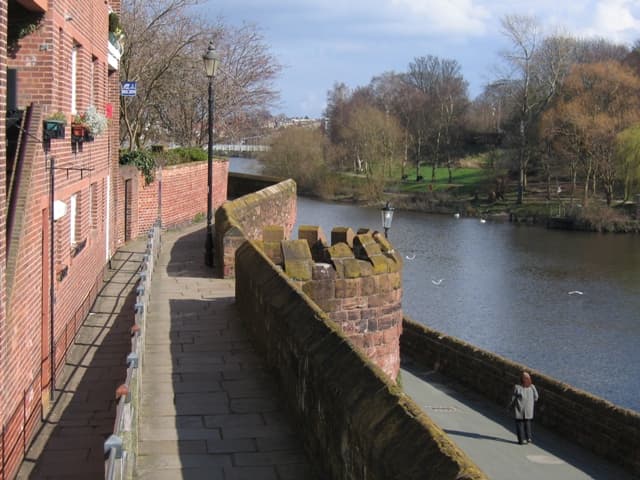
Today, the Chester city walls form an almost complete circuit of the old city, stretching approximately 2.95 kilometres (1.8 miles). They are a major tourist attraction, offering visitors a unique walkway along the battlements with views of the historic cityscape. The walls' preservation presents ongoing challenges, requiring careful conservation to maintain their structural integrity and historical character.
Architectural features and significance
The walls showcase a variety of architectural features from different periods. The Roman sections include large sandstone blocks laid in regular courses, with remnants of original gates and corner towers. The medieval additions introduced bastions and gatehouses with defensive mechanisms such as murder holes and arrow slits. The walls also incorporate walkways that allowed defenders to patrol and respond quickly to threats.
Chester city walls are an important cultural heritage site, illustrating the evolution of military architecture from the Roman period through the Middle Ages. Their preservation enables the study of construction techniques and urban defense strategies across centuries.
Visiting the walls today
Visitors to Chester can enjoy a nearly complete circuit of the city walls, which provide a unique perspective on the city's history and architecture. The walkway is accessible in many parts, though some sections require careful footing due to age and preservation efforts. Interpretive signage along the route explains the historical context and architectural details.
The walls are integrated into the fabric of modern Chester, with access points near key landmarks such as Eastgate, Northgate, and Watergate. They remain a focal point for cultural events and educational programs, linking the city's past to its present.
Frequently asked questions (FAQ)
- How do I access the Chester city walls for a walk?
- The Chester city walls can be accessed at multiple points around the city, including near Eastgate, Northgate, and Watergate. The walkway is open to the public and offers a continuous circuit around the historic city center.
- What is the historical significance of Chester city walls?
- Chester city walls are significant as one of the best-preserved Roman and medieval defensive structures in Britain, illustrating military architecture from the 1st century through the Middle Ages.
- When were the Chester city walls originally built?
- The original construction of Chester city walls began between 70 and 80 CE by the Romans as part of the fortress of Deva Victrix.
- Can I see Roman architectural features on the walls?
- Yes, visitors can observe Roman construction techniques such as large sandstone blocks and remnants of original gates and towers along the walls.
- Are the walls fully intact today?
- The walls form an almost complete circuit around Chester, with a total length of approximately 2.95 kilometres, making them one of the most complete city walls in the UK.
Photo gallery

Information
Loading map...
Visitor reviews
No reviews yet. Been here? Write the first review and help other travelers!
Write the first reviewVisited this castle? Share your experience
Your review helps other travelers and adds first-hand knowledge to our encyclopedia.