Chester Castle
Chester Castle stands as a remarkable testament to nearly a millennium of English history, architecture, and military evolution. Located in the historic city of Chester, England, this hill castle was originally established in 1070 by Hugh d’Avranches, the first Earl of Chester, shortly after the Norman Conquest. Built atop what is believed to be an earlier Saxon fortification, the castle's strategic position on an elevated site overlooking the River Dee has ensured its long-standing military and administrative significance.
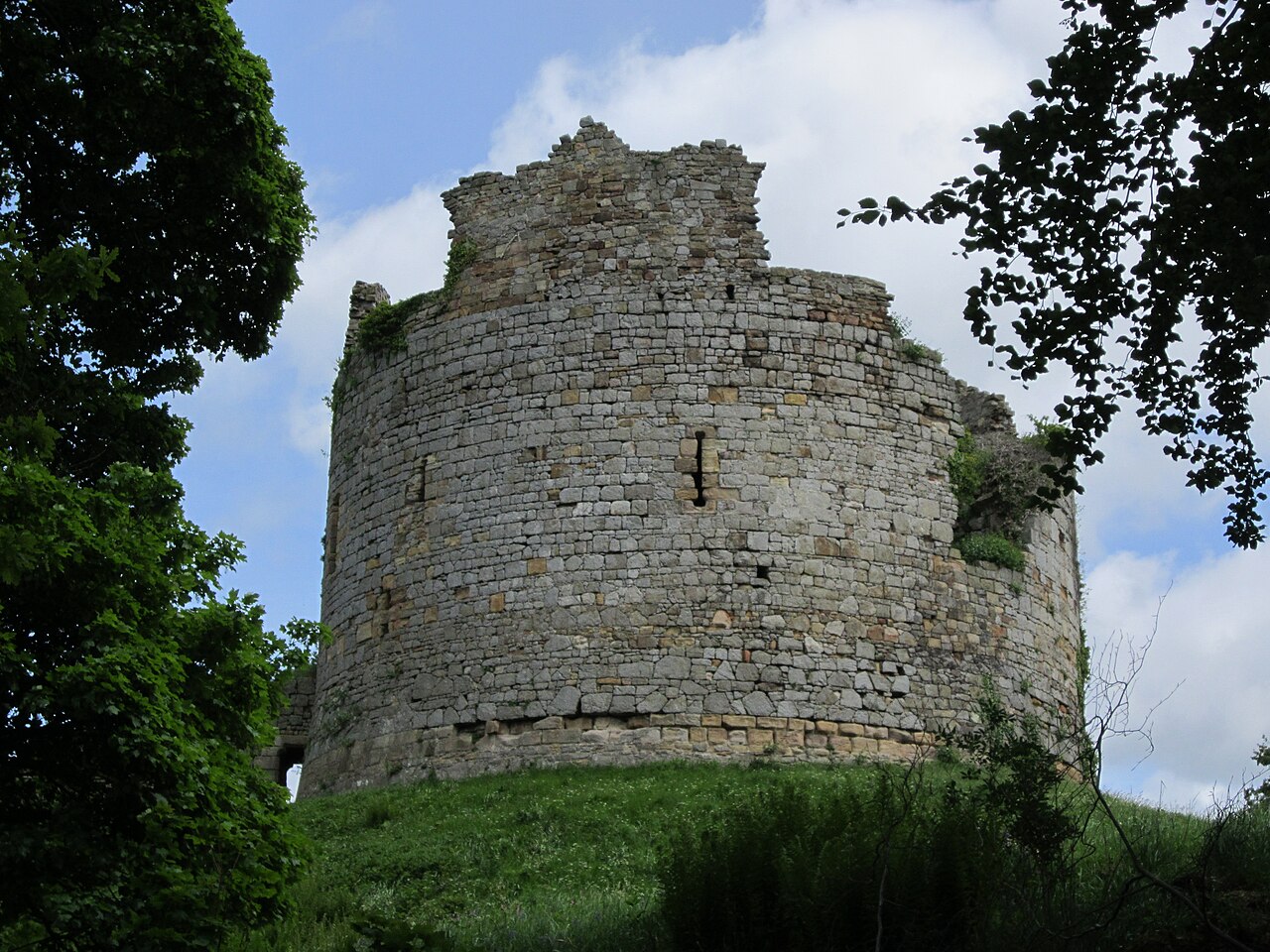
The castle's initial construction followed the typical motte-and-bailey design of the High Medieval period, featuring a raised earthwork topped by a wooden tower and an enclosed courtyard. This early wooden structure was replaced in the 12th century with robust stone fortifications, including the imposing Agricola Tower and the adjoining chapel dedicated to St Mary de Castro. The Agricola Tower, constructed from finely worked sandstone ashlar, is a three-storey building originally designed for both defense and residence. Its ground floor once housed a gateway, now blocked, and a stair turret is positioned to the tower's right side. The chapel on the first floor is a rare surviving example of Norman ecclesiastical architecture, notable for its early 13th-century frescoes depicting religious scenes such as the Visitation and miracles attributed to the Virgin Mary, uncovered during conservation efforts in the 1990s.
Medieval expansion and royal enhancements
During the 13th century, under the reign of King Henry III, Chester Castle underwent significant expansions that enhanced its defensive and residential capabilities. Outer curtain walls were added around the bailey, increasing the castle's fortifications. The original gateway within the Agricola Tower was sealed, and new residential buildings, including a Great Hall, were constructed along the southern side of the inner bailey to improve accommodations for the castle's occupants.
The military architecture evolved further under King Edward I, who introduced a formidable gateway fortified with two half-drum towers and a drawbridge spanning an eight-meter-deep moat. These additions reflected the castle's ongoing strategic importance during the late medieval period. Alongside these military upgrades, royal living quarters, an additional chapel, and stables were also built, underscoring the castle's dual role as a fortress and a royal residence.
Notable prisoners and historical events
The castle's crypt within the Agricola Tower served as a prison for several notable historical figures, including King Richard II, Eleanor Cobham, and Andrew de Moray. During the tumultuous Wars of the Roses, John Neville was held captive here by Lancastrian forces before being freed following a Yorkist victory. These episodes highlight Chester Castle's role not only as a military stronghold but also as a political prison.
Civil war siege and later civic functions
During the English Civil War, Chester Castle remained a Royalist bastion, enduring several attacks and a prolonged siege from 1643 to 1646. The castle's fortifications and strategic location allowed it to withstand these pressures, although the city around it suffered greatly. After the war, the castle transitioned to various civic and administrative roles, functioning as a prison, court, and tax office, reflecting the changing needs of the community.
In 1687, King James II attended mass in the castle's chapel, a testament to its religious significance even in post-medieval times. Additionally, in 1696, the city's mint was established beside the Half Moon Tower, overseen by the renowned astronomer Edmund Halley, adding a unique scientific and economic chapter to the castle's history.
Neoclassical transformation by thomas harrison
By the late 18th century, the condition of the castle's prison facilities had deteriorated significantly. The social reformer John Howard criticized the state of the jail, prompting the commissioning of the architect Thomas Harrison to design a modern prison. Completed in 1792, Harrison's prison was acclaimed as one of the finest in England, marking a significant architectural and humanitarian advancement.
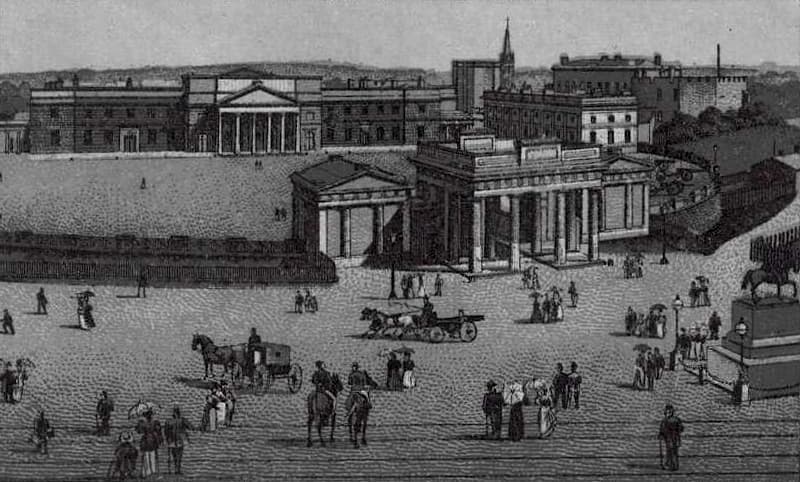
Harrison's influence extended beyond the prison. Between 1788 and 1822, he undertook a comprehensive remodeling of the castle complex, including the medieval Shire Hall, which he transformed in a neoclassical style characterized by a 19-bay façade and a central portico with projecting Doric columns. He also designed the Propylaeum, a grand entrance on Grosvenor Road featuring a massive entablature supported by widely spaced Doric columns and flanked by temple-like lodges, reinforcing the classical aesthetic.
Additional structures such as barracks and an armory were built or adapted during this period, later serving as a military museum and officers' mess. These neoclassical additions are integral to the castle's architectural identity and have earned Grade I listing status for their historic and architectural significance.
Architectural features and preservation
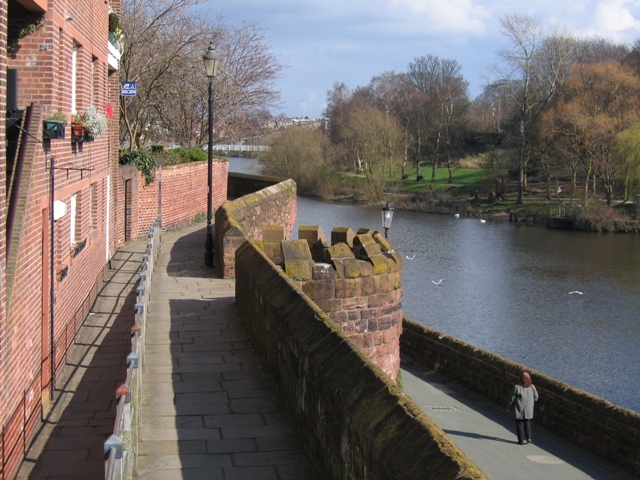
The castle's medieval curtain walls, particularly along the south and west sides, remain a defining feature of its defensive layout. These walls incorporate several prominent towers, including the Half Moon Tower and the Flag Tower. A later gun emplacement overlooking the river was constructed to bolster the castle's defenses during the 18th century, particularly during the 1745 Jacobite rising.
The Agricola Tower and the surrounding medieval ruins are protected as scheduled monuments and hold Grade I listed building status, highlighting their exceptional heritage value. Other sections of the medieval curtain walls and retaining walls include iron railings designed by Thomas Harrison, which are protected by Grade II listing.
Within the castle courtyard stands a statue of Queen Victoria, sculpted in 1903 by Thomas Thornycroft Pomeroy, adding a Victorian commemorative element to the historic site.
Modern use and heritage management
In the 20th century, the crypt and chapel within the Agricola Tower were restored and reconsecrated in 1925 for use by the Cheshire Regiment, with further restoration of the chapel completed in 1939. The castle served as a military depot and home to the Cheshire Regiment until 1939, reflecting its enduring military role.
Today, Chester Castle is managed by the local council on behalf of English Heritage, ensuring the preservation and public accessibility of this multifaceted historic site. The castle's complex history, architectural evolution from Norman military origins through medieval expansions to neoclassical adaptations, and its layered cultural significance make it a vital landmark within England's rich heritage landscape.
Frequently asked questions (FAQ)
- How do I get to Chester Castle?
- Chester Castle is located in the heart of Chester, easily accessible by public transport, including buses and trains. There are also several parking options nearby for those who wish to drive.
- What is the historical significance of Chester Castle?
- Chester Castle dates back to the 11th century and played a crucial role in the defense of the city and the surrounding area during various conflicts. It has served as a royal fortress, a prison, and an administrative center throughout its long history.
- When was Chester Castle built?
- Construction of Chester Castle began in 1070 under the orders of William the Conqueror. Over the centuries, it has undergone numerous renovations and expansions, reflecting the changing architectural styles and defensive needs.
- Can I take guided tours of Chester Castle?
- Yes, guided tours are available and provide visitors with in-depth insights into the castle's history and architecture. These tours are led by knowledgeable guides who share fascinating stories and facts about the castle and its significance.
- Why is Chester Castle considered an architectural gem?
- Chester Castle showcases a mix of Norman, medieval, and Victorian architecture, making it a fascinating study for history and architecture enthusiasts. Its well-preserved structures, including the iconic keep and gatehouse, highlight the castle's strategic importance and aesthetic appeal.
- Is it possible to access all areas of Chester Castle?
- While many areas of Chester Castle are accessible to visitors, some sections may have restricted access due to preservation efforts or safety regulations. However, key highlights of the castle, including the keep and the walls, are open for exploration.
- What are the opening hours for Chester Castle?
- Chester Castle is typically open to visitors from 10 AM to 5 PM daily, although hours may vary seasonally or for special events. It is advisable to check the official website for the most current information before planning your visit.
- What are the ticket prices for Chester Castle?
- Admission prices for Chester Castle are generally affordable, with discounts available for children, seniors, and families. Tickets can be purchased on-site, and it's recommended to buy in advance during peak tourist seasons to avoid long lines.
- When is the best time to visit Chester Castle?
- The best time to visit Chester Castle is during the spring and early autumn when the weather is mild, and the gardens are in full bloom. Additionally, visiting during weekdays can help avoid the larger crowds typically found on weekends and holidays.
- Are there any nearby attractions to visit after Chester Castle?
- Yes, Chester Castle is conveniently located near several other attractions, including the Chester Roman Amphitheatre, the Chester Cathedral, and the picturesque Chester Rows. Combining these visits can provide a rich experience of Chester's history and culture.
Photo gallery

Photo by Unknown authorUnknown author•Public domain
Information
Website
Visit websiteSources & official resources
Verify the information above using these authoritative references.
Loading map...
Visitor reviews
No reviews yet. Been here? Write the first review and help other travelers!
Write the first reviewVisited this castle? Share your experience
Your review helps other travelers and adds first-hand knowledge to our encyclopedia.