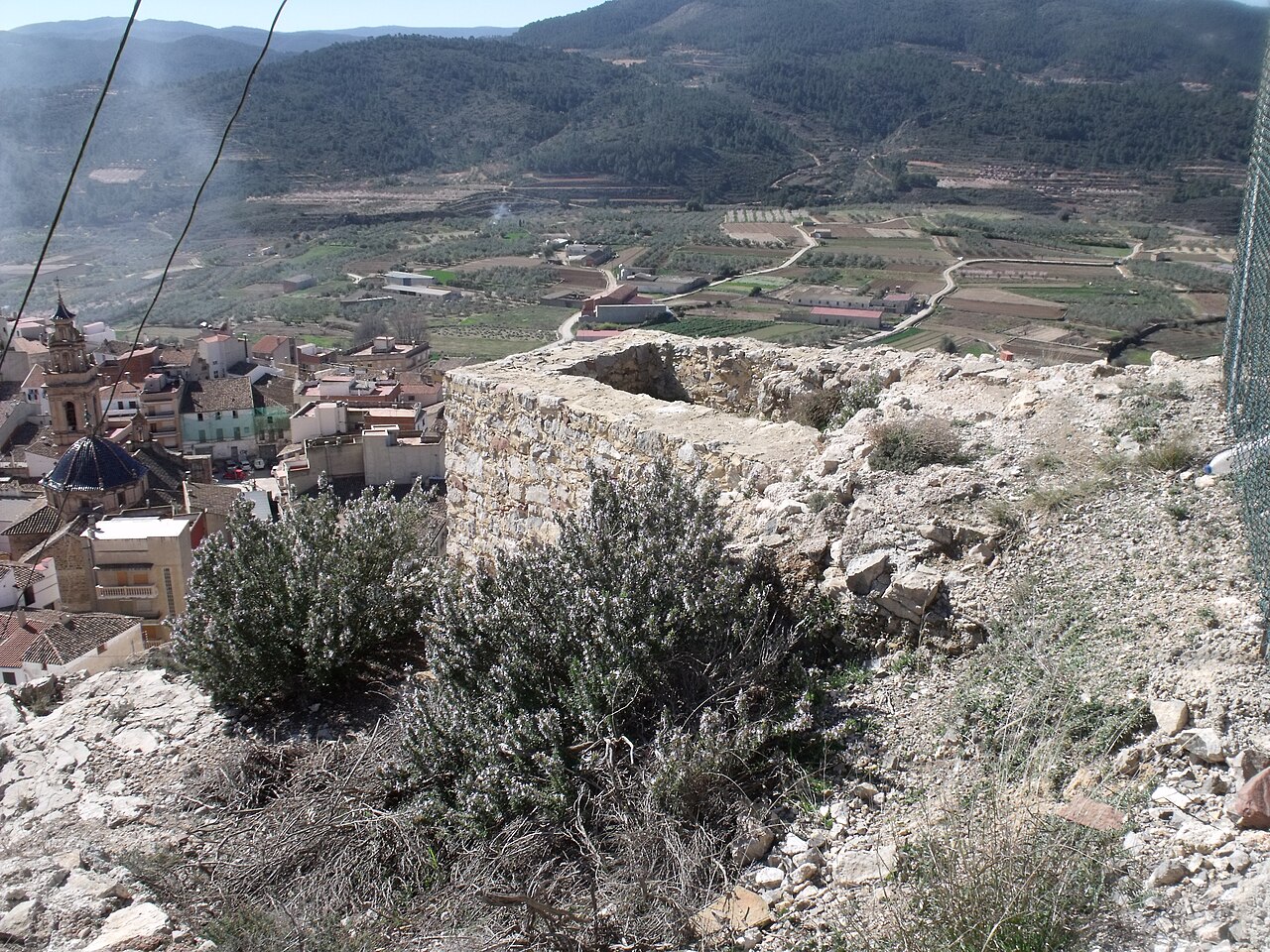
Chelva Castle in Spain traces its origins back to the 11th century when the ruling Moors established a formidable fortress that formed the nucleus of the present-day town of Chelva. This high medieval fortress was strategically positioned to oversee and protect the settlement, which developed immediately adjacent to the castle walls. The castle's initial purpose was military defense, reflected in the encompassing stone walls fortified with four gates, one of which, the San Cristobal gate, remains visible today. These fortifications underscored Chelva's significance as a fortified town during the period of Muslim rule in the Iberian Peninsula.
Medieval origins and moorish fortifications
The castle's foundation during the 11th century corresponds with the era of Muslim dominance in the region, when such fortresses were vital for controlling territory and trade routes. The fortified walls and gates were designed not only for defense but also to regulate access to the town, highlighting Chelva’s role as a key stronghold. The layout of the original city center, enclosed within these walls, reflects typical medieval urban planning influenced by Islamic architectural and military principles.
Architectural evolution and noble residence
In the late 14th century, the castle underwent a significant transformation when it was converted into a palatial residence for the Viscount of Chelva. This change marked a shift from purely military use to a symbol of noble power and prestige. Architecturally, the castle evolved to include more refined living quarters and representative spaces, presiding over the Main Plaza of Chelva. This evolution likely incorporated elements of Gothic and late medieval styles, although specific stylistic details are less documented. The adaptation reflects the broader trend in medieval Spain where castles served dual roles as fortresses and noble homes.
Archaeological discoveries and historical layers
Recent archaeological work has revealed that the site of Chelva Castle has a much longer history of occupation. Evidence of an Iberian settlement dating back to the 4th century B.C. was uncovered, indicating the strategic importance of this location long before the medieval period. Furthermore, the discovery of the first Christian church within the castle walls, dating to the 13th century, sheds light on the religious and cultural transitions in the region following the Christian reconquest.
Castle features and cultural significance
The surviving elements of Chelva Castle, including the San Cristobal gate and sections of the original walls, offer valuable insights into medieval military architecture in the region. The castle’s position overlooking the town and the surrounding landscape emphasizes its role in both defense and governance. Today, Chelva Castle stands as a monument to the layered history of the area, from ancient Iberian roots through Islamic rule and Christian reconquest, reflecting the complex cultural heritage of the Valencian Community in Spain.
Visiting chelva castle
Visitors to Chelva can explore the remnants of the castle and its fortifications, gaining an understanding of its historical significance and architectural evolution. The castle's location near the Main Plaza makes it accessible for tourists interested in medieval history, archaeology, and Spanish heritage. While much of the original structure has not survived intact, the site remains a focal point for cultural tourism and local identity.
Frequently asked questions (FAQ)
- When was Chelva Castle originally built?
- Chelva Castle was originally built in the 11th century during the period of Moorish rule in Spain.
- What architectural style characterizes Chelva Castle?
- Chelva Castle primarily reflects medieval military architecture typical of the high medieval period, with later adaptations for noble residence.
- Is Chelva Castle open to visitors?
- Yes, visitors can explore the remains of Chelva Castle and its fortifications, which are accessible near the Main Plaza in Chelva.
- What historical periods are represented at Chelva Castle?
- Chelva Castle encompasses historical layers from the Iberian settlement of the 4th century B.C., through Moorish fortifications of the 11th century, to Christian reconquest influences in the 13th century.
- What remains of Chelva Castle can be seen today?
- Today, visitors can see parts of the original walls and the San Cristobal gate, which are significant remnants of the castle's medieval fortifications.
Information
Loading map...
Visitor reviews
No reviews yet. Been here? Write the first review and help other travelers!
Write the first reviewVisited this castle? Share your experience
Your review helps other travelers and adds first-hand knowledge to our encyclopedia.