Château de Alpuente
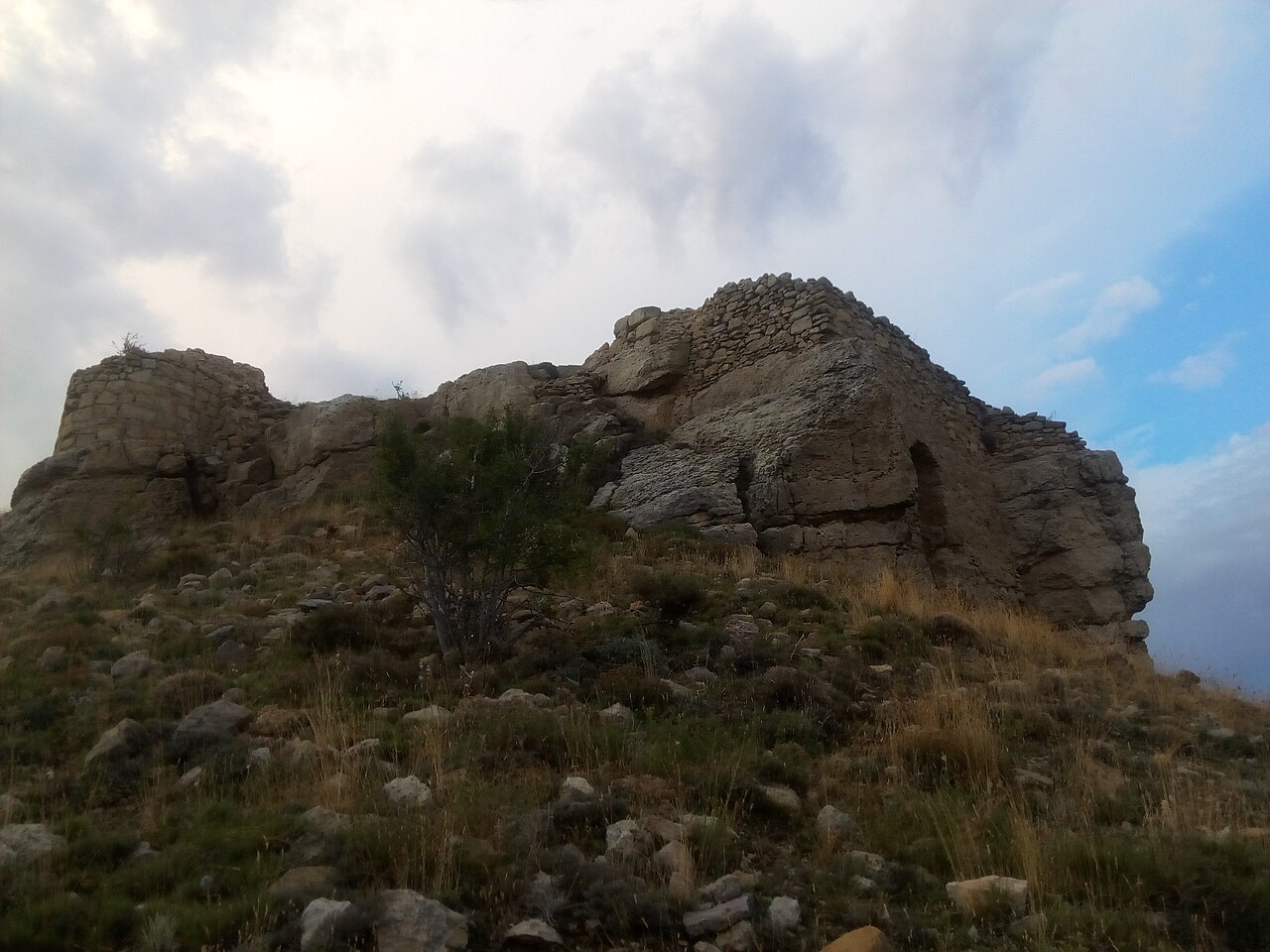
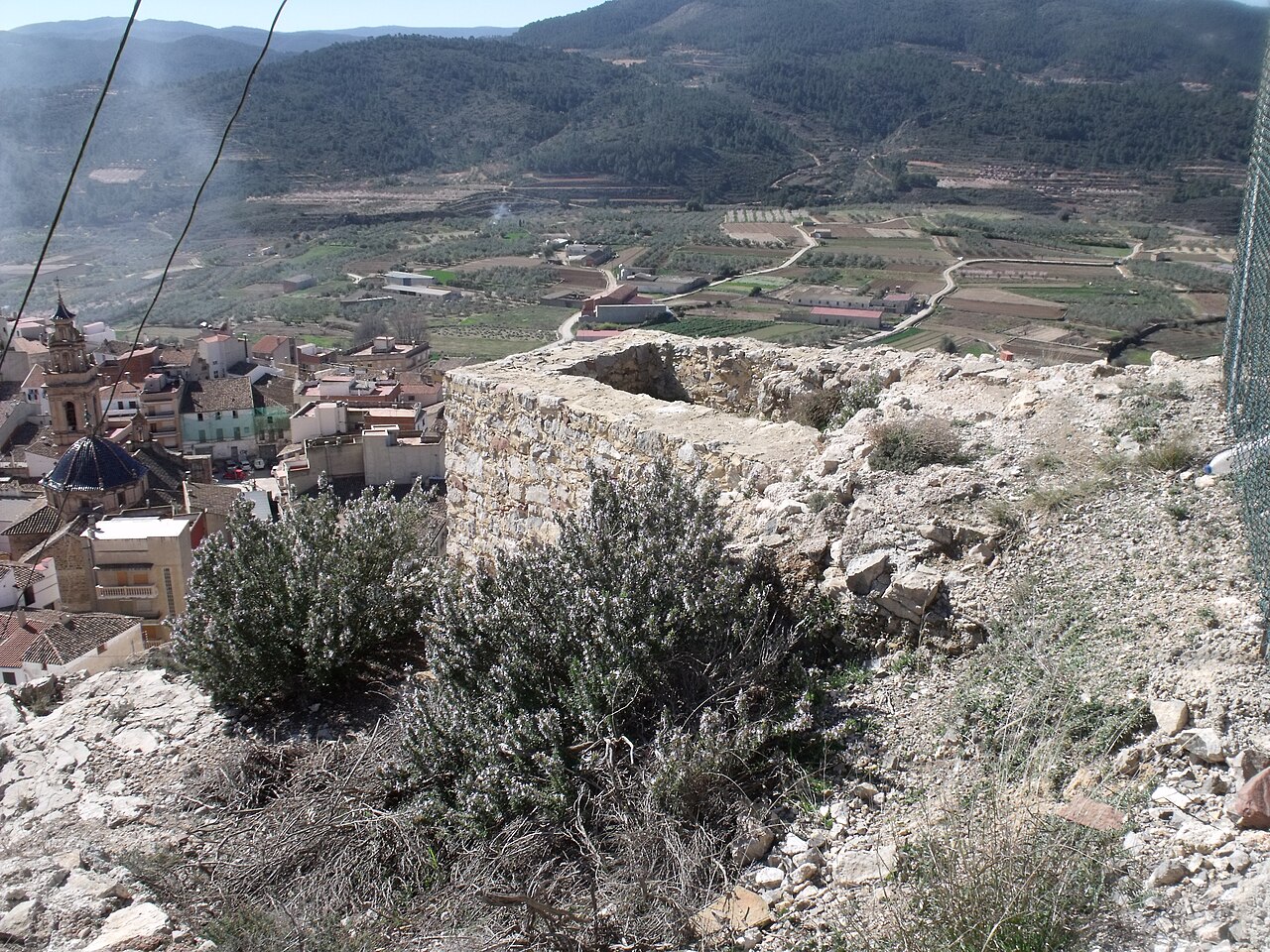
The Château de Alpuente stands as a remarkable example of a hill castle with a rich history that spans over a millennium. Located in the town of Alpuente, Spain, this fortress originated in the 10th century during the caliphal era under Muslim rule. It was strategically perched on a narrow, rocky ridge, approximately 250 meters long and 16 meters wide, providing commanding views and natural defenses over the surrounding landscape. Its position above steep cliffs, especially on the eastern side with a vertical drop of about 150 meters into the Reguero ravine, made it a formidable stronghold.
The castle played a significant role within a larger defensive network, maintaining a subordinate relationship with the nearby Castillo del Poyo or Collado fortress, located about ten kilometers to the north. This connection highlights the strategic importance of the site in controlling territory and protecting vital routes.
Historical significance and military role
Following the Christian Reconquista, Château de Alpuente continued to serve as a key military site due to its proximity to the volatile border between the kingdoms of Aragón and Castilla. Throughout the 14th century, during the Wars of the Union, the fortress underwent extensive renovations to bolster its defenses. During this period, the town of Alpuente rose in prominence as a toll point along a crucial livestock route, especially for sheep, illustrating the castle’s dual military and economic importance.
The castle was repeatedly contested during the 14th and 15th centuries as the border shifted between Aragón and Castilla, reflecting its critical role in regional power struggles. In the early 18th century, after the War of Spanish Succession, King Felipe V ordered the deliberate demolition of the fortress as punishment for its support of the Habsburg claimant. This marked a significant turning point in the castle’s history, transitioning it from an active military bastion to a symbol of contested sovereignty.
Role in the Carlist Wars
Despite its partial destruction, the castle was rebuilt in the 19th century during the turbulent Carlist Wars, a series of civil conflicts rooted in dynastic disputes. In 1835, during the First Carlist War, it was occupied by Carlist forces under the command of Cabrera. The defenders enhanced the fortress by constructing four artillery batteries within the citadel, enabling them to withstand a siege by liberal forces led by General Azpiroz. The castle also saw action during the Third Carlist War.
Following the First Carlist War, authorities again ordered the castle’s demolition to prevent its future military use by Carlist supporters. Over time, the fortress suffered further damage from warfare, neglect, and the removal of stones for local building projects, leading to its current ruined state.
Architectural features and surviving remains
The castle’s defensive design capitalized on the natural topography. Access was limited to a single narrow mountain path carved into the rock, passing through a series of three gates, which have not survived. This difficult approach provided a strong natural defense against attackers.
Surviving structures include fragments of the perimeter walls, built on robust foundations, and the bases of several towers. The most notable surviving tower is the Torre de la Veleta (also known as Torre del Penell or Torre del Homenaje), which stands partially intact at about 10 meters high. Constructed with carefully cut stone blocks in ashlar masonry, this tower represents the most complete above-ground structure despite centuries of demolition and decay.
Underground chambers and water cisterns
Beneath the castle lie vaulted underground chambers resembling dungeons, along with cisterns known as aljibes used for collecting and storing water. These cisterns feature ventilation shafts and access wells, and their interiors are coated with distinctive red plaster called almagra. When no longer used for water storage, these chambers were repurposed with new masonry walls and doors, demonstrating the castle’s adaptability.
The southern sector, closest to the parish church, shows the best preservation of surface structures and subterranean passages. Excavations have revealed medieval residential quarters with lime mortar floors and walls built from a mix of masonry styles, including caliphal stonework finished with fine lime plaster. Over these medieval foundations, 19th-century Carlist artillery batteries were constructed, featuring broad parapets with vertical retaining walls and sloping earth or masonry protections on the exterior. Two of the four batteries identified during the Carlist Wars have been excavated to date.
Castle entrance and military installations
The original castle entrance was marked by a ramp over three meters wide, paved with carefully prepared stone to accommodate cavalry and small carts. Historical comparisons suggest this ramp may have been enclosed by a high parapet, creating a covered passage similar to those found in nearby medieval fortresses such as the castle of Chulilla.
At the base of the rock formation are six semi-spherical basins hewn directly into the stone and bush-hammered for texture. These basins are believed to have been used for grinding gunpowder or manufacturing ammunition, underscoring the practical military functions of the site.
Town fortifications and the Torre Aljama
Surrounding the medieval village on the western side were town walls approximately 600 meters long, featuring fourteen towers each six to eight meters thick. Many towers are heavily eroded, and some were demolished in the late 20th century to accommodate street widening.
The Torre Aljama stands out as the best-preserved tower. This rectangular structure rises 16 meters high and is built from ashlar masonry topped with battlements. It features a semicircular arch and historically served as the main gate to the town. The tower housed important municipal functions, including the town hall and trading spaces on the upper floors, with a council chamber added in the 16th century.
Archaeological insights and heritage value
Archaeological investigations at Château de Alpuente have uncovered continuous occupation layers from the 11th to 13th centuries, revealing adaptations through different historical periods. The castle's layered history reflects the complex cultural and political shifts in the Iberian Peninsula, from Muslim rule through Christian reconquest and into modern civil conflicts.
Today, the castle stands as a partially preserved ruin, offering valuable insights into medieval military architecture, the dynamics of border fortifications, and the resilience of a fortress adapting to evolving warfare technologies and political changes. Its strategic location, architectural features, and historical significance make it an important cultural heritage site in Spain.
Frequently asked questions (FAQ)
- How do I get to Château de Alpuente?
- Château de Alpuente is located in the town of Alpuente in Spain. Visitors can reach the site by car or local transport, followed by a hike up the narrow mountain path leading to the castle ruins.
- What is the historical significance of Château de Alpuente?
- Château de Alpuente has a rich history dating back to the 10th century, serving as a Muslim fortress, a Christian border castle, and a Carlist stronghold, reflecting its strategic importance over centuries.
- Can I explore the underground chambers and cisterns?
- Some of the vaulted underground chambers and cisterns are accessible during guided tours or archaeological visits, offering a glimpse into the castle’s water storage and defensive systems.
- When is the best time to visit Château de Alpuente?
- The best time to visit is during spring and autumn when the weather is mild, allowing comfortable exploration of the castle ruins and surrounding landscape.
- Is Château de Alpuente wheelchair accessible?
- Due to the castle’s location on a rocky ridge and the steep, narrow access path, it is not wheelchair accessible. Visitors should be prepared for uneven terrain and some climbing.
Information
Loading map...
Visitor reviews
No reviews yet. Been here? Write the first review and help other travelers!
Write the first reviewVisited this castle? Share your experience
Your review helps other travelers and adds first-hand knowledge to our encyclopedia.