Château Moncade
Château Moncade stands as a significant medieval fortress located in Orthez, within the Pyrénées-Atlantiques département of France. Constructed beginning in 1242 by Gaston VII, Viscount of Béarn, this castle served as the political and military heart of the viscounty when Orthez was its capital. The castle's strategic hilltop position offered commanding views over the surrounding landscape, extending more than 30 kilometers, providing both defense and surveillance advantages.
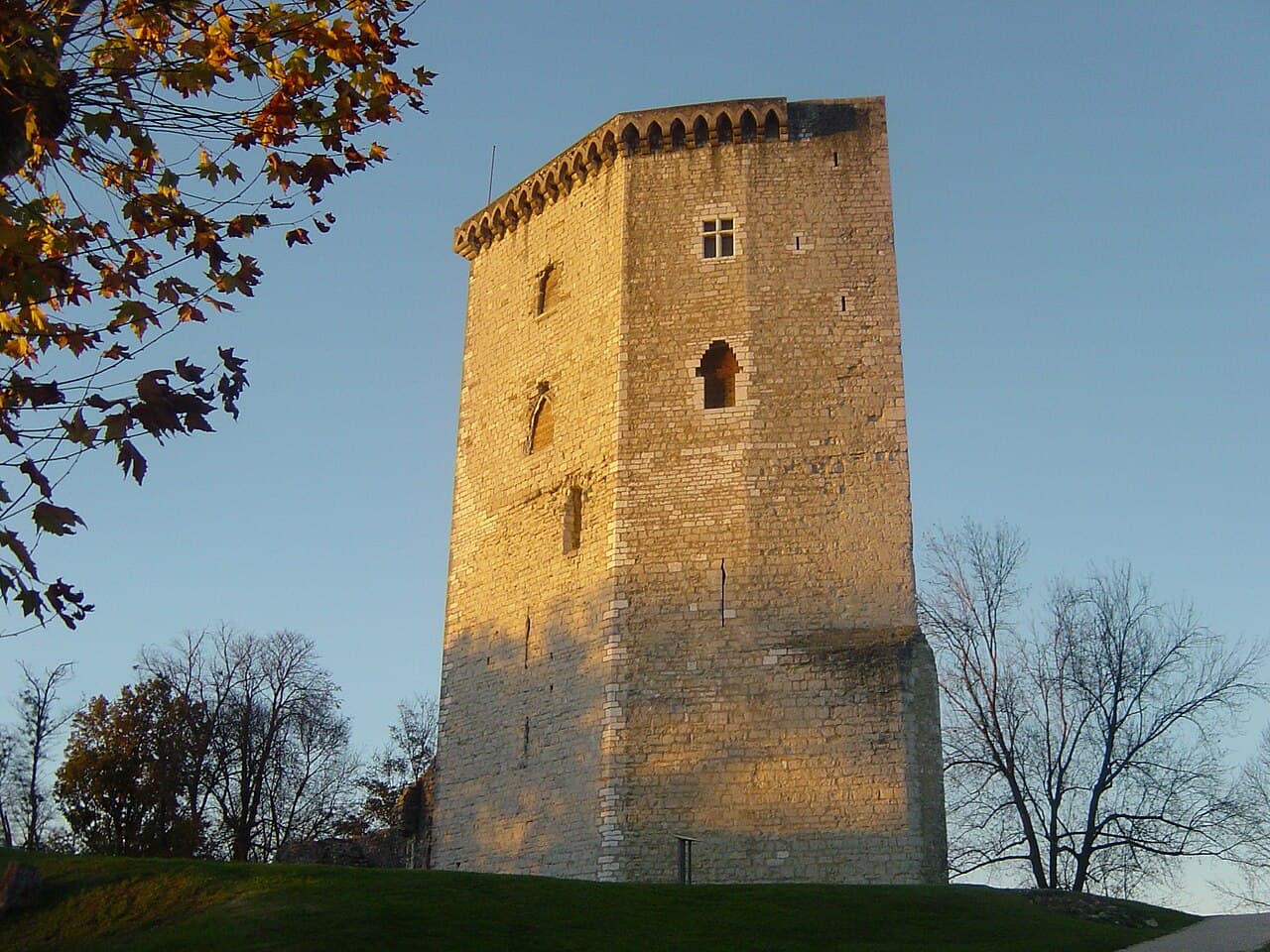
The castle's centerpiece is its imposing pentagonal keep, known as the tour de Moncade, which originally rose four stories high. This keep was not only a military stronghold but also a residential space, featuring fireplaces and chambers that indicate its dual role in defense and habitation. Access to the keep was secured by a main entrance on the second floor, connected to adjacent residential buildings, enhancing its defensibility.
Historical context and political significance
The construction of Château Moncade coincided with a turbulent period in regional politics. Gaston VII aligned himself with the English crown, pledging loyalty to King Henry III of England in 1242. This alliance influenced the castle's role as a seat of power for the viscounts of Béarn throughout the 13th to 15th centuries. The castle was the residence of the Kings of Béarn during the time when Orthez was the capital, underscoring its importance as a political center.
In 1267, the castle passed into the administration of the Foix-Béarn family through the marriage of Marguerite de Moncade to Roger-Bernard III, marking a dynastic shift. Later, between 1368 and 1375, Gaston Fébus (Gaston III of Foix-Béarn) undertook significant renovations, enhancing the castle's defenses and residential quarters. He raised the height of the pentagonal keep and added a chapel tower, reflecting both military and religious functions.
Architectural features and defensive structures
The pentagonal keep and living quarters
The pentagonal keep is the most prominent surviving feature of Château Moncade. It stands approximately 33 meters tall today, after the loss of its uppermost floor in 1820. The thick stone walls formed a formidable defense against attackers. Inside, the keep housed living quarters with fireplaces dating from the 14th century or later, indicating the comfort provided to its noble residents. A spiral staircase built within a buttress connected all floors, a feature attributed to Gaston Fébus's renovations.
Curtain walls, moats, and gate defenses
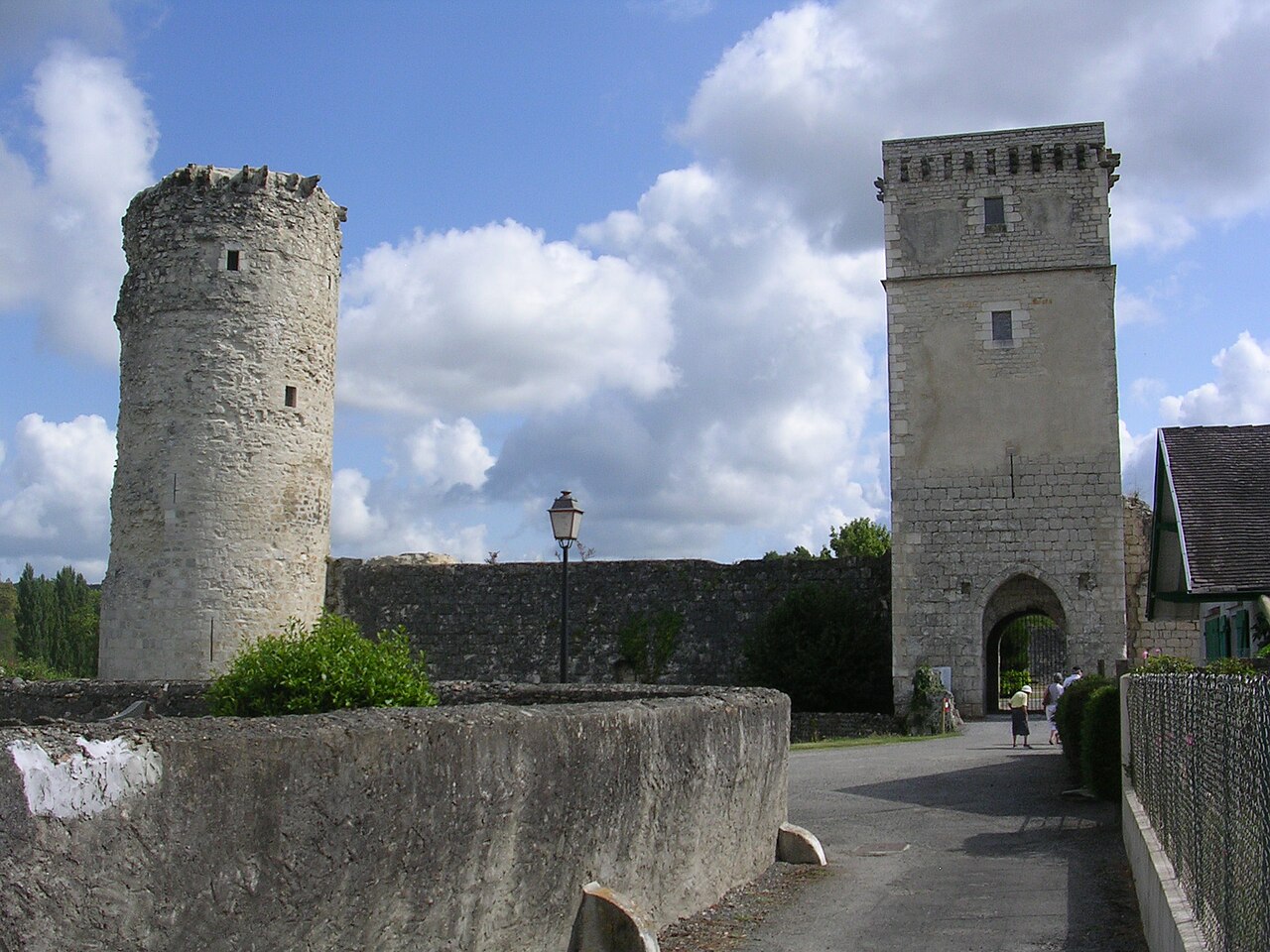
Surrounding the keep was a roughly circular curtain wall protected by a deep masonry-lined moat up to 15 meters deep. The castle's entrance was secured by a drawbridge, a typical medieval defensive element. Records mention a barbican, an outer fortified gate structure, which guarded the approach to the castle; only fragments of this survive today. The castle's double curtain walls enclosed a platform nearly 60 by 50 meters in size.
Additional defensive enclosures and the castral borough
Beyond the main castle defenses lay the castral borough or bourg castral, an area protected by three additional enclosures: the Lavignotte enceinte, the Moncade bourg enceinte, and a northern enceinte. These outer walls extended the defensive perimeter and protected the settlement associated with the castle.
Decline, damage, and restoration efforts
Château Moncade suffered significant damage during the Wars of Religion in 1569, when Protestant and Catholic forces clashed nearby. The castle was burned and pillaged, contributing to its decline. Following the annexation of Béarn by France in 1620, the castle was abandoned and gradually fell into ruin.
During the French Revolution, the property was sold to dismantlers who demolished much of the curtain walls. Today, only the keep remains largely intact, along with the moats and fragments of the curtain walls. In 1840, the keep was classified as a historic monument, prompting preservation efforts in the 19th and 20th centuries. These efforts included reopening the sealed ground floor entrance, adding protective roofing, and archaeological excavations that revealed the castle's courtyard layout.
Architectural details and materials
The castle's walls exhibit a mixture of stone types, reflecting centuries of construction and modification. Later additions, such as windows and staircases, used different stone than the original keep, indicating evolving architectural styles and functional needs. Decorative elements like faux machicolations were added during restoration to evoke medieval defensive features.
Residential buildings and internal features
Attached to the keep was a rectangular corps de logis, which contained the castle's great hall or tinel. This hall served as a space for gatherings and official functions. An impressive external staircase led to the first floor of this building, demonstrating the castle's blend of defensive and domestic architecture.
Visiting Château Moncade today
The castle is open to the public for a fee and contains exhibits including a detailed model of the site. Visitors can explore the well-preserved keep, walk along the moats undergoing restoration, and view remnants of the curtain walls. Its elevated position offers panoramic views of the surrounding Béarn countryside, connecting visitors with the region's medieval past.
Château Moncade remains a key historical and architectural landmark in southwestern France, illustrating the evolution of medieval fortifications and noble residences in the Pyrenean region.
Frequently asked questions (FAQ)
- How do I get to Château Moncade?
- Château Moncade is located in Orthez, France, and can be easily accessed by car or public transportation. If you are traveling by train, the nearest station is in Orthez, from which you can take a short taxi ride to the castle.
- What is the historical significance of Château Moncade?
- Château Moncade is a medieval fortress built in the 13th century, serving as a symbol of the region's rich history and feudal past. It played a crucial role in the defense of the town of Orthez and has witnessed many significant events throughout its long history.
- When was Château Moncade built?
- Château Moncade was constructed in the early 13th century, around 1240, during a period of territorial expansion and conflict in the region. Its architecture reflects the military needs of the time, showcasing the defensive features typical of medieval castles.
- Can I visit Château Moncade during the off-season?
- Yes, Château Moncade is open for visitors year-round, but operating hours may vary during the off-season. It is advisable to check the official website for specific opening times and any seasonal events or closures.
- Why is Château Moncade popular among tourists?
- Château Moncade attracts visitors due to its impressive medieval architecture, stunning views of the surrounding landscape, and rich history. It offers a glimpse into the past and provides educational experiences through guided tours and exhibitions.
- Is it possible to access all areas of Château Moncade?
- While many areas of the castle are accessible to visitors, some sections may be restricted due to preservation efforts. Guided tours typically cover the most significant parts of the castle, ensuring that visitors can appreciate its historical and architectural highlights.
- What are the ticket prices for Château Moncade?
- Ticket prices for Château Moncade are generally affordable, with discounts available for children, seniors, and groups. It is advisable to check the official website for the most up-to-date pricing information and any special promotions.
- What are the opening hours of Château Moncade?
- Château Moncade typically opens to visitors from 10 AM to 6 PM, but hours may vary by season. It's best to confirm the current schedule on the castle's official website before planning your visit.
- What nearby attractions can I visit while in Orthez?
- While in Orthez, visitors can explore several nearby attractions, including the historic town center, the Church of Saint-Pierre, and the beautiful Gave de Pau river. Additionally, the region is known for its picturesque landscapes and vineyards, making it an ideal destination for a day trip.
Photo gallery

Photo by [https://www.flickr.com/photos/10699036@n08 Object location43° 29′ 31.15″ N, 0° 46′ 11.91″ W View this and other nearby images on: OpenStreetMap 43.491987; -0.769974 10699036@N08] at https://www.flickr.com.•CC BY-SA 2.0
Information
Website
Visit websiteSources & official resources
Verify the information above using these authoritative references.
Loading map...
Visitor reviews
No reviews yet. Been here? Write the first review and help other travelers!
Write the first reviewVisited this castle? Share your experience
Your review helps other travelers and adds first-hand knowledge to our encyclopedia.