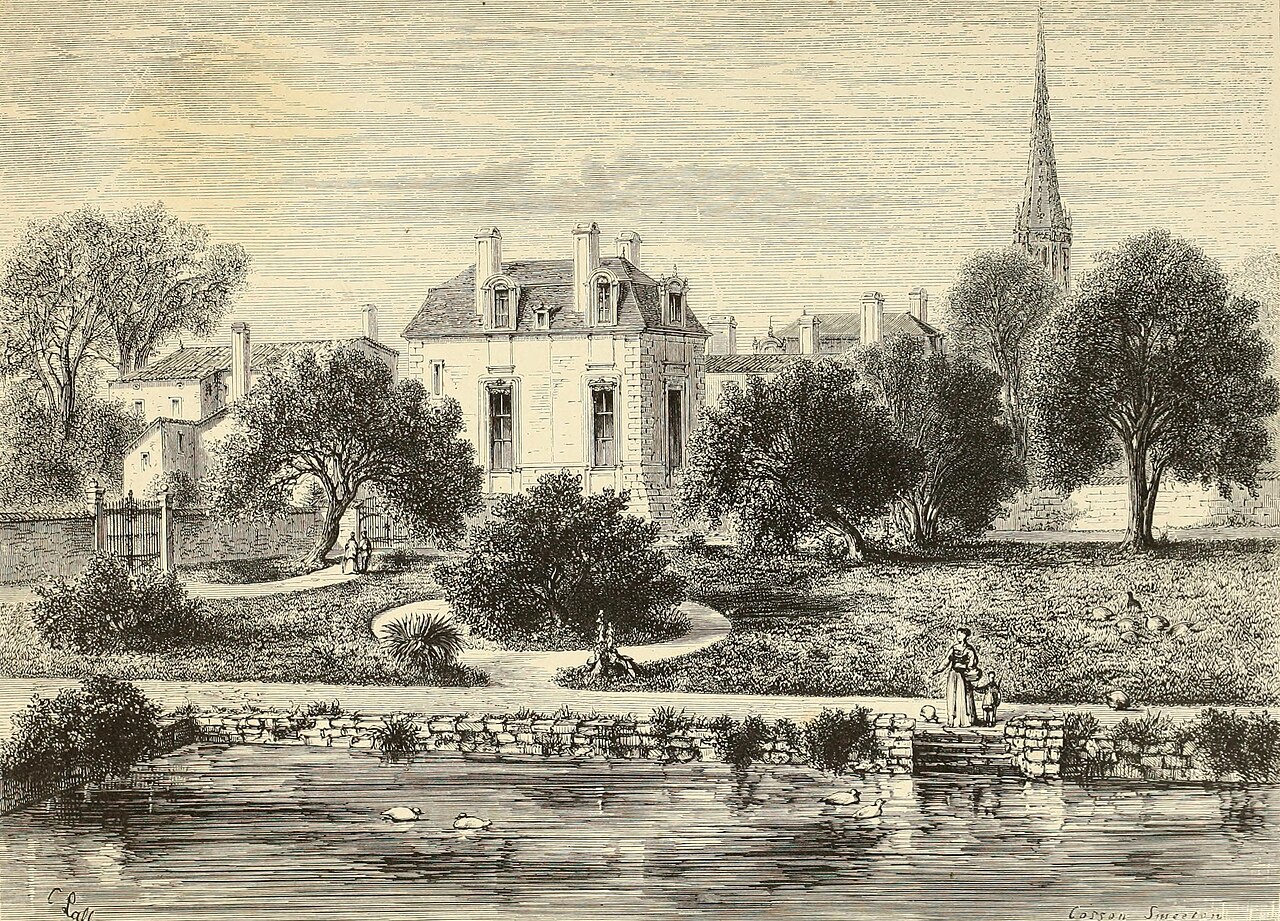
Château Lafite Rothschild
Château Lafite Rothschild is an iconic estate located in the wine-producing village of Pauillac in the Médoc region of France. Known primarily for its prestigious vineyards and exceptional wine production, the château itself is a 16th-century Renaissance manor house that remains a central architectural feature of the estate. The estate's origins date back to 1234 when it was owned by Gombaud de Lafite, marking centuries of continuous viticultural tradition on this land.
Early history and ownership
The property was acquired in the 17th century by the influential Ségur family, who played a pivotal role in shaping the estate's viticultural legacy. Although vineyards likely existed prior, it was around 1680 when Jacques de Ségur undertook significant planting efforts, establishing the majority of the vineyard that would later gain worldwide acclaim. The Ségur family also preserved the Renaissance manor house from the 16th century, which still stands today as a testament to the estate's longstanding heritage.
Refinement and rise to prominence
In the early 18th century, Nicolas-Alexandre, marquis de Ségur, further refined the estate's wine-making techniques, elevating the quality and reputation of its wines. His efforts introduced Château Lafite wines to the upper echelons of European society, including royalty and nobility, cementing its status as a symbol of luxury and excellence.
Impact of the french revolution and subsequent changes
The French Revolution brought significant upheaval to the estate. During the Reign of Terror, Nicolas Pierre de Pichard, the then-owner, was executed in 1794, ending the Ségur family's ownership. The estate became public property before being sold in 1797 to a consortium of Dutch merchants. The early 19th century saw the estate under the ownership of the Vanlerberghe family, during which time the wine quality improved notably, producing celebrated vintages such as those of 1795, 1798, and 1818.
The rothschild era and modern developments
In 1868, Baron James Mayer Rothschild purchased the château for 4.4 million francs, marking the beginning of the Rothschild family's stewardship. Although Baron James died shortly after acquiring the estate, it was inherited jointly by his sons Alphonse, Gustave, and Edmond Rothschild. Under their guidance, Château Lafite Rothschild solidified its reputation as one of the world's premier wine producers.
The 20th century presented challenges including recovery from the phylloxera epidemic that devastated European vineyards and the impacts of two world wars. During World War II, the château was occupied by the German army and suffered significant plundering of its wine cellars. Post-war restoration efforts helped revive the estate's production and prestige.
Vineyard and production details
Today, Château Lafite Rothschild encompasses approximately 107 hectares of vineyards, making it one of the largest in the Médoc. The estate produces around 35,000 cases annually, focusing on quality and traditional methods that honor its long history. The vineyards are planted primarily with Cabernet Sauvignon, Merlot, Cabernet Franc, and Petit Verdot, reflecting classic Bordeaux varietals.
Architectural features and estate layout
The château itself is a fine example of Renaissance architecture with preserved elements from the 16th century. It features a traditional manor house structure with characteristic stone masonry, pitched roofs, and symmetrical façades. The estate grounds include vineyards, cellars, outbuildings, and courtyards that support the wine production process and visitor experiences.
Current management and cultural significance
Since 1974, the estate has been under the direction of Éric de Rothschild, who succeeded his uncle Élie de Rothschild. The château remains a symbol of French viticultural heritage and is internationally recognized for its contributions to Bordeaux wine culture. It attracts wine enthusiasts and tourists who seek to explore its historic vineyards and architectural heritage.
Loading map...
Visitor reviews
No reviews yet. Been here? Write the first review and help other travelers!
Write the first reviewVisited this castle? Share your experience
Your review helps other travelers and adds first-hand knowledge to our encyclopedia.