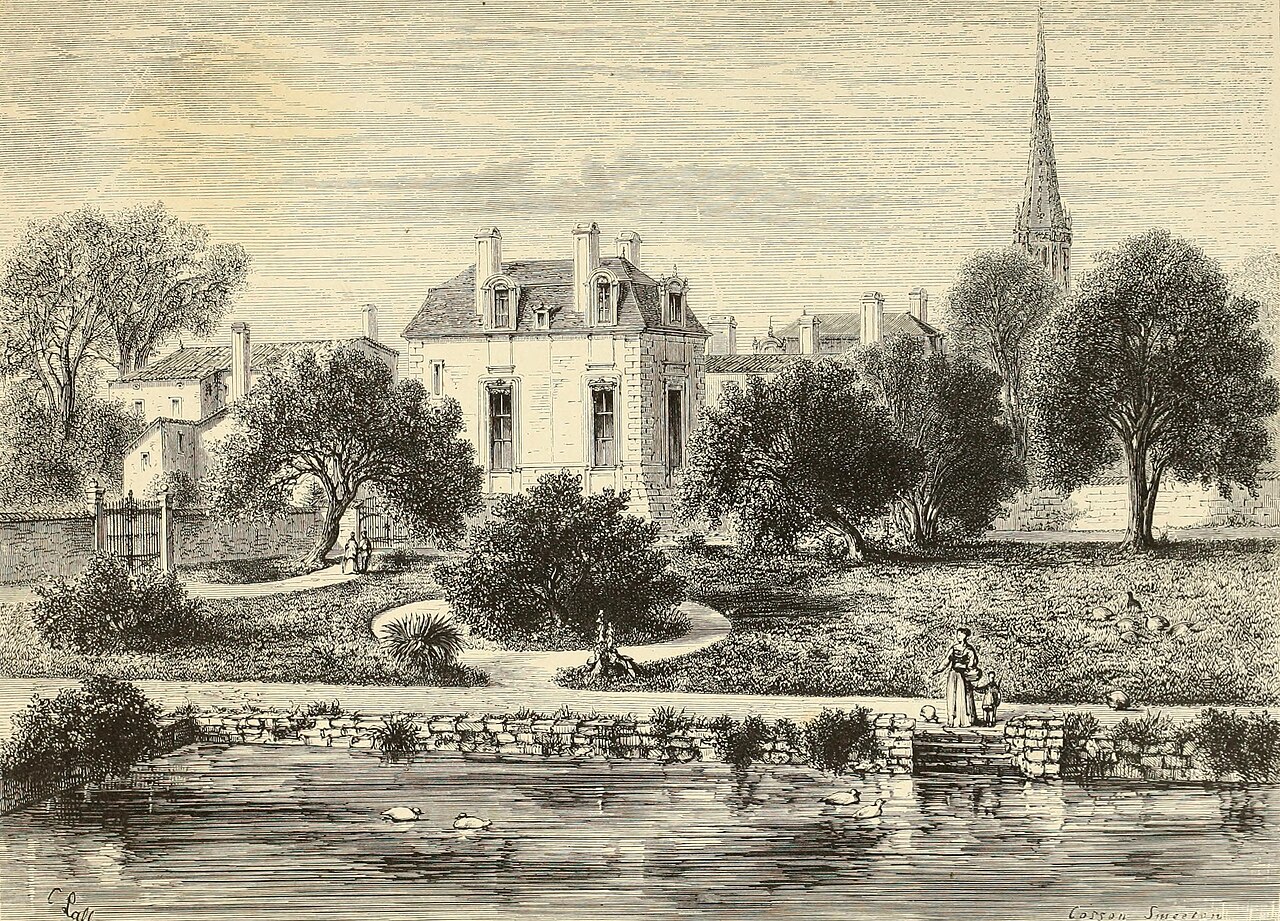
Château Laffitte Carcasset

Château Laffitte Carcasset: historic hill castle and vineyard estate in Saint-Estèphe
Saint-Estèphe, Hauts-de-France, France

Château Laffitte Carcasset stands as a distinguished 18th-century hill castle nestled in the heart of Saint-Estèphe, within the renowned Bordeaux wine region of Hauts-de-France, France. This estate is emblematic of the rich tradition of viticulture that has shaped the region for centuries, combining the heritage of a historic château with the modern demands of high-quality wine production.

Historical background and ownership lineage

The estate’s origins trace back to before the mid-18th century, first appearing on maps in 1759 under the name "Carcasset," confirming its early establishment as a vineyard. The formal recognition of the vineyard came in the 18th century, but its roots extend further, associated with various prior owners and names such as Carcasset Jacques and Carcasset Alçuet. The pivotal moment in its history occurred in 1781 when Jean Laffitte, a lawyer and royal prosecutor from Bordeaux, acquired the land, founding the estate as it is known today. This acquisition marked the beginning of the Laffitte family's long-standing influence on the estate's identity and development.

The 19th century brought significant challenges, notably the devastating oïdium (powdery mildew) and phylloxera crises that afflicted vineyards across Europe. These afflictions drastically reduced the estate's production from 100 barrels to just 30, placing financial strain on the owners. Consequently, in 1898, the estate was sold to Jean Grillet, who assumed ownership along with the debts.

In 1918, the estate changed hands again to Paul Vitrant, who managed to stabilize and revive the vineyard despite reducing its planted area. Under his stewardship, Château Laffitte Carcasset achieved the prestigious classification of Cru bourgeois supérieur in 1932, a testament to the quality of its wines. The Vitrant family maintained ownership until 1958, when the de Padirac family took over, stewarding the estate through much of the 20th century.

The modern era began in 2017 with management by Eden Villages, part of the Rapido group, ushering in significant technological and infrastructural upgrades. This period saw the introduction of innovative features such as augmented reality wine labels and a comprehensive renovation of the winery and vineyards, completed in 2021. The estate continues to benefit from the expertise of renowned oenologist Hubert de Boüard, who advises on wine production and quality enhancement.

Architectural features and landscape

The château itself is an exemplar of the chartreuse architectural style, characterized by its elegant symmetry and restrained grandeur, typical of the Bordeaux region in the 18th century. This style emphasizes balanced proportions and a harmonious facade, reflecting the refined tastes of the era. The château is situated centrally amidst the vineyards, which are planted on a distinctive gravelly plateau unique to Saint-Estèphe. The underlying argillo-calcareous soil, a blend of clay and limestone, provides ideal conditions for cultivating premium grape varieties.

The estate encompasses approximately 35 hectares of vineyards, planted predominantly with Cabernet Sauvignon (60%), complemented by Merlot (35%) and a smaller proportion of Cabernet Franc (5%). The vines average around three decades in age, contributing mature and complex characteristics to the wines. The proximity to the Gironde estuary plays a crucial role in moderating the microclimate, ensuring balanced temperatures that support healthy vine growth and consistent grape ripening.

Viticulture and wine production techniques

Château Laffitte Carcasset combines traditional winemaking methods with modern technological advancements to produce wines of notable quality and character. The vinification process includes careful temperature control through thermoregulation during fermentation, preserving the delicate aromas and flavors of the grapes. The wines are aged for about one year in oak barrels, with approximately 30% being new French oak, which imparts subtle notes of vanilla, spice, and complexity to the final product.

The estate produces between 100,000 and 140,000 bottles annually, including its flagship grand vin, alongside a second label named Le Reflet de Laffitte Carcasset and a third cuvée called Le Corsaire de Laffitte Carcasset. This tiered approach allows the estate to cater to different market segments while maintaining high standards across all offerings.

Cultural significance and heritage preservation

The landscape of Château Laffitte Carcasset, with its historic château and meticulously maintained vineyards, preserves the atmosphere of centuries-old wine production traditions. The estate reflects the enduring legacy of Bordeaux’s viticultural heritage, blending architectural elegance with agricultural excellence. It remains a vital part of the Saint-Estèphe appellation, contributing to the region's reputation for producing robust, age-worthy red wines.

Through ongoing investments in both preservation and innovation, Château Laffitte Carcasset continues to honor its historical roots while adapting to contemporary demands. This balance of heritage and progress ensures the estate's relevance and prestige within the competitive Bordeaux wine landscape.

Frequently asked questions (FAQ)

How do I get to Château Laffitte Carcasset?
Château Laffitte Carcasset is located in Saint-Estèphe, France, and is easily accessible by car. The nearest major city is Bordeaux, which is about an hour's drive away. Public transportation options may be limited, so driving or arranging a taxi is recommended for a seamless visit.
What is the historical significance of Château Laffitte Carcasset?
Château Laffitte Carcasset is a notable example of 19th-century architecture and has been integral to the Saint-Estèphe wine region. The estate has a rich history of winemaking, contributing to the area's reputation for high-quality Bordeaux wines. Its historical significance lies not only in its architectural style but also in its contribution to the local culture and economy.
When was Château Laffitte Carcasset built?
Château Laffitte Carcasset was constructed in the 19th century, reflecting the architectural trends of that era. This period marked a significant evolution in the design of French châteaux, incorporating both style and functionality. The château has been preserved to showcase its historical elements and charm.
Can I tour Château Laffitte Carcasset?
Yes, visitors can tour Château Laffitte Carcasset, where guided tours provide insights into the history, architecture, and winemaking processes. It is advisable to book your tour in advance, especially during peak tourist seasons, to ensure availability. Enjoy a comprehensive experience that includes tastings of their renowned wines.
Why is Château Laffitte Carcasset considered an architectural gem?
Château Laffitte Carcasset is considered an architectural gem due to its exquisite design that embodies the elegance of 19th-century French châteaux. The intricate details and harmonious proportions reflect the craftsmanship of the era, making it a subject of interest for architecture enthusiasts. Its scenic setting amidst vineyards further enhances its aesthetic appeal.
Is it possible to hold events at Château Laffitte Carcasset?
Yes, Château Laffitte Carcasset offers facilities for hosting various events, including weddings, corporate gatherings, and private parties. The picturesque surroundings and elegant architecture provide a stunning backdrop for any occasion. It is recommended to contact the château directly for more information on services and availability.
What are the opening hours for Château Laffitte Carcasset?
Château Laffitte Carcasset typically opens to visitors from Tuesday to Saturday, with hours varying throughout the year. It is advisable to check their official website or contact them directly for the most current opening hours, especially during holidays or special events. Planning your visit in advance ensures you don't miss out on the experience.
What are the ticket prices for visiting Château Laffitte Carcasset?
Ticket prices for Château Laffitte Carcasset may vary depending on the type of tour and experiences offered. Generally, guided tours include wine tastings, with prices reflecting the quality of the wines and the overall experience. For the latest pricing information, it's best to visit their official website or inquire when making a reservation.
When is the best time to visit Château Laffitte Carcasset?
The best time to visit Château Laffitte Carcasset is during the spring and early autumn months when the weather is pleasant, and the vineyards are vibrant. Additionally, these seasons often coincide with wine harvests, providing an authentic experience of the region's winemaking culture. To avoid crowds, consider visiting on weekdays.
Are there nearby attractions to visit after Château Laffitte Carcasset?
Yes, there are several nearby attractions to explore after visiting Château Laffitte Carcasset. The beautiful Médoc wine region offers numerous other vineyards and châteaux to discover, as well as picturesque landscapes. Additionally, the coastal town of Soulac-sur-Mer is within a short drive, providing a lovely seaside experience.

Information

Hill Castle

Sources & official resources

Verify the information above using these authoritative references.

Loading map...

Visitor reviews

No reviews yet. Been here? Write the first review and help other travelers!

Write the first review

Visited this castle? Share your experience

Your review helps other travelers and adds first-hand knowledge to our encyclopedia.

Write a review

(5/5)

0/2000 characters

Your review will be visible after admin approval

Nearby castles

3.1 km

Château Lafite Rothschild

Pauillac, France

Château Lafite Rothschild is an iconic estate located in the wine-producing village of Pauillac in the Médoc region of France. Known primarily for its prestigious vineyards and exceptional wine production, the château itself is a 16th-century Renaissance manor house that remains a central architectural feature of the estate. The estate's origins date back to 1234 when it was owned by Gombaud de Lafite, marking centuries of continuous viticultural tradition on this land. Early history and ownership The property was acquired in the 17th century by the influential Ségur family, who played a pivotal role in shaping the estate's viticultural legacy. Although vineyards likely existed prior, it was around 1680 when Jacques de Ségur undertook significant planting efforts, establishing the majority of the vineyard that would later gain worldwide acclaim. The Ségur family also preserved the Renaissance manor house from the 16th century, which still stands today as a testament to the estate's longstanding heritage. Refinement and rise to prominence In the early 18th century, Nicolas-Alexandre, marquis de Ségur, further refined the estate's wine-making techniques, elevating the quality and reputation of its wines. His efforts introduced Château Lafite wines to the upper echelons of European society, including royalty and nobility, cementing its status as a symbol of luxury and excellence. Impact of the french revolution and subsequent changes The French Revolution brought significant upheaval to the estate. During the Reign of Terror, Nicolas Pierre de Pichard, the then-owner, was executed in 1794, ending the Ségur family's ownership. The estate became public property before being sold in 1797 to a consortium of Dutch merchants. The early 19th century saw the estate under the ownership of the Vanlerberghe family, during which time the wine quality improved notably, producing celebrated vintages such as those of 1795, 1798, and 1818. The rothschild era and modern developments In 1868, Baron James Mayer Rothschild purchased the château for 4.4 million francs, marking the beginning of the Rothschild family's stewardship. Although Baron James died shortly after acquiring the estate, it was inherited jointly by his sons Alphonse, Gustave, and Edmond Rothschild. Under their guidance, Château Lafite Rothschild solidified its reputation as one of the world's premier wine producers. The 20th century presented challenges including recovery from the phylloxera epidemic that devastated European vineyards and the impacts of two world wars. During World War II, the château was occupied by the German army and suffered significant plundering of its wine cellars. Post-war restoration efforts helped revive the estate's production and prestige. Vineyard and production details Today, Château Lafite Rothschild encompasses approximately 107 hectares of vineyards, making it one of the largest in the Médoc. The estate produces around 35,000 cases annually, focusing on quality and traditional methods that honor its long history. The vineyards are planted primarily with Cabernet Sauvignon, Merlot, Cabernet Franc, and Petit Verdot, reflecting classic Bordeaux varietals. Architectural features and estate layout The château itself is a fine example of Renaissance architecture with preserved elements from the 16th century. It features a traditional manor house structure with characteristic stone masonry, pitched roofs, and symmetrical façades. The estate grounds include vineyards, cellars, outbuildings, and courtyards that support the wine production process and visitor experiences. Current management and cultural significance Since 1974, the estate has been under the direction of Éric de Rothschild, who succeeded his uncle Élie de Rothschild. The château remains a symbol of French viticultural heritage and is internationally recognized for its contributions to Bordeaux wine culture. It attracts wine enthusiasts and tourists who seek to explore its historic vineyards and architectural heritage.

Renaissance (15th–17th c.)
Details
8.8 km

Château Pichon

Parempuyre, France

Château Pichon Longueville Baron is a historic estate located in Parempuyre, within the prestigious Bordeaux wine region of France. Known primarily for its exceptional red wine production, this château holds a significant place in the history of Bordeaux winemaking. The estate is situated in the Pauillac appellation, an area celebrated for producing some of the world's finest and most sought-after wines. The château's wine was officially recognized in the 1855 Bordeaux Wine Official Classification, where it was ranked as one of the fifteen Deuxièmes Crus (Second Growths). This classification remains a benchmark of quality and prestige in the wine industry. The estate's origins trace back to a larger property once owned by Pierre de Rauzan, a notable figure in Bordeaux viticulture. In 1850, the original estate was divided into two separate properties: Château Pichon Longueville Baron and Château Pichon Longueville Comtesse de Lalande. Historical background and estate division The division of the estate in the mid-19th century marked a pivotal moment in the history of both properties. Château Pichon Longueville Baron emerged as a distinct entity, continuing the legacy of high-quality wine production. The estate's name reflects the noble lineage and the historical significance of the Pichon family in the Bordeaux region. Architectural features and estate layout While Château Pichon Longueville Baron is primarily known as a winery, the estate includes a château building that reflects the architectural style of the late 19th century, corresponding with its construction date of 1881. The château's design features elements typical of the period, including symmetrical façades and classical detailing, though it is not primarily noted as a fortified castle or defensive structure. The estate encompasses extensive vineyards, cellars, and production facilities integral to its winemaking operations. Winemaking facilities and vineyards The vineyards of Château Pichon Longueville Baron cover a substantial area within Pauillac, planted predominantly with Cabernet Sauvignon, Merlot, and other Bordeaux varietals. The estate's cellars and production buildings have been modernized over time to incorporate advanced winemaking technologies while preserving traditional methods that contribute to the wine's distinctive character. Ownership and management In 1987, the estate was acquired by the French insurance company AXA. This transition marked a new era of investment and modernization for the property. AXA appointed Jean-Michel Cazes, renowned for his work at Château Lynch-Bages, as the estate's administrator. Under his leadership, Château Pichon Longueville Baron enhanced its reputation and quality standards. Today, the estate is managed by Christian Seely, an Englishman with extensive experience in Bordeaux wine estates. His stewardship continues to emphasize the château's commitment to excellence and innovation in winemaking. Significance in Bordeaux wine culture Château Pichon Longueville Baron holds a distinguished position among Bordeaux's classified growths. Its wines are characterized by their complexity, structure, and aging potential, making them highly prized by collectors and connoisseurs worldwide. The château's history, combined with its commitment to quality and tradition, contributes to its enduring legacy in the wine world. Visitors to the estate can explore the vineyards and cellars, gaining insight into the meticulous processes involved in crafting one of Bordeaux's most celebrated wines. The château's location in Pauillac places it among other renowned estates, contributing to the region's reputation as a premier wine-producing area.

Modern (19th–20th c.)
Details
10.4 km
Château Léoville-Poyferré — France castle

Château Léoville-Poyferré

, France

Château Léoville-Poyferré is a distinguished historic estate located in the Saint-Julien appellation of the Bordeaux wine region in France. While primarily renowned today as a prestigious Bordeaux winery, the estate's origins trace back to a fortified hill castle structure that played a significant role in the region's medieval landscape. The castle's elevated position on a hill provided strategic advantages typical of hill castles, including commanding views over the surrounding terrain and natural defenses. The estate is best known for producing Château Léoville-Poyferré wine, a red wine classified as one of the fifteen Deuxièmes Crus (Second Growths) in the 1855 Bordeaux Wine Official Classification. This classification recognized the estate's longstanding reputation for quality and excellence in viticulture, cementing its status among the top Bordeaux producers. Historical background and architectural origins The origins of Château Léoville-Poyferré are closely linked to the medieval fortifications that once dominated the Bordeaux region. The estate's location on a hill is characteristic of hill castles built during the High Medieval period, designed for defense and control of the surrounding land. Although today the site functions primarily as a vineyard and winery, remnants of its castle past influence its architectural layout and landscape. The castle's initial construction likely dates back several centuries, with modifications and expansions occurring over time to adapt to changing defensive needs and later agricultural developments. The estate's buildings include fortified elements such as thick stone walls and towers, which historically would have served both residential and defensive purposes. Wine production and classification Château Léoville-Poyferré is internationally recognized for its red Bordeaux wine, produced primarily from Cabernet Sauvignon, Merlot, and other traditional Bordeaux grape varieties. The estate's vineyards benefit from the region's favorable gravelly soils and temperate climate, which contribute to the complexity and aging potential of its wines. The 1855 classification, commissioned by Emperor Napoleon III for the Exposition Universelle de Paris, ranked Bordeaux wines based on reputation and trading price. Château Léoville-Poyferré's designation as a Deuxièmes Crus places it among the elite producers, second only to the Premier Crus (First Growths). This classification remains a benchmark for quality and prestige in Bordeaux wine production. Architectural features and estate layout The estate's architecture reflects a blend of medieval defensive design and later adaptations for vinicultural purposes. The hill castle structure includes remnants of battlements and fortified walls that once protected the site from invaders and rival factions during the turbulent medieval era. Over time, the castle buildings were repurposed to accommodate wine production facilities, including cellars, storage rooms, and tasting areas. The juxtaposition of ancient stonework with modern winemaking infrastructure illustrates the evolution of the estate from a military stronghold to a center of agricultural excellence. Defensive elements Key defensive features historically present at Château Léoville-Poyferré include thick stone walls and lookout towers strategically positioned to oversee the surrounding vineyards and approaches. These features were typical of hill castles designed to withstand sieges and provide refuge for local lords and their retainers. Winemaking facilities The estate houses extensive cellars carved into the hillside, providing ideal conditions for aging wine. The cool, stable environment of these subterranean spaces is essential for the maturation of the estate's renowned red wines. Modern additions include stainless steel tanks and barrel rooms that coexist with the historic architecture. Geographical and cultural significance Located in the heart of the Saint-Julien appellation, Château Léoville-Poyferré benefits from proximity to the Gironde estuary and the Atlantic Ocean, which moderate the climate and influence the terroir. The estate's position on a hill contributes to excellent drainage and sun exposure, factors crucial for high-quality grape cultivation. The castle and winery form an integral part of Bordeaux's cultural heritage, representing the intersection of medieval history and viticultural tradition. The estate attracts wine enthusiasts and tourists interested in both its historic architecture and its celebrated wines. Visiting Château Léoville-Poyferré Visitors to Château Léoville-Poyferré can explore the estate's historic grounds and participate in wine tastings that showcase the estate's signature Second Growth Bordeaux wines. The blend of historic castle ambiance and modern wine culture offers a unique experience for guests. While the estate is primarily a working winery, tours often include visits to the ancient cellars and explanations of the estate's history and winemaking process. These visits highlight the continuity between the castle's medieval origins and its contemporary role in Bordeaux's wine industry.

High Medieval (11th–13th c.)
Details