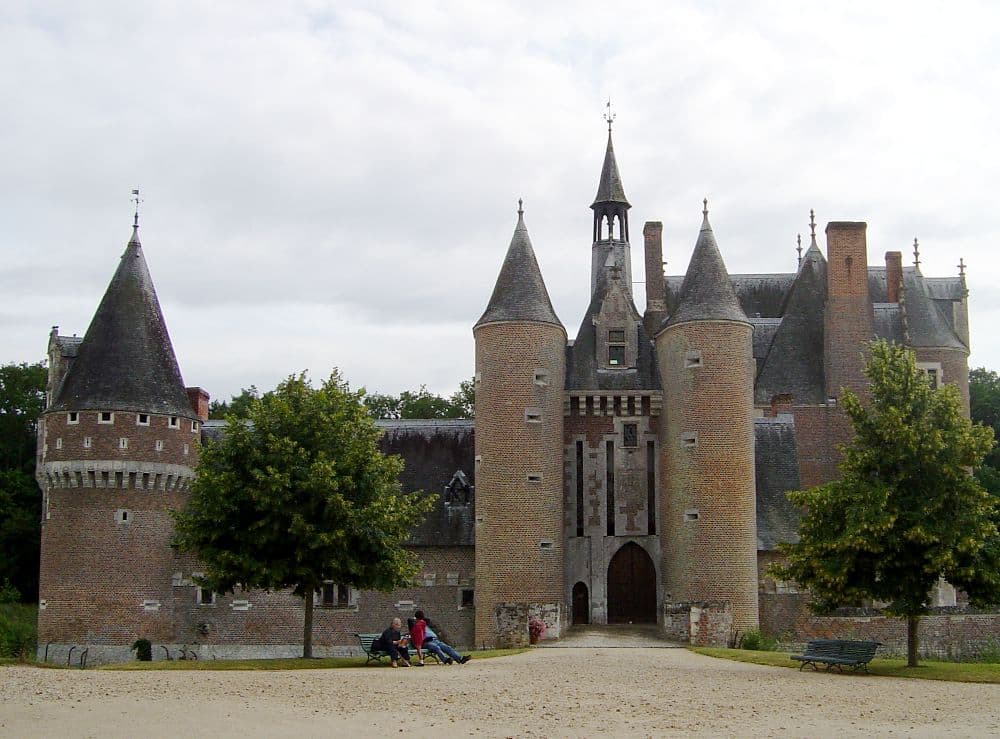
Château du Moulin
Château du Moulin stands as a remarkable example of a late medieval moated castle located in Lassay-sur-Croisne, France. Constructed between 1480 and 1501 by Philippe du Moulin, a noble closely associated with the French royal court, this castle combines residential elegance with defensive features typical of its era. Its well-preserved condition and distinctive architectural elements make it an important monument reflecting the social and political aspirations of the late 15th century French nobility.
Historical background and significance
The château was commissioned by Philippe du Moulin, a childhood friend and loyal supporter of King Charles VIII. Philippe's rise in status was closely tied to his service during the Italian Wars, particularly after he reportedly saved the king's life at the Battle of Fornoue in 1495. This act earned him royal favor, including the title of lord of Langres and permission in 1490 to fortify his residence in Lassay-sur-Croisne.
Unlike purely military fortresses, Château du Moulin was designed primarily as a seigneurial residence that symbolized Philippe's elevated social rank rather than as a stronghold intended to withstand prolonged sieges. Nevertheless, it incorporated military architectural elements such as moats, towers, and fortified walls, reflecting the turbulent political climate of the late medieval period in France.
The château remained inhabited and maintained through the centuries, preserving much of its original structure. It was officially recognized as a historic monument in the early 20th century, with listings in 1926 and 1927 that acknowledged its cultural and architectural importance.
Architectural features and layout
Moated rectangular plan and towers
The castle is arranged as a rectangular water castle, surrounded by a wide moat fed by a tributary of the nearby Croisne River. This moat not only provided defense but also enhanced the aesthetic appeal of the residence. Originally, the château featured four corner towers, creating a symmetrical and imposing silhouette typical of late medieval noble residences.
Today, some of these towers survive, along with substantial portions of the curtain walls and earthworks. One tower was notably elevated during the reign of King Louis XIII in the early 17th century, showing the château's continued adaptation over time.
Gatehouse and heraldry
The gatehouse remains a prominent feature, retaining its heavy oak doors reinforced with iron bindings dating from the original construction period. Above the entrance, the coat of arms of Philippe du Moulin is displayed, featuring a blue shield with three silver horizontal bars, symbolizing the founder's identity and noble status.
Building materials and decorative elements
The walls are constructed from a combination of rubble stone and glazed bricks in alternating orange and black patterns. This decorative brickwork is characteristic of late 15th-century architecture in the Loire Valley region, blending functional masonry with aesthetic detail.
Residential quarters and interior features
The living quarters include multiple floors accessed by a spiral stone staircase housed within a square tower. A distinctive round half-tower extends from the main façade, forming a secondary wing that adds complexity to the château's layout.
At the base of the residential section lies an oratory finished in the Flamboyant Gothic style, noted for its intricate tracery and elaborate stonework. This private chapel provided a dedicated space for prayer and reflection, underscoring the importance of religion in noble life during the period.
Later history and cultural significance
Throughout the 20th century and into the 21st, Château du Moulin gained recognition as a filming location for historic movies and television series, including Jean Epstein’s 1926 silent film Mauprat and the 1960s TV series Thierry la Fronde. Its authentic medieval appearance and well-preserved structures made it an ideal setting for period productions.
Despite its cultural value, the château was closed to public visits in January 2020 and placed for sale by its owners. Prior to closure, visitors could explore some of the well-appointed interior rooms and the surrounding grounds.
Gardens and grounds
The château grounds include a kitchen garden redesigned in the 20th century using an optical illusion technique that arranges plots in decreasing sizes to enhance depth perception. The site of the former garden now hosts the Conservatoire de la Fraise (Strawberry Conservatory), linking the historic estate to modern horticultural activities.
Preservation and current condition
Château du Moulin is classified as well preserved, maintaining much of its original structure and architectural details. The survival of key elements such as the moat, towers, gatehouse, and oratory offers valuable insight into late medieval castle design and noble lifestyle.
Its status as a protected historic monument ensures ongoing efforts to conserve its fabric, although its closure to the public limits direct access. The château remains an important cultural landmark in the region, embodying the architectural and historical heritage of late medieval France.
Frequently asked questions (FAQ)
- How do I get to Château du Moulin?
- Château du Moulin is located in Lassay-sur-Croisne, France, easily accessible by car. There are also public transport options available from nearby towns, with local buses connecting to the castle. Make sure to check the schedule in advance for a smooth visit.
- What is the historical significance of Château du Moulin?
- Château du Moulin dates back to the 15th century and reflects the architectural style of the period. It has been a pivotal part of local history, serving various roles throughout its existence, including a residence and a defensive stronghold. The castle's rich history provides insight into the region's past and the evolution of French architecture.
- When was Château du Moulin built?
- Château du Moulin was constructed in the late 15th century, making it a significant example of medieval architecture. Its construction coincided with a period of peace in France, allowing for the development of grand structures. The castle has undergone various renovations over the centuries while retaining its original charm.
- Can I take guided tours of Château du Moulin?
- Yes, guided tours are available at Château du Moulin, offering a deeper insight into its history and architecture. Tours are typically conducted by knowledgeable guides who share fascinating stories about the castle and its former inhabitants. It is recommended to check the schedule and book in advance during peak season.
- Why is Château du Moulin a popular tourist destination?
- Château du Moulin is popular due to its stunning architecture, rich history, and picturesque setting. Visitors are drawn to its well-preserved structures and the beautiful gardens surrounding the castle. Additionally, the castle often hosts events and exhibitions, making it a vibrant spot for cultural experiences.
- Is it possible to visit Château du Moulin with children?
- Absolutely! Château du Moulin is family-friendly and offers activities suitable for children, including treasure hunts and educational workshops. The spacious grounds allow kids to explore safely while learning about history in an engaging way. Families are encouraged to plan their visit to ensure a fun and informative experience for all ages.
- What are the opening hours of Château du Moulin?
- Château du Moulin is typically open to visitors from March to November, with hours varying by season. It is advisable to check the official website for the most current opening times and any special closures. Planning your visit during weekdays may provide a quieter experience.
- What are the ticket prices for Château du Moulin?
- Ticket prices for Château du Moulin vary based on age and the type of tour selected. Generally, adults can expect to pay a standard admission fee, while discounts may be available for students and children. Special rates may also apply for group visits or guided tours, so it's worth checking ahead.
- What is the best time to visit Château du Moulin?
- The best time to visit Château du Moulin is during the spring and early autumn months when the weather is pleasant and the gardens are in full bloom. These seasons also tend to be less crowded compared to the peak summer months. Consider visiting during weekdays for a more tranquil experience.
- Are there nearby attractions to visit after Château du Moulin?
- Yes, there are several attractions nearby, including charming villages and scenic walking trails that showcase the natural beauty of the region. Visitors can explore local markets, vineyards, and other historical sites that complement the experience at Château du Moulin. It’s a great opportunity to immerse yourself in the culture and landscape of the area.
Photo gallery

Information
Loading map...
Visitor reviews
No reviews yet. Been here? Write the first review and help other travelers!
Write the first reviewVisited this castle? Share your experience
Your review helps other travelers and adds first-hand knowledge to our encyclopedia.



