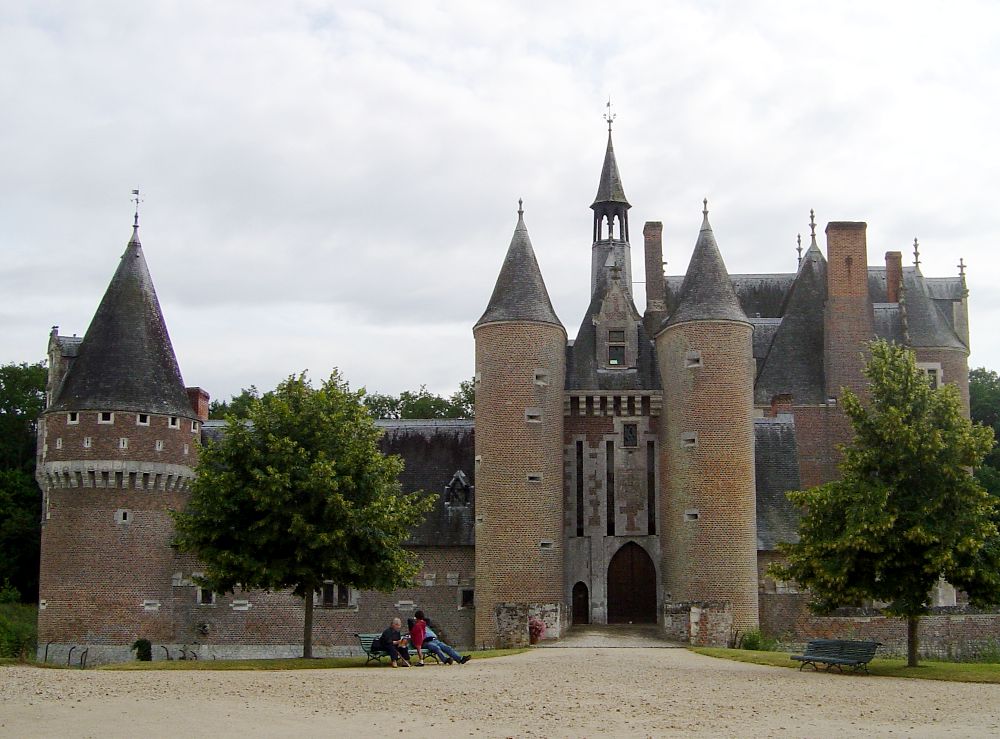
Château de Chémery
Château de Chémery is a historically significant moated castle located in the village of Chémery in the Hauts-de-France region of northern France. Originally constructed in the 13th century, this castle exemplifies the architectural and social evolution of French noble estates from the High Medieval period through the Renaissance and beyond. Today, it functions as a hotel, offering visitors a unique opportunity to experience a castle that has maintained much of its historic character while adapting to modern uses.
Medieval origins and feudal significance
The earliest records of Château de Chémery date back to 1236, when it was held by Regnault de Chémery as part of a seigneurie under the jurisdiction of St-Aignan. The castle's location on a hill and its encompassing moats reflect typical defensive strategies of the High Medieval period, designed to protect against both local conflicts and larger military threats. Its strategic position within the village and the surrounding agricultural lands made it an important local power center.
Ownership of the château passed through several prominent noble families over the centuries, including the Chalon-Tonnerre, Beauvilliers, and later the La Roche-Aymon families. These transitions illustrate the castle's role within the feudal hierarchy and its integration into regional networks of power and landholding. The estate's considerable size, encompassing around 600 hectares during the Renaissance, underscores its economic as well as military importance.
Renaissance transformation and architectural evolution
During the 16th century Renaissance period, Château de Chémery underwent significant architectural modifications that altered its medieval fortress character. These changes included the addition of Renaissance stylistic elements, which softened the castle's military austerity and introduced more comfortable residential features. The eastern wing of the château, in particular, displays these Renaissance characteristics, contrasting with the more robust medieval western section.
The Renaissance renovations were commissioned by owners such as René de Beauvilliers, the 2nd Count of St Aignan, who held the estate until his death in 1557. These updates reflected broader trends in French noble architecture, where castles were increasingly adapted to serve as stately homes and centers of agricultural management rather than purely military fortifications.
In the early 18th century, the château was further remodeled by the Dukes of Beauvilliers and St-Aignan, who converted parts of the estate into a farm and agricultural hub. This practical adaptation included sealing many windows with brick to reduce tax liabilities and to create optimal storage conditions for grain, demonstrating the castle's evolving function in response to economic pressures.
Architectural layout and defensive features
The château is enclosed entirely by moats, with original defensive features such as a former drawbridge on the south side and a wooden footbridge on the west side providing access across the water. The main buildings are arranged around a rectangular courtyard, creating a compact and organized layout that balances defense and residential needs.
The western portion of the castle retains its medieval construction style, characterized by robust masonry and defensive design, while the eastern wing reflects Renaissance architectural refinements. Surrounding the courtyard on the north and east sides are low, single-story service buildings known as communs. These masonry structures with tiled roofs were designed as three adjoining but independent units, linking to the Renaissance wing and supporting the estate's agricultural functions.
A western enclosure wall connects the service buildings to the medieval wing, completing the courtyard's defensive circuit. Archaeological investigations have revealed a corridor built within the thickness of this enclosure wall, approximately 1.40 meters wide, which likely served as a protected walkway facilitating movement within the castle's defenses.
Outbuildings and estate features
Outside the moated perimeter lie two notable outbuildings: a tithe barn to the west, historically used for collecting and storing agricultural produce, and an old dovecote to the southeast, which served as a pigeon house. While the dovecote is not part of the château's current ownership, these structures contribute to understanding the estate's agricultural and economic role throughout its history.
Modern history and preservation efforts
The château remained in the hands of the La Roche-Aymon family until 1970, after which it was acquired by Madeleine Lemaître, a writer. In 1981, architect Axel Fontaine and his wife Cécile took ownership and initiated restoration efforts aimed at preserving the château's historical and architectural heritage. These efforts have helped maintain the structural integrity and aesthetic qualities of the château while adapting it for contemporary use.
In addition to its residential and agricultural functions, Château de Chémery has served as a filming location for the television series "Un gars, Une fille," highlighting its cultural relevance and picturesque qualities. Today, as a hotel, it offers visitors the chance to explore a castle that embodies centuries of French history, architecture, and rural life.
Cultural and architectural significance
Château de Chémery stands as a notable example of a hill castle that transitioned from a medieval fortress into a Renaissance residence and agricultural estate. Its well-preserved moats, courtyard layout, and combination of medieval and Renaissance architectural elements provide valuable insights into the changing functions and aesthetics of French noble castles over several centuries.
The castle's layered history, from its feudal origins through its Renaissance transformation and later agricultural adaptations, reflects broader historical trends in French society, economy, and architecture. Its continued preservation and adaptive reuse demonstrate the importance of maintaining such heritage sites for educational and cultural enrichment.
Frequently asked questions (FAQ)
- How do I get to Château de Chémery?
- Château de Chémery is located in the charming village of Chémery in France. You can reach it by car via the D938 road, and there is ample parking available nearby. Public transportation options are limited, so planning your visit by car is recommended.
- What is the historical significance of Château de Chémery?
- Château de Chémery dates back to the 15th century and has a rich history tied to the local nobility. It has witnessed various historical events and changes throughout the centuries, making it a significant landmark in the region. The castle reflects the architectural styles of its time and serves as a testament to the area's heritage.
- When was Château de Chémery built?
- Château de Chémery was constructed in the late 15th century, with its foundation laid in 1480. The castle showcases the evolution of French architecture through its various renovations and restorations over the centuries. Its historical elements provide insight into the architectural trends of the period.
- Can I take photographs inside Château de Chémery?
- Yes, visitors are welcome to take photographs inside and outside Château de Chémery. However, it is important to be respectful of any signs indicating restrictions, particularly in areas that may house sensitive artifacts. Capturing the beauty of the castle is encouraged to help remember your visit.
- Why is Château de Chémery a popular tourist destination?
- Château de Chémery attracts visitors due to its stunning architecture, rich history, and picturesque surroundings. It offers a unique glimpse into the past and the opportunity to explore its beautiful gardens and grounds. Additionally, its proximity to other attractions in the region enhances its appeal as a travel destination.
- What are the opening hours for Château de Chémery?
- Château de Chémery is typically open to visitors from 10 AM to 6 PM during the summer months, with reduced hours in the winter. It's recommended to verify the current opening hours on their official website before your visit, as they can vary seasonally or due to special events.
- What are the ticket prices for visiting Château de Chémery?
- Ticket prices for Château de Chémery are generally affordable, with discounts available for students and seniors. Children under a certain age may be granted free admission, making it a family-friendly destination. Check the castle's website for the most up-to-date pricing information and any special offers.
- What are some nearby attractions to Château de Chémery?
- Nearby attractions include the beautiful Parc Naturel Régional de la Brenne, known for its stunning landscapes and wildlife. Visitors can also explore other historical sites and charming villages within a short drive. Combining a visit to Château de Chémery with these nearby destinations can enhance your overall experience in the region.
Information
Website
Visit websiteSources & official resources
Verify the information above using these authoritative references.
Loading map...
Visitor reviews
No reviews yet. Been here? Write the first review and help other travelers!
Write the first reviewVisited this castle? Share your experience
Your review helps other travelers and adds first-hand knowledge to our encyclopedia.