Château du Frankenbourg — France castle

Château du Frankenbourg

Château du Frankenbourg: medieval hill castle ruins in Neubois, France
Neubois, Grand-Est, France
High Medieval (11th–13th c.)
Ruins

Château du Frankenbourg is a remarkable medieval hill castle located on the Schlossberg mountain near Neubois, France. Its origins extend far beyond the medieval period, encompassing ancient Celtic and Roman settlements that highlight the site's long-standing strategic importance. Today, the castle stands as impressive ruins surrounded by dense forest, offering visitors a glimpse into centuries of layered history.

Ancient origins and early history

The site of Château du Frankenbourg has been occupied since the late Bronze Age and Iron Age, as evidenced by the presence of fortified enclosures known as "pagan walls" typical of the La Tène culture. These prehistoric fortifications, built with large stone blocks joined by dovetail-shaped joints, cover approximately 1.7 hectares and demonstrate advanced craftsmanship. Archaeological finds including Celtic and Roman coins, a bronze axe, and a bull-shaped figurine attest to continuous habitation and the area's significance through multiple eras.

According to tradition, the fortress was founded in the 5th century by Clovis I, the first King of the Franks, who allegedly named it Frankenbourg, meaning "Fortress of the Franks." Legend associates the site with Clovis's conversion to Christianity near the Battle of Tolbiac and the construction of a chapel. While these stories hold symbolic value, the earliest documented mention of the castle appears much later, in a 1123 charter issued by Emperor Henry V.

Medieval development and ownership

During the High Medieval period, Château du Frankenbourg was controlled by the Counts of Frankenbourg, related to the Counts of Saarbrücken and later the Counts of Werd. The castle functioned as a fief of the Bishopric of Strasbourg, reflecting its role within the feudal and ecclesiastical hierarchy of the region. Over subsequent centuries, ownership passed through noble families such as the Linange or Leiningen lineage.

By the late 15th century, the castle came under the administration of the Strasbourg Cathedral Chapter and the city of Sélestat, marking a shift from aristocratic to ecclesiastical and municipal control. This transition illustrates the evolving political landscape of the region during the late medieval period.

Destruction and decline

In 1582, a lightning strike caused a devastating fire that severely damaged the castle. Although some rebuilding efforts followed, the fortress gradually fell into disuse and ruin by the 17th century. Its strategic importance diminished, and the castle was eventually abandoned.

Recognizing its historical and cultural significance, the ruins were declared a historic monument in 1896. Further protection was extended to the surrounding prehistoric fortifications, including the "pagan wall," in 1990, underscoring ongoing efforts to preserve the site's full archaeological heritage.

Architectural features and remains

Medieval fortifications

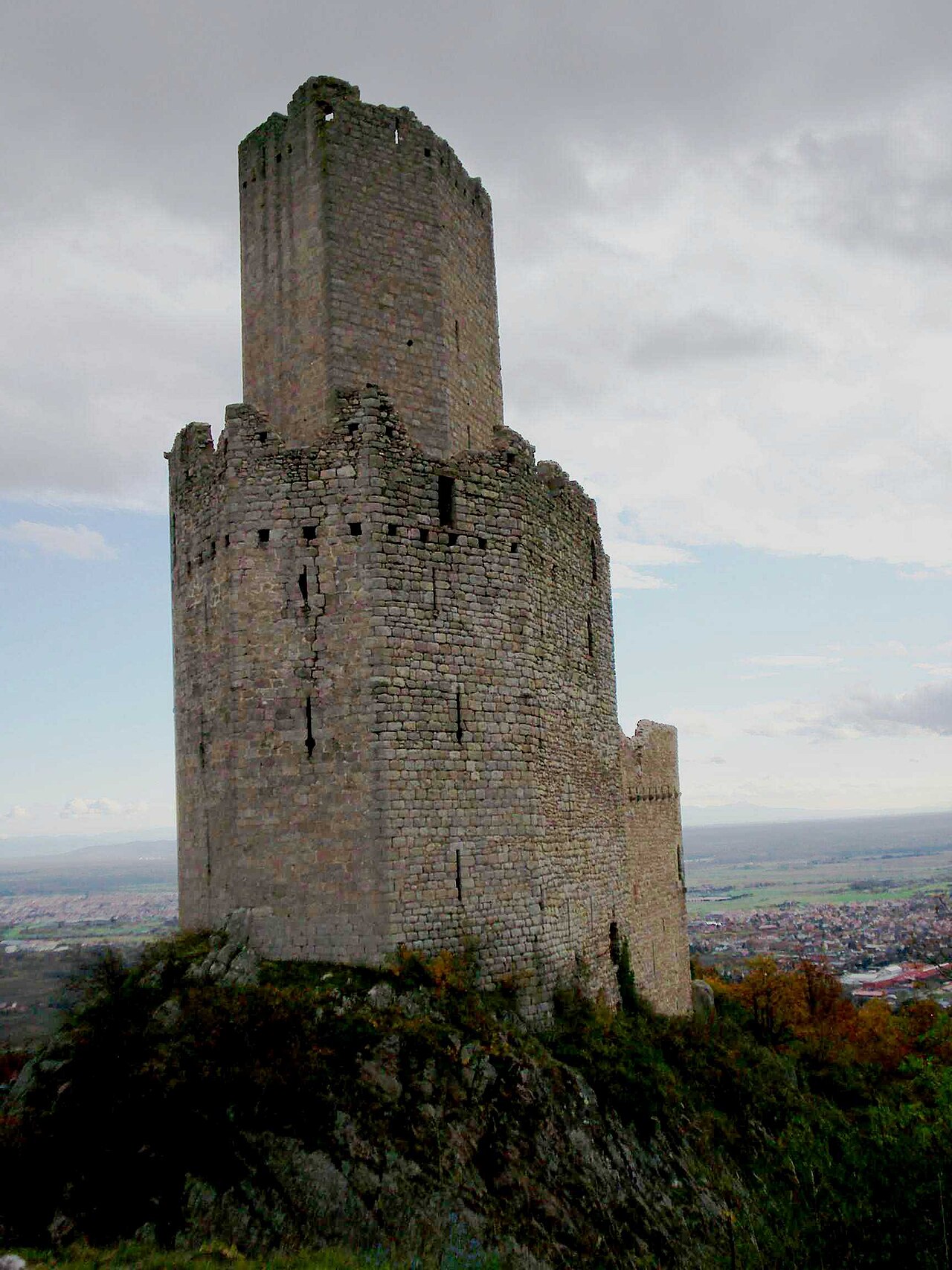
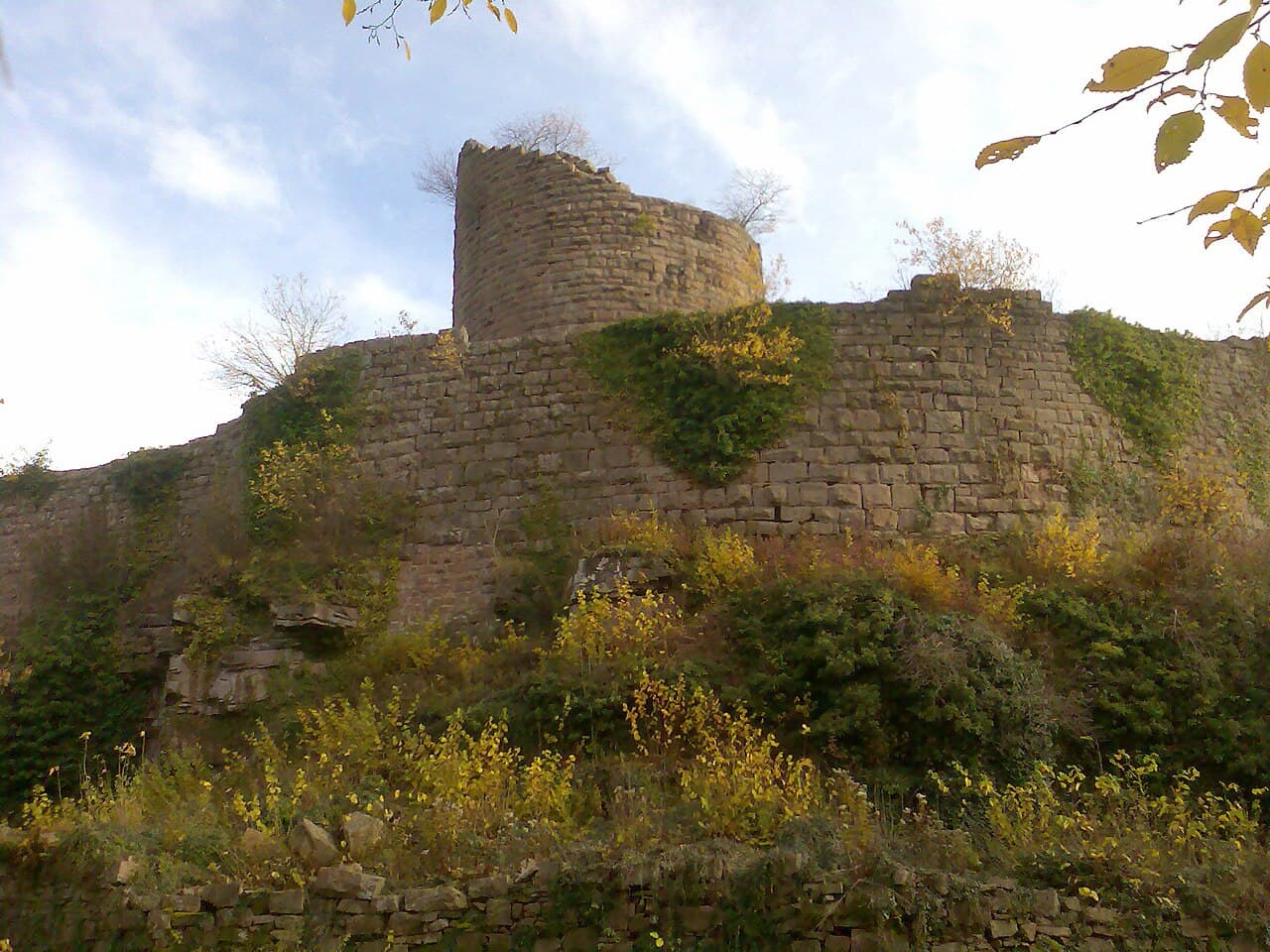
The castle's remains primarily consist of a large rectangular enclosure atop the sandstone ridge of the Schlossberg. The medieval walls vary between six and ten meters in height and form a polygonal shape that adapts to the natural rock formations. The main entrance, facing north toward the Alsace plain, is protected by a distinctive 16th-century triangular tower designed to guard the gate.

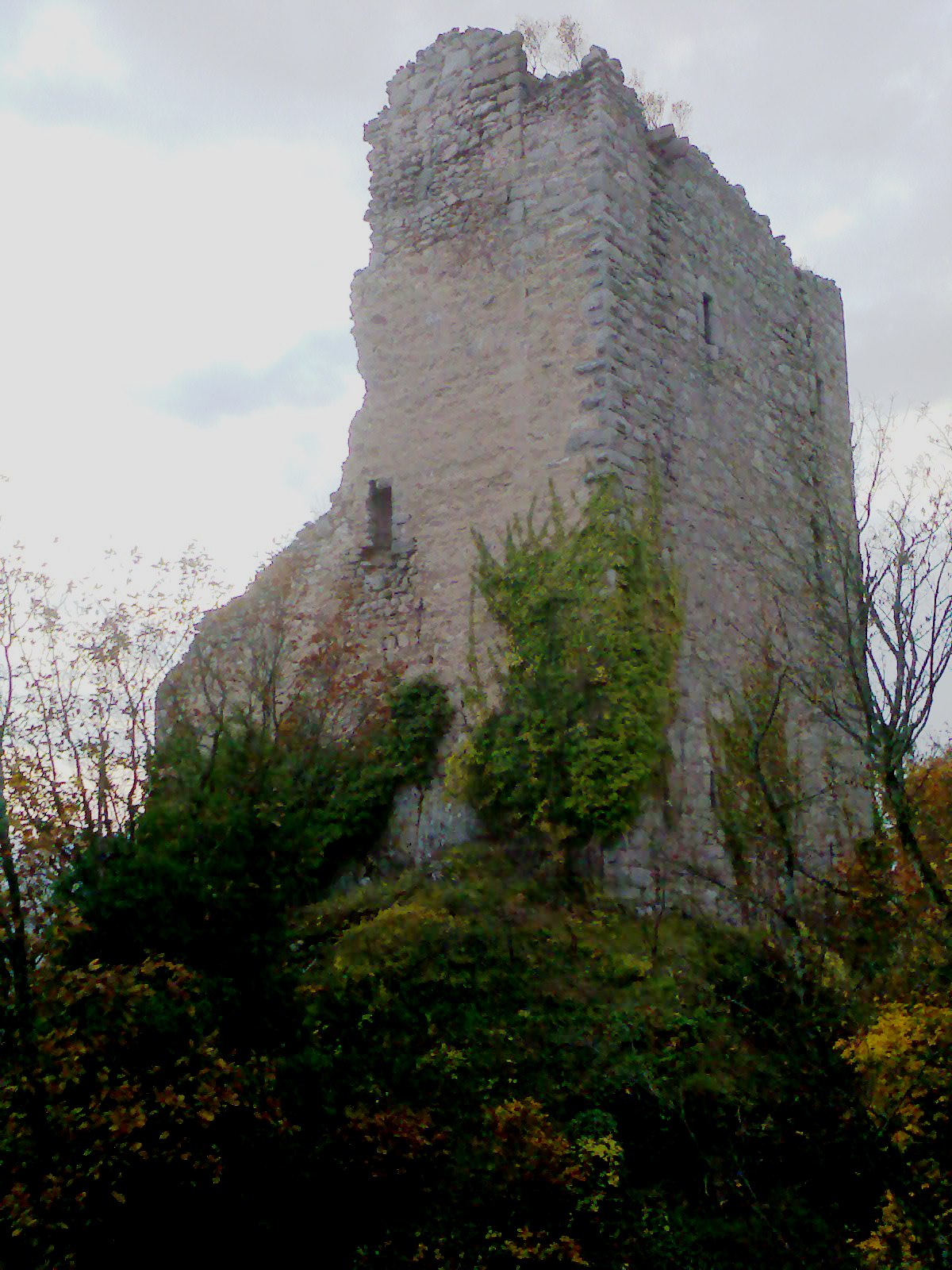
One of the most prominent surviving structures is the bergfried, a defensive tower on the north side near the Val de Villé. Constructed around the mid-13th century, the bergfried rises approximately eleven meters with exceptionally thick walls measuring four meters. Its vaulted interior, built from brick, was carefully restored in 1981, making it one of the best-preserved medieval components of the castle.

Internal structures and defensive elements

Within the courtyard on the southern side, remnants of a stone staircase with about twenty to twenty-five steps remain, likely providing access to the first floor of an internal building. Near the southern entrance, a small window partially obscured by debris offers views over the Lièpvrette valley, suggesting its use for defensive observation.

Archaeological excavations have revealed remains of residential buildings toward the west side of the enclosure, as well as a 12th-century bastion on the southern edge. These features illustrate the castle's expansion and adaptation over time in response to changing defensive needs.

Prehistoric fortifications

Extending below the medieval fortifications along the west slope of the mountain lies the ancient "pagan wall," a massive enclosure dating from the late Iron Age. This wall, measuring about 1.8 meters thick and up to 0.7 meters tall in its best-preserved sections, encircles the site and reflects the area's long-standing strategic significance. The complex construction technique using dovetail-shaped joints highlights the advanced engineering skills of the Celtic builders.

Preservation and modern significance

Since the 1970s, local historical societies and hiking groups have actively worked to clear, stabilize, and conserve the ruins of Château du Frankenbourg. The significant restoration of the bergfried and ongoing conservation efforts have helped preserve both the medieval architecture and the older prehistoric fortifications. This work ensures that the site's rich historical layers remain accessible for study, education, and tourism.

Château du Frankenbourg stands as a testament to the region's complex history, from ancient Celtic and Roman times through the medieval era and into the modern period. Its ruins offer visitors a unique opportunity to explore a site where multiple historical epochs converge, showcasing the evolution of fortification architecture and the enduring legacy of the Frankish kingdom.

Frequently asked questions (FAQ)

How do I get to Château du Frankenbourg?
Château du Frankenbourg is located in Neubois, France, and can be reached by car or public transport. The nearest major city is Strasbourg, from where you can take a train or drive approximately 45 minutes to the castle. There is parking available on-site for visitors.
What is the historical significance of Château du Frankenbourg?
Château du Frankenbourg dates back to the 13th century and played a vital role in the region's history during the medieval period. It served as a strategic fortress and has witnessed numerous battles and sieges. The castle is a fine example of medieval military architecture and reflects the historical conflicts of the Alsace region.
When was Château du Frankenbourg built?
Construction of Château du Frankenbourg began in the early 13th century, specifically around 1230. Over the years, it underwent several modifications and restorations, especially after being damaged during conflicts. Its enduring structure offers visitors a glimpse into the architectural styles of the medieval era.
Can I visit Château du Frankenbourg year-round?
Yes, Château du Frankenbourg is open to visitors year-round, but hours may vary by season. It is advisable to check the official website for current opening hours and any seasonal events. Guided tours are also available to enhance your visit.
Why is Château du Frankenbourg a popular tourist attraction?
Château du Frankenbourg attracts visitors due to its rich history, stunning architecture, and picturesque views of the Alsace region. The castle's well-preserved ruins offer a unique experience for history enthusiasts and photographers alike. Additionally, the surrounding natural beauty adds to its appeal.
Is it possible to access Château du Frankenbourg with a wheelchair?
Château du Frankenbourg has limited accessibility due to its historical structure and uneven terrain. While some areas may be accessible, it is recommended to contact the castle administration prior to your visit to inquire about specific accommodations for visitors with mobility challenges.
What are the ticket prices for visiting Château du Frankenbourg?
Ticket prices for Château du Frankenbourg vary depending on age and whether you opt for a guided tour. Generally, adult tickets are around 8 euros, while discounted rates are available for students and seniors. Children under a certain age can enter for free, making it a family-friendly destination.
What is the best time to visit Château du Frankenbourg?
The best time to visit Château du Frankenbourg is during the spring and early fall when the weather is mild, and the surrounding landscape is beautiful. Summer months can be busy with tourists, but the castle also hosts various events. Planning your visit during weekdays can help you avoid large crowds.
Are there any nearby attractions to visit alongside Château du Frankenbourg?
Yes, there are several attractions near Château du Frankenbourg, including the charming village of Ribeauvillé and the picturesque Haut-Koenigsbourg Castle. The Alsace Wine Route is also close by, offering opportunities for wine tasting and exploring local vineyards. These nearby sites make for a delightful day trip.

Photo gallery

Château du Frankenbourg
Click to view

Photo by Ahandrich at German Wikipedia•Public domain

1 photo • Click any image to view in full screen

Information

Hill Castle

Loading map...

Visitor reviews

No reviews yet. Been here? Write the first review and help other travelers!

Write the first review

Visited this castle? Share your experience

Your review helps other travelers and adds first-hand knowledge to our encyclopedia.

Write a review

(5/5)

0/2000 characters

Your review will be visible after admin approval

Nearby castles

3.4 km

Thanvillé Castle

7 Rue du Château, France

Thanvillé Castle, known locally as Château de Thanvillé, is a historic fortress situated near the village of Thanvillé in the Bas-Rhin department of France, within the region commonly referred to as Northern Alsace or the Middle Vosges. This castle occupies a strategic position near an ancient salt road, which historically made it significant both as a defensive stronghold and as a trading post controlling access to the valley. Early history and original construction The castle's origins date back to 1084, when Hugues VII, Count of Éguisheim and Dabo, initiated its construction on lands owned by the Moyenmoutier Abbey. The initial structure was a robust fortified castle designed primarily for defense and to oversee the vital trade routes passing through the region. The castle's early military and economic roles underscore its importance during the high medieval period. Tragically, Hugues VII was assassinated in 1089 by the bishop of Strasbourg, an event that led to the castle passing into the hands of the Hattstatt family. Following this transfer, the castle fades from detailed historical records for over four centuries, suggesting either a period of relative quiet or limited documentation. Renaissance rebuilding and turmoil By the early 16th century, specifically around 1507, Thanvillé Castle had fallen into ruin, likely due to the numerous conflicts and wars that ravaged the region. At this time, Jean de Hattstatt undertook efforts to rebuild the castle, transforming it more into a residence than a purely military fortress. In 1540, the castle came under the stewardship of Jean de Vidrange, an advisor to Duke Antoine de Lorraine. This period saw the castle continue as a noble residence until it was severely damaged by a devastating fire in 1571, which also destroyed much of the adjacent village. The castle was restored following this disaster, demonstrating its ongoing importance to local nobility. Destruction and restoration during the thirty years' war The Thirty Years' War (1618–1648) brought further destruction when, in 1633, the castle was looted and burned by Swedish troops. This event left the castle in ruins once more. Reconstruction began in 1663 under François-Anne de Bazin de Chanlas, who sought to restore the castle's residential function. By 1680, the castle was divided among his five sons, who sold it in 1688 to Marie-Agnès de Cocqfontaine. Under her ownership and that of her descendants, Thanvillé Castle was transformed into a more comfortable and pleasant noble residence, reflecting the architectural and domestic trends of the late 17th and early 18th centuries. Later ownership and modern history In 1786, ownership passed to the Dartein family, and then in 1810 to the Castex family through marriage. The Castex family undertook beautification efforts, enhancing the castle's aesthetic and residential appeal. The castle suffered significant damage during the Franco-Prussian War around 1870, when it was sacked by German troops. The Castex family restored it afterward, only to face similar destruction again in 1918 during World War I, when German forces once more ransacked the property. The resilience of the Castex family is evident in their repeated restorations after each conflict. Finally, in 1982, the castle was sold to the Wagner family, who currently own it. Today, Thanvillé Castle is private property and is used as a venue for weddings and receptions. Unfortunately, it is not open to the public for regular tours. Architectural characteristics and significance Thanvillé Castle originally featured typical high medieval fortification elements such as thick defensive walls, towers, and a strategic location overseeing a valley and trade route. Its repeated destruction and restorations over centuries have resulted in a complex architectural evolution, blending medieval defensive features with later residential modifications from the Renaissance and post-medieval periods. The castle's location near the Middle Vosges mountains and its role guarding the salt road highlight its historical importance in regional trade and military defense. Although much of the original medieval fabric has been altered or rebuilt, the castle remains an important example of a fortified residence adapting through turbulent European history. Current condition and accessibility Presently, Thanvillé Castle is well preserved thanks to the restoration efforts of its owners over the centuries. However, as it remains a private residence and event venue, it is not accessible to the general public for tours or visits. Its preservation ensures that the castle continues to embody the layered history of the Alsace region.

High Medieval (11th–13th c.)
Details
4.7 km
Château de Ramstein — France castle

Château de Ramstein

Scherwiller, France

Château de Ramstein is a notable medieval castle ruin located in the commune of Scherwiller, in the Bas-Rhin département of France. Perched at an altitude of 384 meters on the same crest as the nearby Château de l'Ortenbourg, Ramstein is separated from Ortenbourg by just a few hundred meters. The castle's name likely derives from the German words "Ram" (crow) and "Stein" (stone), meaning "rock of the crow," a name reflecting both its natural rocky setting and the local fauna. Historical context and construction The Château de Ramstein was constructed around 1293 during the high medieval period. It was originally built as a strategic rear base during the siege of Château de l'Ortenbourg by Otto von Ochenstein, amidst the conflict between Adolf of Nassau and Albert of Habsburg. Initially, Ramstein began as a simple fortified tower designed to support siege engines, reflecting its military purpose during this turbulent era. At the start of the 14th century, the castle underwent significant expansion. The original tower was strengthened, and an additional defensive wall was added, transforming Ramstein from a mere siege support tower into a more substantial fortified castle. This development reflects the castle's growing strategic importance in the region and the evolving nature of military architecture at the time. Architecture and layout The castle's remaining structures include the exterior curtain wall and two granite turrets, which give insight into its original defensive design. The use of granite, a durable local stone, provided strong fortifications resistant to siege weapons and the elements. The castle's elevated position on a rocky crest offered commanding views of the surrounding landscape, crucial for surveillance and defense. Though much of the castle is in ruins, the surviving walls and turrets illustrate typical high medieval military architecture with thick walls and defensive towers designed to repel attackers and protect the garrison within. Significant historical events In 1421, the castle was attacked and pillaged by forces from Strasbourg, indicating its continued military and political significance in the region during the late medieval period. Later, during the Thirty Years' War in 1633, the castle was destroyed by Swedish troops. This destruction marked the end of Ramstein as a functioning fortress. In the 19th century, the ruins of Ramstein became the property of Baron Mathieu de Fabvier, who also owned the nearby Château de l'Ortenbourg. Despite its ruined state, the castle's remains have been preserved as a cultural heritage site. Later history and preservation Since 1924, the Château de Ramstein has been listed as a monument historique by the French Ministry of Culture, recognizing its historical and architectural significance. The castle is currently owned by the local commune. Due to concerns over landslide risks in the area, the castle has been closed to visitors since 1983 to ensure public safety. Despite this, the site remains an important example of medieval fortifications in the Alsace region. Related sites and additional features The Château de Ramstein should not be confused with another castle of the same name located in the commune of Baerenthal. That Ramstein castle was built by the lords of Falkenstein in the late 13th century to control the Zinselbach valley and was destroyed in 1355 after being used as a base for brigands. Near the Baerenthal Ramstein, two underground passages were dug in 1936 by French military engineers as part of the Maginot Line defenses. These tunnels served as shelters during World War II battles but are unrelated to the Scherwiller Ramstein. Visiting information and current status Visitors to the Château de Ramstein in Scherwiller should note that access has been restricted due to safety concerns. The castle's ruins are fragile, and the risk of landslides has led to the closure of the site to the public since the early 1980s. Despite limited access, the castle remains a point of interest for historians, archaeologists, and enthusiasts of medieval military architecture, offering a glimpse into the defensive strategies and feudal conflicts of the high medieval period in the Alsace region.

High Medieval (11th–13th c.)
Details
5 km
Ortenbourg Castle — France castle

Ortenbourg Castle

Scherwiller, France

Ortenbourg Castle, also known as Château de l'Ortenbourg or Burg Ortenberg, is a remarkable medieval fortress located west of the village of Scherwiller in the Bas-Rhin department of France. Nestled in the region historically referred to as Northern Alsace or the Middle Vosges, this hill castle stands prominently on a granite peak of the Rittersberg mountain at an altitude of 443 meters. Its strategic position commands the entrance to the Lièpvre valley and offers clear views of the famous Haut-Kœnigsbourg Castle, another iconic Alsatian stronghold. The castle's origins trace back to the mid-13th century, with construction dated between 1260 and 1265. It was built by Rudolf of Habsburg on the site of an older fortification, marking a significant phase of expansion and architectural development. The castle features a distinctive pentagonal keep approximately 35 meters high, comprising five floors. This keep is encircled by a high curtain wall equipped with numerous niched loopholes designed for archers and crossbowmen, reflecting the military innovations of the late medieval period. Architectural features and defensive structures The pentagonal design of the keep was a sophisticated military architectural choice, allowing for better deflection of projectiles and enhanced defense against sieges. The keep's six levels of defensive fire positions made it a formidable stronghold. Surrounding the keep is a massive shield wall approximately 17 meters high, constructed with five defensive tiers. The lower three levels contain tall arrow slits, while the fourth level features a wooden gallery or hoardings, enabling defenders to observe and repel attackers effectively. The uppermost level is crenellated, providing an additional fighting platform. Adjacent to the keep lies a two-story residential building characterized by early Gothic windows with tracery, indicating the castle's role not only as a military fortress but also as a noble residence. A large cistern situated between the keep and the living quarters ensured a reliable water supply during prolonged sieges. The castle is further protected by a deep neck ditch separating it from the neighboring Ritterberg massif, adding an extra layer of defense. Historical context and ownership The castle's history is closely intertwined with the regional power struggles of medieval Alsace. Initially linked to the Ortenberg family in the 10th and 11th centuries, the castle passed to the Hohenberg family in the early 12th century before coming under Habsburg control through Rudolf of Habsburg's marriage and subsequent rebuilding efforts around 1265. The fortress served as the administrative center for the royal Habsburg family's Alsatian properties, with Otto d'Ochsenstein acting as bailiff. In 1293, the castle was besieged by Otto IV of Ochsenstein, who, operating from the nearby Ramstein Castle, forced its surrender after a three-week siege. This event underscored the castle's strategic importance and the intense regional conflicts involving the Habsburgs and local nobles. Financial difficulties later compelled the Habsburgs to sell Ortenbourg to the Müllenheim family in 1314. The castle suffered damage during the 1374 campaign led by Jean I of Lorraine and was occupied by outlawed knights in the 15th century until recaptured by Pierre de Hagenbach in 1470. Strasbourg forces reclaimed it in 1474, after which the castle was restored in collaboration with its owners and the town authorities. Decline and destruction From the 16th century onward, Ortenbourg Castle began to decline due to neglect and changing military technologies. Despite continued habitation into the early 17th century, the castle's strategic relevance diminished. In 1633, during the Thirty Years' War, Swedish forces set fire to the castle, causing significant destruction and accelerating its abandonment. Ownership passed through several noble families, including the Bollwiller and Choiseul families, until the upheavals of the French Revolution. Restoration efforts commenced in the 19th century under Baron Philippe-Gaétan Mathieu de Faviers and were later supported by local preservation groups from 1966 onward. The castle has been officially protected as a historic monument since 1923, with formal classification in 1924. Current condition and visitor experience Today, Ortenbourg Castle remains a well-preserved ruin and a masterpiece of military architecture. Its imposing pentagonal keep and shield wall are visible from a distance, harmoniously integrated into the surrounding landscape of oak forests and thermophilic plant species. Visitors can access the site via marked hiking trails, though the ascent is steep and demanding, requiring approximately an hour's uphill walk. The castle's layout and surviving structures offer valuable insights into medieval defensive design and residential arrangements. The presence of armaments such as crossbows, artillery pieces, and culverins recorded in 15th-century documents attests to its military significance. Additionally, records of livestock and food supplies from 1471 reveal aspects of domestic life within the fortress. Ortenbourg Castle stands as a testament to the turbulent history of Alsace, reflecting centuries of feudal power struggles, architectural innovation, and cultural heritage. It remains a must-see destination for enthusiasts of medieval history and castle architecture.

Late Medieval (14th–15th c.)
Details