Château de Ramstein
Château de Ramstein is a notable medieval castle ruin located in the commune of Scherwiller, in the Bas-Rhin département of France. Perched at an altitude of 384 meters on the same crest as the nearby Château de l'Ortenbourg, Ramstein is separated from Ortenbourg by just a few hundred meters. The castle's name likely derives from the German words "Ram" (crow) and "Stein" (stone), meaning "rock of the crow," a name reflecting both its natural rocky setting and the local fauna.
Historical context and construction
The Château de Ramstein was constructed around 1293 during the high medieval period. It was originally built as a strategic rear base during the siege of Château de l'Ortenbourg by Otto von Ochenstein, amidst the conflict between Adolf of Nassau and Albert of Habsburg. Initially, Ramstein began as a simple fortified tower designed to support siege engines, reflecting its military purpose during this turbulent era.
At the start of the 14th century, the castle underwent significant expansion. The original tower was strengthened, and an additional defensive wall was added, transforming Ramstein from a mere siege support tower into a more substantial fortified castle. This development reflects the castle's growing strategic importance in the region and the evolving nature of military architecture at the time.
Architecture and layout
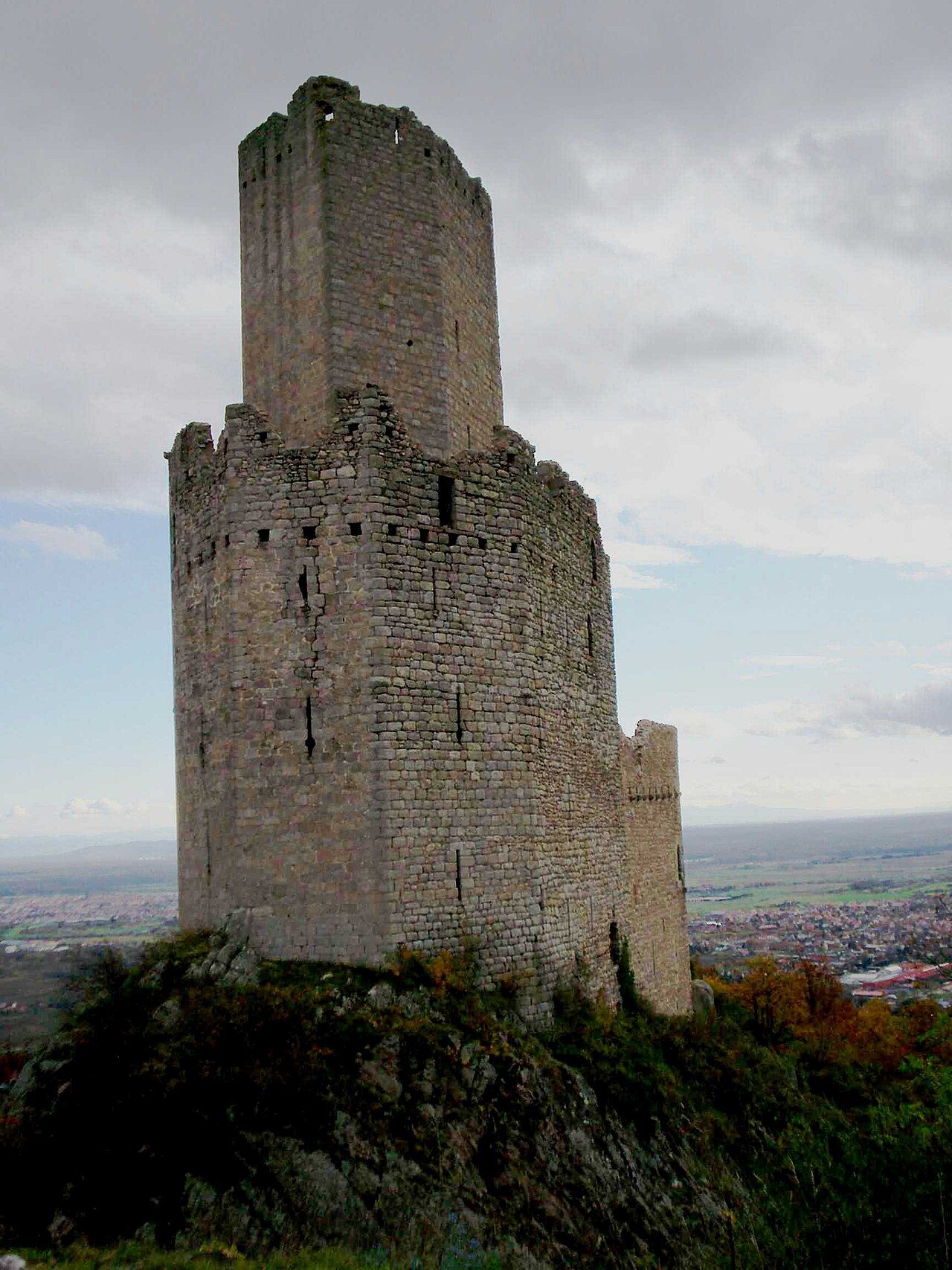
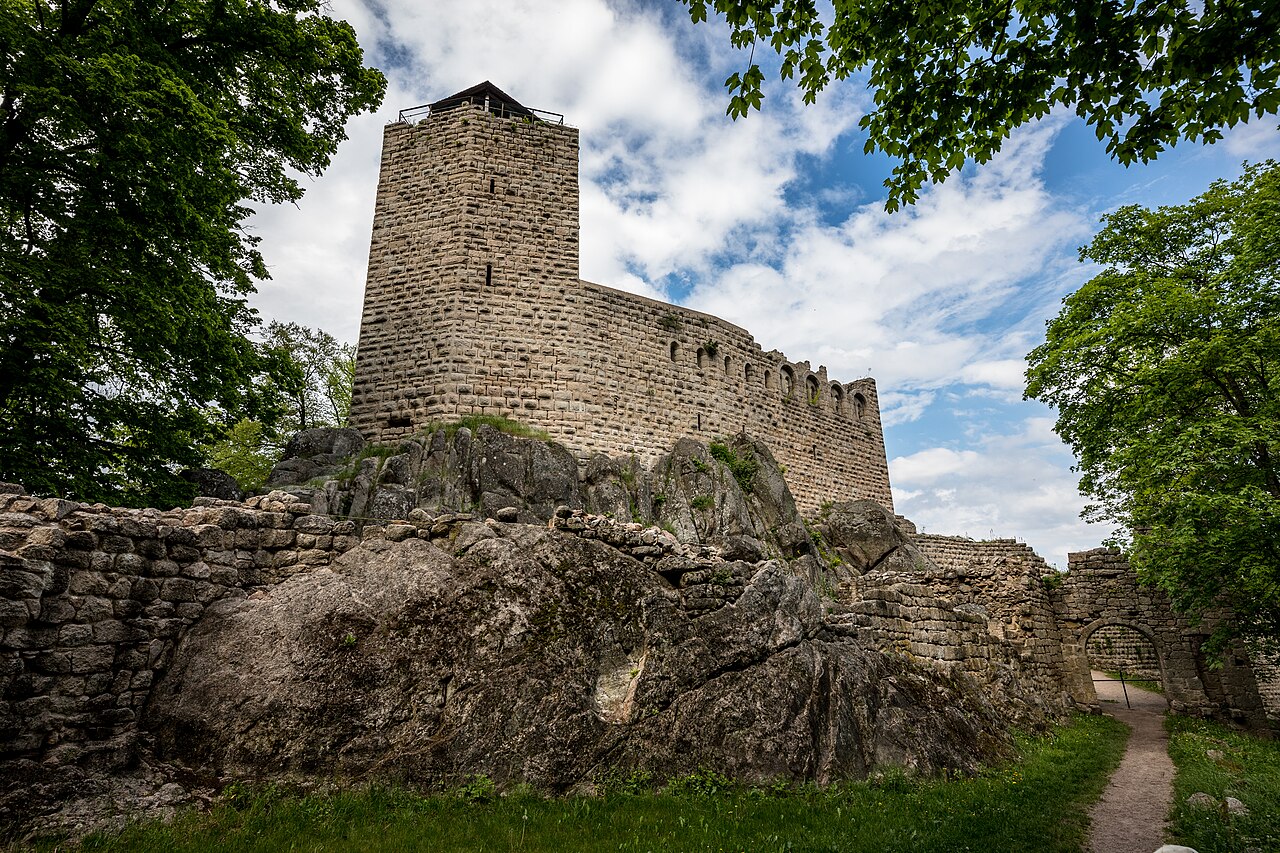
The castle's remaining structures include the exterior curtain wall and two granite turrets, which give insight into its original defensive design. The use of granite, a durable local stone, provided strong fortifications resistant to siege weapons and the elements. The castle's elevated position on a rocky crest offered commanding views of the surrounding landscape, crucial for surveillance and defense.
Though much of the castle is in ruins, the surviving walls and turrets illustrate typical high medieval military architecture with thick walls and defensive towers designed to repel attackers and protect the garrison within.
Significant historical events
In 1421, the castle was attacked and pillaged by forces from Strasbourg, indicating its continued military and political significance in the region during the late medieval period. Later, during the Thirty Years' War in 1633, the castle was destroyed by Swedish troops. This destruction marked the end of Ramstein as a functioning fortress.
In the 19th century, the ruins of Ramstein became the property of Baron Mathieu de Fabvier, who also owned the nearby Château de l'Ortenbourg. Despite its ruined state, the castle's remains have been preserved as a cultural heritage site.
Later history and preservation
Since 1924, the Château de Ramstein has been listed as a monument historique by the French Ministry of Culture, recognizing its historical and architectural significance. The castle is currently owned by the local commune.
Due to concerns over landslide risks in the area, the castle has been closed to visitors since 1983 to ensure public safety. Despite this, the site remains an important example of medieval fortifications in the Alsace region.
Related sites and additional features
The Château de Ramstein should not be confused with another castle of the same name located in the commune of Baerenthal. That Ramstein castle was built by the lords of Falkenstein in the late 13th century to control the Zinselbach valley and was destroyed in 1355 after being used as a base for brigands.
Near the Baerenthal Ramstein, two underground passages were dug in 1936 by French military engineers as part of the Maginot Line defenses. These tunnels served as shelters during World War II battles but are unrelated to the Scherwiller Ramstein.
Visiting information and current status
Visitors to the Château de Ramstein in Scherwiller should note that access has been restricted due to safety concerns. The castle's ruins are fragile, and the risk of landslides has led to the closure of the site to the public since the early 1980s.
Despite limited access, the castle remains a point of interest for historians, archaeologists, and enthusiasts of medieval military architecture, offering a glimpse into the defensive strategies and feudal conflicts of the high medieval period in the Alsace region.
Frequently asked questions (FAQ)
- When was Château de Ramstein built and for what purpose?
- Château de Ramstein was built around 1293 as a rear base during the siege of Château de l'Ortenbourg, serving as a military support tower initially.
- What remains of Château de Ramstein today?
- Today, only the exterior walls and two granite turrets remain of Château de Ramstein, reflecting its original medieval defensive architecture.
- Why is Château de Ramstein closed to visitors?
- The castle has been closed since 1983 due to the risk of landslides, making it unsafe for public access.
- Who owned Château de Ramstein in the 19th century?
- In the 19th century, Château de Ramstein became the property of Baron Mathieu de Fabvier, who also owned Château de l'Ortenbourg.
- What significant events affected Château de Ramstein?
- The castle was attacked by Strasbourg in 1421 and destroyed by Swedish troops in 1633 during the Thirty Years' War.
Photo gallery

Photo by Ahandrich at German Wikipedia•Public domain
Information
Current owner
Commune
Loading map...
Visitor reviews
No reviews yet. Been here? Write the first review and help other travelers!
Write the first reviewVisited this castle? Share your experience
Your review helps other travelers and adds first-hand knowledge to our encyclopedia.