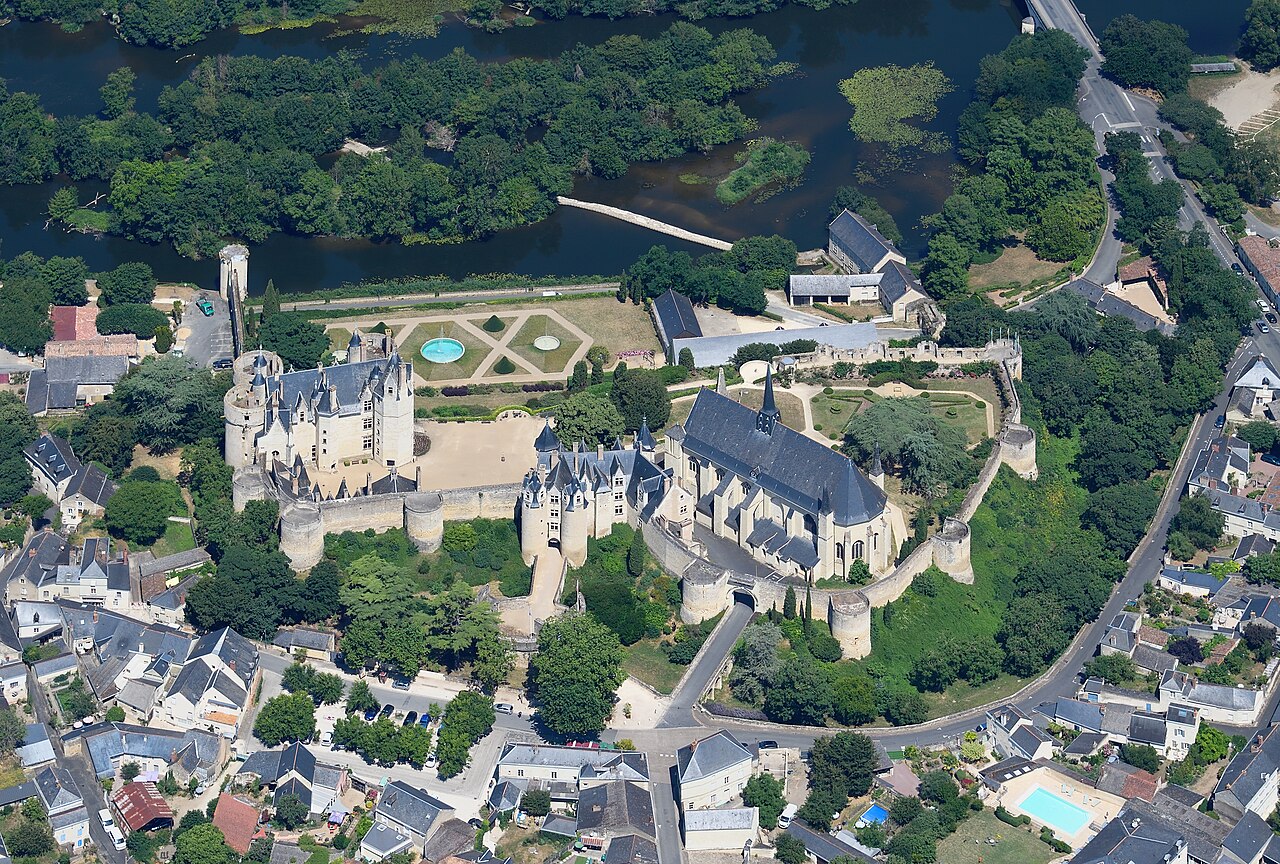
Château du Bois de Sanzay

Château du Bois de Sanzay: a late medieval castle in Saint-Martin-de-Sanzay
Saint-Martin-de-Sanzay, Nouvelle-Aquitaine, France
Late Medieval (14th–15th c.)
Well Preserved

The Château du Bois de Sanzay is a notable example of a late medieval castle situated in the commune of Saint-Martin-de-Sanzay, nestled between the towns of Thouars and Saumur in western France. This castle reflects the architectural and social transitions of the 15th century, combining defensive features with residential comfort and later enhancements from the 18th century.

Historical context and ownership

The castle's origins are documented through records linked to the Saint Laon de Thouars abbey, which indicate that in 1487, the land was acquired from the clergy by François de Beaumont, a knight holding the title Seigneur du Boys de Sanzay. This transfer marks the castle's emergence as a noble residence during a period when fortified homes were evolving into more comfortable estates. The Beaumont family played a significant role in the local nobility, and their ownership reflects the castle's status within the region's feudal hierarchy.

Architectural features and construction materials

The central building of the Château du Bois de Sanzay was constructed in the 15th century, characteristic of the late medieval period. Its structure incorporates large blocks of tufa stone in certain sections, prized for its durability and ease of carving, alongside rubble masonry used in other parts of the building. This combination was typical for castles of this era in the Loire Valley, balancing strength with available local materials.

Distinctive architectural elements include high chimneys that rise prominently above the roofline, serving both functional and aesthetic purposes. The interior boasts three monumental gothic fireplaces, which not only provided heat but also demonstrated the wealth and status of the inhabitants through their elaborate design. An échauguette—a small projecting turret used for observation—adds to the castle's defensive features, while a private chapel within the estate reflects the religious practices of the noble family.

Below ground, extensive cellars provide storage and preservation spaces, typical of castles designed to sustain long periods of residence or siege. The presence of these cellars indicates the castle's role as a self-sufficient estate.

Later additions and landscape features

In the 18th century, the Château du Bois de Sanzay underwent significant modifications that introduced elements of the period's architectural style and landscaping trends. These additions softened the castle's medieval austerity and adapted it for more modern residential use.

The estate includes a dovecote, an important symbol of feudal privilege and a practical structure for raising pigeons, which provided meat and fertilizer. The presence of a French formal garden demonstrates the influence of classical garden design, characterized by geometric patterns, symmetry, and carefully manicured plantings, reflecting the aesthetic preferences of the Enlightenment era.

A pond on the grounds contributes to the scenic quality of the estate and may have served practical purposes such as fish farming or water management.

Architectural significance and preservation

The Château du Bois de Sanzay is a valuable example of a late medieval fortified residence that transitioned into a more refined noble estate. Its combination of gothic architectural features and 18th-century enhancements illustrates the evolution of castle architecture in the Loire Valley region.

The use of tufa stone and rubble masonry showcases typical regional building practices, while the castle's gable roofs, chimneys, and échauguette reflect defensive and domestic architectural concerns of the time. The preservation of interior elements like the monumental fireplaces and chapel provides insight into the lifestyle and social status of its historical occupants.

Visiting the château and its surroundings

Today, the Château du Bois de Sanzay remains a significant cultural heritage site within the Nouvelle-Aquitaine region of France. Visitors can appreciate the castle's architectural details and its surrounding landscape, including the formal gardens and dovecote, which offer a glimpse into the estate's historical function and aesthetic.

The castle's location between Thouars and Saumur places it within a rich historical corridor known for numerous castles and medieval sites, making it an attractive destination for enthusiasts of history and architecture.

Information

Hill Castle

Loading map...

Visitor reviews

No reviews yet. Been here? Write the first review and help other travelers!

Write the first review

Visited this castle? Share your experience

Your review helps other travelers and adds first-hand knowledge to our encyclopedia.

Write a review

(5/5)

0/2000 characters

Your review will be visible after admin approval

Nearby castles

7.7 km

Castle of Montreuil-Bellay

Montreuil-Bellay, France

The castle of Montreuil-Bellay stands as a remarkable example of medieval military architecture in the Loire Valley region of France. Perched strategically on a hill overlooking the Thouet River, this fortress has origins dating back to the 11th century, built on the site of an earlier Gallo-Roman village. Its commanding position provided both defensive advantages and control over the surrounding territory, a typical characteristic of high medieval fortifications. Historical background and strategic importance The site of Montreuil-Bellay was originally occupied during the Gallo-Roman period, indicating its long-standing significance as a settlement. The castle itself was constructed in the high medieval period, around the 11th century, reflecting the feudal need for fortified residences to assert control and protect lands. Throughout the centuries, the castle played a crucial role in regional conflicts and power struggles, including the Hundred Years' War between England and France, where fortifications like Montreuil-Bellay were vital for defense. Architectural features and fortifications Montreuil-Bellay castle is classified as a hill castle, built on elevated terrain to maximize defensive capabilities. The fortress features massive curtain walls interspersed with round towers and square defensive towers, designed to provide overlapping fields of fire against attackers. The walls are punctuated by arrow slits and crenellations, typical of high medieval military architecture. The castle's keep or donjon is a prominent feature, serving as the last line of defense and residence for the lord. The complex also includes a moat fed by the nearby river, enhancing its defensive perimeter. Inside the walls, the castle contains a courtyard with residential buildings, a chapel, and storage facilities, reflecting its dual role as a military stronghold and noble residence. Renaissance modifications and later history While the core structure dates from the high medieval period, the castle underwent significant modifications during the Renaissance, adapting to changing military technologies and residential needs. Some of the defensive features were softened to incorporate more comfortable living quarters and decorative elements typical of the period. In later centuries, the castle passed through various owners and was preserved as a historic monument. It remains one of the best-preserved medieval castles in the region, recognized officially as a monument historique by the French Ministry of Culture. Cultural significance and present-day use Today, the castle of Montreuil-Bellay is not only a significant cultural and historical landmark but also lends its name to a renowned premium wine produced on the estate. The castle attracts visitors interested in medieval history, architecture, and French heritage. Its well-preserved state allows for exploration of the fortifications, towers, and courtyards, offering insight into medieval defensive strategies as well as noble life during the high medieval and renaissance periods. The castle's location in the picturesque Loire Valley further enhances its appeal as a tourist destination.

High Medieval (11th–13th c.)
Details
7.9 km
Montreuil-Bellay Castle — France castle

Montreuil-Bellay Castle

Montreuil-Bellay, France

Montreuil-Bellay Castle stands as a magnificent example of medieval military architecture nestled on a strategic hilltop overlooking the Thouet River in the historic region of Anjou, now part of the Centre-Val de Loire in France. Its origins date back to the 11th century, when the formidable Foulque Nerra, Count of Anjou, known as the Black Falcon, constructed the first citadel on the foundations of a Roman oppidum. This initial fortress laid the groundwork for what would become one of the most impregnable strongholds in the region, reflecting the turbulent power struggles of medieval France and England. The castle’s early history is deeply intertwined with the rise of the Plantagenet dynasty, whose members, including Geoffroy Plantagenet, Henry II, Aliénor of Aquitaine, Richard the Lionheart, and King John, left a lasting legacy on both French and English history. The fortress was entrusted to Foulque Nerra’s vassal, Giraud Berlay, whose family name evolved into Bellay. This lineage helped establish Montreuil-Bellay’s reputation as a fortress of strategic importance during the protracted conflicts between the English crown and the French monarchy. Medieval origins and architectural evolution Foundations and early construction The castle’s location atop a hill provided natural defensive advantages, enhanced by its proximity to the Thouet River. The initial fortifications constructed by Foulque Nerra in the early 11th century were primarily wooden structures that gradually gave way to stone constructions as military technology advanced. The site’s earlier use as a Roman oppidum underscores its long-standing strategic significance. Expansion under the Berlay family During the 12th and 13th centuries, Montreuil-Bellay underwent significant fortification upgrades. The Berlay family, particularly under Guillaume de Melun in the late 12th century, expanded the castle’s defenses by erecting massive stone walls and creating a complex of 13 interlocking towers. These towers formed a formidable curtain wall designed to withstand prolonged sieges. Access to the castle was tightly controlled through a single fortified gateway, emphasizing its role as a military bastion. Architectural features and defensive elements The castle’s design reflects typical high medieval military architecture, with thick curtain walls, battlements, and a moat system fed by the nearby river. The interlocking towers provided overlapping fields of fire for archers and crossbowmen, while the elevated position allowed for early detection of approaching enemies. The castle also contained residential quarters, a chapel, and storage facilities, illustrating its dual role as a fortress and noble residence. Historical significance and notable events Plantagenet conflicts and french royal visits Montreuil-Bellay was a contested site during the power struggles between the Plantagenet rulers of England and the French crown. Between 1148 and 1151, the castle endured a three-year siege that culminated in Geoffroy Plantagenet overcoming resistance from Giraud II Berlay. Later, the castle hosted the courts of King Philip Augustus in 1208 and King Louis VIII in 1224, underscoring its importance as a royal stronghold. Hundred years war and religious conflicts The Hundred Years War brought hardship to Montreuil-Bellay and its surroundings. The castle served as a refuge for local populations during raids and famine. The lord at the time, William de Melun-Tancarville, died heroically at the Battle of Azincourt in 1415. The subsequent centuries saw the castle involved in the French Wars of Religion, where it was a site of arms exchanges between Catholic and Protestant forces. Despite the turmoil, the fortress itself remained largely intact. Early modern period and notable residents In the 17th century, the castle came under the ownership of Henry II of Orleans, Duke of Longueville, who played a diplomatic role in signing the Treaty of Westphalia in 1648. His wife, Geneviève de Condé, was a prominent figure during the Fronde rebellion and was confined to Montreuil-Bellay by order of Louis XIV. The castle thus continued to be a center of political intrigue and noble residence. Modern history and restoration Revolutionary period and subsequent ownership During the French Revolution, the castle was confiscated and converted into a prison for women suspected of royalist sympathies. After the revolution, it was purchased by Adrien Niveleau, a wealthy merchant from Saumur. He subdivided the estate into rental units, reflecting changing social and economic conditions. 19th century restoration and contemporary status In the mid-19th century, Niveleau’s daughter undertook a significant restoration project, refurbishing parts of the castle in the Troubadour style, a romanticized medieval revival architectural movement. The castle remains in the hands of her descendants today, who continue to preserve its historical and architectural heritage. The estate also produces a premium wine under the Montreuil-Bellay name, linking the site’s cultural significance to the region’s viticultural tradition. Architectural highlights and visitor experience Fortifications and towers The castle’s 13 interlocking towers and massive curtain walls provide a striking example of medieval defensive architecture. Visitors can explore the battlements, fortified gateways, and moats that once protected the stronghold from invaders. The layout demonstrates the evolution of military design from early wooden fortifications to sophisticated stone castles. Interior and stylistic elements Inside, the castle features rooms restored in the Troubadour style, characterized by ornate medieval-inspired decor and furnishings. The blend of original medieval elements and 19th-century romantic restoration offers a unique glimpse into the castle’s layered history. Cultural significance and heritage status Recognized as a monument historique by the French Ministry of Culture, Montreuil-Bellay Castle is a protected heritage site that attracts visitors interested in medieval history, architecture, and French nobility. Its continuous ownership by the same family lineage adds to its authenticity and appeal.

High Medieval (11th–13th c.)
Details
8.7 km

Château de Berrie

, France

The Château de Berrie stands as a remarkable example of medieval fortification nestled in the region of Hauts-de-France, France. This hill castle boasts a rich history that traces back to the Carolingian Empire, a pivotal era in European history known for its consolidation of power and cultural revival during the early Middle Ages. Originally conceived as a fortified refuge, the château’s strategic location atop an oval-shaped elevated platform provided natural defensive advantages, which were further enhanced by its surrounding moat and complex subterranean structures. Early origins and carolingian foundations The earliest phase of the Château de Berrie dates to the late Carolingian period, when the site featured a light well ingeniously carved directly into the local tuffeau rock. This architectural element was not merely decorative but served a functional purpose by illuminating extensive underground cellars. These cellars were vital for daily living needs and provided a secure refuge during times of invasion and unrest, reflecting the turbulent political landscape of early medieval Europe. During this period, the château’s design emphasized both shelter and defense, combining natural geological features with human ingenuity to create a fortified complex that could sustain its inhabitants under siege. The use of troglodyte dwellings—rock-cut habitations integrated into the counterscarp of the moat—demonstrates an advanced adaptation of the natural environment for both residential and defensive purposes. Medieval development and noble stewardship By the late 11th century, the land encompassing the château was part of the barony of Loudun, which fell under the influence of the powerful Angevin domain. This affiliation positioned the château within a broader network of feudal territories that played significant roles in regional politics and military affairs. Following the death of the last lord of Berrie in 1274, control of the castle passed to the lords of Amboise, who were also viscounts of Thouars. These lords administered the surrounding castle district, or châtellenie, until the mid-15th century. The Amboise family’s tenure marked an era of architectural and administrative consolidation, with the château serving as a key stronghold in their territorial holdings. Subsequently, ownership transitioned to the La Trémoille family, a distinguished noble house in France, known for their political influence and patronage of the arts. The château’s connection to such prominent families underscores its importance as both a defensive fortress and a noble residence. In 1695, the château was acquired by the Dreux-Brézé family, who maintained possession for several centuries. Notably, the château escaped the widespread destruction that befell many noble estates during the French Revolution, preserving its historical fabric for future generations. The late 19th century saw significant renovation efforts led by a descendant of the Dreux-Brézé family, who undertook restoration and modernization projects to adapt the château to contemporary tastes while respecting its historical integrity. Architectural features and subterranean elements The château’s architecture is distinguished by a harmonious blend of Romanesque and medieval elements, reflecting its long history of construction and adaptation. Several rooms within the château date back to the Romanesque period, characterized by their pointed vaults and paired arches, which exemplify the robust and functional style of early medieval architecture. The medieval halls are supported by sturdy pillars and feature arcatures—small series of arches that serve both decorative and structural purposes. The presence of silos within the castle indicates its role in storage and sustenance during sieges or prolonged habitation. One of the château’s most notable features is its castle chapel, established in the early 13th century (circa 1200-1250). This sacred space preserves 15th-century mural paintings that offer valuable insight into the religious and artistic traditions maintained within the château across centuries. The chapel’s survival and artistic heritage contribute significantly to the château’s cultural importance. The château’s defensive system is further enhanced by its moat, which encircles the elevated platform and incorporates a sophisticated network of tunnels and troglodyte dwellings within the counterscarp. Access to the extensive subterranean cellars, including a remarkable hypostyle rotunda—a circular chamber supported by multiple columns—is achieved via dry moats that separate the château from the surrounding terrain. These features illustrate the castle’s complex layering of defense, habitation, and storage, making it a unique example of medieval military architecture. Preservation and cultural significance Today, the Château de Berrie is recognized for its exceptional preservation, combining both visible above-ground structures and extensive underground spaces. Its designation as a historic monument in 1997 underscores its value as a cultural and architectural heritage site in France. The château’s survival through centuries of political upheaval, including the French Revolution, and its continuous adaptation by successive noble families, reflect its resilience and enduring significance. Visitors to the site can explore a rich tapestry of history, from its Carolingian origins to its medieval expansions and modern restorations, all set within the picturesque landscape of Hauts-de-France. As a hill castle with a unique combination of troglodyte dwellings, Romanesque architecture, and extensive subterranean features, Château de Berrie offers a compelling glimpse into the evolution of medieval fortifications and noble residences in northern France.

Details