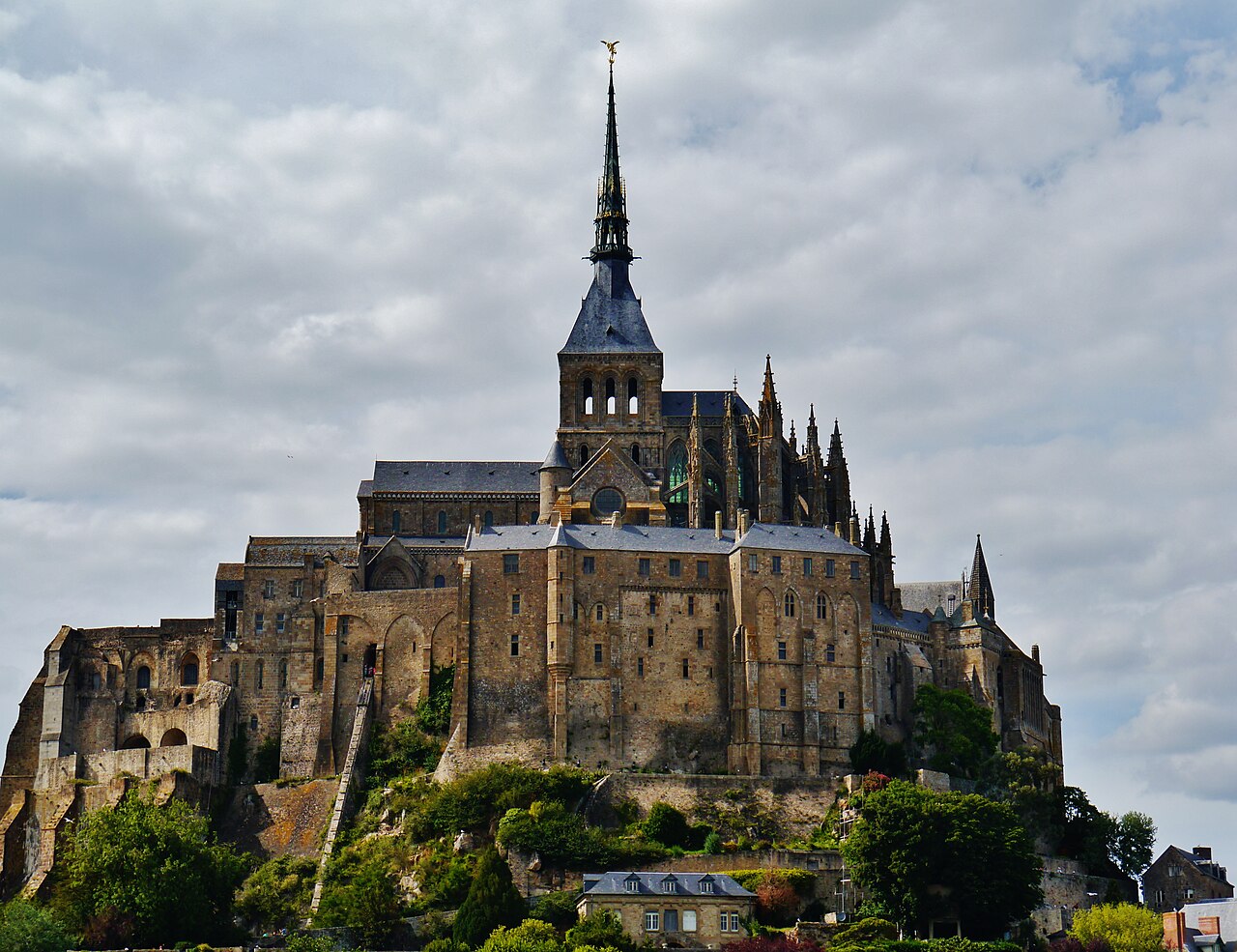
Château des Montgommery

Château des Montgommery in Ducey, Normandy
Ducey, France
Renaissance (15th–17th c.)
Well Preserved

The Château des Montgommery stands as a significant Renaissance castle located in the town of Ducey in the Normandy region of France. This historic estate has deep roots connected to the Norman Montgommery family, who acquired the domain in 1521 through the marriage of James Montgommery to Claude de la Boissière, the heiress of the lands of Ducey. The castle itself was constructed in the early 17th century by Gabriel II de Montgommery, a prominent figure of his time and a direct descendant of the infamous Gabriel de Montgommery, known for his tragic role in the death of King Henry II of France during a tournament in 1559.

Historical background of the Montgommery family

The Montgommery family was a notable Norman noble house with a complex and turbulent history. The elder Gabriel de Montgommery, who died in 1574, was a controversial figure due to his accidental killing of King Henry II, an event that had significant repercussions in French politics and religion. Following this incident, Gabriel converted to Protestantism and became a leading Protestant chief in the region, which earned him the enmity of powerful figures such as Catherine de Médicis. His execution by beheading on the Place des Grèves in Paris marked a dramatic end to his life, but his legacy continued through his descendants.

Construction and architectural features

The castle built by Gabriel II de Montgommery, born in 1565, reflects the architectural style and sensibilities of the early 17th century Renaissance period in Normandy. While specific architectural details of the château are less documented, it is characteristic of the era's transition from medieval fortifications to more comfortable and elegant noble residences. The château likely features elements such as symmetrical façades, large windows to allow more light, and decorative stonework typical of Renaissance architecture in France.

Layout and defensive aspects

Although built in a period when castles were evolving from purely military fortresses to stately homes, the Château des Montgommery may retain some defensive features inherited from earlier medieval designs. These could include thick stone walls and possibly remnants of towers or battlements, adapted to the needs of the time. The location in Ducey, near the Avranches area, was strategically important during the religious conflicts of the 16th and 17th centuries.

Religious and political significance

The Montgommery family played a vital role in the Protestant cause during the French Wars of Religion. Gabriel II, following his father's footsteps, became a chief Protestant leader in the Avranches region. This affiliation influenced the castle's history and may have affected its design and use, balancing residential comfort with the need for security in a time of religious conflict.

Current status and public access

Today, the Château des Montgommery is open to the public, allowing visitors to explore its historic grounds and appreciate its architectural heritage. The castle serves as a cultural landmark in Normandy, reflecting the region's rich history and the legacy of the Montgommery family. Visitors can learn about the castle's connection to significant historical events and figures while enjoying the ambiance of a well-preserved Renaissance estate.

Visitor information

While specific visiting hours and ticket prices vary, the château typically welcomes guests interested in history, architecture, and French heritage. Its location in Ducey makes it accessible for tourists exploring Normandy's castles and historic sites. Nearby attractions include other Norman castles and the beautiful surrounding countryside.

Frequently asked questions (FAQ)

What are the opening hours for Château des Montgommery?
Château des Montgommery is open to visitors from 10 AM to 6 PM, Tuesday through Sunday. It is closed on Mondays and during certain holidays, so it's advisable to check their official website for any seasonal changes.
How do I get to Château des Montgommery?
You can reach Château des Montgommery by car, as there is ample parking available nearby. If you prefer public transport, the nearest train station is located in Ducey, followed by a short taxi ride to the castle.
Is there an admission fee to enter Château des Montgommery?
Yes, there is a modest admission fee to explore the castle grounds and its exhibitions. Tickets are priced at €8 for adults and €4 for children aged 6 to 12, with discounts available for families and groups.
When was Château des Montgommery built?
Château des Montgommery was constructed in the 15th century and has a rich history tied to the region's noble families. Its architecture reflects the transitional style between medieval fortifications and Renaissance elegance.
What is the historical significance of Château des Montgommery?
The castle is significant as it served as the residence of the Montgommery family, who played a crucial role in the history of Normandy. It witnessed various historical events, including conflicts during the Hundred Years' War.
Can I take guided tours at Château des Montgommery?
Yes, guided tours are available and provide a deeper insight into the castle's history and architecture. These tours are typically conducted in English and French, and it is recommended to book in advance for larger groups.
Why is the architecture of Château des Montgommery noteworthy?
The architecture of Château des Montgommery is noteworthy for its blend of medieval and Renaissance styles, characterized by intricate stonework and fortified structures. This unique combination illustrates the evolution of castle design in France.
What is the best time to visit Château des Montgommery?
The best time to visit is during the spring and early autumn months when the weather is pleasant and the gardens are in full bloom. Additionally, special events and exhibitions are often held during these seasons, enhancing the visitor experience.
Are there nearby attractions to visit after Château des Montgommery?
Yes, nearby attractions include the historic town of Ducey, with its charming streets and local markets, as well as the beautiful Mont Saint-Michel, which is just a short drive away. These sites provide a great opportunity to explore the rich cultural heritage of the region.

Information

Lowland Castle

Loading map...

Visitor reviews

No reviews yet. Been here? Write the first review and help other travelers!

Write the first review

Visited this castle? Share your experience

Your review helps other travelers and adds first-hand knowledge to our encyclopedia.

Write a review

(5/5)

0/2000 characters

Your review will be visible after admin approval

Nearby castles

8.9 km

Avranches Castle

Avranches, France

Avranches Castle, known locally as Château d'Avranches, is a historic Norman fortress situated in the town of Avranches in the Manche department of France. Perched on a rocky promontory at the confluence of the rivers Sée and Sélune, the castle commands sweeping views over the surrounding town and the bay of Mont-Saint-Michel. Its strategic location has made it a significant military and administrative site from antiquity through the medieval period and beyond. The site of Avranches Castle has a rich history of occupation dating back to the 1st century when it was inhabited by the Abrincatui, a Celtic tribe. It later became a regional capital under Roman rule, with fortifications established to control the important river crossings and coastal approaches. Following the Roman era, the area was inhabited by Saxons until the Franks assumed control in 786, underscoring the site's enduring strategic importance over centuries. In the mid-10th century, the Normans recognized the site's defensive value and constructed the first castle here. This early fortress was initiated by Ansfrid the Dane (also known as Onfroy le Dane), who built upon the remains of Roman fortifications to establish a stronghold against Breton incursions along the southwestern border of the Duchy of Normandy. This initial castle was among the earliest stone fortifications in Normandy, contemporaneous with other key defensive sites such as the towers of Rouen and Ivry-la-Bataille. Medieval development and military significance During the 11th century, the castle was rebuilt and expanded, reflecting the growing power of the Norman dukes. The rectangular keep that formed the castle's centerpiece was likely constructed by Henry I of England following his victory over his brother Robert Curthose at the Battle of Tinchebray in 1106. Henry I needed to secure the borders of the Duchy of Normandy, and Avranches was a crucial stronghold alongside other fortresses such as Domfront, Mortain, and Vire. The castle and its surrounding town walls played an integral role in the defense of the region. In 1204, during the conflict between King Philip II of France and the Duchy of Normandy, the ruler of Brittany, Guy de Thouars, exploited the turmoil to attack the Avranchin region. He destroyed much of the town's defenses, including the castle, which was part of the town's fortifications. Subsequently, King Louis IX undertook reconstruction efforts around 1236, restoring the castle and strengthening the walls to reinforce the town's defenses. Throughout the 14th and 15th centuries, the castle and town fortifications were further enhanced in response to ongoing military threats, including those posed by the Hundred Years' War. The fortress endured sieges and changed hands, notably surrendering in 1450 to Francis I, Duke of Brittany, and Arthur de Richemont, a prominent military leader. The castle also served as a residence for important figures such as Richard I of Normandy, William Rufus, Robert Curthose, and Henry I Beauclerc, highlighting its status as a seat of regional power. Architectural features and surviving remains The Château d'Avranches was constructed primarily from stone, characteristic of early Norman military architecture. It occupied a commanding position on a promontory overlooking the town and the meeting point of the Sée and Sélune rivers, with views extending towards the bay of Mont-Saint-Michel. The castle was integrated into a larger defensive system enclosing the medieval town, which included a fortified enceinte (town wall) with multiple gates and towers. The original castle featured a square donjon or keep, positioned along the rampart behind the current town hall. Although the keep itself no longer survives, it formed the core of the castle's defensive structure. The medieval town was protected by a fortified wall with two main gates: the Porte Baudange and the Porte de Ponts, supplemented by a smaller postern gate near the cathedral for controlled access. To bolster vulnerable sections of the defenses, the enclosure was supported by four towers, three of which—Arsenal, Promenoir, and Geôle—guarded the most exposed front between the main gates. Archaeological plans from 1775 reveal an additional line of ramparts, or lices, a narrow defensive walkway ahead of the main town wall, providing an extra layer of protection. Several of these defensive structures partially survive today. A section of curtain wall near the south front by the former site of Saint-André cathedral remains visible. The Arsenal tower, also known as the Saint-Louis tower, located on rue de la Belle Andrine behind the town hall, is preserved and classified as a historic monument. The Promenoir tower and its connecting wall to the former donjon also endure, as does the Geôle tower situated on Place d'Estouteville. Unfortunately, the northern tower of the Porte de Ponts was destroyed during World War II bombings in 1944. Decline and modern preservation From the mid-18th century onward, Avranches Castle lost its military importance. By the 19th century, the castle and town walls were dismantled, with stones sold and repurposed for local habitation. The once-prominent square keep gradually fell into ruin and collapsed. In later 19th-century developments, the keep almost completely disappeared when a new road was constructed through its former site. Today, only partial walls of the keep remain on either side of the Rue de la Belle Andrine. During World War II, the remains of the castle and town walls suffered damage from bombings in 1944. Subsequent efforts have been made to consolidate and rebuild some walls and towers, preserving the remnants of this historic fortress. Visitors can freely explore the remains, and from atop one of the surviving towers, enjoy panoramic views over the town, the surrounding countryside, and the iconic Mont-Saint-Michel on the horizon. Historical significance and cultural heritage Avranches Castle stands as a testament to the layered history of Normandy, reflecting the region's Celtic, Roman, Saxon, Frankish, and Norman pasts. Its strategic location at the crossroads of important waterways and near the border with Brittany made it a focal point for military and political power struggles over many centuries. The castle's association with notable historical figures such as Henry I of England, Louis IX, and military leaders during the Hundred Years' War underscores its importance in the broader narrative of French and Norman history. Although much of the original structure has been lost, the surviving fortifications and archaeological remains provide valuable insights into medieval military architecture and urban defense systems. Today, Avranches Castle is recognized as a cultural heritage site, attracting visitors interested in medieval history, architecture, and the dramatic landscapes of Normandy. Its proximity to Mont-Saint-Michel adds to its appeal, offering a unique combination of natural beauty and historical depth. Visiting avranche castle The remains of Avranches Castle are accessible to the public, with no entrance fee required. Visitors can explore the surviving towers, walls, and gates, gaining a tangible sense of the castle's former scale and significance. The site offers excellent photographic opportunities, particularly the views towards Mont-Saint-Michel and the surrounding Normandy countryside. Informational plaques and local guides provide context for the castle's history and architectural features. Avranches town itself offers additional attractions, including the Avranches Scriptorial museum, which houses medieval manuscripts and artifacts related to the region's history. The combination of cultural sites and natural scenery makes a visit to Avranches Castle a rewarding experience for history enthusiasts and tourists alike.

Early Medieval (5th–10th c.)
Details
16.1 km
Mont Saint Michel — France castle

Mont Saint Michel

, France

Mont Saint Michel is a breathtaking medieval abbey and fortress perched on a rocky tidal island in the Normandy region of France. Renowned for its dramatic setting amidst the largest tides in continental Europe, this iconic site has captivated visitors and pilgrims for centuries. It was designated a UNESCO World Heritage site in 1979 in recognition of its outstanding cultural and architectural significance. Located approximately three hours from Paris, Mont Saint Michel stands at the boundary between Normandy and Brittany. Its unique position on a granite islet surrounded by vast sandbanks and powerful tidal waters has shaped its history, architecture, and strategic importance. The island's natural defenses made it a formidable stronghold during the Middle Ages, while its abbey served as a major religious center and pilgrimage destination. The geological and geographical setting The Mont rises dramatically from the bay on a rocky outcrop, which is accessible by a causeway that is periodically submerged by the sea. The bay experiences some of the highest tidal variations in Europe, with water levels that can change by up to 14 meters (46 feet). This natural phenomenon has contributed to the Mont's defense and mystique, as the island becomes completely isolated during high tide and accessible only at low tide. The architectural evolution of Mont Saint Michel Early foundations and Romanesque beginnings The site originally hosted a small oratory established in the 8th century after the Archangel Michael reportedly appeared to Aubert, Bishop of Avranches. The first major construction was the Romanesque abbey church built in the 10th and 11th centuries. This early architecture features rounded arches, thick walls, and a fortress-like appearance, reflecting the need for defense as well as spiritual refuge. Gothic expansions and fortifications From the 13th to the 15th centuries, Mont Saint Michel underwent significant expansions in the Gothic architectural style. The abbey church was extended with soaring pointed arches, ribbed vaults, and flying buttresses that allowed for larger windows and more light. This period also saw the construction of extensive fortifications, including thick defensive walls, towers, and a gatehouse to protect against English invasions during the Hundred Years' War. The abbey complex and monastic buildings The abbey complex includes a variety of structures such as the cloister, refectory, chapter house, and monks' dormitories. These buildings are arranged vertically on the steep rock, with the church at the summit symbolizing spiritual ascent. The ingenious medieval architects adapted the design to the challenging topography, creating a harmonious blend of religious and military architecture. Historical significance and cultural impact Mont Saint Michel has played a crucial role in French history, serving both as a religious sanctuary and a military fortress. It resisted numerous sieges, notably during the Hundred Years' War, when English forces failed to capture it. Its reputation as an impregnable stronghold contributed to its nickname, "La Merveille" (the marvel), a term also used by Victor Hugo who famously compared it to the Great Pyramid of Egypt. The site became a symbol of French national identity and resilience. Over the centuries, it attracted pilgrims from across Europe, drawn by its spiritual significance and the legend of the Archangel Michael. The abbey's religious function diminished after the French Revolution, when it was used as a prison for a time, but it was later restored as a cultural monument. Modern preservation and tourism Today, Mont Saint Michel is one of the most visited tourist destinations in France, attracting millions annually. Preservation efforts have focused on maintaining the delicate balance between protecting the historic fabric and accommodating modern visitors. The causeway was replaced by a bridge in 2014 to restore the island's insular character during high tide and prevent silting of the bay. The site offers visitors a unique experience of medieval architecture, breathtaking views, and natural beauty. Guided tours, museums, and cultural events help interpret the rich history and architectural marvels of Mont Saint Michel. Its inclusion on the UNESCO list underscores its universal value as a masterpiece of human creativity and endurance.

High Medieval (11th–13th c.)
Details
24.2 km

Château de Bonnefontaine

Antrain, France

Château de Bonnefontaine stands as a notable example of a late medieval fortress constructed in 1488 in the commune of Antrain, France. Originally built at the end of the 15th century, this castle has undergone various modifications over the centuries, reflecting changes in architectural styles and the evolving needs of its inhabitants. Historical background and architectural evolution The castle was erected during a period marked by the transition from fortified medieval strongholds to more comfortable residences, though it retained significant defensive features typical of the late medieval period. Its initial construction in 1488 places it in the waning years of the Middle Ages, a time when castles began to serve dual roles as both fortresses and noble homes. Throughout its history, Château de Bonnefontaine has been adapted to suit residential purposes, which has influenced its current form. Despite these changes, the structure maintains key elements of its original design, such as thick stone walls and defensive layouts that were common in late medieval castles. The castle’s preservation as a well-preserved residence allows visitors to appreciate its historical fabric while understanding its functional transformation over time. Gardens and landscape design The castle is particularly renowned for its extensive 25-hectare landscaped grounds and gardens, which offer a striking contrast to the medieval architecture. These grounds were designed by the prominent 19th-century landscape gardeners Denis Bülher and Édouard André, whose work exemplifies the English garden style popular in the late 1800s. The gardens feature expansive open spaces that create surprising visual perspectives framed by carefully planned plantings and copses. Visitors can enjoy majestic avenues lined with giant sequoia, cypress, and chestnut trees, which provide a tranquil and romantic atmosphere. This landscape design emphasizes naturalistic beauty, blending the castle's historical presence with a lush, green environment. Architectural features and layout The castle’s architecture reflects the defensive needs of its time, with robust stone construction and features such as battlements and possibly a moat, typical of late medieval fortifications. While the castle has been adapted for residential use, these elements remain visible, offering insight into the martial origins of the structure. Inside, the castle likely contains a combination of residential chambers and functional spaces that evolved from its original fortress role. The integration of the castle with its gardens creates a harmonious balance between built and natural environments, a hallmark of aristocratic estates in France during the 19th century. Current status and visitor experience Today, Château de Bonnefontaine remains inhabited, which has contributed to its excellent state of preservation. Although it is a private residence, the owners welcome visitors to explore the extensive gardens and grounds, making it accessible to the public in a limited capacity. The castle and its gardens provide a unique experience for visitors interested in both medieval architecture and historic landscape design. The English-style gardens offer peaceful walking paths and scenic views that complement the castle’s imposing structure, making it a favored destination for those exploring the heritage of Brittany and the broader region of Ille-et-Vilaine. Significance and heritage value Château de Bonnefontaine exemplifies the evolution of French castles from purely defensive fortresses to elegant noble residences integrated with sophisticated landscape design. Its combination of late medieval architecture and 19th-century English gardens illustrates the layered history of aristocratic estates in France. The castle’s preservation and continued use contribute to the cultural heritage of the region, offering insights into architectural and horticultural trends spanning several centuries. Visitors can appreciate the castle not only as a historical monument but also as a living estate that bridges past and present.

Late Medieval (14th–15th c.)
Details