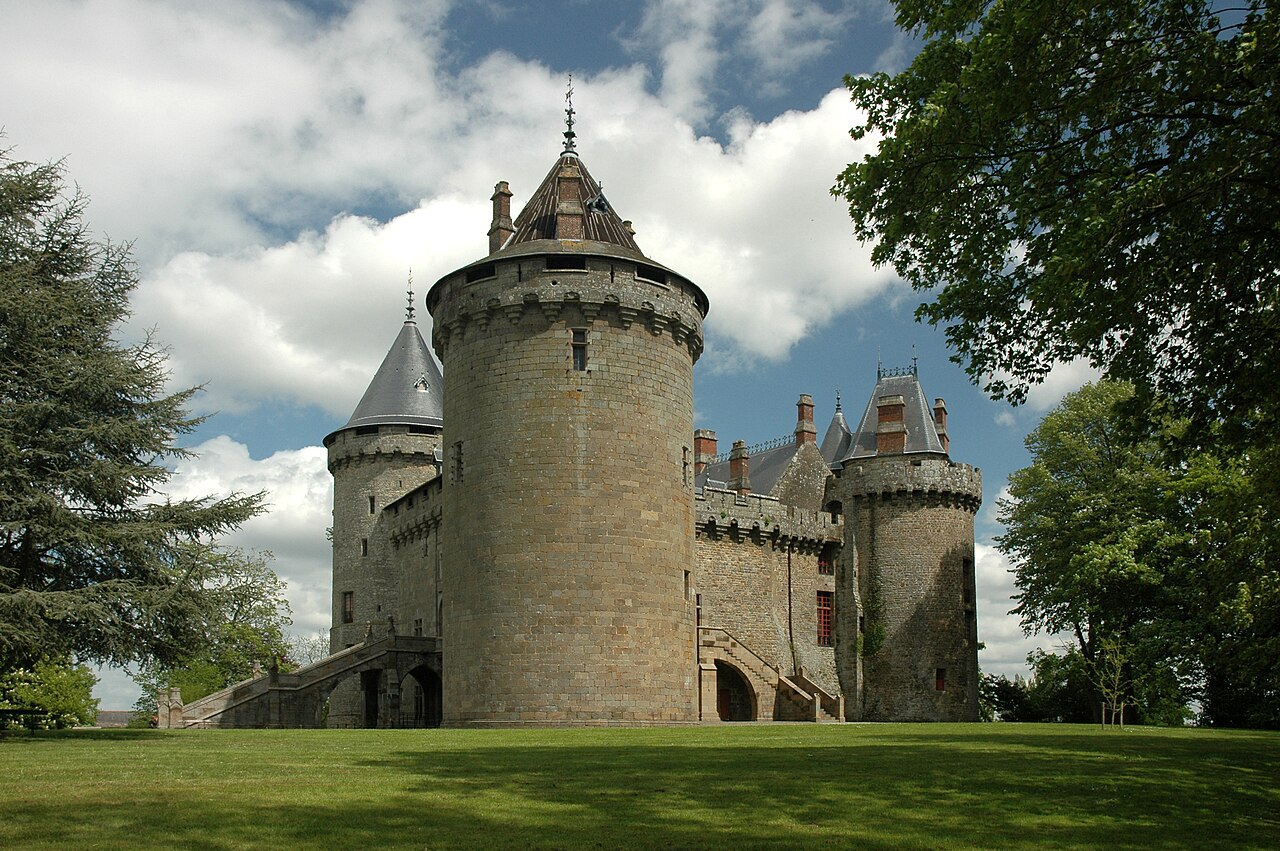
Château de Bonnefontaine
Château de Bonnefontaine stands as a notable example of a late medieval fortress constructed in 1488 in the commune of Antrain, France. Originally built at the end of the 15th century, this castle has undergone various modifications over the centuries, reflecting changes in architectural styles and the evolving needs of its inhabitants.
Historical background and architectural evolution
The castle was erected during a period marked by the transition from fortified medieval strongholds to more comfortable residences, though it retained significant defensive features typical of the late medieval period. Its initial construction in 1488 places it in the waning years of the Middle Ages, a time when castles began to serve dual roles as both fortresses and noble homes.
Throughout its history, Château de Bonnefontaine has been adapted to suit residential purposes, which has influenced its current form. Despite these changes, the structure maintains key elements of its original design, such as thick stone walls and defensive layouts that were common in late medieval castles. The castle’s preservation as a well-preserved residence allows visitors to appreciate its historical fabric while understanding its functional transformation over time.
Gardens and landscape design
The castle is particularly renowned for its extensive 25-hectare landscaped grounds and gardens, which offer a striking contrast to the medieval architecture. These grounds were designed by the prominent 19th-century landscape gardeners Denis Bülher and Édouard André, whose work exemplifies the English garden style popular in the late 1800s.
The gardens feature expansive open spaces that create surprising visual perspectives framed by carefully planned plantings and copses. Visitors can enjoy majestic avenues lined with giant sequoia, cypress, and chestnut trees, which provide a tranquil and romantic atmosphere. This landscape design emphasizes naturalistic beauty, blending the castle's historical presence with a lush, green environment.
Architectural features and layout
The castle’s architecture reflects the defensive needs of its time, with robust stone construction and features such as battlements and possibly a moat, typical of late medieval fortifications. While the castle has been adapted for residential use, these elements remain visible, offering insight into the martial origins of the structure.
Inside, the castle likely contains a combination of residential chambers and functional spaces that evolved from its original fortress role. The integration of the castle with its gardens creates a harmonious balance between built and natural environments, a hallmark of aristocratic estates in France during the 19th century.
Current status and visitor experience
Today, Château de Bonnefontaine remains inhabited, which has contributed to its excellent state of preservation. Although it is a private residence, the owners welcome visitors to explore the extensive gardens and grounds, making it accessible to the public in a limited capacity.
The castle and its gardens provide a unique experience for visitors interested in both medieval architecture and historic landscape design. The English-style gardens offer peaceful walking paths and scenic views that complement the castle’s imposing structure, making it a favored destination for those exploring the heritage of Brittany and the broader region of Ille-et-Vilaine.
Significance and heritage value
Château de Bonnefontaine exemplifies the evolution of French castles from purely defensive fortresses to elegant noble residences integrated with sophisticated landscape design. Its combination of late medieval architecture and 19th-century English gardens illustrates the layered history of aristocratic estates in France.
The castle’s preservation and continued use contribute to the cultural heritage of the region, offering insights into architectural and horticultural trends spanning several centuries. Visitors can appreciate the castle not only as a historical monument but also as a living estate that bridges past and present.
Frequently asked questions (FAQ)
- How do I get to Château de Bonnefontaine?
- Château de Bonnefontaine is located in Antrain, France, and can be accessed by car or public transport. If driving, take the D797 road, and there is parking available on-site. For public transport, check local bus schedules for connections to Antrain.
- What is the historical significance of Château de Bonnefontaine?
- Château de Bonnefontaine dates back to the 15th century and is known for its beautiful architecture and rich history. It has served various purposes over the centuries, including a noble residence and a defensive structure. The castle is a testament to the region's medieval heritage.
- When was Château de Bonnefontaine built?
- The construction of Château de Bonnefontaine began in the late 15th century, with significant renovations occurring in the following centuries. Its design reflects the transition from medieval fortifications to more refined Renaissance aesthetics. The castle's architecture showcases the evolution of building styles in France.
- Can I take photographs inside Château de Bonnefontaine?
- Yes, photography is allowed inside Château de Bonnefontaine, but visitors are requested to respect certain areas where photography may be restricted. Be sure to check for any specific guidelines upon entry. Capturing the stunning architecture and decor is encouraged!
- Why is Château de Bonnefontaine popular among tourists?
- Château de Bonnefontaine is popular due to its picturesque setting and historical significance. Visitors are drawn to its stunning architecture, beautiful gardens, and the opportunity to learn about its fascinating past. Additionally, the castle often hosts cultural events and exhibitions, enhancing its appeal.
- Is it possible to book guided tours at Château de Bonnefontaine?
- Yes, guided tours are available at Château de Bonnefontaine, providing visitors with an in-depth understanding of its history and architecture. It is advisable to book your tour in advance, especially during peak tourist season, to ensure availability. Tours typically include access to the main rooms and gardens.
- What are the opening hours for Château de Bonnefontaine?
- Château de Bonnefontaine is open to visitors from 10 AM to 6 PM, Tuesday through Sunday. The castle is closed on Mondays and during certain holidays, so it's best to check the official website for any updates before your visit. Plan your visit accordingly to make the most of your time there.
- What are the ticket prices for Château de Bonnefontaine?
- Ticket prices for Château de Bonnefontaine vary depending on age and tour options. Generally, adults pay around €10, while reduced rates are available for students and children. Family tickets and group discounts may also be offered, so check the official site for the latest pricing details.
- What is the best time to visit Château de Bonnefontaine?
- The best time to visit Château de Bonnefontaine is during the spring and early fall when the weather is mild, and the gardens are in full bloom. Summer can be busy with tourists, while winter may have limited access to some outdoor areas. Consider visiting during weekdays for a quieter experience.
- Are there any nearby attractions to Château de Bonnefontaine?
- Yes, there are several nearby attractions, including the historic town of Antrain and the scenic Mont Saint-Michel, which is just a short drive away. Other nearby sites include local museums and beautiful walking trails. Exploring the surrounding area can enhance your visit to the castle.
Information
Website
Visit websiteSources & official resources
Verify the information above using these authoritative references.
Loading map...
Visitor reviews
No reviews yet. Been here? Write the first review and help other travelers!
Write the first reviewVisited this castle? Share your experience
Your review helps other travelers and adds first-hand knowledge to our encyclopedia.