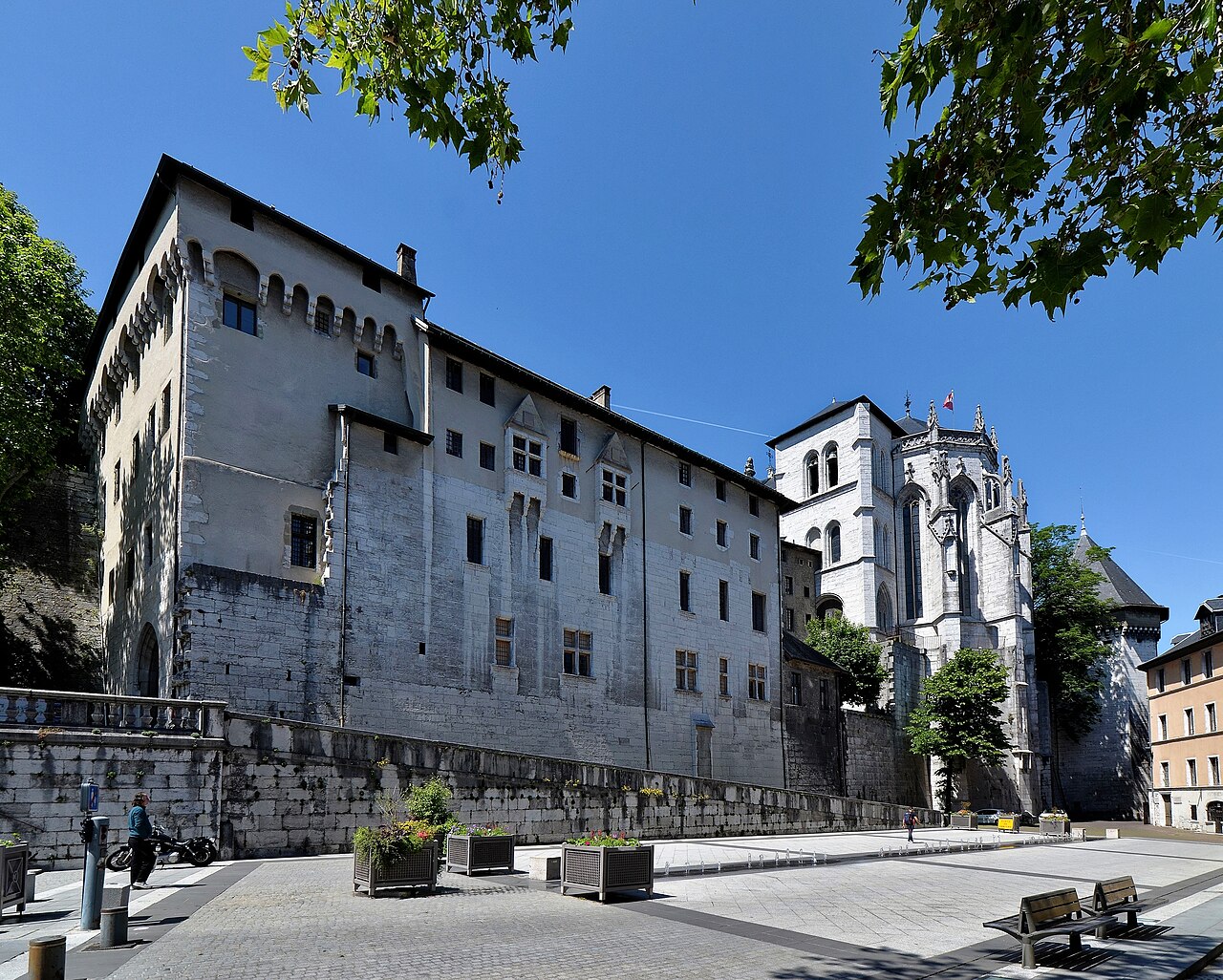
Château des Comtes de Challes
The Château des Comtes de Challes is a remarkable historical site located in the town of Challes-les-Eaux, France. This 13th-century medieval fortress was originally constructed by Étienne de Challes and served as the residence of the noble Counts of Challes, a lineage that significantly influenced the region during the Middle Ages. The castle's enduring presence reflects a rich history of noble ownership, cultural significance, and architectural evolution.
Medieval origins and noble lineage
The château's foundation as a hill castle is centered around a medieval donjon, a fortified tower typical of the 13th century. This stone keep formed the core defensive and residential structure of the castle, embodying the military architecture of the high medieval period. The Counts of Challes, who commissioned and inhabited the castle, played a pivotal role in local governance and feudal society.
Following the death of Louis de Challes in 1590 without direct heirs, ownership transferred in 1594 to Louis Milliet, Baron of Faverges. The Milliet family, with roots in Savoy and origins tracing back to Geneva, maintained control of the lordship for nearly two centuries. Members of this lineage adopted various noble titles, including baron and marquis of Faverges, Challes, and Arvillars, reflecting their expanding influence and territorial claims.
Cultural significance and rousseau’s connection
During the 18th century, the château gained cultural prominence through its association with the philosopher Jean-Jacques Rousseau. In his autobiographical work Confessions, Rousseau recounts providing music lessons to two daughters of the Milliet family, Catherine Françoise and Gasparde Milliet. This connection underscores the château’s role not only as a noble residence but also as a center of intellectual and artistic activity during the Enlightenment.
Transition to spa hotel and modern era
After the death of Henri Joseph Milliet de Challes in 1777, the estate reverted to the main Milliet branch in Faverges. The tumultuous period surrounding the French Revolution saw the property change hands, eventually being acquired by Jacques-Antoine Balmain and later by Dr. Louis Domenget, a physician to the King of Sardinia and local syndic.
In 1841, Dr. Domenget discovered a mineral spring on the château grounds, a discovery that transformed the estate's future. The therapeutic waters led to the renaming of the commune as Challes-les-Eaux in 1872, emphasizing the importance of the thermal springs. Recognizing the commercial potential, Domenget sold the property and mineral rights to the Société des eaux minérales de Challes, which converted the château into the Hôtel du Château. This conversion included the construction of a new building enveloping the medieval keep and the development of thermal baths, marking a significant adaptation from fortress to spa hotel.
In the 21st century, specifically in 2002, the property was acquired by Gérard Trèves. Under the management of his son, Florian Trèves, the château continues to operate as a hotel and restaurant, preserving its centuries-old hospitality tradition.
Architectural features and preservation
The château's most prominent surviving feature is its medieval donjon, which retains its essential character as a fortified stone tower from the 13th century. This keep exemplifies the defensive architecture of the period, designed to provide both protection and status. While detailed measurements and decorative elements are not extensively documented, the keep remains a tangible link to the castle's medieval origins.
The later 19th-century extensions constructed by the Société des eaux minérales de Challes envelop the original tower, integrating it into a hotel complex. This architectural layering illustrates the site’s continuous evolution, blending medieval military architecture with 19th-century commercial and spa facilities. The château today stands as a testament to adaptive reuse, maintaining historical integrity while serving modern functions.
The castle’s fabric reveals a juxtaposition of medieval defensive elements and thermal spa architecture, a rare combination that highlights the site's unique historical trajectory. Although the château does not retain extensive ornamental features or inscriptions, its structural composition embodies centuries of changing ownership, social roles, and architectural styles.
The château’s role in local heritage and tourism
As a landmark in Challes-les-Eaux, the château not only represents medieval nobility but also the development of the town as a renowned spa destination. The discovery of mineral springs and subsequent establishment of thermal baths have anchored the château’s significance in both historical and contemporary contexts.
Today, the site attracts visitors interested in medieval architecture, Enlightenment history, and thermal spa culture. The château's adaptation into a hotel allows guests to experience a blend of historical ambiance and modern comfort, fostering a unique cultural tourism experience.
The enduring presence of the Château des Comtes de Challes thus embodies a layered narrative of feudal power, intellectual heritage, and health tourism, making it a notable site within the Hauts-de-France region.
Frequently asked questions (FAQ)
- How do I get to Château des Comtes de Challes?
- Château des Comtes de Challes is located in Challes-les-Eaux, France, easily accessible by car and public transport. If you are traveling by train, the nearest station is in Chambéry, from where you can take a bus or taxi to reach the castle.
- What is the historical significance of Château des Comtes de Challes?
- Château des Comtes de Challes dates back to the 14th century and has served as a significant residence for the Counts of Challes. The castle is an important example of medieval architecture and plays a vital role in the local history of the Savoie region.
- When was Château des Comtes de Challes built?
- Construction of the Château des Comtes de Challes began in the 14th century, with various modifications and restorations made over the centuries. The castle reflects the architectural styles of different periods, showcasing its evolution through time.
- Can I visit Château des Comtes de Challes?
- Yes, visitors are welcome to explore Château des Comtes de Challes during the designated opening hours. Guided tours are available, providing insight into the castle's history and architectural features.
- Why is Château des Comtes de Challes a popular tourist attraction?
- Château des Comtes de Challes attracts tourists due to its rich history, stunning architecture, and beautiful surrounding gardens. The castle also hosts various cultural events throughout the year, making it a vibrant part of the community.
- Is it possible to attend events at Château des Comtes de Challes?
- Yes, Château des Comtes de Challes often hosts cultural events, exhibitions, and concerts. Check their official website or local event listings for the latest information on upcoming activities.
- What are the opening hours for Château des Comtes de Challes?
- The opening hours for Château des Comtes de Challes vary by season, typically operating from 10 AM to 6 PM during the tourist season. It is advisable to check the official website for the most current information before your visit.
- What are the ticket prices for Château des Comtes de Challes?
- Ticket prices for Château des Comtes de Challes are generally affordable, with discounts available for students, seniors, and families. It is best to consult the official website for current pricing and any special offers.
- What is the best time to visit Château des Comtes de Challes?
- The best time to visit Château des Comtes de Challes is during the spring and summer months when the gardens are in full bloom and the weather is pleasant. Additionally, various cultural events take place during this time, enhancing the visitor experience.
- Are there any nearby attractions to Château des Comtes de Challes?
- Yes, there are several nearby attractions including the thermal baths of Challes-les-Eaux and the beautiful landscapes of the Chartreuse Mountains. Visitors can also explore the town’s charming cafes and shops, making for a delightful day trip.
Information
Website
Visit websiteSources & official resources
Verify the information above using these authoritative references.
Loading map...
Visitor reviews
No reviews yet. Been here? Write the first review and help other travelers!
Write the first reviewVisited this castle? Share your experience
Your review helps other travelers and adds first-hand knowledge to our encyclopedia.