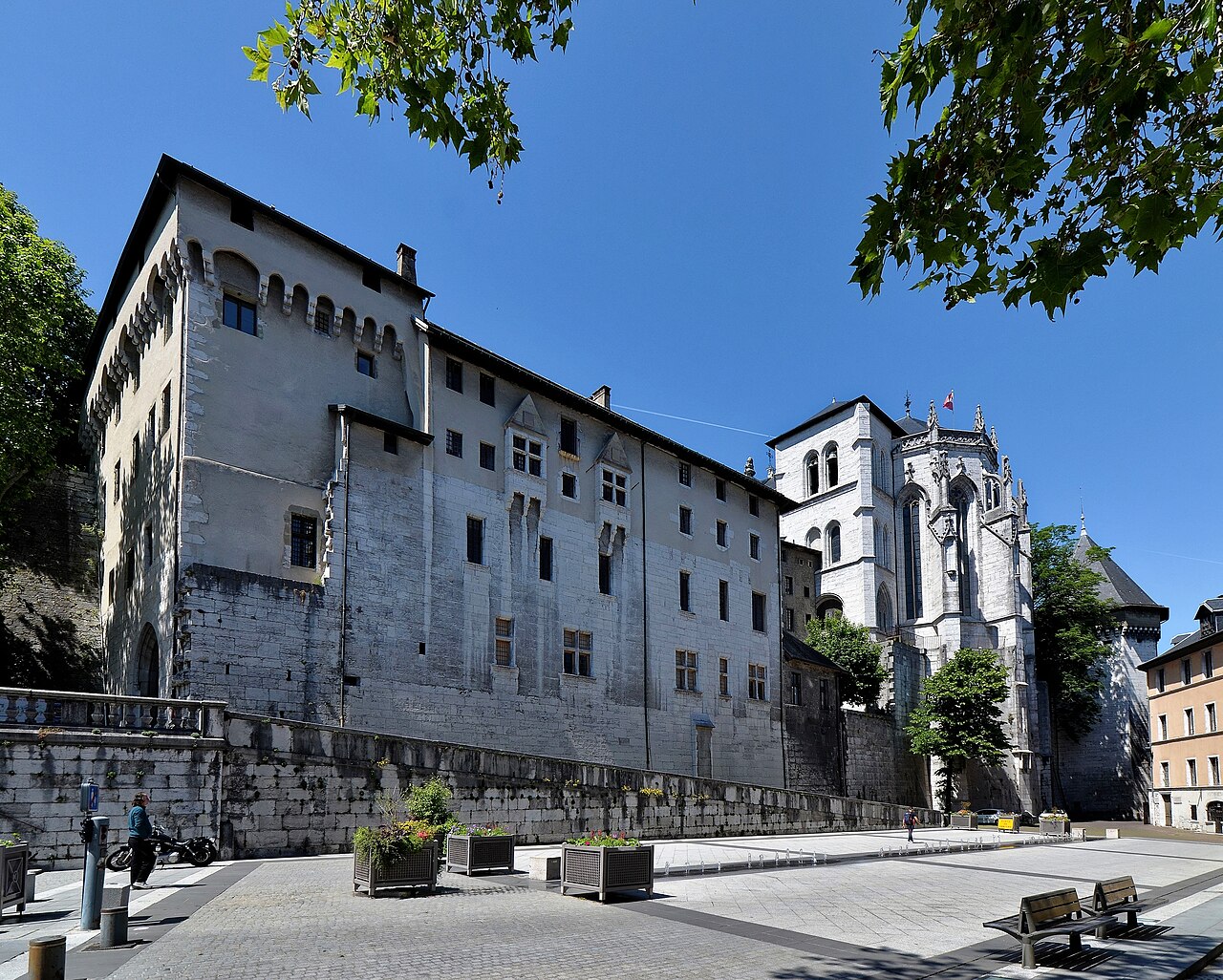
Château de Buisson-Rond
The Château de Buisson-Rond is a prominent hill castle located in the region of Hauts-de-France, France. Though its exact city location is historically associated with Chambéry, the estate’s significance transcends local boundaries due to its layered history and architectural evolution spanning several centuries. Originally established on medieval foundations, the château exemplifies the transition from fortified noble residences to refined aristocratic estates characteristic of the late 18th and early 19th centuries.
The origins and early history of Château de Buisson-Rond
The site of Château de Buisson-Rond was initially owned by the Grange family during the 14th century. Ownership subsequently passed through the Luyrieu and then the Marcossay families by marriage, reflecting the typical inheritance patterns among French nobility. In 1587, the estate was acquired by Louis Milliet, who held the prestigious position of Grand Chancellor of Savoy. This acquisition marked the beginning of the Milliet family's long association with the property.
At the turn of the 17th century, François-Amédée Milliet de Challes, who served as Archbishop of Tarentaise, commissioned the construction of a second house on the estate. This development was emblematic of the period’s intertwining of religious authority and noble estate management, adding a layer of ecclesiastical significance to the property.
18th-century transformations and the Milliet d’Arvillars era
By the late 18th century, the château was under the ownership of the Milliet d’Arvillars family. The death of Marquis Joseph Frédéric Pantaléon Milliet d’Arvillars in 1794 occurred during the turbulent years of the French Revolution, leading to the estate’s sale as national property. This period saw the château change hands multiple times, reflecting the widespread redistribution of aristocratic lands during revolutionary France.
In 1802, the estate was purchased by the count of Boigne, who initiated significant architectural and landscaping projects that shaped the château’s current form. The count demolished earlier structures to erect a new residence tailored to the refined tastes of early 19th-century French nobility.
Architectural features and layout of the château
The present-day Château de Buisson-Rond primarily dates from the 18th century, constructed in a style typical of Piedmontese residences from the late 18th to early 19th centuries. Its design reflects a blend of aristocratic residential comfort and subtle defensive elements inherited from its medieval past.
The château’s centerpiece is a grand salon with a ceiling height equivalent to two stories, creating an imposing and elegant interior space. Surrounding this central hall are several adjoining chambers that served both residential and ceremonial purposes. The estate also includes a private chapel and two pavilions, which likely accommodated guests and supported various functions within the noble household.
The northeast façade faces the Albanne river, connected visually and physically to the château’s forecourt by an aligned bridge. On the opposite side, the building rises toward the foothills of the Chartreuse mountains, adapting to the natural terrain and offering scenic views.
Heraldic and decorative elements
Photographic evidence reveals the presence of heraldic motifs, including coats of arms on the exterior façade, underscoring the château’s noble lineage and the artistic embellishments typical of aristocratic residences. The interior spaces feature detailed decorative work that reflects the tastes and status of its historic owners.
Landscaping and gardens
The château is set within a landscaped park designed in 1810 by the general-count of Boigne. This park includes an extensive rose garden containing approximately 83 varieties of roses and a total of 6,000 rose bushes spread over 7,500 square meters. The garden exemplifies early 19th-century landscape design trends, emphasizing botanical diversity and aesthetic pleasure.
In addition to the rose garden, the grounds have been enhanced with modern recreational facilities such as a swimming pool and an indoor ice rink, which coexist with the historic fabric without detracting from the château’s heritage value.
Historical significance and modern use
Château de Buisson-Rond holds a unique place in regional history. Notably, it was the launch site for Savoy’s first hot air balloon expedition on May 6, 1784, led by engineer Louis Brun and officer Xavier de Maistre. This event marks the château’s contribution to early aeronautical experimentation and innovation.
At the close of the 20th century, the city of Chambéry acquired the estate and repurposed it as a municipal annex, integrating the historic property into contemporary civic use. Since February 24, 1982, parts of the château have been protected as a historic monument under the official designation “château de Buisson Rond,” ensuring its preservation and recognition within France’s cultural heritage.
Preservation and current condition
The château is well preserved, maintaining much of its 18th-century architectural character alongside later additions. Its protection as a historic monument has facilitated conservation efforts, allowing visitors to appreciate its architectural and historical richness.
Frequently asked questions (FAQ)
- When was Château de Buisson-Rond originally built?
- The château’s origins date back to the 14th century, with significant construction phases occurring through the 18th and early 19th centuries.
- What architectural styles are represented in Château de Buisson-Rond?
- The château displays a mixed architectural style, primarily reflecting late medieval foundations and 18th-century Piedmontese influences.
- Can visitors see the rose garden at Château de Buisson-Rond?
- Yes, the château’s extensive rose garden, featuring around 83 varieties and 6,000 rose bushes, is a highlight of the grounds and accessible to visitors.
- What is the historical significance of Château de Buisson-Rond?
- Besides its noble lineage, the château was the launch site of Savoy’s first hot air balloon expedition in 1784, marking its role in early aeronautical history.
- Who owns Château de Buisson-Rond today?
- The château is currently owned by the municipality of Chambéry and serves as a municipal annex.
Information
Sources & official resources
Verify the information above using these authoritative references.
Loading map...
Visitor reviews
No reviews yet. Been here? Write the first review and help other travelers!
Write the first reviewVisited this castle? Share your experience
Your review helps other travelers and adds first-hand knowledge to our encyclopedia.