Château des Cars
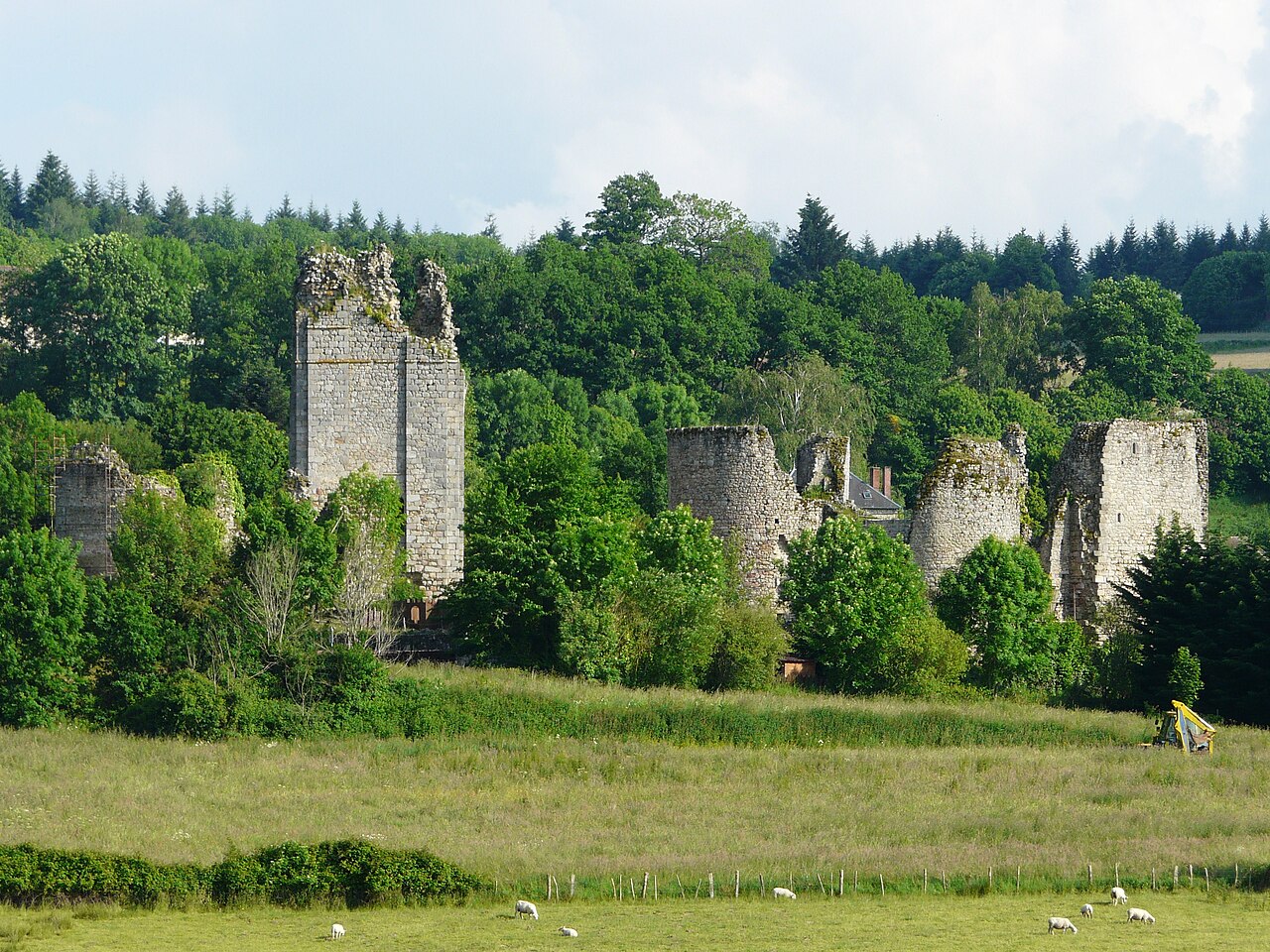
Château des Cars stands as a significant example of a 16th-century hill castle located in the commune of Les Cars, within the Hauts-de-France region of France. Originally established in the 12th century as a modest fortified site, it reflects the feudal landscape of medieval France. Over the centuries, the castle evolved from a simple fortification into a grand seigneurial residence, showcasing architectural adaptations to changing military technologies and social status.
Early history and feudal origins
The castle’s origins trace back to the 12th century, when it was first constructed as a small fortified site by local medieval builders. Initially, it served as a defensive stronghold typical of the feudal system, protecting the surrounding lands and asserting the authority of its lords. By the mid-13th century, around 1260, the estate began to take on a more formalized structure as the seigneurial domain of Les Cars. It was held as a fief under the control of the Lastours family, a notable medieval lineage.
Ownership transitioned through marriage when the Barry family, who previously held a fortified residence or hospicium on the site, passed the estate to the Pérusse family. This transfer marked the beginning of a significant phase in the castle’s development, as the Pérusse family would become its most prominent owners and patrons.
Transformation into a principal residence
In 1479, the domain of Les Cars was elevated to an independent châtellenie, meaning it became a district governed from the castle itself. Under the leadership of Geoffroy Pérusse in the late 15th century, the castle was transformed from a fortified stronghold into a grand principal residence. It became one of the most prestigious estates in the historic Limousin region, reflecting the rising social status and wealth of the Pérusse family.
Throughout the 16th century, the castle underwent continuous expansion and architectural enhancement. The residence incorporated Renaissance stylistic elements while maintaining defensive features, illustrating the dual role of castles during this period as both noble homes and military fortifications.
Military adaptations during the wars of religion
The French Wars of Religion in the late 16th century prompted significant defensive upgrades at Château des Cars. François de Pérusse des Cars, anticipating the increasing use of firearms and artillery, reinforced the castle’s defenses. This included the addition of artillery towers designed to accommodate cannon, a surrounding moat, and a fortified entrance featuring a drawbridge and a châtelet gatehouse flanked by slender towers.
The castle’s fortifications were innovative for the time, with multiple cannon openings or cannonnières integrated into the walls and towers. The elliptical artillery tower at the southwest angle exemplifies the adaptation to new military technologies, its rounded form optimized to deflect cannon fire and provide strategic firing positions.
Architectural features and layout
Main enclosure and towers
The castle was originally designed as a large square enclosure measuring more than 30 meters on each side. The principal tower, or tour maîtresse, located at the southeast corner, remains partially preserved. This tower housed spacious chambers illuminated by large windows, indicating a focus on comfort alongside defense.
Surrounding the main enclosure was a moat crossed by a drawbridge leading to the entrance. The gateway was protected by a châtelet, a small fortified gatehouse flanked by two slender towers, providing a controlled access point.
Outer defenses and artillery platform
A secondary surrounding wall created an outer boundary known as a boulevard, a wide artillery platform lined with five ornamental and defensive pavilions. Today, two of these pavilions survive at the northeast and southwest corners, offering insight into the castle’s extensive defensive network.
Lower courtyard and stables
The basse-cour or lower courtyard contained various outbuildings, notably the extensive stables built in the late 16th century. This rectangular building measures approximately 38 by 12 meters and features a symmetrical façade with a central doorway, square attic windows, and dormers decorated with pilasters, pinnacles, and shell motifs.
Inside, the vaulted ground floor ceiling is adorned with large frescoes depicting horse-riding scenes, attributed to François de Pérusse (1546–1595), linking the artwork directly to the castle’s historical owners. Renovations in the 17th century altered the roofline and upper walls of the stables, including the replacement of a spiral staircase with a straight stone stairway.
Gardens and landscape
The castle grounds originally included formal French gardens to the south, designed in the 16th century. These gardens reflected Renaissance landscape principles and were later complemented by terraced gardens on the west side added in the 18th century. The terraces are bordered by a canal, which remains visible today and illustrates the estate’s water management and aesthetic planning.
Additional preserved elements on the grounds include a pavilion and a 16th-century house characterized by dormer windows, as well as an arched gateway connecting the town hall square to the historic Cour des Miracles area. The surviving canal alongside the property further highlights the castle’s extensive estate and its integration with the surrounding environment.
Decline and archaeological significance
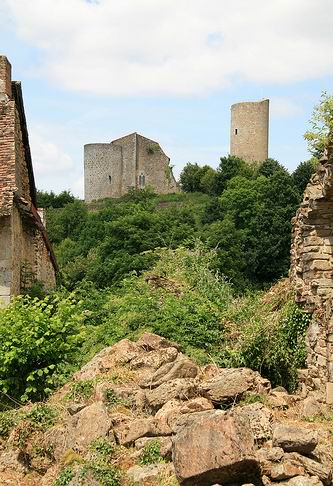
The French Revolution marked a turning point in the castle’s history. The Pérusse family emigrated to England, and the castle was confiscated by revolutionary authorities. Subsequently, it was sold to quarrymen who dismantled much of the structure to reuse its building materials. Only fragments of the artillery towers, main tower, and some walls remain today.
From the late 20th century onward, archaeological excavations have uncovered rich remains around the site. These include fine tableware, glassware, metal objects, sculptures, and decorative stone carvings, which provide valuable insights into the castle’s former wealth, artistic heritage, and daily life.
Today, the site is owned by the local commune, which collaborates with archaeologists to preserve and study the ruins. The castle and associated buildings have been protected as historical monuments since 1982, with additional protections extended in 2012, ensuring ongoing conservation efforts.
Frequently asked questions (FAQ)
- What is the historical significance of Château des Cars?
- Château des Cars is a stunning example of 15th-century architecture, showcasing the evolution of French castles over the centuries. It played a pivotal role in regional history, serving as a residence for notable nobles and a strategic location during various conflicts.
- When was Château des Cars built?
- Château des Cars was constructed in the late 15th century, with significant renovations occurring in the following centuries. Its architecture reflects the transition from medieval fortifications to more elegant Renaissance styles.
- Can I visit Château des Cars?
- Yes, Château des Cars is open to the public for tours, allowing visitors to explore its rich history and beautiful grounds. It is recommended to check the official website for any specific visiting conditions or seasonal events.
- What are the opening hours for Château des Cars?
- Château des Cars typically opens from 10 AM to 6 PM during the tourist season, but hours may vary based on the time of year. Visitors should confirm current hours on the castle's official website before planning their visit.
- Is it possible to access Château des Cars by public transport?
- Yes, Château des Cars can be accessed via public transport, with several bus routes serving the area. Additionally, the castle is located near major roads, making it accessible for those traveling by car.
- What is the best time to visit Château des Cars?
- The best time to visit Château des Cars is during the spring and early autumn months when the weather is mild and the gardens are in full bloom. These seasons also see fewer crowds, allowing for a more enjoyable experience.
- What are the ticket prices for visiting Château des Cars?
- Ticket prices for Château des Cars vary depending on age and group size, with discounts available for children and students. It’s advisable to check the official website for the most current pricing information and any special offers.
- Are there any nearby attractions to visit after Château des Cars?
- Yes, there are several attractions nearby, including picturesque villages and other historical sites, which can enrich your visit. Consider exploring the local vineyards or taking a scenic walk in the surrounding countryside to fully experience the region.
Information
Website
Visit websiteSources & official resources
Verify the information above using these authoritative references.
Loading map...
Visitor reviews
No reviews yet. Been here? Write the first review and help other travelers!
Write the first reviewVisited this castle? Share your experience
Your review helps other travelers and adds first-hand knowledge to our encyclopedia.