Château de Vieillecour

Château de Vieillecour: medieval fortress and historic residence in Hauts-de-France
Hauts-de-France, France
High Medieval (11th–13th c.)
Well Preserved

The Château de Vieillecour is a remarkable example of a 12th-century hill castle located near the village of Saint-Pierre-de-Frugie in the Hauts-de-France region of France. Its origins as a medieval fortress are deeply intertwined with significant historical events and figures, making it an important cultural landmark. The castle's architecture and strategic position reflect the military and residential needs of the Middle Ages, evolving over centuries into a stately residence.

Historical significance and early origins

Constructed originally in the 12th century, the château was built during a period when fortified castles were essential for territorial control and defense. The site holds a notable religious association, potentially linked to the birthplace of Saint Vaast, a prominent Christian figure of the early medieval period. This connection adds a layer of spiritual importance to the location, complementing its military role.

One of the château's most dramatic historical episodes involves Richard the Lionheart, the famed English king and warrior. In 1199, after being gravely wounded during the siege of the nearby fortress of Châlus, Richard reportedly sought refuge within the walls of Château de Vieillecour. This event occurred just six days before his death, highlighting the castle's role as a sanctuary during a turbulent time in medieval Europe.

The château during the hundred years’ war

During the Hundred Years’ War, a prolonged conflict between England and France spanning from 1337 to 1453, the château assumed a critical military function. In 1372, the celebrated French commander Bertrand Du Guesclin stationed a garrison at the castle shortly after recapturing Saint-Pierre-de-Frugie from English forces. This underscores the château's strategic importance in regional military campaigns and its role as a defensive stronghold.

Architectural evolution from fortress to residence

Between the 15th and 17th centuries, Château de Vieillecour underwent significant transformations that reflect broader shifts in castle architecture and function. Originally designed for defense, the château was gradually remodeled into a more comfortable and elegant residence. This transition from fortress to leisure estate illustrates changing social and political conditions, where the emphasis moved from military necessity to noble lifestyle and domestic comfort.

The château's ownership changed hands multiple times during this period, reflecting the fluid nature of property among the French nobility. Notable owners included Jehan de Maulmont, who sold the property to François de Laige in 1576, followed by acquisitions by Louis de Stuard de Caussade in 1598, Jean du Glenest in 1650, and Jean Mosnier de Planeau in 1665. Each owner likely contributed to the château's evolving architectural and interior features.

20th-century preservation and modern status

In the 20th century, the château was owned by Marie Sohier (1885–1963), granddaughter of the local prefect Adrien Sohier, illustrating the continued prominence of the estate in regional society. Later, ownership passed to Armand Lejeune (1918–2006), an architect who presumably played a role in preserving the château's historic fabric.

Recognizing its cultural and historical value, French authorities designated Château de Vieillecour as a monument historique on October 4, 1946. This status has helped ensure the château's preservation and protection as an important heritage site.

Architectural features and layout

The château is situated approximately two kilometers northeast of Saint-Pierre-de-Frugie, near the small Valouse stream. Its layout forms an incomplete quadrilateral courtyard, a common medieval defensive design. The courtyard is bordered by dry moats on two sides, which were originally intended to hinder attackers and protect the castle walls.

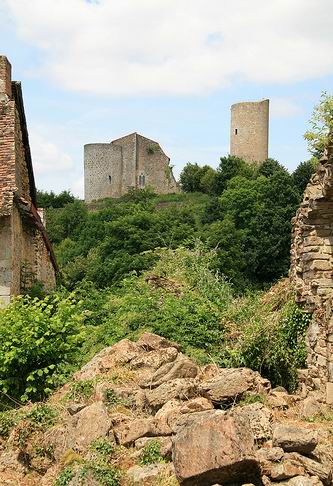
Surrounding the courtyard are six towers: five are circular and one is square. These towers date from the château's original defensive phase and are notable for their machicolations, openings in the floors or walls that allowed defenders to drop stones or boiling liquids on attackers below. This feature is a hallmark of medieval military architecture and emphasizes the château's initial role as a fortress.

The main residential building retains its medieval character, featuring a rectangular plan with four integrated round towers. In addition to this core structure, there is a separate round tower and the distinctive square tower, which together form a robust defensive perimeter. The combination of tower shapes and the dry moat system reflects the castle's strategic design to maximize defense while accommodating residential needs.

Defensive structures and adaptations

The presence of machicolations on the towers is particularly significant, as it indicates advanced defensive capabilities for the period. These openings allowed defenders to protect the base of the walls effectively. The dry moats, although no longer filled with water, demonstrate the castle's layered defense strategy, combining physical barriers with elevated vantage points from the towers.

Over time, as the château transitioned from a military fortress to a noble residence, some defensive features were softened or incorporated into more comfortable living spaces. However, the essential medieval fortification elements remain intact, preserving the castle's historic character.

Cultural heritage and visitor experience

Today, Château de Vieillecour remains under private ownership and is preserved as a historic monument. Its well-preserved defensive features, such as the towers with machicolations and the dry moats, offer visitors a tangible connection to medieval military architecture and French history.

While not always open to the public due to private ownership, the château's exterior and surrounding landscape provide an evocative glimpse into the region's medieval past. Its association with figures like Richard the Lionheart and Bertrand Du Guesclin enhances its appeal to history enthusiasts and scholars.

The château exemplifies the evolution of medieval castles in France, from fortified strongholds to elegant residences, encapsulating centuries of architectural, military, and social history within its walls.

Frequently asked questions (FAQ)

How do I get to Château de Vieillecour?
Château de Vieillecour is conveniently located in the picturesque countryside of France. Visitors can reach the castle by car, with ample parking available on-site. Public transport options include nearby train stations, followed by a short bus ride or taxi to the castle.
What is the historical significance of Château de Vieillecour?
Château de Vieillecour is renowned for its rich history, dating back to the 12th century. It played a pivotal role in regional defense during the medieval period and has been restored to reflect its architectural grandeur. The castle is a testament to the feudal era and the evolution of French nobility.
When was Château de Vieillecour built?
Construction of Château de Vieillecour began in the early 12th century and was completed in the late 14th century. Over the centuries, it has undergone several renovations, each adding to its charm and historical value. The castle's architecture showcases various styles, reflecting the different periods of its history.
Can I take guided tours of Château de Vieillecour?
Yes, visitors can enjoy guided tours of Château de Vieillecour, providing an in-depth look at the castle's history and architecture. Tours are available in multiple languages and are led by knowledgeable guides. Advance booking is recommended, especially during peak tourist season.
Why is the architecture of Château de Vieillecour unique?
The architecture of Château de Vieillecour is unique due to its blend of medieval and Renaissance styles, showcasing intricate stonework and elegant design elements. The castle features imposing towers, expansive courtyards, and beautifully decorated interiors that reflect its historical significance. It stands as a prime example of the evolution of castle architecture in France.
Is it possible to host events at Château de Vieillecour?
Yes, Château de Vieillecour offers facilities for hosting private events, including weddings, corporate gatherings, and cultural events. The enchanting surroundings and historic ambiance make it a popular choice for such occasions. Interested parties should contact the castle management for details on availability and services.
What are the opening hours for Château de Vieillecour?
Château de Vieillecour is open to visitors from 10 AM to 6 PM daily, with extended hours during the summer months. It is advisable to check the official website for any holiday closures or special events that may affect opening times. Arriving early ensures you have ample time to explore the grounds and exhibits.
What are the ticket prices for visiting Château de Vieillecour?
Ticket prices for Château de Vieillecour vary depending on age and group size, with discounts available for students and seniors. Family packages are also offered for those visiting with children. It’s best to purchase tickets online in advance to secure the best rates and avoid long queues.
When is the best time to visit Château de Vieillecour?
The best time to visit Château de Vieillecour is during the spring and early fall when the weather is mild and the gardens are in full bloom. Summer months can be quite busy, but they also offer vibrant events and activities. Visiting during weekdays may provide a more peaceful experience compared to weekends.
Are there nearby attractions to visit along with Château de Vieillecour?
Yes, there are several nearby attractions that complement a visit to Château de Vieillecour, including charming villages, local vineyards, and scenic walking trails. The surrounding region is rich in history and culture, making it an ideal spot for day trips. Don’t miss the opportunity to explore the local cuisine and artisan shops in the area.

Information

Hill Castle

Sources & official resources

Verify the information above using these authoritative references.

Loading map...

Visitor reviews

No reviews yet. Been here? Write the first review and help other travelers!

Write the first review

Visited this castle? Share your experience

Your review helps other travelers and adds first-hand knowledge to our encyclopedia.
Write a review

(5/5)

0/2000 characters

Your review will be visible after admin approval

Nearby castles

8.3 km
Château de Châlus-Chabrol — France castle

Château de Châlus-Chabrol

Châlus, France

Château de Châlus-Chabrol stands as a remarkable example of a medieval fortress nestled in the commune of Châlus, within the historical region of Haute-Vienne in France. This hill castle commands a strategic position overlooking the town and the right bank of the Tardoire River, guarding important medieval routes that connected Limoges to Périgord and beyond. Its significance is deeply intertwined with the turbulent history of the High Middle Ages, particularly due to its role in the final chapter of King Richard I of England's life, also known as Richard the Lionheart. Early history and strategic importance Constructed initially in the 11th century by the viscounts of Limoges, Château de Châlus-Chabrol was designed as a military stronghold to control a vital border route. This route was a frontier zone between the domains of the counts of Périgord and the viscounts of Limoges, later evolving into a contested boundary between the Duchy of Aquitaine under the Plantagenet kings of England and territories directly held by the French crown. The castle's location on a rocky promontory provided natural defensive advantages, augmented by a double line of thick defensive walls called a double enceinte, designed to deter siege engines and infantry assaults. Architectural features and layout The fortress's core is its imposing donjon (keep), dating originally from the 11th century but believed to have been rebuilt following the siege of 1199. This circular stone tower remains one of the most prominent surviving structures, exemplifying medieval military architecture with its thick walls and limited openings. Adjacent to the donjon is a round corner tower, also medieval in origin, which formed part of the castle's comprehensive fortifications. The castle complex included a corps de logis, a residential building where the lord and his retinue lived. The oldest sections of this structure date back to the 11th century, featuring a ground floor with two rooms and an underground vaulted hall topped by a dome-shaped ceiling. These residential quarters were expanded in the 13th century under the ownership of Géraud de Maulmont, who contributed to the castle's evolution from a purely military fortress to a noble residence. Religious buildings on the site include two chapels: one dating from the 10th or 11th century initially serving as a castral chapel before becoming a parish church, and a smaller 15th-century chapel reflecting continued spiritual use through the late medieval period. A 17th-century corps de logis was also added, showing the castle's adaptation over centuries. A well within the grounds ensured a reliable water supply during sieges. The siege of 1199 and king richard the lionheart's death Château de Châlus-Chabrol is most famously known for the siege of March 1199, during which King Richard I of England was fatally wounded. The siege was led by Mercadier, a commander loyal to Richard, aiming to capture the fortress that was defended by a small garrison of approximately 38 men, including two knights. Despite being outnumbered, the defenders held the castle against the assault. During the fighting, Richard was struck by a projectile—either an arrow or a crossbow bolt—fired from the castle's keep by a defender named Pierre Basile (also known in some accounts as Bertrand de Gourdon). The wound proved mortal, and Richard died on April 6, 1199. His death marked a significant moment in medieval history, symbolizing the vulnerability of even the most formidable monarchs. The king's entrails were buried in the castle chapel, a fact commemorated today by a modern cenotaph near the chapel, underscoring the castle's enduring historical legacy. Legends and historical narratives The siege and Richard's death have inspired numerous legends and chronicled accounts. Medieval writers like Rigord mentioned a treasure of gold allegedly hidden within the castle, which may have motivated the siege. Other stories speak of Lucius Capreolus, a mythical Roman proconsul credited with founding the fortress, adding layers of myth to the castle's narrative. While these tales enhance the castle's mystique, they remain part of medieval lore rather than verified history. Ownership and later history After the 13th century, the castle's ownership changed hands several times. It passed to Géraud de Maulmont before being confiscated by King Philip IV of France. Later, it was sold to the House of Albret. Through marriage, Charlotte d'Albret brought the castle as a dowry to Cesare Borgia, connecting the fortress to notable Renaissance figures. The castle remained in the possession of the Bourbon-Busset family until the late 20th century. In the late 16th century, during the French Wars of Religion, the castle was captured by Protestant forces in 1592 but was soon retaken by Catholic troops after artillery bombardments. The conflict caused significant damage, and the castle was partly dismantled during the French Revolution. Restoration efforts and modern significance Restoration began in the 19th century under the direction of the Count of Châlus, who founded a religious community on the site in 1854 and repaired the main tower in 1861. Further restoration was undertaken after 1995 by Bertrand Heyraud, culminating in a commemorative ceremony in 1999 marking the 800th anniversary of King Richard's death. This event was attended by dignitaries including the Queen of England and French President Jacques Chirac. The castle has been protected as an official historical monument since 1944, with key buildings receiving additional classification and inscription status in 1981. Despite its ruinous state, the castle's surviving medieval structures have been stabilized and partially restored, preserving its architectural and historical heritage for future generations. Architectural remains and visitor experience Today, visitors to Château de Châlus-Chabrol can explore the remains of its 11th-century donjon, the round corner tower, and the oldest parts of the corps de logis. The castle's double enceinte walls, although partly ruined, still convey the formidable defensive design of the fortress. The site also features the ruins of two chapels, a 17th-century residential building, and a well that once supplied water during sieges. Across the valley lies the related Château de Châlus-Maulmont, highlighting the strategic significance of this region in medieval times. The modern cenotaph dedicated to King Richard the Lionheart near the chapel serves as a poignant reminder of the castle's role in European history. The castle's protected status ensures ongoing preservation efforts, allowing visitors to connect with its rich past and architectural grandeur.

High Medieval (11th–13th c.)
Details
8.8 km

Castle of Montbrun

Dournazac, France

The Castle of Montbrun is a remarkable example of a high medieval hill castle located in Dournazac, France. Its history spans over two millennia, with archaeological evidence revealing continuous occupation since ancient times. The site features remains of several ancient structures, including an 11th-century motte and a Romanesque keep, reflecting the castle's evolution through the Middle Ages and beyond. Early history and foundation The origins of the castle trace back to the early medieval period, with the first known fortification constructed by the knight Aimery Brun upon his return from the Second Crusade in 1178. The castle was built under the orders of Henri II, King of England, who controlled the Duchy of Aquitaine at the time. This strategic location served to defend the borders of the duchy, which was a key English possession during the 12th century. The initial fortress, known as Trados after the old Roman name for the area, featured a high, square Romanesque keep with machicolations—defensive openings in the parapet for dropping projectiles on attackers. Today, this keep remains the most prominent medieval structure on the site, alongside parts of the original curtain wall and a well. Medieval significance and military history The castle is historically notable for its connection to Richard the Lionheart, King of England and son of Henri II. In 1199, during the siege of the nearby Castle Chalus, Richard was wounded by a crossbow bolt. He was brought to Montbrun Castle, where he died 12 days later, marking a significant event in medieval European history. During the Hundred Years' War, the castle remained under the control of the Montbrun family, who were loyal to the English crown. The castle changed hands multiple times due to the turbulent conflict between England and France. In the late 14th century, the original square towers were replaced with round towers, a common defensive upgrade to better deflect projectiles and reduce blind spots. This reconstruction gave the castle much of its present-day form. The castle suffered damage during the Wars of Religion in the 16th century, particularly at the hands of Protestant Huguenots. Ownership changed in the 17th century when the castle was sold to the Lambertie family. It remained in noble hands until the upheavals of the French Revolution, during which it was pillaged and partially destroyed, and its archives were lost. Architectural features and defensive elements The castle is built on an insular platform surrounded by water defenses created by damming the nearby Le Dournaujou stream and a tributary, forming protective ponds. This moat-like system dates from the 12th to 14th centuries and was integral to the castle's defense. The Romanesque keep is the castle's centerpiece, standing tall with its original square plan enhanced by 14th-century machicolations. The later medieval additions include a fortified residential building with four large round towers at each corner. These towers were designed to improve defense and surveillance. The castle's façades feature large mullioned windows typical of the 15th century, which allowed more light into the interior but made the walls less defensible. The use of natural stone from the local geology gives the castle a harmonious appearance with its surroundings. Inside, modern restorations have added amenities such as a two-story library, music and meeting rooms, and several reception salons. These updates respect the historic fabric while providing contemporary functionality. Restoration and modern history After suffering damage from a fire during World War I, the castle underwent significant restoration. In the late 19th century, the de la Bonne family initiated repairs, but it was not until the late 20th century that the castle was fully restored by Maarten Joost Lamers, a Dutch owner who revitalized the property and preserved its historic character. The castle's interior was officially recognized as a historic monument in 1946, with the exterior and surrounding lands receiving classification in 1990. This status reflects the cultural and architectural significance of the site within the Périgord Limousin Regional Natural Park. Today, the castle includes 16 bedrooms, a library, a billiard room, and multiple dining rooms, set within approximately 4,000 square meters of land. It remains a private residence but has attracted interest for sale, highlighting its blend of historic grandeur and modern comfort. Archaeological and cultural importance The castle's site holds a layered archaeological record, from the early medieval motte with its subterranean galleries to the late medieval fortifications. These elements provide valuable insights into the evolution of castle architecture and medieval defensive strategies in the region. Montbrun Castle has also found a place in popular culture, notably appearing in the French film Les Visiteurs, where it is depicted on a wooded hill, adding to its cultural resonance. Visitor information and legacy While primarily a private residence, the castle's historical and architectural significance makes it a notable landmark within the Haute-Vienne department. Its location within the Pays de Nexon-Monts de Châlus community and the surrounding natural park offers visitors a rich experience of history and nature combined. The castle's preservation and restoration efforts underscore the importance of protecting medieval heritage sites in France, ensuring that future generations can appreciate the complex history embodied in structures like Montbrun.

High Medieval (11th–13th c.)
Details
10.4 km

Château de Mavaleix

Chalais, France

The Château de Mavaleix stands as a testament to centuries of architectural evolution and industrial heritage in the commune of Chalais, France. Originating in the 13th century during the medieval period, this hill castle was initially constructed as a fortress to assert control over the surrounding landscape. Its strategic location near the Valouse river provided both natural defense and access to resources essential for its later industrial role. Throughout the 16th century, the château underwent significant reconstruction, transforming from a purely defensive stronghold into a residence that reflected the changing needs and status of its owners. This rebuilding phase incorporated architectural features typical of the late medieval period, blending fortification elements with more comfortable living spaces. The stone walls, robust towers, and fortified gates from this era remain integral to the château's character. Historical context and ownership The château's history is closely intertwined with the Grenouillet family, prominent ironmasters originally from the Franche-Comté region. By the 18th century, the Grenouillet family had established themselves as masters of the forge, introducing advanced refining techniques to the local iron industry around Mavaleix. Their expertise helped modernize the region's ironworking practices, contributing to the economic development of the area. The family managed multiple forges not only near Mavaleix but also across the Berry region. Their industrial network extended through alliances with notable forge families such as Pasquet de Salagnac, de Lignac, and Bugeaud de La Piconnerie from Périgord. This network highlights the château's role as a hub of both familial influence and industrial innovation during the early modern period. Ownership remained within the Grenouillet lineage until 1980, illustrating a remarkable continuity of stewardship that preserved the château's historical and architectural integrity. An event of military significance linked to the site occurred in the 19th century, when General Bazaine used the château as a resting point following his escape from Île Sainte-Marguerite before his exile to Spain. This episode adds a layer of 19th-century historical interest to the château's story. Architectural features and site layout Constructed on the foundations of its 13th-century predecessor, the current château reflects the architectural evolution from medieval fortress to a residence adapted for industrial and domestic functions. The extensive 16th-century rebuilding preserved the defensive character while introducing elements suited to the lifestyle of ironmaster nobility. The château's location on a hillside overlooking the Valouse river provided strategic advantages, including natural defense and proximity to water resources vital for forge operations. Its stone construction features thick walls designed for defense, with surviving towers and battlements indicating its fortified origins. Although detailed architectural measurements and interior layouts are not extensively documented, the building's fabric reveals a layering of historical phases. Today, the château is situated approximately 500 meters from a national route, making it accessible while maintaining a degree of seclusion. The structure's preservation state is sufficient to support adaptive reuse, including hospitality functions, demonstrating the durability of its construction and the care taken in its maintenance. Cultural significance and preservation Since December 16, 1947, the Château de Mavaleix has been officially listed as a historic monument, recognizing its importance as a cultural and architectural landmark in the Hauts-de-France region. This designation ensures protective measures that safeguard the château's structural integrity and historical authenticity. The château embodies the legacy of the Grenouillet family's contributions to forge technology and regional industrial history. It stands as a tangible connection to the area's medieval past and early modern industrial development. Its preservation allows visitors and scholars alike to explore the intersection of feudal architecture and industrial innovation. While the château's interior details remain less documented, its external form and historical associations provide valuable insights into the evolution of French hill castles, particularly those that transitioned from military fortresses to centers of economic activity. Visiting château de mavaleix The château's proximity to major roads enhances its accessibility for visitors interested in medieval architecture and industrial heritage. Though specific visiting hours and ticketing details are not widely published, the château's condition supports potential tourism and educational use, including guided tours and cultural events. Visitors can appreciate the château's robust stonework, defensive features, and scenic location near the Valouse river. The site offers a unique opportunity to explore a castle that reflects both feudal and industrial histories within the French countryside.

Late Medieval (14th–15th c.)
Details

