Château de Vaulruz
Château de Vaulruz is a remarkable example of a medieval hill castle located in the municipality of Vaulruz in Switzerland. Constructed originally in the 13th century, it embodies the architectural and historical evolution typical of the region's fortified noble residences. This castle is distinguished by its strategic position and its role in the complex political and military landscape of medieval Savoy and the surrounding Swiss territories.
The origins and early history of Château de Vaulruz
The castle was initially built as a fortified home designed to serve both defensive and residential purposes for the local nobility. It was first owned by the Lords of Billens, a noble family whose influence in the region was significant during the High medieval period. The ownership soon passed to Mermet de Blonay, before transferring around 1302 or 1303 to Louis II of Vaud, a prominent noble who undertook substantial remodeling efforts to strengthen the castle's fortifications and adapt it to the military needs of the time.
By 1359, the castle came into the possession of Catherine de Namur, daughter of Louis II, who sold it to Count Amédée VI of Savoy. This period marked the castle's integration into the defensive network of the Savoyard state, where it played a crucial role as a frontier fortress protecting the northeastern border of Savoyard lands. The castle was part of a larger system that guarded the Herrschaft Bulle region, an area of strategic importance.
Challenges and transformations through the 14th and 15th centuries
The surrounding settlement and the castle itself endured significant hardships during the plague outbreak of 1349-1350, which devastated populations across Europe. In 1387, a catastrophic fire further damaged the castle and the nearby village. Although Amédée VII of Savoy initiated repairs, the castle was left in a state of disrepair. That same year, the property was sold to Jacques and Antoine Champion from Saint-Michel-de-Maurienne, who did not undertake major reconstruction efforts.
During the Burgundian Wars of 1475, Château de Vaulruz suffered additional damage, reflecting the turbulent military conflicts of the late medieval period. Despite these challenges, the castle remained a symbol of regional power and control.
Political realignments and administrative role in the early modern period
In the mid-16th century, the territory around Vaulruz aligned itself with the city of Fribourg, accepting its suzerainty in 1536. Fribourg formally purchased the lordship in 1538 and established the Vogtei (bailiwick) of Vaulruz. This administrative unit governed the region until the upheavals of the French Revolutionary Wars in 1798, when French forces invaded and abolished the traditional structures.
Following the revolutionary period, ownership of the castle shifted to regional authorities, first to the district of Bulle and later to Gruyère from 1848 onward. In 1824, the castle was sold to Dr. Ody, who subsequently transferred it to the local parish in 1859. The castle served as a rectory until 1895 and was later repurposed as a domestic school beginning in 1903.
Restoration efforts around 1910 helped stabilize the structure. During World War I, the castle provided refuge for Belgian children and was later used as an orphanage. Since 1957, it has been managed by the municipality for various community functions and is officially recognized as a cultural property of regional importance.
Architectural features and layout
The carré savoyard design and defensive elements
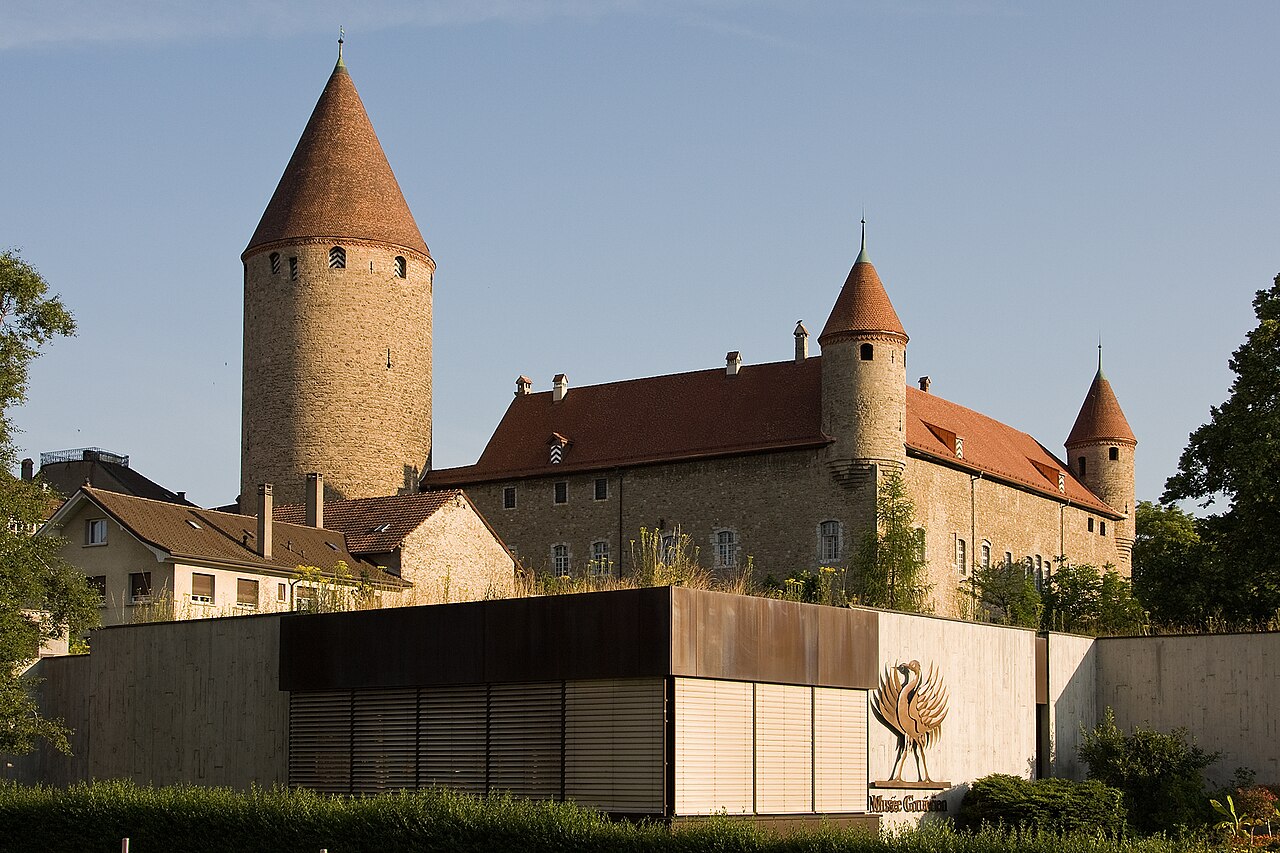
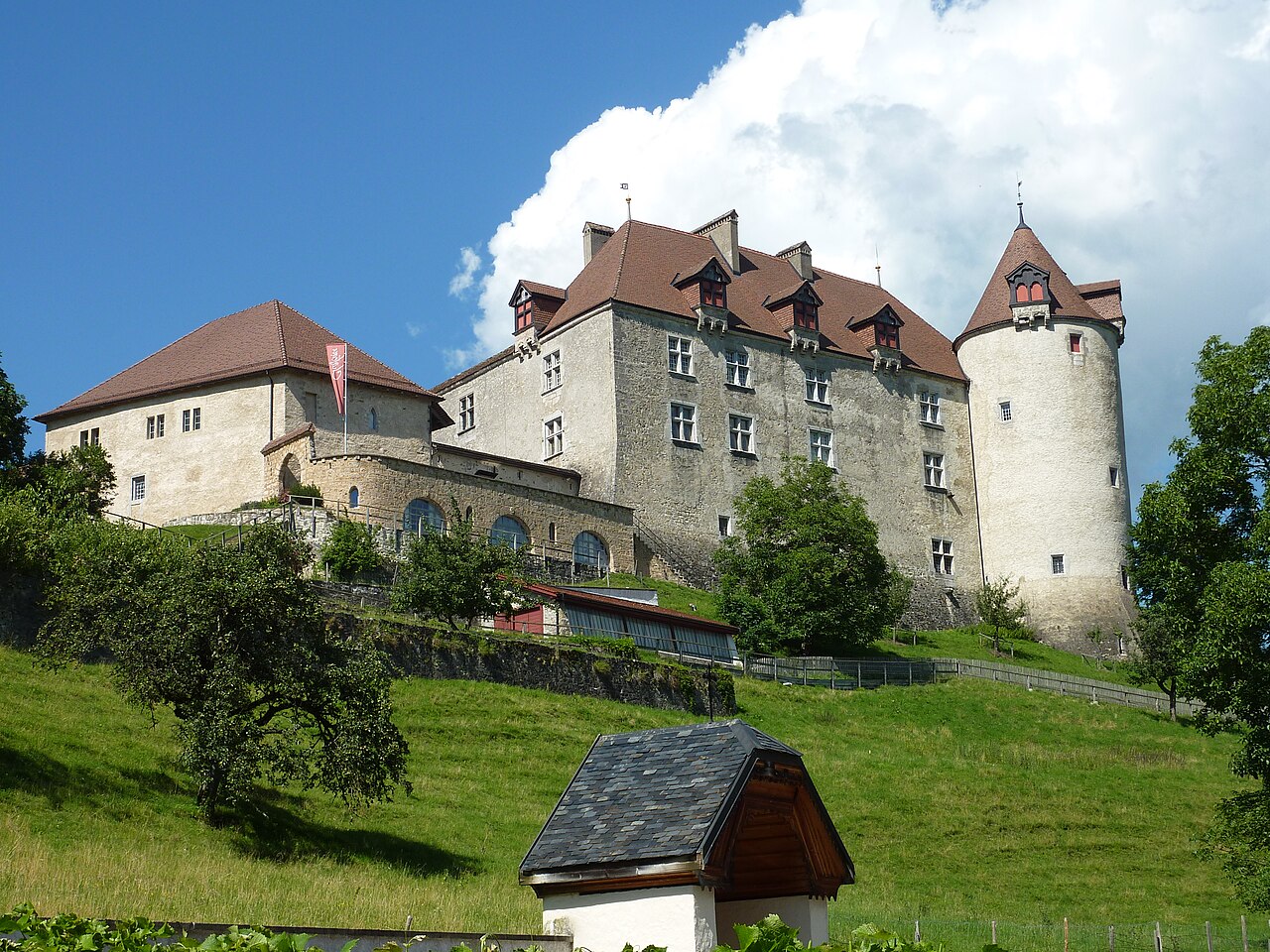
Château de Vaulruz follows the distinctive "carré savoyard" layout, a hallmark of Savoyard fortress architecture characterized by a square plan centered around a main tower known as a bergfried. This tower is positioned at the northeast corner of the castle, serving as a dominant defensive and residential structure. The castle's buildings extend primarily along the southern and eastern sides of the enclosure, reflecting a combination of military and domestic functions.
The southwestern wing was the principal residence for the Vogtei officials. It features a half-hipped roof, locally referred to as a Krüppelwalmdach, which slightly overhangs the walls and is topped by several prominent chimneys. This roof style is distinctive in the region and contributes to the castle's unique silhouette. The west façade of this wing still bears the coat of arms of Vaulruz, symbolizing its administrative significance.
Masonry and construction phases
The castle's masonry reveals a complex history of construction and repair. The west side of the castle shows three distinct stonework styles, indicating multiple phases of rebuilding and restoration. In contrast, the east side features large boulders alongside bricked-up arches and former window openings, illustrating the castle's adaptation over time.
The gatehouse is topped by a battlemented walkway called a wehrgang, which was used for defense and patrol. This feature underlines the castle's military origins and its role in border protection.
The bergfried and restoration efforts
The bergfried is notable for its dormer windows on the north and east sides and is crowned by a roof flag, adding to its imposing presence. From the courtyard, it appears more as a residential tower than a purely military keep, reflecting its dual function.
Restoration work carried out between 1909 and 1914 partially reconstructed the tower's battlements and the access bridge, based on historical designs. These efforts have helped preserve the castle's medieval character, though they also complicate precise architectural dating.
Château de Vaulruz today and cultural significance
Today, Château de Vaulruz stands as a testament to the region's medieval heritage and its evolving role through centuries of political and social change. The castle's combination of defensive medieval elements with residential and administrative modifications illustrates the adaptability of such structures over time.
Its status as a cultural property of regional importance ensures ongoing preservation efforts and highlights its value as a historical monument. The castle is utilized by the municipality for community events, maintaining its relevance to local life while preserving its rich history.
Visitors to Château de Vaulruz can appreciate its architectural features, the layered history evident in its masonry, and its role in the broader historical context of Savoy and Switzerland. The castle offers insight into medieval fortification techniques, noble residence design, and the political dynamics of the region across several centuries.
Frequently asked questions (FAQ)
- When was Château de Vaulruz originally constructed?
- Château de Vaulruz was originally constructed during the 13th century as a fortified noble residence.
- What is the architectural layout of Château de Vaulruz?
- The castle follows the carré savoyard layout, featuring a square plan centered around a main tower called a bergfried.
- Who were some notable historical owners of Château de Vaulruz?
- Notable owners include the Lords of Billens, Mermet de Blonay, Louis II of Vaud, Catherine de Namur, and Count Amédée VI of Savoy.
- What role did Château de Vaulruz play in regional defense?
- It served as a key defensive outpost on the northeastern border of Savoyard lands, guarding the Herrschaft Bulle region.
- How has Château de Vaulruz been used in modern times?
- Since 1957, the castle has been used by the municipality for community functions and is recognized as a cultural property of regional importance.
Information
Sources & official resources
Verify the information above using these authoritative references.
Loading map...
Visitor reviews
No reviews yet. Been here? Write the first review and help other travelers!
Write the first reviewVisited this castle? Share your experience
Your review helps other travelers and adds first-hand knowledge to our encyclopedia.