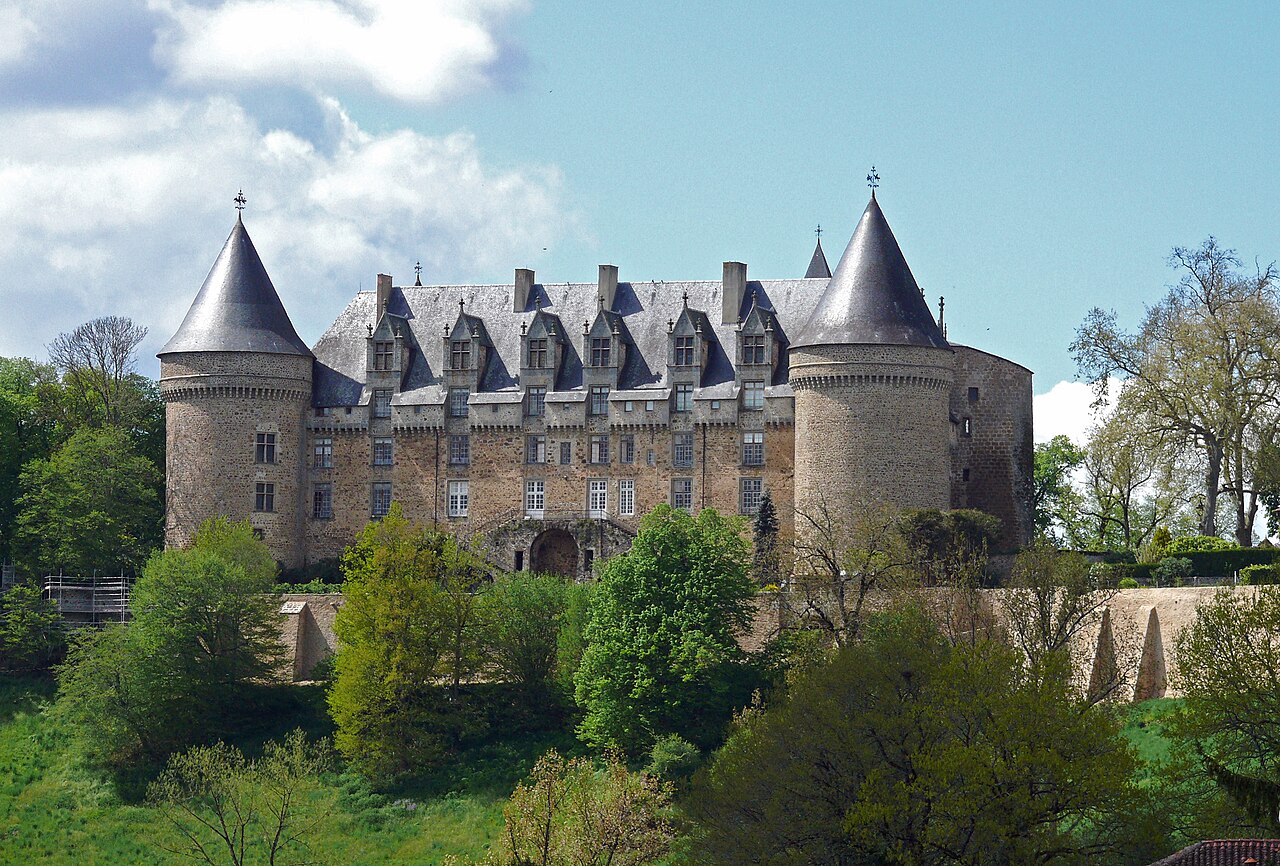
Château de Saint-Germain-de-Confolens
The Château de Saint-Germain-de-Confolens is a remarkable medieval fortress located in the commune of Saint-Germain-de-Confolens in France. Perched strategically on a rocky plateau overlooking the Vienne River, this hill castle was originally constructed by local feudal lords during the Middle Ages to control and defend a vital river crossing. Its position afforded both military advantage and oversight of the surrounding territory, reflecting the typical strategic considerations of medieval fortifications.
The earliest documented mentions of the castle date back to the 11th century, with lords named Hélie in 1073 and Conis in 1087 recorded as early proprietors. These early references establish the castle's long-standing role in regional power dynamics. Over subsequent centuries, the fortress passed through the hands of notable aristocratic families, including the Counts of La Marche and the Mortemart family. Through marriage alliances, a common medieval practice to consolidate power and territory, the castle became part of the estates of the Rochechouart family, one of the oldest noble houses in France.
Historical ownership and military significance
In 1498, the castle experienced a significant change in ownership when Gauthier de Pérusse des Cars acquired it, and it remained with his descendants for several generations. This period coincided with the late medieval era, during which the castle's defensive features were enhanced to meet evolving military needs. Notably, during the French Wars of Religion in the 16th century, the fortress was seized by Protestant forces in 1570. However, it was soon retaken by Jean des Cars, underscoring the castle's continued strategic and military importance in regional conflicts.
By the mid-18th century, the castle passed by marriage into the hands of the d’Armentières family, maintaining its status as an aristocratic residence. However, the upheavals of the French Revolution brought dramatic changes. Like many symbols of the ancien régime, the castle was confiscated as national property and subsequently dismantled. This dismantling led to the ruinous state that characterizes the site today.
Architectural features and layout
The Château de Saint-Germain-de-Confolens is situated on a roughly 100-meter-long and 40 to 60-meter-wide rocky plateau, giving it a commanding view of the surrounding landscape and the river crossing it was meant to guard. The surviving ruins primarily date from the 15th century, showcasing a blend of medieval defensive and residential architecture.
Towers and defensive structures
At the core of the fortress stand two large three-story towers, each approximately 18 meters high. These towers are architecturally distinctive due to their rounded exterior facades combined with square interiors. This design likely served a dual purpose: enhancing the towers' defensive strength against siege weaponry while maximizing usable interior space for garrison and storage. Between these towers lies the remains of the main residential building, or logis, which housed the castle's inhabitants.
Earlier construction phases include a 12th-century square keep that formed the original defensive nucleus of the castle. The following century saw the addition of a well tower, a vital feature ensuring a secure water supply during sieges, reflecting the practical necessities of medieval fortification design.
The 15th century also brought the construction of additional fortified elements, such as the Kitchen Tower, notable for its six floors, and a fortified gatehouse known as a châtelet at the main entrance. The châtelet provided a crucial defensive checkpoint, controlling access to the castle and adding a layered defense system.
Walls, courtyard, and chapel
The castle was further protected by a secondary curtain wall, which enclosed the entire complex. This wall has undergone recent restoration efforts, helping to preserve the site's historical integrity. Within the fortifications, the inner courtyard remains partially visible, along with the original gate entrance. These features frame scenic views towards the Vienne River and the bridge below, which the castle was originally designed to guard.
A particularly notable architectural element is the castle's chapel, constructed in the 12th century. This chapel is architecturally unusual for its Greek cross plan, where all four arms are of equal length, differing from the more common Latin cross layout prevalent in Western ecclesiastical architecture. Beneath the chapel lies an underground crypt, traditionally used for burials and religious rites. The chapel has survived the centuries and now serves as the parish church of Saint-Vincent, maintaining its spiritual role within the local community.
Preservation and modern significance
Following its confiscation and dismantling during the French Revolution, the castle fell into ruin. In 1900, a local priest named Laffay purchased the ruins and generously donated the property to the bishopric, ensuring its care and preservation. Eventually, stewardship passed to the Confolens tourist office, which has overseen the site's maintenance and promotion as a cultural heritage landmark.
The ruins were officially recognized for their historic value with monument protection status granted in 1925. Further preservation measures were implemented in 2016 to stabilize and restore key structural elements. The castle remains an important heritage site, attracting visitors interested in medieval architecture, feudal history, and the military heritage of the region.
The Château de Saint-Germain-de-Confolens stands today as a testament to the layered history of medieval fortifications in France. Its architectural features, from the distinctive towers and fortified gatehouse to the unique chapel, offer valuable insights into the defensive strategies and residential life of the period. The site’s ongoing preservation ensures that this cultural landmark continues to educate and inspire future generations.
Frequently asked questions (FAQ)
- How do I get to Château de Saint-Germain-de-Confolens?
- Château de Saint-Germain-de-Confolens is conveniently located in the town of Saint-Germain-de-Confolens, France. Visitors can reach the castle by car, with ample parking available nearby. Public transportation options may also be available, including local buses that connect to surrounding areas.
- What is the historical significance of Château de Saint-Germain-de-Confolens?
- Château de Saint-Germain-de-Confolens dates back to the medieval period and played a vital role in the region's history. It served as a strategic stronghold during various conflicts and has been a witness to important historical events. The castle's architecture and artifacts provide insight into the feudal era of France.
- When was Château de Saint-Germain-de-Confolens built?
- The castle was originally constructed in the 12th century, showcasing the architectural styles of its time. Throughout the centuries, it has undergone various renovations and expansions, reflecting changes in design trends and historical needs. Today, it stands as a testament to the rich history of the region.
- Can I visit Château de Saint-Germain-de-Confolens year-round?
- Yes, Château de Saint-Germain-de-Confolens is open to visitors throughout the year, although hours may vary seasonally. It is advisable to check the official website or contact the castle directly for the most current visiting hours. Special events may also affect access, so planning ahead is recommended.
- Why is the architecture of Château de Saint-Germain-de-Confolens noteworthy?
- The architecture of Château de Saint-Germain-de-Confolens is noteworthy for its blend of medieval and Renaissance elements. Features such as its sturdy stone walls, towers, and intricate details reflect the craftsmanship of the time. Visitors can appreciate the castle's unique design while exploring its grounds and interiors.
- Is it possible to take guided tours of Château de Saint-Germain-de-Confolens?
- Yes, guided tours are available for visitors who wish to learn more about the castle's history and architecture. These tours are typically led by knowledgeable guides who provide insights into the castle's past and its significance in French history. It is recommended to book tours in advance, especially during peak tourist seasons.
- What are the ticket prices for visiting Château de Saint-Germain-de-Confolens?
- Ticket prices for Château de Saint-Germain-de-Confolens vary depending on age and group size, with discounts often available for students and seniors. Family tickets may also be offered for those visiting with children. Check the official website for the latest pricing information and any special offers that may be available.
- When is the best time to visit Château de Saint-Germain-de-Confolens?
- The best time to visit Château de Saint-Germain-de-Confolens is during the spring and early autumn months when the weather is pleasant, and the surrounding gardens are in full bloom. Additionally, these seasons often feature fewer crowds, allowing for a more enjoyable experience. Be sure to check the castle's schedule for any seasonal events that may enhance your visit.
- What nearby attractions should I consider visiting?
- In addition to Château de Saint-Germain-de-Confolens, visitors can explore the charming village of Saint-Germain-de-Confolens, which boasts local shops and cafes. Nearby attractions also include other historical sites and natural parks that showcase the beautiful French countryside. Planning a day trip around the area can enrich your experience.
Information
Website
Visit websiteSources & official resources
Verify the information above using these authoritative references.
Loading map...
Visitor reviews
No reviews yet. Been here? Write the first review and help other travelers!
Write the first reviewVisited this castle? Share your experience
Your review helps other travelers and adds first-hand knowledge to our encyclopedia.