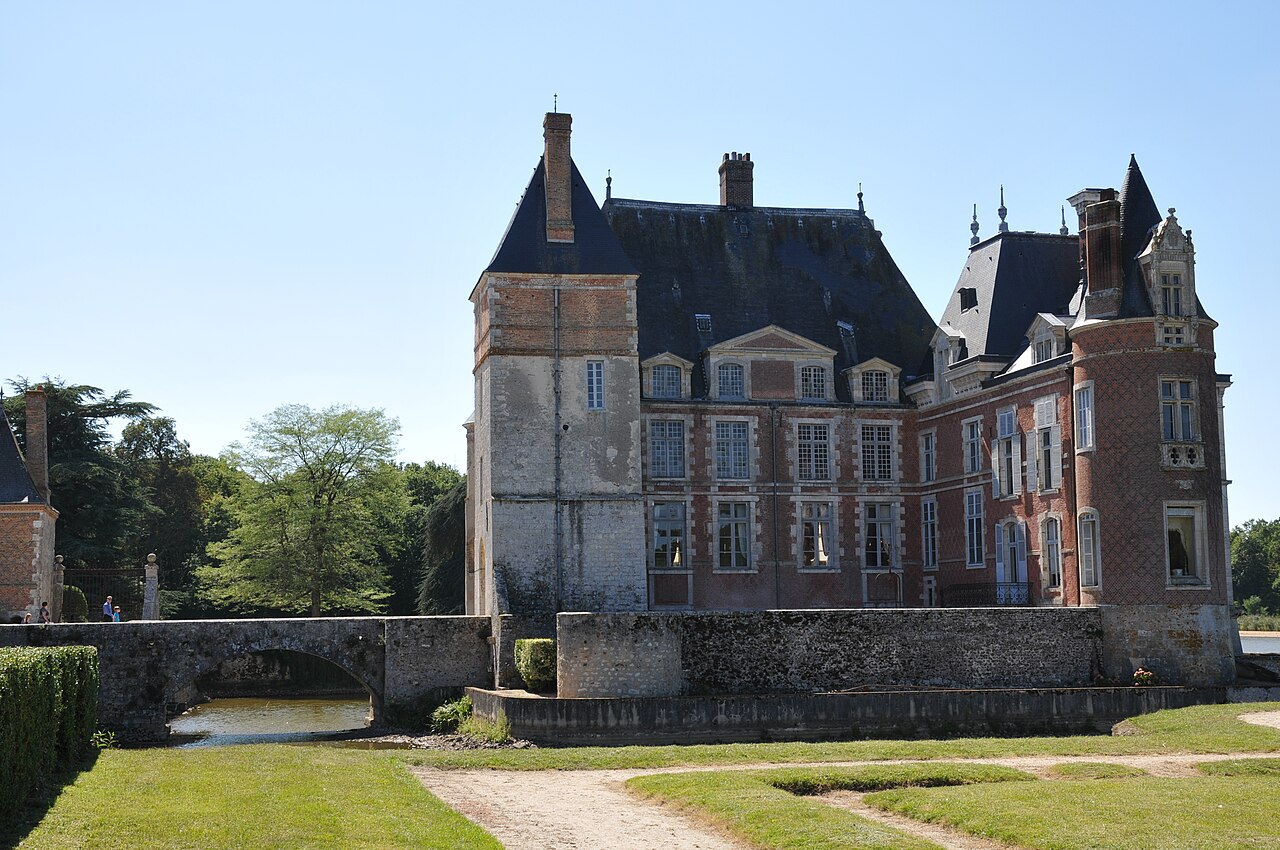
Château de Saint-Brisson
Château de Saint-Brisson stands as a remarkable example of a medieval fortress that evolved into a grand Renaissance manor, located in the picturesque commune of Saint-Brisson-sur-Loire in France. This hill castle, originally constructed in the late 12th to early 13th century by the de Sancerre family, occupies a strategic position overlooking the left bank of the Loire River. Its location near the historic boundary between Berry and Orléanais regions highlights its historical significance as a defensive stronghold and noble residence.
The castle’s initial construction replaced an earlier 12th-century fortification, reflecting the turbulent political and military context of the High Medieval period. Built predominantly in a single phase, the polygonal fortress features a unique architectural plan with alternating cylindrical and square defensive towers along its curtain walls, yet notably lacks a central keep or donjon. This design emphasizes a blend of military defense and residential comfort, a concept that was forward-thinking for its era.
Historical context and ownership lineage
The earliest records trace the site back to the mid-11th century, with the lord Probert de Saint-Brisson supporting the Abbey of Fleury and donating the church of Sainte-Marie within the castle enclosure. The original fortification suffered destruction by order of King Louis VI around 1135, due to the lord’s rebellious actions including dismantling earlier defenses. Subsequently, the castle came under the control of Étienne I of Blois-Champagne in the late 12th century, who held it as an allodial property free from feudal obligations.
During the reign of King Philip Augustus, the castle was involved in regional political conflicts, leading to royal confiscation and eventual restoration to the Sancerre family. The extant stone structure likely dates from between 1180 and 1200 under Étienne de Sancerre, possibly with contributions from Guillaume aux Blanches Mains, Archbishop of Reims. Ownership passed through several noble families, including the Nevers and later the Séguier family in 1567, who transformed the castle into a stately Renaissance manor.
Notable residents include Sidoine Séguier, Marquis de Saint-Brisson (1738–1773), a military figure and writer. The French Revolution brought damage to key defensive elements such as the gatehouse and curtain walls, reflecting the era’s anti-feudal sentiment. Restoration efforts commenced in the 19th century, with significant masonry repairs, pavilion reconstructions, and structural reinforcements continuing into the 20th century.
Architectural features and defensive design
Layout and fortifications
The castle’s polygonal layout is roughly six-sided with a somewhat triangular shape, a rare and deliberate design choice that maximized defensive coverage. The curtain walls connect a series of alternating cylindrical and square towers, each constructed with subtle variations in stonework that indicate careful planning rather than piecemeal additions. The absence of a central keep suggests a palace-fortress style, prioritizing both defense and noble habitation.
Towers and curtain walls
The defensive towers are strategically placed to cover all approaches, equipped originally with arrow slits and battlements typical of the High Medieval military architecture. The curtain walls themselves are robust, with some sections featuring window openings fitted with stone mullions, a feature that allowed natural light into interior chambers while maintaining defensive integrity. These mullioned windows are comparable to those at the Château de Castelnau-Bretenoux, indicating a shared architectural influence.
Residential adaptations
During the 16th century, the Séguier family undertook significant transformations, converting the fortress into a comfortable Renaissance manor. This included the addition of large windows, refined interior spaces, and decorative elements that softened the castle’s martial appearance. The castle’s 14 furnished rooms today reflect this blend of medieval and Renaissance styles, showcasing period furniture, exposed roof beams, and functional spaces such as the kitchen and dining hall.
Landscape and grounds
The château is surrounded by an extensive park developed in the English garden style, featuring aligned trees, orchards, and rare plant species. A notable artistic feature of the grounds is a landscaped island designed using anamorphosis, a visual distortion technique popularized by André Le Nôtre, the famed French garden designer. This island remains a subject of ongoing study and adds cultural depth to the site.
The grounds also include replicas of medieval siege engines such as a mangonel, couillard, and trebuchet. These functional models, created through collaboration with local heritage associations and the Loiret departmental council, provide visitors with tangible insights into medieval military technology and siege warfare tactics.
Restoration and modern use
Following damage during the French Revolution, the château underwent extensive restoration beginning in 1819 led by descendants of the Séguier family. These efforts included rebuilding pavilions named after Charles X and the Marquise, masonry repairs using grey cement, and structural reinforcements with tie rods to stabilize the western curtain wall and northern facades.
In 1987, the last marquis descendant, Anne de Ranst de Berchem de Saint Brisson, donated the château to the local community, establishing an organization to manage its restoration and public access. In 2015, ownership transferred to a company specializing in Loire castles, with ongoing restoration supported by visitor revenues and regional cultural grants.
Today, the château is a well-preserved historic monument, protected since 1993, offering visitors a rich experience through its furnished rooms, the Children’s Museum dedicated to René Chevreau, and popular summer demonstrations of medieval war machines. Its combination of military architecture, Renaissance elegance, and cultural heritage makes it a unique destination in the Loire Valley.
Cultural significance and heritage protection
The Château de Saint-Brisson-sur-Loire is recognized as a French historic monument, encompassing not only the castle itself but also its park, terraces, moats, bridges, ponds, canals, and various architectural elements such as the basement, dining hall, and ornamental pool. Its elevated position overlooking the Loire and the surrounding countryside underscores its strategic and aesthetic importance.
This castle exemplifies the evolution of medieval fortifications into noble residences, reflecting broader historical trends in French architecture and aristocratic life. Its preservation and public accessibility contribute to the cultural tourism of the region, offering educational and experiential opportunities related to medieval history, Renaissance art, and landscape design.
Frequently asked questions (FAQ)
- How do I get to Château de Saint-Brisson?
- Château de Saint-Brisson is located in Saint-Brisson-sur-Loire, France, easily accessible by car and public transport. If you're driving, follow the signs from the nearest major city, Orléans, which is about 30 kilometers away. For public transport, check local bus services that connect to this charming village.
- What is the historical significance of Château de Saint-Brisson?
- Château de Saint-Brisson dates back to the 12th century and played a crucial role in the defense of the region during various conflicts. Its strategic location allowed it to serve as a stronghold for local nobility throughout the Middle Ages. Today, it stands as a testament to the architectural evolution and historical events that shaped the Loire Valley.
- When was Château de Saint-Brisson built?
- The original structure of Château de Saint-Brisson was constructed in the 12th century, with significant renovations occurring in the following centuries. The castle showcases a mix of architectural styles that reflect its long history and the various modifications made over the years. Visitors can appreciate the evolution of design and construction techniques through its different sections.
- Can I take guided tours of Château de Saint-Brisson?
- Yes, guided tours are available at Château de Saint-Brisson, providing visitors with in-depth insights into its history and architecture. These tours typically include access to the main rooms and gardens, led by knowledgeable guides who share fascinating stories about the castle. It's recommended to check the schedule in advance and book your tour online for a guaranteed spot.
- Is it possible to visit the gardens at Château de Saint-Brisson?
- Absolutely! The gardens of Château de Saint-Brisson are open to visitors and are a lovely complement to the castle's historical significance. The landscaped gardens are perfect for a leisurely stroll, where you can enjoy the beautiful views of the surrounding countryside. Be sure to check the opening hours, as they may vary seasonally.
- What are the opening hours for Château de Saint-Brisson?
- Château de Saint-Brisson is typically open to visitors from March to November, with varying hours depending on the season. During peak tourist months, the castle may offer extended hours for visitors. It’s always best to check the official website for the most current opening times before planning your visit.
- What are the ticket prices for Château de Saint-Brisson?
- Ticket prices for Château de Saint-Brisson vary depending on the type of tour and age group. Adult tickets generally cost around €8, while discounts are often available for students and seniors. Family tickets may also be offered at a reduced rate, making it an affordable outing for visitors of all ages.
- When is the best time to visit Château de Saint-Brisson?
- The best time to visit Château de Saint-Brisson is during the spring and early autumn months, when the weather is pleasant and the gardens are in full bloom. These seasons also see fewer crowds compared to the peak summer months, allowing for a more enjoyable experience. Additionally, special events and exhibitions may be held during these times, enhancing your visit.
- Are there any nearby attractions to visit while in Saint-Brisson-sur-Loire?
- Yes, there are several nearby attractions worth visiting, including the picturesque Loire River and charming local villages. The region is known for its beautiful châteaux, such as Château de Gien and Château de Sully-sur-Loire, both of which offer unique insights into French history. Exploring the local area by bike or on foot can also reveal hidden gems and stunning landscapes.
Information
Website
Visit websiteSources & official resources
Verify the information above using these authoritative references.
Loading map...
Visitor reviews
No reviews yet. Been here? Write the first review and help other travelers!
Write the first reviewVisited this castle? Share your experience
Your review helps other travelers and adds first-hand knowledge to our encyclopedia.