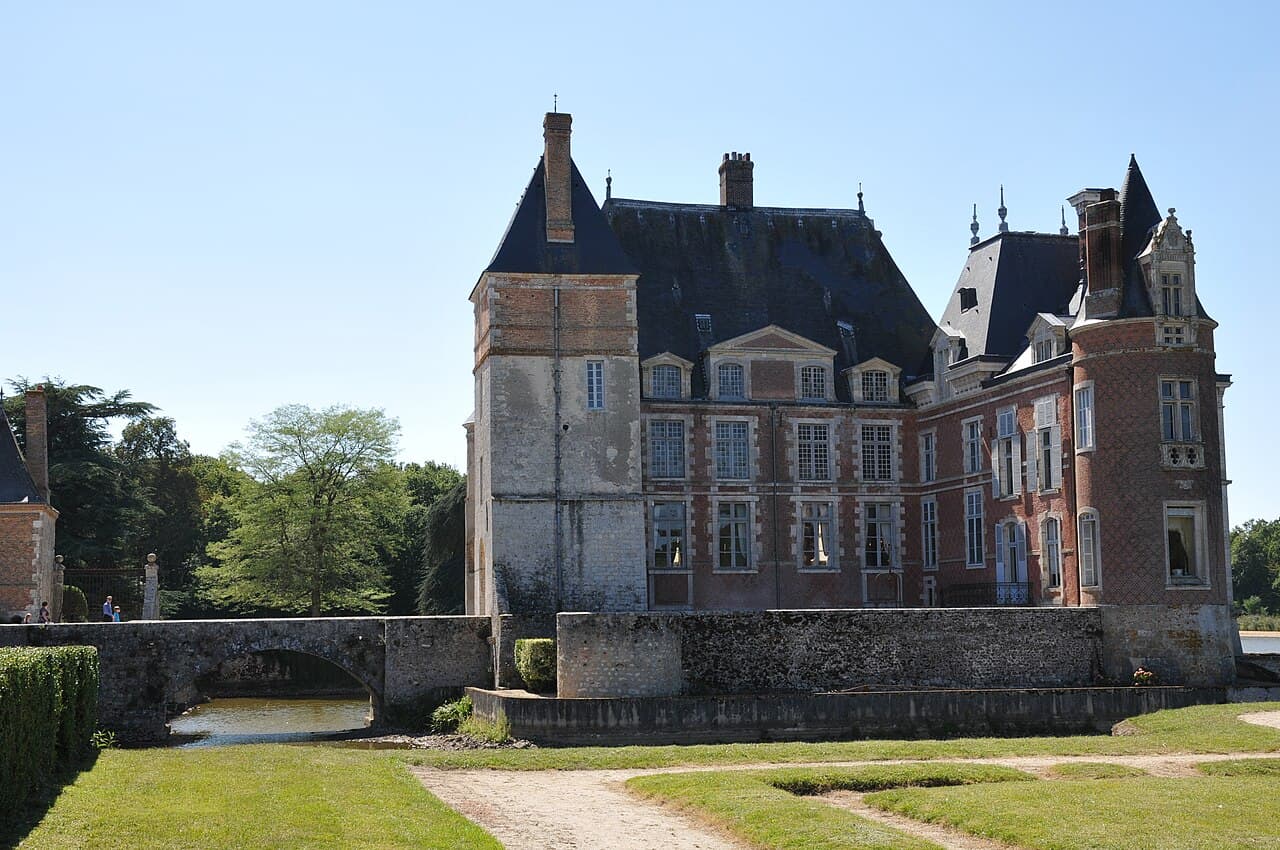
Château de La Bussière
The Château de La Bussière stands as a remarkable example of a medieval water castle in the Hauts-de-France region of northern France. Situated on a nearly square island surrounded by a vast six-hectare pond fed by the Vernisson river, this château embodies centuries of architectural evolution and historical significance. Its origins trace back to the late 11th or early 12th century, when the noble Seigneurs de Feins established a fortress to control the strategic route between Paris and Lyon. This location, on the border of the Île-de-France and the Duchy of Burgundy, made it a vital defensive stronghold in a chain of frontier castles.
Initially conceived as a military garrison, the castle's earliest documented lord, Étienne de Feins, is recorded around 1204 to 1208. He notably diverted the main road deliberately to pass before the fortress, enhancing its defensive and administrative control. Over the centuries, the château's role and ownership evolved, reflecting the shifting political and social landscape of France. By the 13th century, the House of Sancerre had taken control, promoting local economic development through fairs and markets established before 1264.
Medieval origins and strategic importance
The castle's medieval quadrangular plan with four corner round towers dates from the 13th century, a layout preserved through subsequent modifications. The original defensive purpose is evident in the robust fortifications, including thickened walls up to two meters in the late 15th century, adapted to withstand artillery with vaulted masonry inside towers designed to support cannon placements. Remnants of these defensive features survive, such as firing openings and vaulted ceilings, underscoring the château's military significance during the Middle Ages.
Ownership transitions and conflicts
In the early 15th century, ownership passed to the Froment family, and later, in 1518, to the du Tillet family, who maintained possession for over two centuries. The château's military role was dramatically highlighted during the French Wars of Religion in 1567, when it was besieged by Huguenot forces after sheltering Catholic priests fleeing persecution. The siege led to near destruction and the execution of the priests, marking a dark chapter in its history. Following this, Jean II du Tillet spearheaded a significant reconstruction in the late 16th century, transforming the fortress into a more comfortable residence aligned with Renaissance sensibilities.
Architectural evolution and restoration
The château's main residential building, primarily dating from the 17th century, is a two-winged structure resting on medieval cellar vaults. It features the characteristic brique-et-pierre construction, combining red brick walls with a distinctive diamond-shaped pattern formed by two colors of stone. This decorative style is comparable to that of the nearby Château de Gien. The eastern gate tower, predating 1550, displays finely cut ashlar stone on its lower floors and brickwork above, reflecting the transition from purely defensive to more aesthetic architectural elements.
The outer bailey or vorburg contains a blend of medieval and 17th-century buildings, including a horseshoe-shaped wing typical of Louis XIII architecture, former courtrooms with surviving wall paintings, stables, an orangery, and a large dovecote with about 1,200 nesting holes. This dovecote, a substantial round tower with a flat conical roof, once stood alongside a twin tower framing the estate's entrance.
19th-century modifications and gardens
During the 19th century, the château underwent extensive remodeling, including the addition of a veranda with large rounded-arched windows overlooking the pond around 1860. Interior arrangements were altered, but key medieval features such as the large stone kitchen fireplace and vaulted brick cellars remain. The kitchen hearth was in use until 1950, and a water pump installed in the kitchen supplied water until 1920, highlighting the château's blend of historical continuity and modernization.
The 65-hectare park surrounding the château is enclosed by a four-kilometer-long wall and combines formal French gardens with English landscaped areas. The gardens, possibly designed by the renowned landscape architect André Le Nôtre in the 18th century, feature straight avenues and a six-hectare rectangular pond. Adjacent to the park is the 1.5-hectare kitchen garden (potager), restored since 1992 to its 18th-century layout with a central alley and six squares dedicated to medicinal herbs, vegetables, fruit trees, and flowers. This garden holds the prestigious Jardin remarquable label, acknowledging its exceptional heritage value.
Cultural significance and museum collections
Since 1962, the château has housed a museum dedicated to freshwater fishing, reflecting the estate's cultural connection to its aquatic environment. The museum's collections include diverse fishing equipment, artworks related to fishing, and a preserved coelacanth specimen maintained in formalin, offering visitors a unique glimpse into both natural history and regional traditions.
The château's entrance is marked by two 17th-century baroque pavilions flanking a wrought iron gate, leading into a forecourt and the main building. The façades retain their distinctive diamond brick pattern, combining brick and ashlar stonework, while the interior courtyard façade was rebuilt in brick by the late 16th century, showcasing Renaissance influences. Despite the moat being drained in the 19th century, the château's medieval water defenses and corner towers remain prominent, preserving the historic character of this water castle.
Inside, rooms display furnishings and decorations from the 17th to 19th centuries, including tapestries, carved fireplaces, and painted ceilings. These elements span stylistic periods from Louis XIII to the Second Empire, illustrating the château's continuous adaptation and refinement over centuries.
Preservation and heritage status
The Château de La Bussière was designated a Monument historique in 1993, with additional parts classified in 1995, recognizing its architectural and historical importance. The gardens and kitchen garden have been acknowledged with the Jardin remarquable label since 1993, underscoring the estate's cultural and horticultural significance. Today, the château remains well preserved, offering visitors a rich experience of medieval fortifications, Renaissance and Baroque architecture, and beautifully maintained gardens that reflect centuries of French heritage.
Frequently asked questions (FAQ)
- What is the historical significance of Château de La Bussière?
- Château de La Bussière is a 17th-century castle located in the Loire Valley, known for its rich history and beautiful gardens. It was originally built as a hunting lodge for the nobility and showcases the architectural styles of its time, reflecting the cultural heritage of France.
- When was Château de La Bussière built?
- Construction of Château de La Bussière began in the early 17th century and was completed in the mid-1600s. The castle has undergone various renovations over the years, preserving its historical integrity while adapting to modern visitor needs.
- How do I get to Château de La Bussière?
- Château de La Bussière is easily accessible by car, located approximately 150 km from Paris. Public transport options include trains to nearby towns, followed by a short taxi ride to the castle.
- Is it possible to visit Château de La Bussière year-round?
- Yes, Château de La Bussière is open to visitors throughout the year, though specific opening hours may vary depending on the season. It’s recommended to check their official website for the most up-to-date information on accessibility and visiting hours.
- What are the opening hours for Château de La Bussière?
- The castle typically opens at 10 AM and closes at 6 PM during the peak season, with shorter hours in the off-season. Visitors should verify the current schedule before planning their trip, as hours can change for special events or holidays.
- Can I bring food or drinks to Château de La Bussière?
- Visitors are not permitted to bring food or drinks into the castle grounds, but there are designated picnic areas available. The castle also features a café where guests can enjoy refreshments during their visit.
- What are the ticket prices for Château de La Bussière?
- Ticket prices for Château de La Bussière vary depending on the season and age group, with discounts available for children and seniors. It’s advisable to purchase tickets online in advance to secure the best rates and avoid long lines.
- When is the best time to visit Château de La Bussière?
- The best time to visit Château de La Bussière is during the spring and early fall when the gardens are in full bloom and the weather is pleasant. These seasons also tend to attract fewer crowds, allowing for a more enjoyable experience.
- Are there any nearby attractions to visit?
- Yes, nearby attractions include the picturesque town of Briare and the famous Canal de Briare. Additionally, the Loire Valley is dotted with other historic châteaux, making it a perfect destination for castle enthusiasts and history lovers alike.
Photo gallery

Information
Website
Visit websiteSources & official resources
Verify the information above using these authoritative references.
Loading map...
Visitor reviews
No reviews yet. Been here? Write the first review and help other travelers!
Write the first reviewVisited this castle? Share your experience
Your review helps other travelers and adds first-hand knowledge to our encyclopedia.



