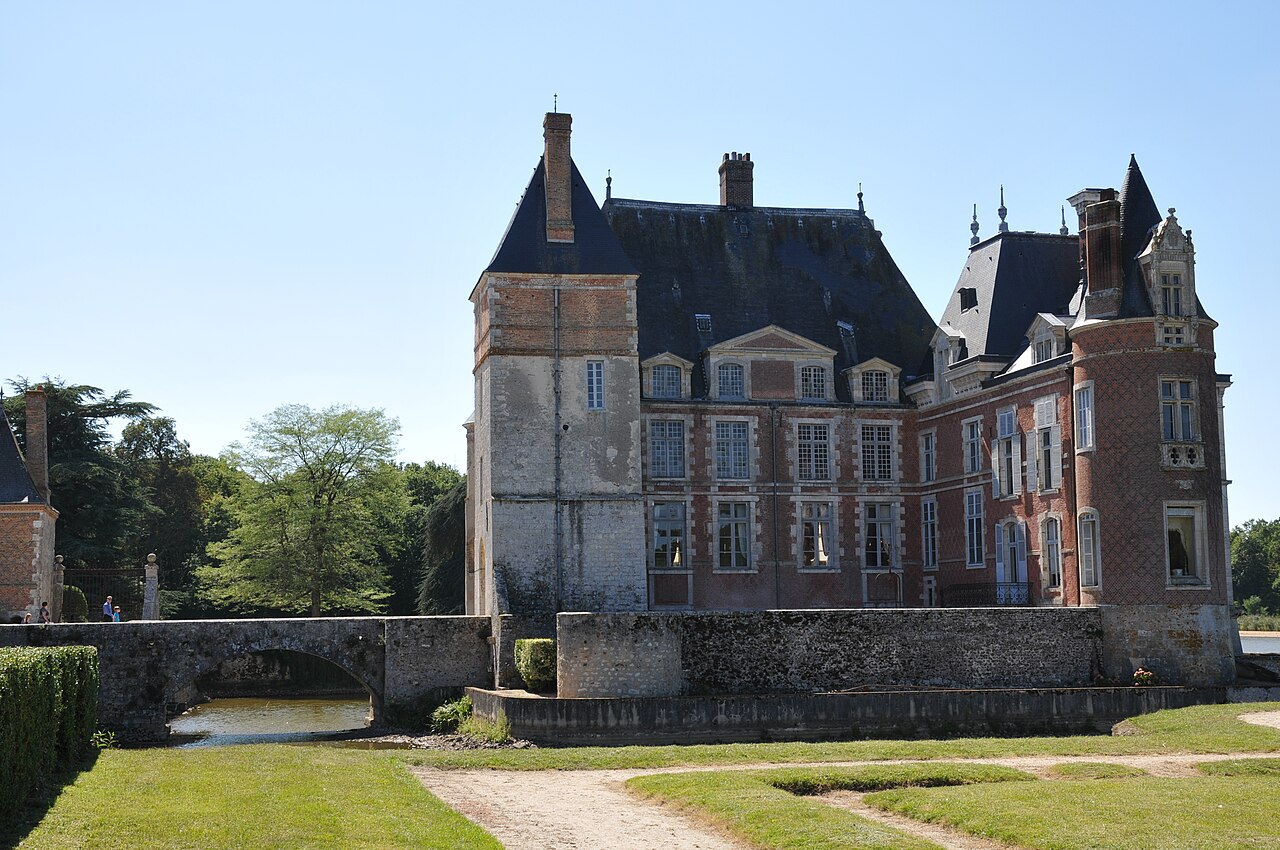
Château de Gien
The Château de Gien is a remarkable late medieval castle located in the town of Gien, within the Loiret department of France. Originally constructed in the 15th century for Anne of France, the castle stands on a strategic rocky promontory overlooking the Loire River. This site has a deep historical lineage, with archaeological evidence revealing a lordly tower dating back to between the 9th and 11th centuries, marking its early medieval origins. Over centuries, the castle has witnessed significant historical events and hosted numerous notable figures, including King Francis I, King Henry II, Queen Catherine de Médicis, King Charles IX, Queen Anne of Austria, and King Louis XIV.
Historical significance and royal connections
The Château de Gien's location near the border of the Duchy of Burgundy made it a contested fortress throughout the Middle Ages. Initially part of a seigneurie and parish dating back to the late 6th century, the castle's ownership shifted multiple times. It was ceded to King Philip II of France in 1199 and later became an apanage granted to Louis d’Évreux in 1307, then to Jean de Berry in 1381. After a period under the Duchy of Burgundy, control returned to the French crown in 1416. The medieval fortress suffered damage during the Hundred Years’ War, notably in 1378 when it was attacked by troops under Robert Knolles.
In 1482, Anne de France and her husband Pierre II de Beaujeu undertook a major reconstruction, replacing the damaged medieval fortress with a new castle constructed in the First French Renaissance style. This transformation reflected the evolving architectural and political landscape of late 15th-century France. Throughout its history, the castle hosted several French monarchs and royal figures. During the Fronde civil wars in 1652, the young Louis XIV, accompanied by his mother Anne of Austria and Cardinal Mazarin, took refuge within its walls. The castle also changed hands multiple times, including confiscation by Francis I and a brief grant to James V of Scotland as part of a marriage dowry in 1537.
Architectural features and layout
The Château de Gien is built primarily of red brick with decorative black glazed brick patterns arranged in geometric shapes such as triangles, checkerboards, and six-pointed stars. These motifs, found on the courtyard walls, may hold symbolic significance possibly linked to Masonic traditions. The castle's façades are contrasted by window and door frames made of light-colored ashlar stone, enhancing its visual appeal.
The castle’s structure includes a long two-story south wing and a shorter three-story east wing, connected by a round tower at the corner of the courtyard. One of the oldest surviving parts is the Charlemagne Tower, a square tower facing the Loire River, dating from the late 12th or early 13th century and topped with a flat pyramidal roof. The south corner round tower is notable for its diamond-shaped brick patterns in various colors and is capped with a conical roof and lantern. The roofs are covered with slate shingles, typical of the region.
Inside, original furnishings have largely been lost due to remodelings over the centuries, but the large hall in the south wing still retains an impressive chestnut wood beam ceiling. The castle terrace, rebuilt following medieval plans, connects to the town center via several stairways. The west wing preserves the prison doors from when the castle housed a prison until 1926, and the tribunal was located there until about 1960.
Modern history and restoration efforts
In the 19th and early 20th centuries, the Château de Gien served various administrative and judicial roles after being acquired by the Loiret department in 1823. It housed a prison, tribunal, and sub-prefecture. It was officially classified as a historic monument in 1840 and underwent restoration in 1869. During World War II, the castle suffered partial damage from German bombing in 1940, including a fire on the east wing’s roof and collapse of part of the north-east corner, though the main structure remained largely intact.
Between 2012 and 2017, extensive restoration and archaeological investigations were conducted, uncovering more about the castle’s medieval origins and preserving its historical fabric. Excavations between 2011 and 2014 revealed the foundations of the original lordly tower, confirming its construction between the 9th and 11th centuries beneath the Renaissance château.
The international hunting museum
Since 1952, the Château de Gien has housed the Musée International de la Chasse (International Hunting Museum), founded by Pierre-Louis Duchartre. The museum displays a vast collection of over 3,000 hunting-related objects, including 15th-century crossbows, 16th-century arquebuses (early firearms), tapestries by Laurent Guyot, and paintings by François Desportes and Jean-Baptiste Oudry. The collection also features prints, ceramics, and hunting trophies, illustrating the cultural and historical significance of hunting in France and Europe.
Location and visitor experience
Perched on a rocky outcrop overlooking the Loire River, the Château de Gien dominates the town below, offering visitors a striking view and a rich historical atmosphere. Its late Gothic Flamboyant style architecture, combined with Renaissance elements, provides a unique example of transitional French castle design. The castle’s courtyard, towers, and decorated façades invite exploration, while the museum offers educational exhibits on hunting traditions.
Visitors can appreciate the castle’s layered history through its preserved architectural features and the archaeological discoveries that reveal its early medieval past. The castle’s connection to French royalty and its role in regional conflicts add depth to its historical narrative. The International Hunting Museum enriches the visit by presenting a specialized cultural collection within this historic setting.
Frequently asked questions (FAQ)
- What are the opening hours of Château de Gien?
- Château de Gien is typically open to visitors from 10 AM to 6 PM, with extended hours during the summer months. It is advisable to check the official website for any changes in schedule or special closures.
- How do I get to Château de Gien?
- Château de Gien is accessible by car, located near the A77 motorway, and there is parking available on-site. Additionally, public transportation options include trains to Gien station, followed by a short walk to the castle.
- What is the historical significance of Château de Gien?
- Château de Gien was originally built in the 15th century and served as a royal residence for King Louis XI. Its rich history is reflected in its architecture and the various renovations it has undergone over the centuries.
- Can I take photographs inside Château de Gien?
- Photography is generally allowed inside the château, but flash photography and tripods may be restricted in certain areas. Always check for signage or ask staff for guidance to ensure a respectful visit.
- When is the best time to visit Château de Gien?
- The best time to visit Château de Gien is during the spring and early autumn when the weather is mild, and the gardens are in full bloom. These seasons also tend to attract fewer crowds compared to the peak summer months.
- Is it possible to access Château de Gien with limited mobility?
- Yes, Château de Gien offers accessibility options for visitors with limited mobility. There are ramps and elevators available, but it's recommended to contact the château in advance to ensure all necessary accommodations are in place.
- What are the ticket prices for Château de Gien?
- Ticket prices for Château de Gien vary, with discounts available for students, seniors, and children. It's best to check the official website for the most current pricing and any special offers.
- Are there any nearby attractions to visit?
- Yes, there are several nearby attractions, including the picturesque town of Gien itself and the scenic Loire River. Visitors can also explore other historical sites and local markets in the surrounding area.
Information
Website
Visit websiteSources & official resources
Verify the information above using these authoritative references.
Loading map...
Visitor reviews
No reviews yet. Been here? Write the first review and help other travelers!
Write the first reviewVisited this castle? Share your experience
Your review helps other travelers and adds first-hand knowledge to our encyclopedia.