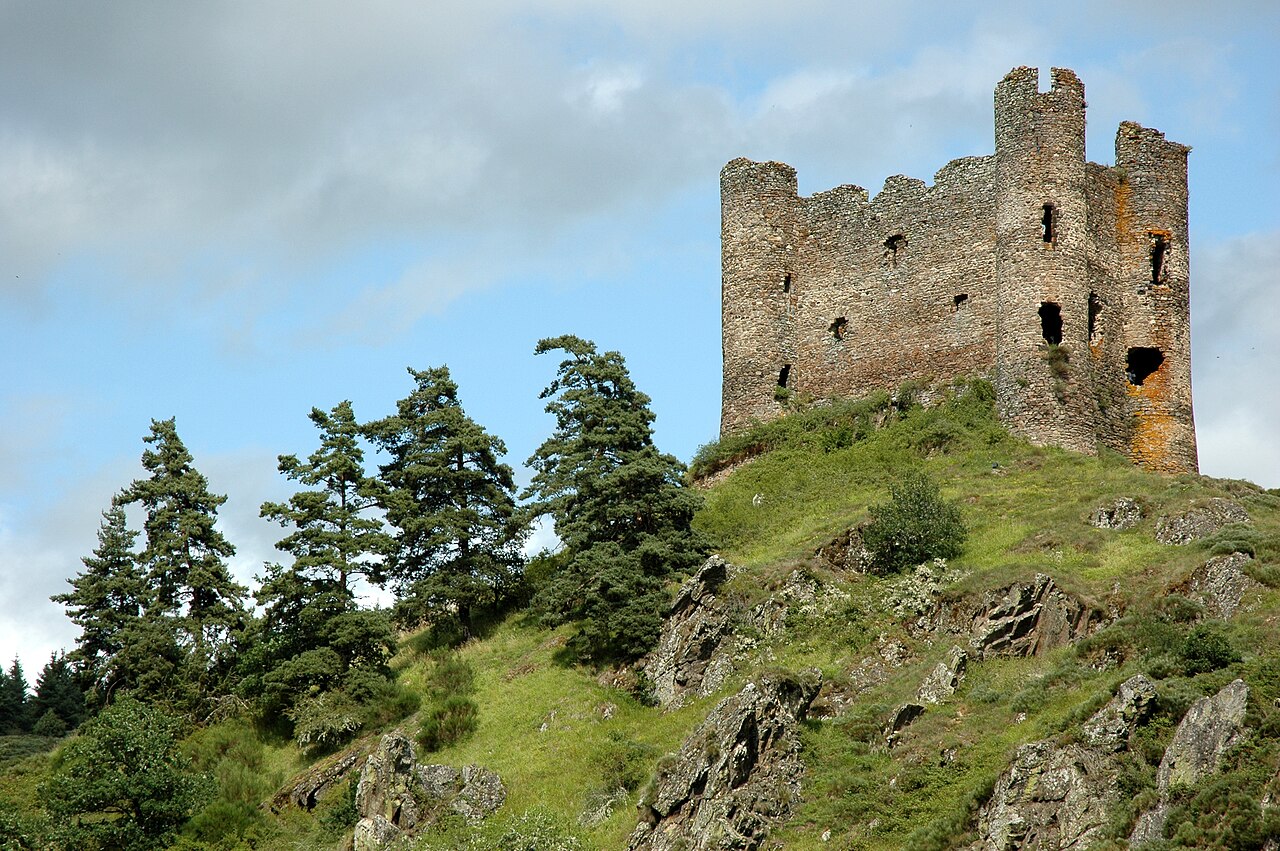
Château de Saint-Alban
Château de Saint-Alban, located in Saint-Alban-sur-Limagnole in the Lozère region of France, is a castle with origins tracing back to the high medieval period. The castle is first documented in 1188, marking its significance in medieval French history. It was strategically important enough to endure multiple sieges during the Hundred Years' War, a prolonged conflict between England and France that spanned from 1337 to 1453.
Medieval origins and strategic importance
The initial construction of the Château de Saint-Alban dates to the 12th century, situating it firmly in the high medieval era. This period was characterized by the development of stone fortifications replacing earlier wooden structures, reflecting advances in military architecture. The castle's location in the rugged terrain of the Massif Central region provided a natural defensive advantage, which was further enhanced by its architectural features.
Architectural evolution and 15th-century additions
While the original castle was built in the 12th century, significant architectural modifications were made in the 15th century. The three existing towers visible today date from this later period. These towers were likely added to strengthen the castle's defenses in response to evolving siege technologies during the late medieval period. The towers would have served as lookout points and strongholds within the castle, providing improved vantage and protection for its occupants.
Structural features
The castle's construction includes thick stone walls typical of medieval fortifications, designed to withstand attacks and sieges. The towers are integrated into the curtain walls, creating a fortified perimeter. Although detailed plans of the castle's full layout are scarce, the surviving elements suggest a compact fortress adapted to its hillside location.
Role during the Hundred Years' War
The Château de Saint-Alban's multiple sieges during the Hundred Years' War underline its military significance. Control of such castles was crucial for regional dominance, supply lines, and local governance. The castle's endurance through these sieges indicates it was well-defended and strategically valuable.
Post-medieval transformation and current use
From 1824 onwards, the castle underwent a profound change in function, being repurposed as a psychiatric center. This adaptation reflects a broader trend in the 19th century where many historic castles found new roles beyond military or noble residences. The castle's robust structure made it suitable for institutional use, and it remains in this capacity today.
Despite its long history and changes in use, the Château de Saint-Alban retains significant architectural heritage that illustrates the evolution of medieval fortifications in the region. Its preservation as a functional building contributes to the cultural landscape of Lozère.
Visiting and cultural significance
The castle is not typically open to the public due to its current use as a psychiatric facility. However, its historical importance is recognized locally, and it stands as a notable example of high medieval military architecture adapted through centuries. The castle's presence enriches the historical narrative of the Massif Central area and offers insight into the region's medieval past.
Frequently asked questions (FAQ)
- How do I get to Château de Saint-Alban?
- Château de Saint-Alban is located in Saint-Alban-sur-Limagnole, France, easily accessible by car. If you are traveling by public transport, the nearest train stations are in Mende and Marvejols, from where you can take a taxi or local bus to reach the castle.
- What is the historical significance of Château de Saint-Alban?
- Château de Saint-Alban dates back to the 13th century and played a crucial role in the region's defense during the medieval period. It reflects the architectural styles of its time and has witnessed numerous historical events, making it an important landmark in the Lozère department.
- When was Château de Saint-Alban built?
- Construction of Château de Saint-Alban began in the 13th century, with significant modifications and expansions made in subsequent centuries. Its enduring structure showcases the evolution of medieval architecture over the years.
- Can I visit Château de Saint-Alban year-round?
- Yes, Château de Saint-Alban is open to visitors throughout the year, although the opening hours may vary by season. It is advisable to check the official website or contact the castle directly for the most current visiting information.
- Why is Château de Saint-Alban popular among tourists?
- Château de Saint-Alban attracts visitors for its stunning architecture and rich history, as well as its picturesque setting overlooking the surrounding landscape. The castle also hosts various cultural events and exhibitions, making it a vibrant destination for history enthusiasts and families alike.
- Is it possible to access Château de Saint-Alban with a wheelchair?
- While Château de Saint-Alban strives to accommodate all visitors, some areas of the castle may have limited accessibility due to its historic structure. It is recommended to contact the castle in advance to inquire about specific accessibility options and services available for visitors with mobility challenges.
- What are the ticket prices for visiting Château de Saint-Alban?
- Ticket prices for Château de Saint-Alban vary based on age and group size, with discounts often available for children and seniors. For the most accurate pricing and any available promotions, it is best to check the official website or inquire at the ticket office upon arrival.
- What are the best times to visit Château de Saint-Alban?
- The best times to visit Château de Saint-Alban are during the spring and early autumn months when the weather is mild and the surrounding nature is in full bloom. Visiting during these seasons allows you to enjoy the stunning scenery and partake in outdoor events hosted by the castle.
- What nearby attractions should I consider visiting?
- In addition to Château de Saint-Alban, visitors can explore the scenic landscapes of the Margeride region, which offer hiking and biking opportunities. Other nearby attractions include the historic town of Mende and the stunning Gorges du Tarn, both of which provide a rich experience of the area's natural beauty and cultural heritage.
Information
Loading map...
Visitor reviews
No reviews yet. Been here? Write the first review and help other travelers!
Write the first reviewVisited this castle? Share your experience
Your review helps other travelers and adds first-hand knowledge to our encyclopedia.