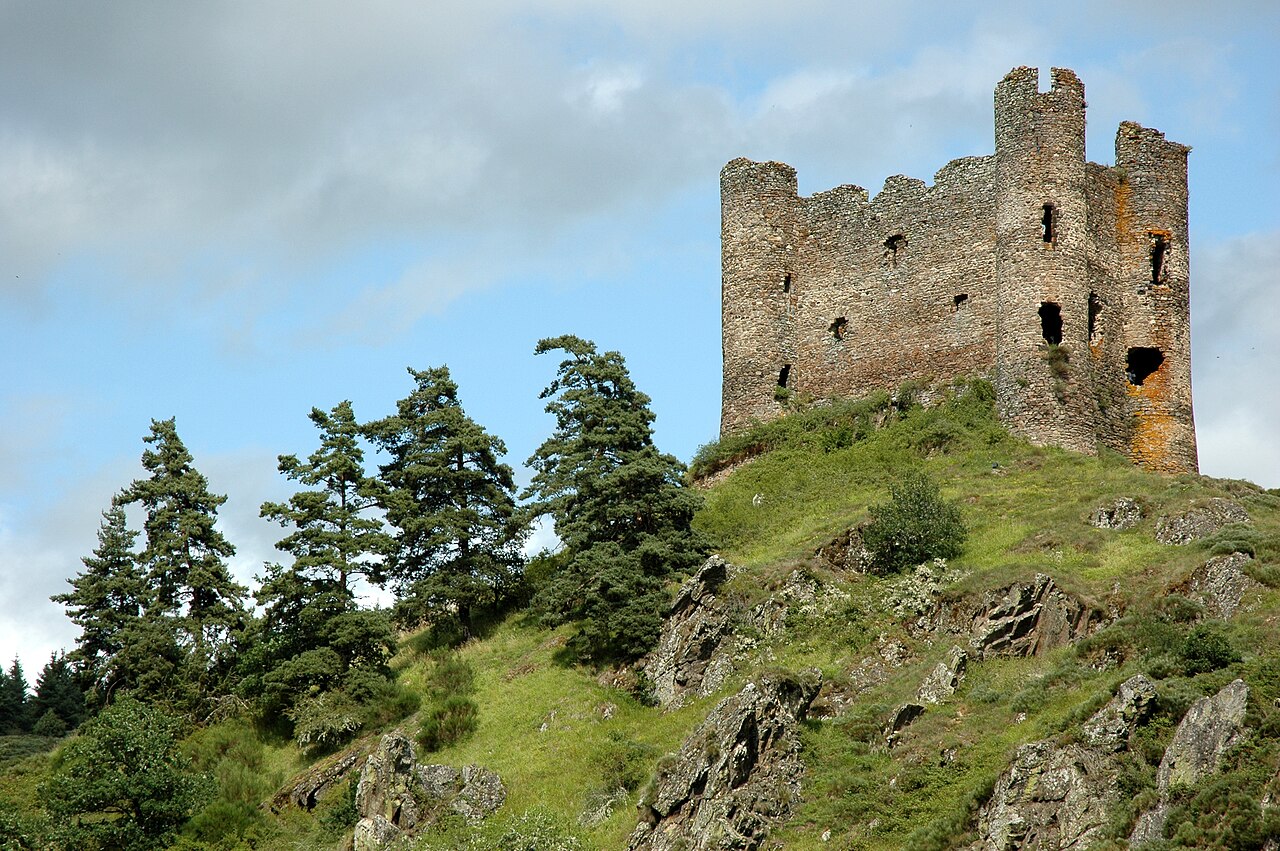
Château d'Apcher
Château d'Apcher is a significant high medieval fortress located in Prunières, France. First mentioned in 1180, this castle exemplifies the military and residential architecture of the 12th century. It was strategically built on a rocky promontory that provides commanding views of the surrounding landscape, an essential feature for defense and surveillance during its active years.
Architectural features and layout
The castle's most prominent structure is its keep, which rises approximately fifteen meters high. This massive tower is crowned with battlements on its terrace, designed for archers and defenders to repel attackers while maintaining a vantage point over the area. The keep's robust construction reflects the typical high medieval military architecture, emphasizing verticality and fortification.
Surrounding the keep are the remains of dwelling quarters and outbuildings, which once housed the lord's household and support staff. These structures would have included living spaces, storage rooms, and workshops necessary for the castle's self-sufficiency.
One of the castle's notable features is the castle chapel, dedicated to Saint John the Baptist. This chapel contains painted decorations dating from the 14th and 15th centuries, which provide valuable insight into the religious art and iconography of the period. The chapel served both spiritual needs and as a symbol of the lord's piety and status.
Historical context and significance
Château d'Apcher was constructed during a period of feudal consolidation in the high medieval era, when local lords fortified their domains to assert control and defend against rival factions. Its first recorded mention in 1180 places it firmly in the context of medieval France's complex political landscape, marked by territorial disputes and the need for strongholds.
The castle was abandoned in the 17th century, a time when many medieval fortresses lost their military relevance due to changes in warfare, such as the advent of artillery and centralized royal power. Despite this, the ruins remain a testament to the architectural and historical legacy of the region.
Preservation and current condition
Today, Château d'Apcher is classified as partially preserved. Key elements such as the dungeon, fragments of the dwelling areas, and the castle chapel still stand, allowing visitors to appreciate the castle's original layout and functions. The painted decorations in the chapel are particularly valuable for historians and art conservators.
The castle's location on a rocky outcrop not only provided defensive advantages but also contributes to its dramatic ruins, which offer visitors panoramic views of the surrounding countryside and a tangible connection to medieval history.
Architectural style and influences
The castle's design reflects the high medieval architectural style, characterized by thick stone walls, narrow windows, and defensive battlements. The chapel's painted decorations indicate the influence of Gothic art trends that spread across France during the 14th and 15th centuries, blending religious symbolism with local artistic traditions.
Visiting Château d'Apcher
Visitors to Château d'Apcher can explore the ruins and enjoy the scenic views from the keep's elevated position. The site provides insight into medieval life, military architecture, and religious practices. While the castle is in ruins, the preserved chapel and painted decorations are highlights for those interested in medieval art and history.
The castle's remote location and rugged terrain mean that visitors should prepare for a hike and wear appropriate footwear. It is advisable to check local tourism resources for opening hours and any guided tours that may be available.
Frequently asked questions (FAQ)
- What is the historical significance of Château d'Apcher?
- Château d'Apcher is a notable example of medieval architecture in France, reflecting the rich history of the Auvergne region. Originally built in the 12th century, it served as a stronghold for local lords and played a key role in regional conflicts during the Middle Ages.
- When was Château d'Apcher built?
- The construction of Château d'Apcher began in the 12th century, around 1150, making it one of the oldest castles in the area. Over the centuries, it has undergone various renovations and restorations that have preserved its historical charm.
- What are the opening hours for visiting Château d'Apcher?
- Château d'Apcher is typically open to visitors from April to October, with specific hours varying by season. It is advisable to check the official website for the most current opening hours and any special events that may affect access.
- Can I take guided tours of Château d'Apcher?
- Yes, guided tours are available for visitors who wish to learn more about the castle's history and architecture. These tours often provide a deeper insight into the castle's significance and the stories of its past inhabitants.
- Is it possible to access Château d'Apcher with mobility aids?
- The accessibility of Château d'Apcher can vary, as it is a historical structure with some uneven surfaces. It is recommended to contact the castle administration in advance to inquire about specific accommodations for visitors with mobility aids.
- What is the best time to visit Château d'Apcher?
- The best time to visit Château d'Apcher is during the late spring or early fall when the weather is pleasant and the crowds are smaller. This allows for a more enjoyable experience while exploring the castle and its surroundings.
- Are there any nearby attractions to see while visiting Château d'Apcher?
- Yes, visitors to Château d'Apcher can explore several nearby attractions, including the stunning landscapes of the Cevennes National Park and the charming village of Prunières. Additionally, several hiking trails and historical sites are within a short drive, making it a perfect base for exploration.
- What are the ticket prices for Château d'Apcher?
- Ticket prices for Château d'Apcher are generally affordable, with discounts available for students and seniors. It is advisable to check the official website or contact the castle's visitor center for the most up-to-date pricing information.
Information
Loading map...
Visitor reviews
No reviews yet. Been here? Write the first review and help other travelers!
Write the first reviewVisited this castle? Share your experience
Your review helps other travelers and adds first-hand knowledge to our encyclopedia.