Château de Saché
The Château de Saché stands as a remarkable testament to French heritage, combining layers of medieval fortification with Renaissance elegance and 19th-century literary significance. Located in the commune of Saché, France, this château is renowned primarily as the cherished retreat of the eminent French writer Honoré de Balzac, who penned many of his masterpieces here between 1830 and 1837. Its rich history, architectural evolution, and cultural legacy make it a unique destination for enthusiasts of history, literature, and architecture.
Medieval origins and architectural evolution
The château’s foundations date back to the 12th century, originally constructed as a fortified manor typical of the feudal landscape of the time. It was part of a medieval châtellenie, an administrative district anchored by a lord’s castle, under the influence of the nearby stronghold of L’Île-Bouchard. Though the exact builders remain unknown, the surviving elements such as a cylindrical tower and remnants of dry moats reflect its defensive purpose.
Over the centuries, the château underwent significant transformations, especially during the 15th to 18th centuries. The main building as seen today largely dates from the 15th century, evolving from its medieval roots into a more comfortable fortified manor. Subsequent renovations in the 16th century Renaissance period introduced stylistic and structural changes aligning with contemporary tastes, while later modifications in the 17th and 18th centuries adapted the residence for residential comfort rather than defense.
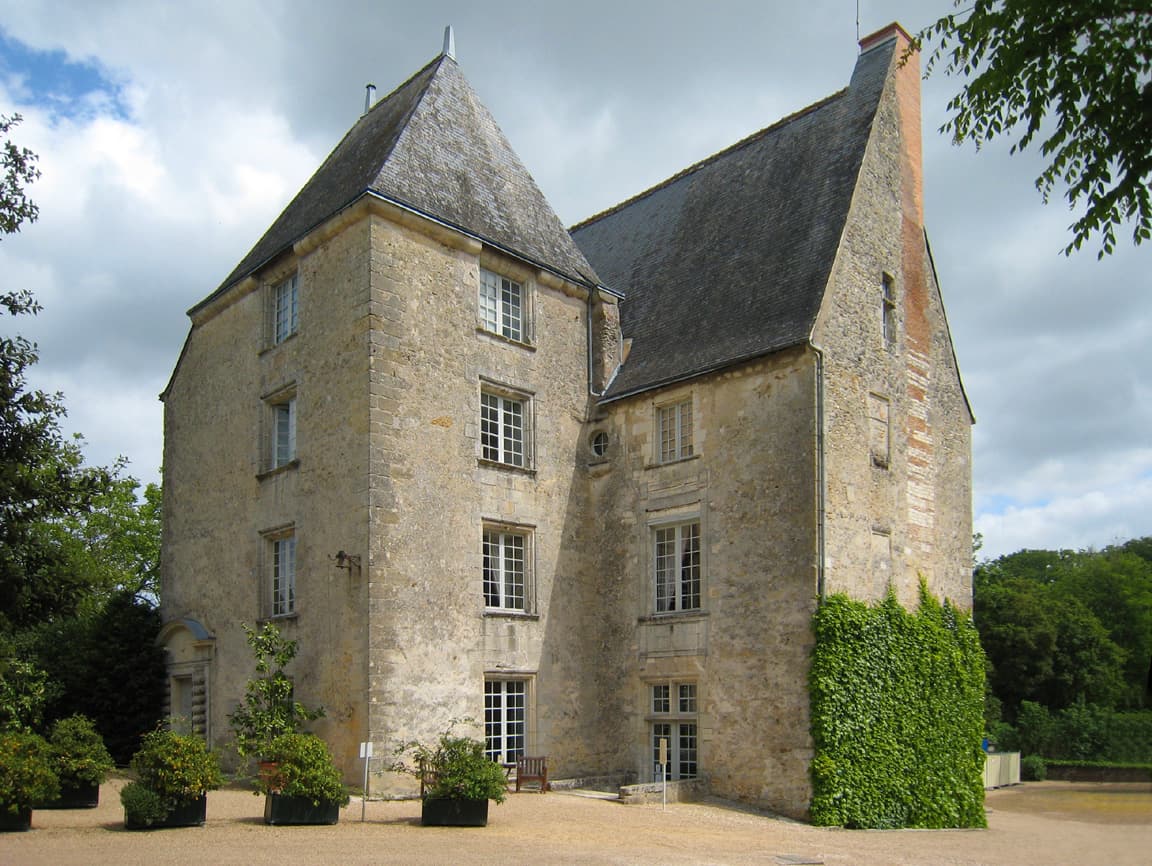
In the early 19th century, Jean de Margonne inherited the property and undertook renovations that gave the château much of its present-day appearance. The plastered limestone walls and slate roof reflect the restrained elegance of this period, preserving a simple yet dignified aesthetic that balances its medieval past with modern habitation.
Honoré de balzac and the château’s literary significance
The château is inseparably linked to Honoré de Balzac, one of France’s most prolific and influential novelists. Balzac was a frequent guest of Jean de Margonne, staying at Saché approximately ten times between 1825 and 1848. The tranquil surroundings provided a refuge from the turmoil of Parisian life, enabling Balzac to focus intensely on his writing.
During his stays, Balzac maintained a rigorous routine, often writing 14 to 16 hours a day. His schedule involved brief periods of sleep, followed by nocturnal writing sessions fueled by copious amounts of coffee. It was within the walls of this château that he created many of the works that compose his monumental series La Comédie Humaine, which sought to portray the breadth of French society in the early 19th century.
Notable works penned here include Le Lys dans la vallée, Le Père Goriot, Illusions perdues, and César Birotteau. The château’s peaceful environment and inspiring views of the Indre valley deeply influenced Balzac’s creative process, particularly in his depictions of provincial life and social dynamics.
Architectural features and preserved elements
The château’s irregular floor plan and structural elements reveal its layered history. The surviving cylindrical tower and the base of a second tower are tangible links to its medieval defensive origins. The partial remains of the dry moat further emphasize its original function as a fortified residence.
Inside, the château preserves rooms restored to reflect the era of Balzac’s residence. The dining room and grand salon showcase period wallpapers and furnishings, evoking the ambiance of the 19th century. Balzac’s modest second-floor bedroom and study contain original artifacts such as his writing desk, a small bed alcove with crimson curtains, and a broad armchair, offering an intimate glimpse into the novelist’s working environment.
The château is set within a two-hectare park featuring ancient oak trees and a stream, overlooking the picturesque Indre valley. This natural setting not only enhances the château’s aesthetic appeal but also served as a source of inspiration for Balzac’s literary landscapes.
Museum collections and literary reconstructions
Since 1951, the château has functioned as a museum dedicated to Balzac’s life and work. It houses an extensive collection of approximately 2,300 items, including original plaster sculptures by Auguste Rodin, paintings, rare books, manuscripts, prints, drawings, and photographs. Among the most prized holdings are three corrected proof editions of Le Lys dans la vallée, which provide valuable insights into Balzac’s creative revisions.
The museum also features literary reconstructions inspired by Balzac’s novels. Visitors can explore recreated interiors such as the dining room and salon of the fictional Château de Clochegourde, the parson’s room in Tours, the boudoir of Foedora from La Peau de chagrin, and the lawyer Derville’s office from Le Colonel Chabert. These immersive exhibits deepen the connection between the château and Balzac’s literary universe.
In 2015, a collaborative restoration project by the Indre-et-Loire council and the French National Furniture Institution renewed the château’s furnishings to authentically represent the period atmosphere. This included period-appropriate pieces such as a trictrac board game table, a loom associated with Madame de Morsauf, white percale curtains with braid trim, Boulle-style cabinetry, Louis XIV-style carved chairs, white porcelain vases with gold fillets, and family silverware. These elements contribute to a vivid, historically grounded visitor experience.
Heritage status and public access
The château has been officially recognized as a monument historique by the French Ministry of Culture since 1932, with extended protections granted in 1968 and 1983 to preserve interiors closely linked to Balzac. This status underscores its dual significance as an architectural heritage site and a cultural landmark associated with one of France’s literary giants.
Today, the château welcomes visitors as a museum that offers a rich blend of history, architecture, and literature. Its well-preserved spaces, evocative exhibits, and tranquil setting provide an immersive experience that honors both its medieval origins and its 19th-century literary legacy.
Frequently asked questions (FAQ)
- How do I get to Château de Saché?
- Château de Saché is located in Saché, France, easily accessible by car or public transport. If you're driving, take the A85 motorway and follow the signs to Saché. The nearest train station is in Tours, from where you can take a bus or taxi to the castle.
- What is the historical significance of Château de Saché?
- Château de Saché is renowned for its connection to the famous French writer Honoré de Balzac, who spent part of his life there. The castle served as a source of inspiration for many of his works, making it a significant cultural landmark. Its history dates back to the 15th century, showcasing the evolution of French architecture and heritage.
- When was Château de Saché built?
- Château de Saché was originally constructed in the 15th century, with various renovations and expansions taking place over the centuries. The castle's architecture reflects the transition from medieval to Renaissance styles, offering a glimpse into the past. Its historical layers make it a fascinating site for visitors interested in French history.
- Can I take photographs inside Château de Saché?
- Yes, visitors are permitted to take photographs inside Château de Saché, but flash photography may be restricted in certain areas to protect the artwork and exhibits. It’s advisable to check for any specific guidelines upon your visit. Capture the beauty of the castle's interiors and its stunning gardens as you explore.
- Why is Château de Saché a popular tourist destination?
- Château de Saché attracts visitors due to its rich literary history, beautiful architecture, and picturesque gardens. The castle not only showcases Balzac's life and work but also offers insights into the cultural heritage of the region. Visitors can enjoy guided tours, exhibitions, and special events throughout the year.
- Is it possible to visit Château de Saché year-round?
- Yes, Château de Saché is open to visitors year-round, although opening hours may vary by season. During peak tourist months, the castle may have extended hours to accommodate more visitors. It’s best to check the official website for current hours and any seasonal events before planning your visit.
- What are the ticket prices for Château de Saché?
- Ticket prices for Château de Saché vary depending on age and whether you are part of a guided tour. Generally, adults can expect to pay a modest entry fee, while discounts may be available for students, seniors, and children. Special rates might apply for group visits, so it’s worth inquiring ahead of time.
- What is the best time to visit Château de Saché?
- The best time to visit Château de Saché is during the spring and early autumn when the weather is mild, and the gardens are in full bloom. These seasons also offer fewer crowds, allowing for a more enjoyable experience. However, each season has its charm, so visiting in winter can also provide a unique perspective of the castle.
- Are there any nearby attractions to visit after Château de Saché?
- Yes, after visiting Château de Saché, you can explore several nearby attractions, including the beautiful Château de Langeais and the historic town of Azay-le-Rideau. The region is also known for its stunning vineyards and wine tours, perfect for those interested in sampling local wines. Don't miss the opportunity to immerse yourself in the rich culture and history of the Loire Valley.
Photo gallery

Information
Website
Visit websiteSources & official resources
Verify the information above using these authoritative references.
Loading map...
Visitor reviews
No reviews yet. Been here? Write the first review and help other travelers!
Write the first reviewVisited this castle? Share your experience
Your review helps other travelers and adds first-hand knowledge to our encyclopedia.