Castle of Bernstein
The castle of Bernstein stands as one of the oldest and most historically significant fortifications in the Alsace region of France. First documented in the 11th century, the castle's origins likely trace back even earlier, making it a remarkable example of medieval military architecture in this borderland area. Its strategic location in Dambach-la-Ville provided a commanding view over the surrounding landscape, crucial for defense and control during the turbulent High Medieval period.
Early history and ownership
Originally, the castle belonged to the counts of Dabo, a noble family influential in the region. In 1227, control of the castle shifted to the bishop of Strasbourg, marking a significant change in its role and status. Under episcopal ownership, the castle served as a fortified residence and administrative center for the bishopric until the late 16th century. This ecclesiastical period saw the castle function not only as a military stronghold but also as a symbol of the bishop's temporal power in Alsace.
Architectural evolution and features
The keep and manor house
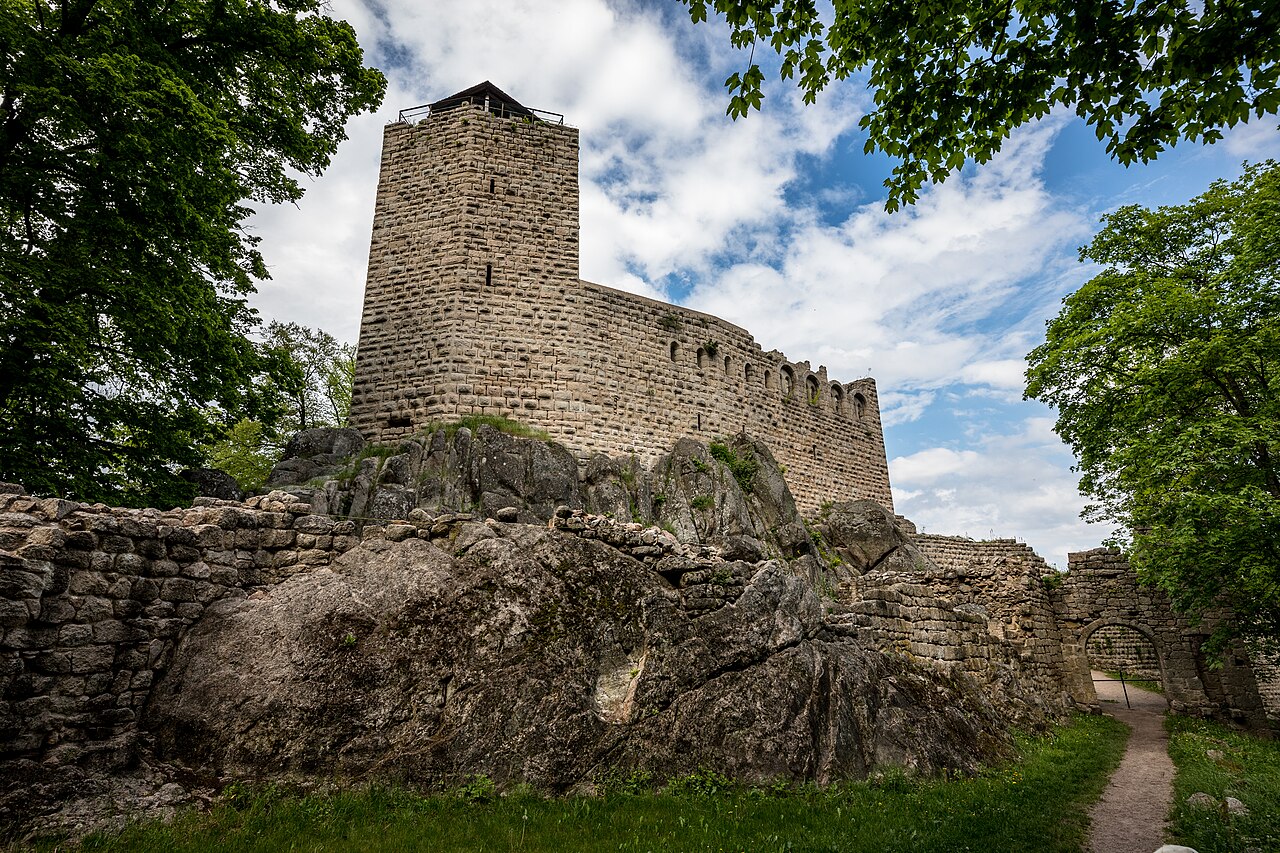
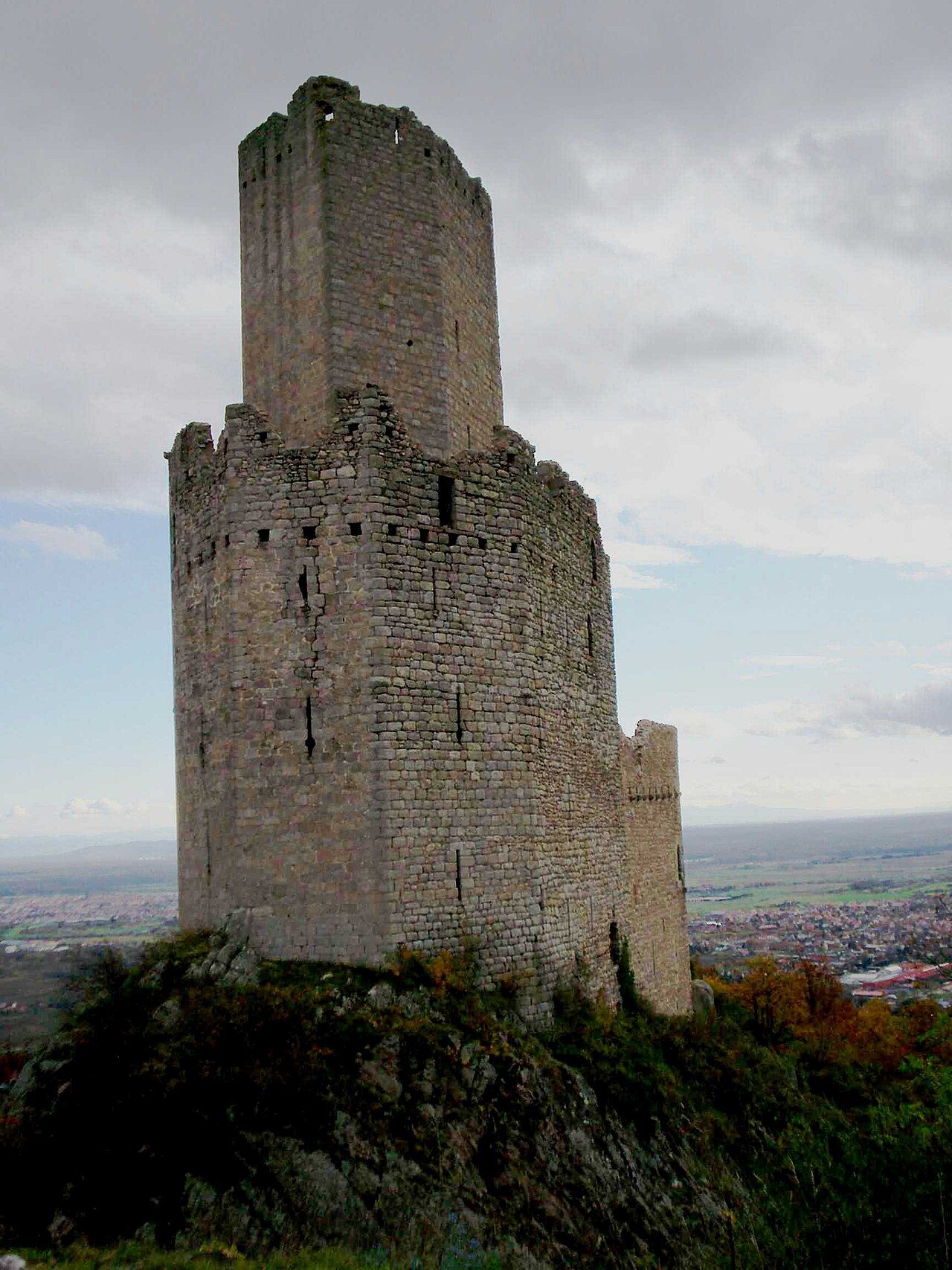
The keep of Bernstein Castle, which remains prominently visible today, is believed to date from the 12th century. This central tower was the heart of the castle's defense, constructed with thick stone walls designed to withstand sieges and attacks. Adjacent to the keep was the manor house, providing living quarters and administrative spaces for the castle's lords. The proximity of these structures reflects the dual military and residential functions typical of high medieval castles.
Defensive enhancements
In the 13th century, a significant defensive modification was made with the construction of a ditch separating the manor house from the keep. This ditch enhanced the castle's defensibility by creating an additional obstacle for attackers. By the 15th century, this ditch was ingeniously repurposed into an underground cistern, demonstrating adaptive reuse of the castle's defensive features to improve water storage, which was vital during sieges.
The st. marguerite tower
Towards the end of the 15th century, a new tower known as the St. Marguerite tower was constructed in the castle's rear courtyard. This addition reflects the ongoing evolution of the castle's fortifications and its adaptation to changing military technologies and needs during the late medieval period.
Decline and current condition
The castle remained inhabited until the end of the 16th century, after which it was abandoned. The lack of continuous occupation led to gradual deterioration, and the castle fell into ruin over the following centuries. Today, visitors can still explore the well-preserved keep, the underground cistern, and sections of the curtain wall, which offer valuable insights into medieval castle construction and life.
Cultural and historical significance
Bernstein Castle is not only an architectural landmark but also a cultural treasure that reflects the complex history of Alsace, a region shaped by shifting political and religious powers. Its connection to the counts of Dabo and the bishopric of Strasbourg illustrates the intertwined secular and ecclesiastical influences that characterized medieval Europe. The castle's enduring ruins continue to attract historians, architects, and tourists interested in medieval fortifications and Alsace's heritage.
Visiting bernstein castle today
Although in ruins, the castle is accessible to visitors who wish to explore its medieval architecture and enjoy panoramic views of the surrounding Alsatian countryside. The site offers a tangible link to the past, with interpretive signage and preserved structures that highlight its historical importance. Visitors are encouraged to respect the fragile remains while appreciating the castle's role in the region's history.
Frequently asked questions (FAQ)
- When was the castle of Bernstein first mentioned in historical records?
- The castle of Bernstein was first mentioned in the 11th century, indicating its origins date back to the early medieval period.
- What are the main architectural features visible at Bernstein Castle today?
- Visitors can see the well-preserved keep, an underground cistern that was once a defensive ditch, and parts of the curtain wall.
- Who owned Bernstein Castle during the 13th century?
- In 1227, the castle was taken by the bishop of Strasbourg and remained an episcopal seat until 1580.
- Is the castle of Bernstein open to the public?
- Yes, the ruins of Bernstein Castle are accessible to visitors, offering historical insights and scenic views of the Alsace region.
- Why was the ditch at Bernstein Castle transformed into a cistern?
- The ditch was converted into an underground cistern in the 15th century to provide a reliable water source during sieges, showcasing adaptive reuse of defensive structures.
Information
Sources & official resources
Verify the information above using these authoritative references.
Loading map...
Visitor reviews
No reviews yet. Been here? Write the first review and help other travelers!
Write the first reviewVisited this castle? Share your experience
Your review helps other travelers and adds first-hand knowledge to our encyclopedia.