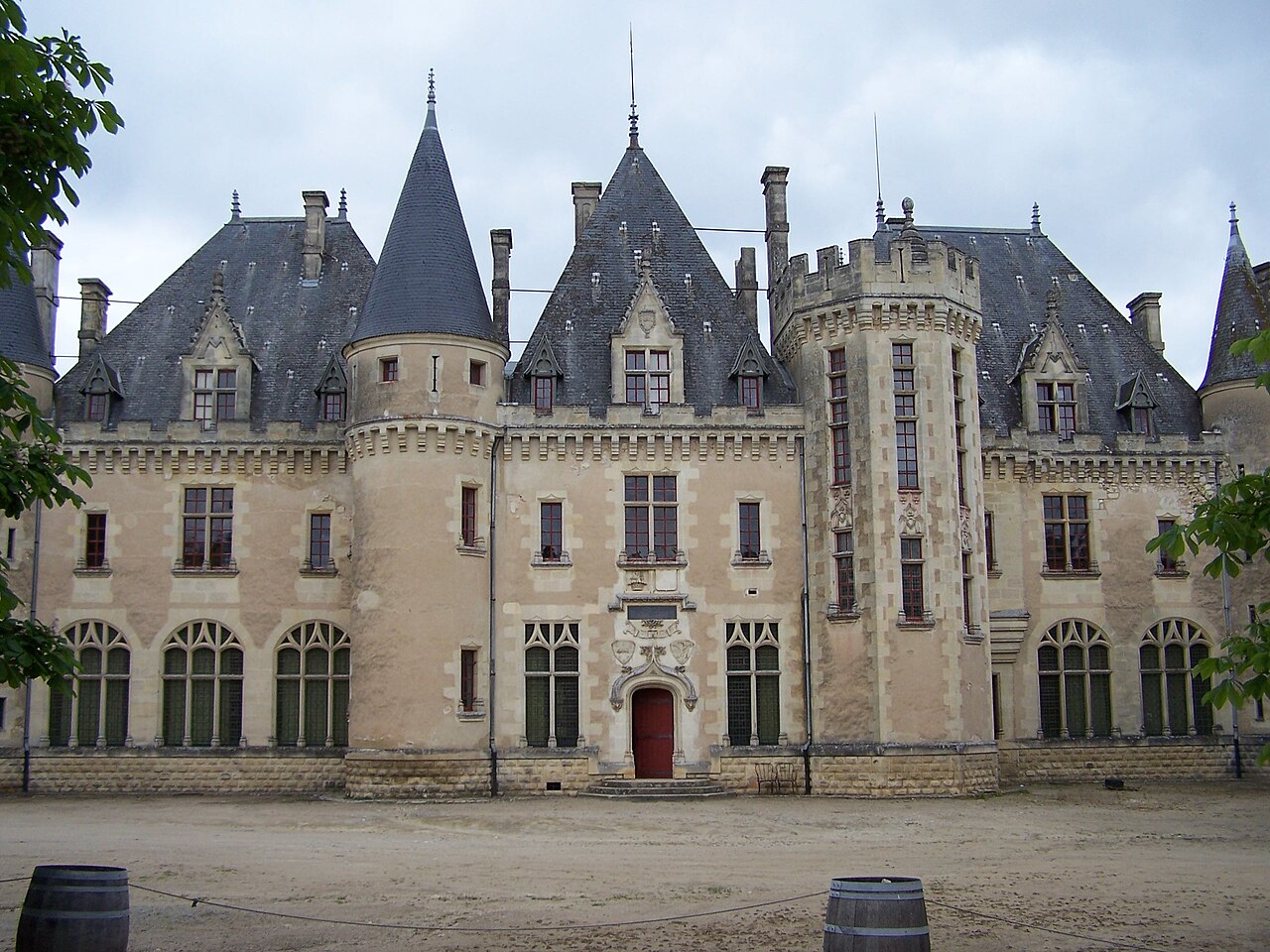
Château de Pitray
The Château de Pitray, located in the village of Saint-Seurin-de-Prats in southwestern France, is a distinguished example of a 17th-century Renaissance château built on a historically significant site. Its name derives from Pic du Roy, or "king's peak," referencing the ancient tumulus known as the Mothe de Prats upon which it stands. This elevated position provided a strategic vantage point slightly above the surrounding plain, typical of many châteaux constructed to command views and assert dominance over the landscape.
Historical background and ownership lineage
The estate originally belonged to the Puch family before being acquired by Gabriel de Ségur, the seigneur of Pitray. The property then passed through the Ségur family, notably to Pierre de Ségur, son of Thomas, co-seigneur of Pitray. Pierre's daughter, Henriette de Ségur, married Alexandre de Puch in 1715, reuniting the property with the Puch lineage. The descendants of this union maintained possession of the château until 1900.
Pierre de Ségur was a notable figure, serving as a chevalier of Pitray and a lieutenant in the Koenigsmark Cavalry Regiment. He distinguished himself during the dragonnades, the persecutions aimed at French Protestants under the reign of Louis XIV. This connection places the château within the broader context of 17th-century religious and military history in France.
Architectural design and evolution
The original château comprised two wings of equal size arranged in perpendicular rectangles, forming a courtyard that opened towards the Dordogne River. This layout reflects a common Renaissance architectural approach emphasizing symmetry and integration with the natural landscape. The positioning of the château to overlook the river would have been both practical for defense and aesthetically pleasing.
At the end of the 19th century, the château came into the possession of Doctor Samuel Amanieux. In 1905, a Bordeaux architect undertook significant modifications by joining the two wings with a massive flat-roofed building. This addition included an Italianate terrace lined with pilasters, introducing elements of early 20th-century architectural style that contrasted with the original Renaissance features. The terrace provided a grand space for leisure and social gatherings, enhancing the château's residential appeal.
Current use and cultural significance
Over the past 25 years, the Château de Pitray has evolved into a popular venue for business meetings, seminars, conferences, and concerts. Its historic ambiance combined with modern adaptations makes it a sought-after location for cultural and professional events. The château's setting by the Dordogne River and its architectural heritage contribute to its appeal for visitors and organizers alike.
Architectural features and landscape setting
The château's foundation on the ancient tumulus known as the Mothe de Prats is a unique feature that links it to prehistoric and medieval land use traditions. The tumulus provided a natural elevation, which was advantageous for both defense and status display.
The two original wings, forming a courtyard, demonstrate the Renaissance emphasis on geometric clarity and harmonious proportions. The later addition of the flat-roofed connecting building and the Italianate terrace reflects the layered architectural history common to many French châteaux, where successive owners adapted the structure to contemporary tastes and needs.
The château's orientation towards the Dordogne River integrates it with the surrounding landscape, offering scenic views and access to waterways that were historically important for transport and communication.
Preservation and accessibility
The Château de Pitray remains in well-preserved condition, with careful maintenance allowing it to function as a modern event venue while retaining its historic character. Its accessibility for public and private events ensures that the château continues to play a role in the cultural life of the region.
Visitors can appreciate the blend of Renaissance architecture and early 20th-century modifications, as well as the château's unique setting atop a historic tumulus. The site offers insights into the architectural evolution and social history of the Dordogne region over several centuries.
Loading map...
Visitor reviews
No reviews yet. Been here? Write the first review and help other travelers!
Write the first reviewVisited this castle? Share your experience
Your review helps other travelers and adds first-hand knowledge to our encyclopedia.