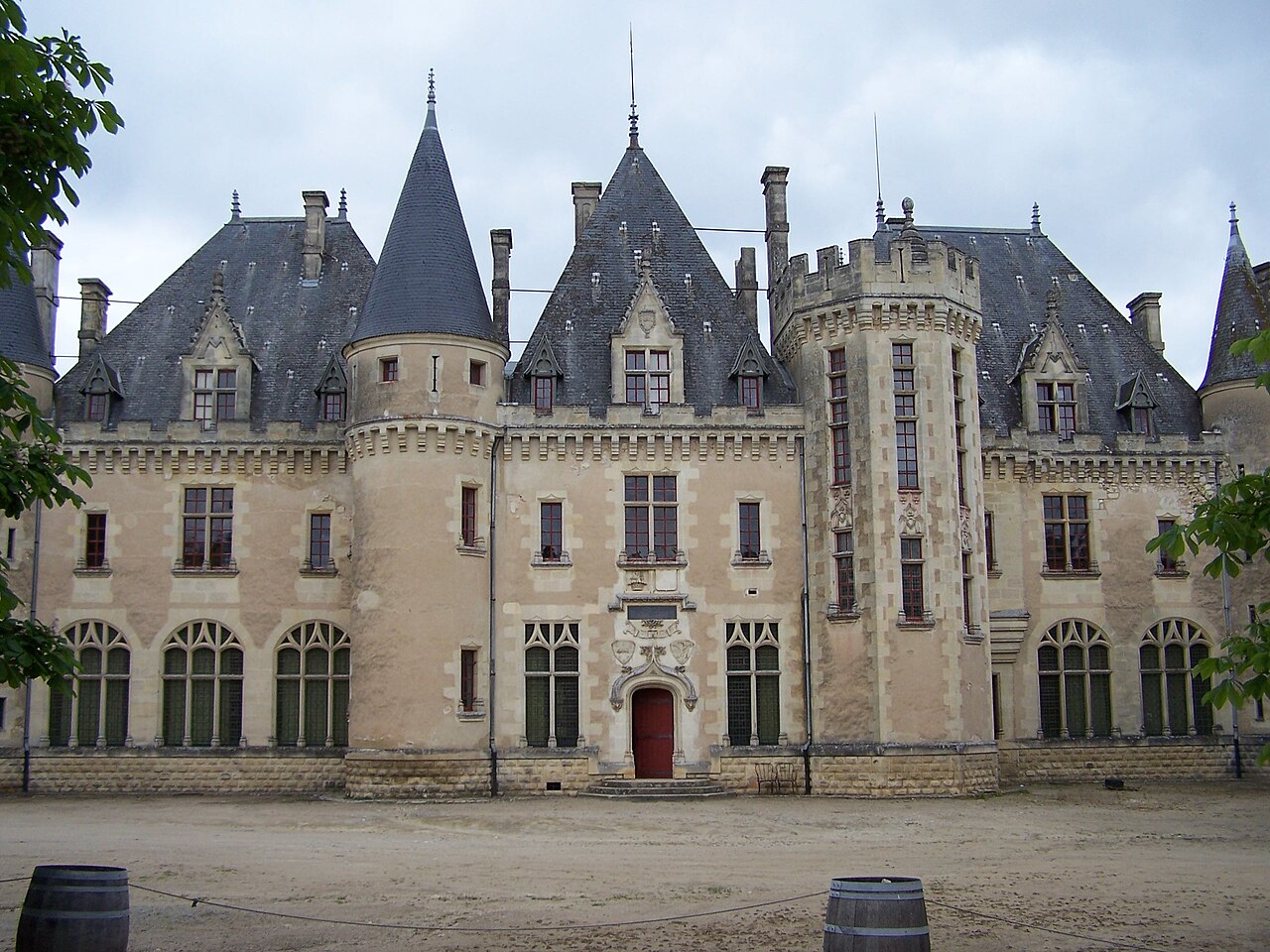
Castle of Montaigne
The Castle of Montaigne stands as a remarkable historical monument in Saint-Michel-de-Montaigne, France, renowned primarily as the family residence of the celebrated French Renaissance philosopher Michel de Montaigne. Originally constructed in the 15th century by Montaigne's grandfather, this castle was built amidst a majestic parkland setting, embodying the defensive and residential architectural sensibilities of the late medieval period.
Historical significance and early construction
The castle's initial design reflected the typical features of a late medieval fortress, with robust stone walls and a prominent round tower that has survived through centuries. After the death of his father, Michel de Montaigne took a personal interest in the castle's design and layout, overseeing renovations that aligned with his intellectual stature and social standing. The castle became more than a family home; it was a place of literary creation and political engagement.
Michel de Montaigne's influence and royal connections
Michel de Montaigne is best known for his pioneering work, Essays, which he is said to have composed within the castle's iconic round tower, which housed his private library. His relationship with the French crown was significant; in 1577, he was appointed gentleman of the chamber by a royal patent letter, and in 1584, he hosted the future King Henry IV at the chateau. This royal visit underscored the castle's importance as a site of political and cultural exchange during the turbulent late 16th century.
Architectural transformations in the 19th century
In 1860, the castle changed hands when Pierre Magne, a minister under Napoleon III, purchased the estate. Magne undertook a comprehensive reconstruction of the castle, transforming it into a fantasy Gothic Loire valley chateau. This renovation introduced characteristic elements such as towers and turrets that were stylistically distinct from the original medieval structure, reflecting the 19th-century romantic revival of Gothic architecture.
Fire and restoration
The castle suffered a serious setback in 1885 when a fire caused extensive damage. However, Magne's daughter led the restoration efforts, rebuilding the castle to closely resemble the design established during her father's renovations. This restoration preserved the neo-Gothic aesthetic that defines the castle's current appearance, blending historical reverence with 19th-century romanticism.
Current architectural features and cultural heritage
Today, the castle of Montaigne is recognized for its neo-renaissance style, a term that captures the blend of Renaissance-inspired elegance and 19th-century Gothic revival elements. The surviving round tower remains one of the most popular and historically significant features of the castle. It serves as a tangible link to Michel de Montaigne himself, symbolizing the castle's role as a cradle of Renaissance humanism and literary innovation.
The castle remains in the possession of the Magne family, maintaining its private ownership while continuing to attract interest for its rich historical associations and architectural evolution. Its location in the picturesque Dordogne region adds to its appeal, situating it within a landscape renowned for its medieval castles and Renaissance heritage.
Architectural details and layout
The castle's layout reflects its dual function as a fortified residence and a noble retreat. The original medieval elements, such as the thick stone walls and defensive towers, coexist with the later additions of decorative turrets and ornate façades. The interiors, while modified over time, retain aspects of Renaissance refinement, including spacious halls and chambers designed for both comfort and social gatherings.
The round tower library
The round tower is particularly notable for its historical use as Michel de Montaigne's library, where he composed his groundbreaking essays. This space exemplifies the castle's role not only as a defensive stronghold but also as a center of intellectual activity during the French Renaissance.
Visiting the castle of Montaigne
While the castle remains privately owned and is not generally open to the public, its exterior and surrounding parkland can be appreciated by visitors to the region. The castle's enduring legacy as the home of one of France's greatest thinkers makes it a site of cultural pilgrimage for those interested in Renaissance philosophy and history.
The castle's blend of late medieval origins and 19th-century neo-Gothic transformations offers a unique architectural narrative that illustrates the evolving tastes and historical circumstances of France over several centuries.
Frequently asked questions (FAQ)
- How do I get to the Castle of Montaigne?
- The Castle of Montaigne is located in Saint-Michel-de-Montaigne, France, and is accessible by car or public transportation. If you are driving, you can follow the signs from nearby towns or use a GPS device for directions. Public transport options include local buses that connect to the nearest train stations.
- What is the historical significance of the Castle of Montaigne?
- The Castle of Montaigne is renowned for its association with the philosopher Michel de Montaigne, who was born here in the 16th century. This castle served as both his home and a place of contemplation, where he developed his famous essays. The site is a testament to the Renaissance period and the intellectual achievements of its time.
- When was the Castle of Montaigne built?
- The Castle of Montaigne was originally constructed in the late 14th century, with significant renovations and expansions occurring throughout the 16th century. Its architecture reflects the transition from medieval fortifications to Renaissance elegance. The castle has retained many features from these periods, making it a valuable historical site.
- Can I visit the Castle of Montaigne?
- Yes, the Castle of Montaigne is open to visitors throughout the year. Guided tours are available, providing insights into the castle's history and architecture. It's advisable to check the official website for any specific visiting guidelines or restrictions before your trip.
- Why is the architecture of the Castle of Montaigne noteworthy?
- The architecture of the Castle of Montaigne combines elements of medieval fortification with Renaissance aesthetics, showcasing the evolution of design during this historical period. Its well-preserved structure features distinctive stonework, impressive towers, and beautiful gardens, making it a prime example of its architectural style. Visitors can appreciate both its historical significance and artistic merit.
- Is it possible to host events at the Castle of Montaigne?
- Yes, the Castle of Montaigne offers facilities for hosting various events, including weddings and corporate gatherings. The picturesque setting and rich history provide a unique backdrop for special occasions. It's recommended to contact the castle's management for more information on available services and booking procedures.
- What are the opening hours for the Castle of Montaigne?
- The Castle of Montaigne typically opens to visitors from 10 AM to 6 PM, with extended hours during the summer months. It is advisable to check the official website for any seasonal changes in opening times or special closures. Planning your visit during these hours ensures you have ample time to explore the castle and its grounds.
- What are the ticket prices for visiting the Castle of Montaigne?
- Ticket prices for the Castle of Montaigne vary depending on age and group size, with discounts available for students and seniors. Generally, adult tickets are reasonably priced, making it accessible for families and history enthusiasts alike. It's best to purchase tickets in advance or check for any promotions on the official website.
- What are some nearby attractions to the Castle of Montaigne?
- In addition to the Castle of Montaigne, visitors can explore nearby attractions such as the charming village of Saint-Michel-de-Montaigne and the beautiful vineyards of the Bordeaux region. The area is rich in cultural heritage and offers opportunities for wine tasting and scenic walks. These attractions make for an enriching experience beyond the castle itself.
Information
Website
Visit websiteSources & official resources
Verify the information above using these authoritative references.
Loading map...
Visitor reviews
No reviews yet. Been here? Write the first review and help other travelers!
Write the first reviewVisited this castle? Share your experience
Your review helps other travelers and adds first-hand knowledge to our encyclopedia.