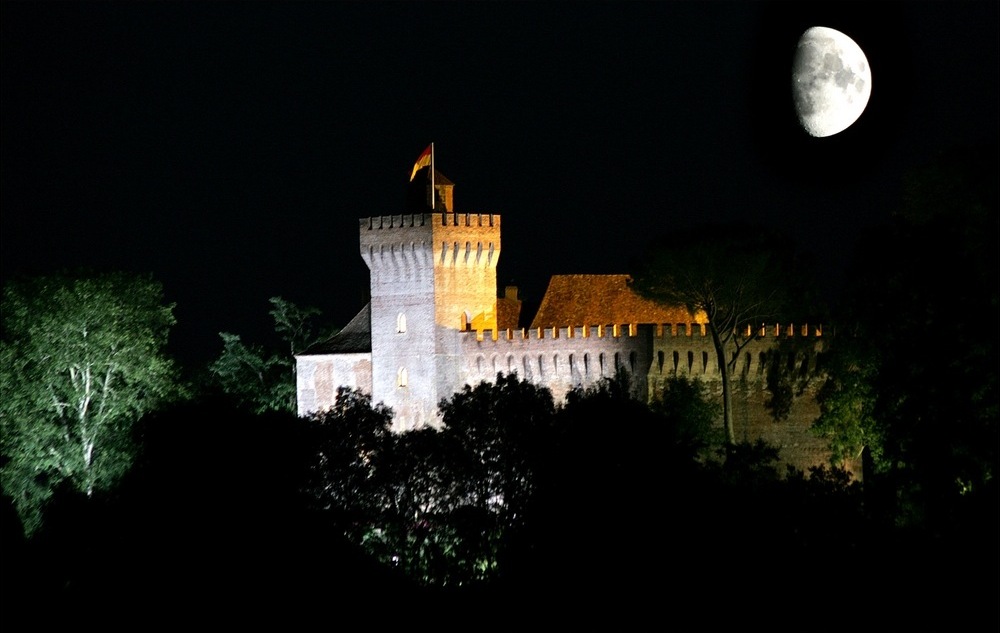
Château de Pau
Château de Pau stands prominently in the heart of Pau, France, commanding views over the Gave de Pau river and the ravine of Hédas. This historic fortress began as a medieval stronghold in the 12th century and evolved into a Renaissance palace, renowned as the birthplace of Henry IV of France and Navarre on December 13, 1553. Over the centuries, it has served various roles, including a royal residence, a prison, and today, a national museum dedicated to the legacy of Henry IV and the Béarn region.
Medieval origins and fortifications
The castle's origins trace back to the 12th century, when Gaston IV of Béarn constructed the initial fortifications, including three prominent towers named Mazères, Billère, and Montauser. Strategically built atop a hill, the castle was designed to oversee and control the surrounding valley and river, a typical feature of hill castles of the period. Its position on the rocky promontory provided natural defenses augmented by man-made fortifications.
The influence of gaston iii of foix-béarn (gaston phoebus)
In the 14th century, the castle was notably enhanced under the direction of Gaston III of Foix-Béarn, known as Gaston Phoebus. Amidst the political tension between the kingdoms of France and England, Gaston Phoebus sought to consolidate Béarn as an autonomous and united region. He added the distinctive brick tower, rising approximately 33 meters, which remains one of the castle's emblematic features. This tower exemplifies the military architecture of the late medieval period, combining functionality with imposing presence.
Renaissance transformation and royal residence
The castle underwent significant transformation during the Renaissance period, especially after the court of Navarre was established there in 1512. Originally a fortress, it was converted into a pleasure residence reflecting Renaissance tastes and courtly life. Henri d'Albret and his wife Marguerite d'Angoulême, sister of King François I and a noted author, resided at the castle. Their influence is still visible in the castle’s decor, with their initials and emblems preserved on walls and ceilings, demonstrating the blend of political power and cultural patronage.
Henry iv's birth and legacy
The most famous figure associated with the castle is undoubtedly Henry IV, born in the castle in 1553. Although he did not spend much time living there, his birth bestowed lasting fame on the château. The castle preserves a notable artifact: a turtle shell cradle said to have held the infant king. Henry IV’s reign is remembered for uniting Navarre and Béarn with the French crown, a process formalized by the treaty signed by Louis XIII in 1620.
Post-medieval history and restoration
Following Henry IV's era, the castle's prominence waned until the 19th century when King Louis-Philippe initiated a restoration project. Louis-Philippe, who sought to reconcile revolutionary ideals with monarchy, transformed the castle into a royal residence symbolizing national unity. During this period, the castle acquired many neo-Renaissance and neo-Gothic furnishings and a rich collection of tapestries dating from the 16th to the 19th centuries.
Notable historical uses
In 1848, the castle served as a prison for the Emir Abd El-Kader, a leader of the Algerian resistance against French colonization. Later, it became a presidential residence during the French Republic and was visited by Napoleon III. Despite these varied uses, the castle retained its architectural character rooted in its Henrician heritage.
Architectural features and collections
The castle’s entrance is marked by a Renaissance portal adorned with the initials of the royal couple of Navarre, symbolizing the transition from fortress to palace. The castle complex includes several towers, defensive walls, and elegant residential quarters, reflecting its evolution through medieval and Renaissance periods. Today, it houses extensive collections related to Henry IV and Béarn, including paintings, armor, furniture, and documents that illustrate the castle’s layered history.
Museum and visitor experience
Currently, Château de Pau functions as a National Museum attracting over 100,000 visitors annually, making it the most visited heritage site in the Pyrénées-Atlantiques department. The museum emphasizes the Henrician theme, showcasing artifacts from the king’s era and the castle’s restorations. Visitors can explore the richly decorated rooms, historic towers, and exhibitions that narrate the castle’s role in regional and national history.
Frequently asked questions (FAQ)
- What is the historical significance of Château de Pau?
- Château de Pau is a renowned historical landmark in France, famous for being the birthplace of King Henry IV. This impressive castle showcases a blend of Gothic and Renaissance architecture and has played a crucial role in French history, serving as a royal residence and a symbol of power.
- When was Château de Pau built?
- Construction of Château de Pau began in the 14th century, with significant renovations and expansions occurring in the 16th century. The castle's design reflects the evolution of architectural styles over the centuries, making it a fascinating site for history enthusiasts.
- What are the opening hours for Château de Pau?
- Château de Pau is typically open to visitors from 9:00 AM to 6:00 PM, with extended hours during the summer months. It is advisable to check the official website for any updates or changes to the schedule before your visit.
- Can I purchase tickets online for Château de Pau?
- Yes, tickets for Château de Pau can be purchased online through their official website. This option allows you to skip the lines and ensure your entry, especially during peak tourist seasons.
- Is it possible to access Château de Pau with a wheelchair?
- Yes, Château de Pau is equipped with facilities to assist visitors with limited mobility. The castle offers wheelchair access to certain areas, but it is recommended to check in advance which parts are fully accessible.
- When is the best time to visit Château de Pau?
- The best time to visit Château de Pau is during the spring and early autumn when the weather is mild and the gardens are in full bloom. Additionally, these seasons tend to attract fewer crowds compared to the peak summer months.
- What nearby attractions should I visit while at Château de Pau?
- While visiting Château de Pau, you can explore the stunning Parc Beaumont and the nearby Musée des Beaux-Arts. Additionally, the charming streets of Pau offer various shops and cafes that enhance your experience in this historic city.
- What are the ticket prices for Château de Pau?
- Ticket prices for Château de Pau vary, with discounted rates available for students and children. Adult tickets generally cost around €10, while free admission is often offered on the first Sunday of each month.
Information
Website
Visit websiteSources & official resources
Verify the information above using these authoritative references.
Loading map...
Visitor reviews
No reviews yet. Been here? Write the first review and help other travelers!
Write the first reviewVisited this castle? Share your experience
Your review helps other travelers and adds first-hand knowledge to our encyclopedia.