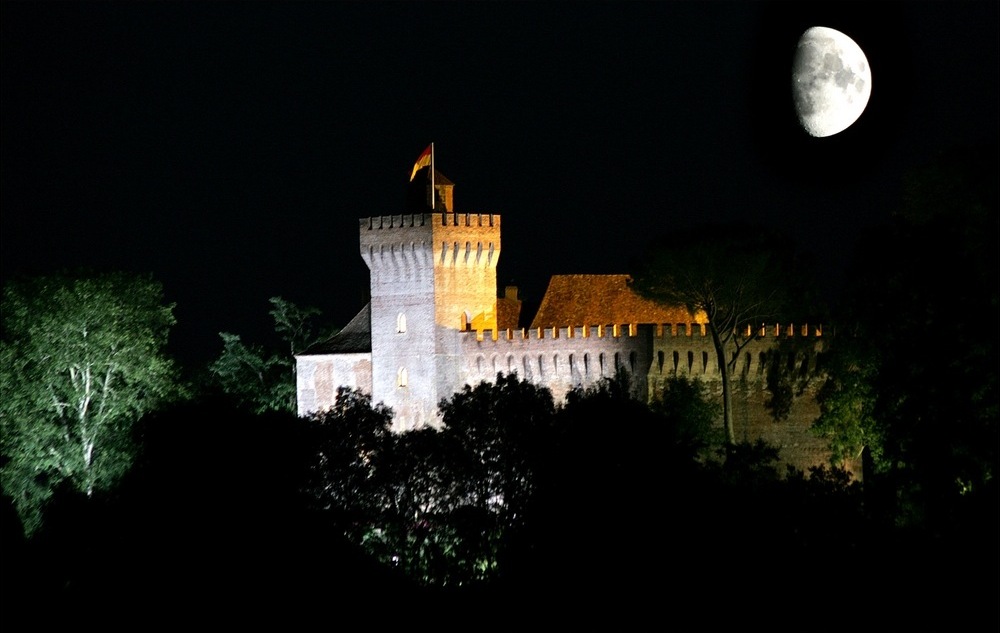
Castle of Pau
The Castle of Pau stands prominently in the heart of the city of Pau, France, renowned as the birthplace of Henri IV, King of Navarre and future King of France. This historic fortress evolved from a strategic medieval stronghold into a splendid Renaissance royal residence, embodying centuries of architectural and political history.
Early fortifications and medieval expansions
The castle's origins trace back to the 11th century, when the first fortification was erected on a commanding hilltop overlooking the Gave river. This location was chosen for its strategic importance, providing extensive views and defensive advantages. In the following century, Gaston IV of Béarn undertook significant enhancements by adding three imposing towers. These towers were named after nearby settlements: Mazères, Billère, and Montauser, reflecting the castle's close ties to the surrounding region.
Fortifications during the hundred years' war
During the turbulent 14th century and the protracted Hundred Years' War, the castle's defenses were further strengthened to withstand sieges and military threats. Gaston Fébus, Count of Foix, was entrusted with this task and constructed a formidable brick tower rising 30 meters high. This tower remains one of the castle's most distinctive features and bears a Latin inscription at its base: Febus me fe, meaning "Febus made me." This addition not only enhanced the castle's military capabilities but also symbolized the power and prestige of its lord.
Renaissance transformation and royal residence
The 16th century marked a pivotal transformation for the Castle of Pau as it transitioned from a military fortress to a luxurious royal residence. This change was initiated by Marguerite de Navarre, sister of King François I of France, and her husband Henri d'Albret. They undertook extensive renovations, converting the medieval stronghold into a splendid Renaissance palace. Architectural elements from this period include elegant facades, refined interior decorations, and the integration of the H and M monograms—representing Henri and Marguerite—that remain visible throughout the castle.
Henri iv's birth and legacy
Perhaps the castle's most famous historical association is as the birthplace of Henri IV, born here on December 13, 1553. Henri IV was the grandson of Henri d'Albret and Marguerite de Navarre, and his early years were spent within these walls. The castle museum preserves a unique artifact from this era: a cradle made from a turtle shell, believed at the time to confer longevity on its occupant. Though Henri IV left Pau during his childhood, the castle remains a powerful symbol of his legacy and the union of Navarre and France.
19th century renovations and preservation
In the 19th century, the castle underwent a comprehensive renovation under the reign of King Louis-Philippe I, with further modifications during the era of Emperor Napoleon III. These restorations aimed to preserve the castle's historical significance while adapting it for modern use. Notably, the room where Henri IV was born was relocated to an upper floor, and the entire second level was transformed into a grand reception area. These changes reflect the evolving function of the castle from fortress to museum and cultural monument.
The castle today: museum and cultural heritage site
Today, the Castle of Pau serves as a National Museum showcasing a rich collection of French fine and applied arts spanning from the time of Henri IV through the 19th-century restorations. Visitors can admire an impressive array of royal tapestries dating from the 16th to the 19th century, along with period furnishings and decorative arts. The museum attracts over 100,000 visitors annually, making it the most visited heritage site in the Pyrenees-Atlantiques department.
Architectural highlights and visitor experience
The castle's blend of medieval military architecture and Renaissance elegance offers a unique glimpse into the evolution of French castle design. Key features include the imposing brick tower of Gaston Fébus, the three medieval towers named after local villages, and the finely decorated Renaissance interiors. The museum's exhibitions provide context on the castle's historical role as a fortress, royal residence, and cultural landmark.
Location and accessibility
Situated in the center of Pau, the castle is easily accessible to visitors exploring the city and the broader region of southwestern France. Its position on a hill overlooking the Gave river not only afforded historic defensive advantages but today offers scenic views of the city and surrounding landscape.
Frequently asked questions (FAQ)
- How do I get to the Castle of Pau?
- You can reach the Castle of Pau by public transportation, including buses and trains, which connect to the city center. If you prefer to drive, there are parking facilities available nearby. The castle is located within walking distance from the main attractions in Pau.
- What is the historical significance of the Castle of Pau?
- The Castle of Pau is renowned as the birthplace of King Henry IV of France, making it a site of great historical importance. This castle has witnessed numerous events throughout French history and reflects the evolution of architectural styles from the 14th to the 19th century. Its rich history attracts visitors interested in both royal lineage and French heritage.
- When was the Castle of Pau built?
- The initial construction of the Castle of Pau began in the 14th century, with significant renovations and expansions taking place in the following centuries. The castle showcases a mix of medieval and Renaissance architecture, reflecting its long history. Over the years, it has evolved from a fortress into a royal residence.
- Can I take guided tours of the Castle of Pau?
- Yes, guided tours are available for visitors who wish to learn more about the castle's history and architecture. These tours provide in-depth insights and often include access to areas not available to self-guided visitors. It is advisable to check the schedule and book in advance during peak tourist seasons.
- Why is the Castle of Pau a popular tourist attraction?
- The Castle of Pau is popular due to its stunning architecture, rich history, and beautiful gardens that offer picturesque views of the surrounding landscape. Additionally, its connection to King Henry IV and the various exhibits showcasing French history attract many history enthusiasts. The castle's location in the charming city of Pau also adds to its appeal.
- Is it possible to visit the gardens at the Castle of Pau?
- Yes, visitors can explore the castle's gardens, which are beautifully landscaped and provide a serene environment for leisurely walks. The gardens are an integral part of the castle's charm and offer scenic views of the Pyrénées mountains. Admission to the gardens is typically included with the castle ticket.
- What are the opening hours for the Castle of Pau?
- The Castle of Pau is generally open to visitors daily, but hours can vary seasonally. It is recommended to check the official website for the most current opening hours before your visit. Special events or holidays may also affect the schedule.
- What are the ticket prices for the Castle of Pau?
- Ticket prices for the Castle of Pau vary depending on age and whether you choose a guided tour. Discounts are often available for children, students, and seniors. Always check the official website for the latest pricing and any special promotions.
- What is the best time to visit the Castle of Pau?
- The best time to visit the Castle of Pau is during the spring and fall when the weather is mild and the gardens are in bloom. These seasons tend to attract fewer crowds compared to the summer months, allowing for a more enjoyable experience. Additionally, visiting during weekdays can also help avoid larger tourist groups.
- Are there any nearby attractions to the Castle of Pau?
- Yes, the Castle of Pau is close to several other attractions, including the Bernadotte Museum and the Boulevard des Pyrénées, which offers stunning views. The city also features charming cafes and shops, making it an ideal area for a full day of exploration. Be sure to check out the local markets and other historical sites in Pau as well.
Information
Website
Visit websiteSources & official resources
Verify the information above using these authoritative references.
Loading map...
Visitor reviews
No reviews yet. Been here? Write the first review and help other travelers!
Write the first reviewVisited this castle? Share your experience
Your review helps other travelers and adds first-hand knowledge to our encyclopedia.