Château de Noirmoutier — France castle

Château de Noirmoutier

Château de noirmoutier: medieval fortress on the island of noirmoutier
Noirmoutier-en-l'Île, Pays-de-la-Loire, France
High Medieval (11th–13th c.)
Restored

Château de Noirmoutier stands as a remarkable example of 12th-century medieval military architecture on the island of Noirmoutier, located in the Vendée département of France. This well-preserved fortress dominates the town of Noirmoutier-en-l'Île with its imposing nearly 20-meter-high rectangular keep, a symbol of feudal power and defensive ingenuity. The castle's origins trace back to a fortified castrum established in 830 by Abbot Hilbold of the Saint-Philbert monastery, built to protect the island's inhabitants and monks from Viking raids. Over the centuries, Château de Noirmoutier evolved from a wooden stronghold into a formidable stone fortress, reflecting the shifting military and political landscape of medieval France.

Early history and construction

The initial fortification on the site was a simple castrum, constructed in the early 9th century as a defensive refuge. By the 12th century, the need for a stronger, more permanent structure led the feudal lords of the region, particularly the barons of La Garnache, to rebuild the castle in stone. The central donjon or keep was commissioned by Pierre IV of La Garnache, who established the core of the castle that still stands today. This keep, built of coarse rubble stone, is a solid rectangular tower with three floors, including the lord's residence on the top level. It features numerous murder holes and defensive turrets at its corners, designed to provide overlapping fields of fire and protect the castle's defenders.

Fortifications and layout

Surrounding the keep is a roughly rectangular curtain wall or enceinte, approximately 100 meters long and 50 meters wide, enclosing the lower courtyard. This wall is reinforced with two main towers and two smaller watch turrets called échauguettes positioned at the corners, offering elevated observation points and defensive positions for archers. The wall includes a single main gate, which historically would have been heavily fortified to withstand sieges.

The castle's defensive design also incorporates a chemin de ronde, a raised walkway along the curtain wall that allowed defenders to patrol and defend the perimeter effectively. The moat surrounding the castle, now filled with grass rather than water, added an extra layer of defense by hindering direct assaults on the walls.

Historical significance and military engagements

Throughout its history, Château de Noirmoutier played a crucial role in regional defense and witnessed numerous military confrontations. The castle successfully resisted English attacks during the Hundred Years' War in 1342, 1360, and 1386, the latter under the command of the Earl of Arundel. In the 16th century, it withstood sieges by Spanish forces in 1524 and 1588, reflecting its strategic importance in controlling the Atlantic coast.

Despite its strong defenses, the castle fell to the Dutch troops led by Admiral Tromp in 1674 during the Franco-Dutch War, marking a significant event in its military history. The castle's resilience and strategic location made it a coveted military asset for various powers over the centuries.

Ownership and functional changes

Ownership of the castle shifted among prominent noble families, including the La Trémoille family, viscounts of Thouars, in the 16th century. In 1720, it was sold to Louis IV Henri de Bourbon-Condé and later resold to King Louis XV in 1767. These transfers reflect the castle's continued importance as both a military stronghold and a noble residence.

During the French Revolution, the château was repurposed as a military prison, notably detaining General d’Elbée before his execution. The castle's role as a prison continued through the 19th century and into the 20th century, including during the Paris Commune in 1871 and both World Wars.

Architectural adaptations and restorations

In response to evolving military technology, especially the advent of artillery, the castle underwent significant modifications. At the beginning of the 18th century, the towers were reconstructed to better accommodate cannon fire and enhance the fortress's defensive capabilities. Openings were added to the keep to allow more light, signaling a shift towards residential comfort alongside military utility.

The courtyard within the castle walls has seen various additions, including a house built in 1960 by the governor of the island, integrating modern habitation within the historic site. Despite these changes, the castle retains much of its medieval character and defensive features.

Architectural features of the keep

The central keep is a massive rectangular tower measuring approximately 19 by 15 meters. Its walls are built from rough rubble stone, originally plastered, with semicylindrical buttresses at mid-height on each face. These buttresses support wide arrow slits designed for flanking defense. The keep's four corner turrets, two of which are topped with distinctive conical "pepperpot" roofs, contain narrow vertical arrow slits or archères for archers to defend the castle while remaining protected.

Inside, the keep comprises three floors. The lower two floors were originally windowless to maximize defense, while the top floor served as the lord's residence, divided by a thick longitudinal wall. The castle also features functional elements such as latrine openings integrated into the watch turrets and built-in window seats known as coussièges, reflecting the daily life and comfort considerations of its medieval inhabitants.

Cultural heritage and modern use

Today, Château de Noirmoutier is owned by the commune of Noirmoutier-en-l'Île and functions as a cultural and historical monument. Since 1993, it has hosted various cultural events, including local festivals that celebrate the island's heritage. The castle's keep houses the Noirmoutier Museum, which exhibits archaeological artifacts, marine objects, local historical collections, and faience pottery from nearby Jersey.

The site was officially classified as a historic monument on 18 July 1994, ensuring its preservation and recognition as a significant part of France's architectural and cultural landscape. This designation protects the castle's medieval structures and promotes its role in educating visitors about the island's rich history.

Visitor experience

Visitors to Château de Noirmoutier can explore the imposing keep, the fortified enceinte with its towers and watch turrets, and the surrounding grounds that evoke centuries of military and domestic history. The museum inside the keep provides detailed insights into the castle's past and the island's cultural heritage. The castle's well-preserved state offers a vivid glimpse into medieval fortification architecture and the strategic importance of coastal castles in France.

Frequently asked questions (FAQ)

What is the historical significance of Château de Noirmoutier?
Château de Noirmoutier is a historic fortress that dates back to the 12th century, playing a crucial role in the defense of the island against invasions. It has witnessed numerous historical events, including conflicts during the Hundred Years' War and has served various purposes over the centuries, from a royal residence to a military stronghold.
When was Château de Noirmoutier built?
Construction of Château de Noirmoutier began in the 12th century, with significant modifications made in the following centuries. The castle showcases a blend of architectural styles that reflect its long and varied history, making it a fascinating site for visitors interested in medieval architecture.
How do I get to Château de Noirmoutier?
Château de Noirmoutier is located on Noirmoutier-en-l'Île, which is accessible by car or public transport. Visitors can reach the island via the bridge from the mainland or by taking a ferry, with parking available nearby for those driving.
Is it possible to visit Château de Noirmoutier year-round?
Yes, Château de Noirmoutier is open to the public throughout the year, but opening hours may vary seasonally. It is advisable to check the official website for current visiting hours and any special events that may affect access.
Can I take guided tours of the castle?
Yes, guided tours are available for visitors who wish to learn more about the history and architecture of Château de Noirmoutier. These tours provide in-depth insights and are a great way to enhance your experience while exploring the castle's grounds.
What are the ticket prices for Château de Noirmoutier?
Ticket prices for Château de Noirmoutier are generally affordable, with discounts available for students, seniors, and groups. Children under a certain age may enter for free, but it's best to check the official website for the most current pricing details.
When is the best time to visit Château de Noirmoutier?
The best time to visit Château de Noirmoutier is during the spring and early autumn when the weather is mild and pleasant for outdoor exploration. Visiting during these seasons also allows you to enjoy the beautiful gardens and surrounding landscapes at their best.
What nearby attractions should I visit while in Noirmoutier-en-l'Île?
While visiting Château de Noirmoutier, consider exploring other nearby attractions such as the picturesque beaches, the historic village of Noirmoutier, and the scenic salt marshes. These sites offer a wonderful complement to your castle experience and showcase the island's natural beauty.
Is the Château de Noirmoutier accessible for visitors with mobility challenges?
Yes, efforts have been made to ensure that Château de Noirmoutier is accessible to visitors with mobility challenges. There are pathways and facilities designed to accommodate those who may require assistance, making it easier for everyone to enjoy the historical site.

Photo gallery

Château de Noirmoutier
Click to view

Photo by Jean-Paul Wettstein

1 photo • Click any image to view in full screen

Information

Lowland Castle

Sources & official resources

Verify the information above using these authoritative references.

Loading map...

Visitor reviews

No reviews yet. Been here? Write the first review and help other travelers!

Write the first review

Visited this castle? Share your experience

Your review helps other travelers and adds first-hand knowledge to our encyclopedia.
Write a review

(5/5)

0/2000 characters

Your review will be visible after admin approval

Nearby castles

16.5 km
Castle of Pornic — France castle

Castle of Pornic

Pornic, France

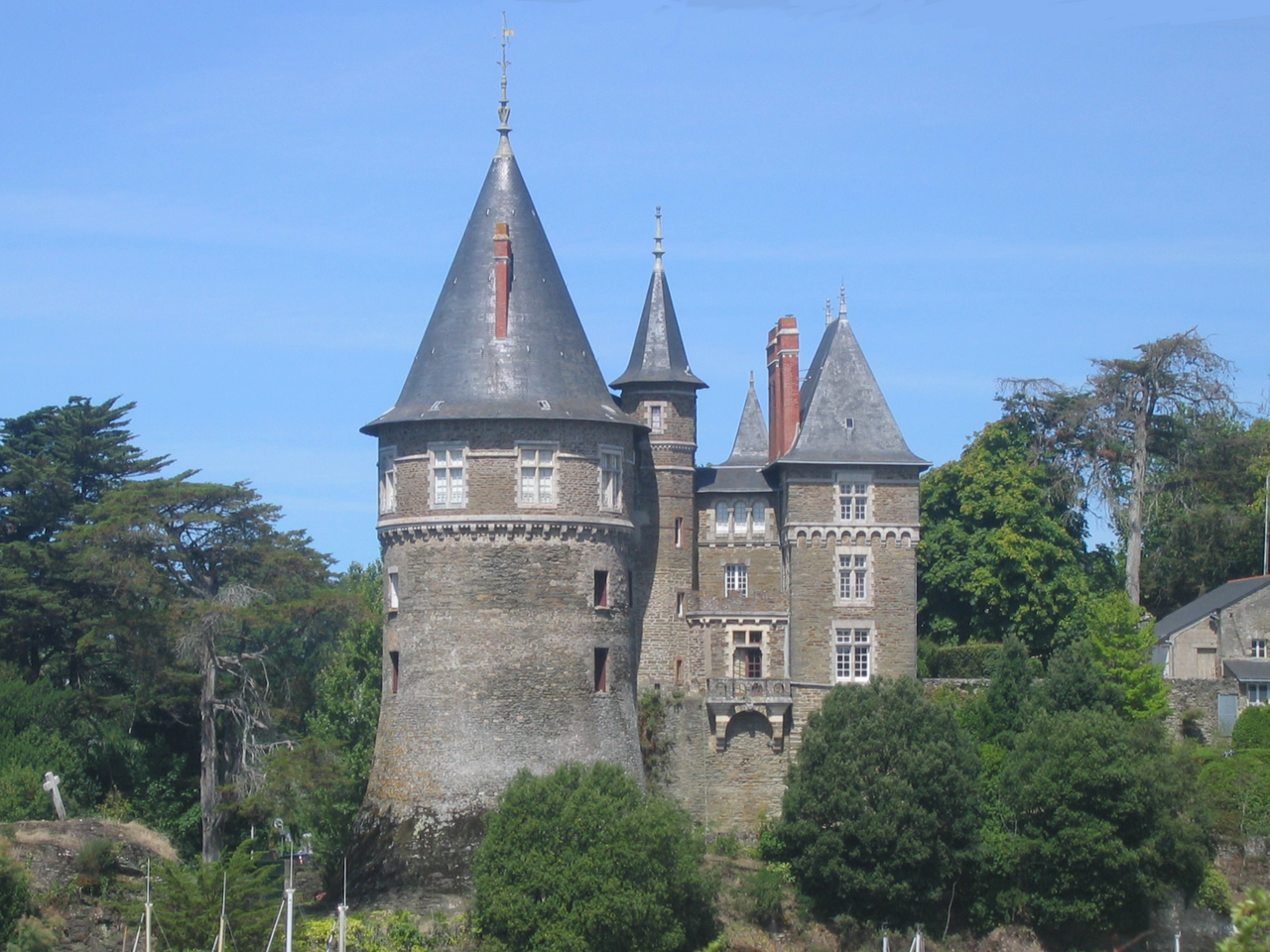
The Castle of Pornic, also known as the Château de Barbe Bleue (Bluebeard Castle), is a historic fortress located in the coastal town of Pornic, France. Positioned on the northern edge of the town's port, the castle commands a strategic view over the Atlantic Ocean and the harbor, reflecting its original purpose as a defensive stronghold. Its origins trace back to the 10th century when it was first established as a wooden fortification by Alan Barbetorte (Alan Wrybeard), Duke of Brittany. This initial structure was intended to protect the entrance to the settlement and secure the vital port area. In the 12th century, the wooden fortress was replaced with a robust stone castle by the Lords of Rais, marking a significant advancement in its defensive capabilities. The stone construction utilized traditional medieval masonry techniques, creating thick curtain walls and imposing towers designed to withstand siege warfare common in the High Medieval period. The castle's location on a rocky promontory overlooking the sea enhanced its natural defenses, making it a formidable obstacle to potential invaders. Medieval history and ownership The castle's history is closely linked with notable figures and turbulent events. In the 15th century, it came under the ownership of Gilles de Rais, a controversial nobleman and military leader who was later tried and executed for crimes that have since become part of his dark legend. During his trial, the castle was confiscated by John V, Duke of Brittany, reflecting the political upheaval of the time. By the 18th century, the castle was owned by Marquis Alexandre de Brie-Serrant. However, the French Revolution led to the confiscation of his properties, including the castle, which subsequently fell into disrepair and ruin. The decline continued through the 19th century as the castle changed hands among various creditors, reflecting the financial difficulties surrounding its maintenance. 19th-century restoration and architectural transformation The castle experienced a revival in the late 19th century when it was purchased by Joseph Le Breton, a local merchant and founder of the seawater baths in Pornic. He initiated restoration efforts to preserve the castle's structure. The most significant restoration was undertaken in 1886 by the architect François Bougoüin, who introduced elements inspired by Italian Renaissance architecture. This included the addition of fully rounded, arched windows framed with brickwork, a stylistic choice influenced by the nearby Château de Clisson. These renovations blended the castle's medieval fortress character with decorative Italianate features, creating a unique architectural synthesis. Despite these changes, the restoration respected the original medieval fabric by preserving much of the curtain walls and towers, which remain prominent features of the castle today. Architectural features and defensive elements The Castle of Pornic is classified as a hill castle due to its elevated position overlooking the sea and port. Its defensive design includes thick stone curtain walls that enclose the main courtyard and protect the inner buildings. Several towers punctuate the walls, serving as lookout points and defensive bastions. One side of the castle is naturally protected by the Atlantic Ocean, while the other sides are fortified with ramparts and access ramps, which were designed to control entry and facilitate the movement of troops. The castle's layout reflects typical medieval military architecture, combining natural landscape advantages with man-made fortifications. The surviving medieval structures exhibit robust stone masonry, with arrow slits and battlements that provided defenders with vantage points for archery and surveillance. The 19th-century restorations introduced large arched windows that softened the fortress's austere appearance and added an element of elegance inspired by Italian palatial architecture. Modern status and cultural significance Today, the Castle of Pornic remains a private property and is not open to the public. Despite this, it stands as a prominent symbol of the town's rich history and maritime heritage. Since 1986, several parts of the castle, including its medieval towers, curtain walls, and access ramps, have been protected by the French Ministry of Culture as historic monuments. This status ensures the preservation of the castle's essential medieval and 19th-century architectural features for future generations. The castle's nickname, Château de Barbe Bleue, connects it indelibly to the infamous Gilles de Rais, whose legacy adds a layer of intrigue and legend to the site. Its strategic location and enduring structure make it a significant example of medieval military architecture adapted and transformed through centuries of French history. Though not accessible to visitors, the castle's exterior and its commanding presence over the Pornic harbor continue to attract interest from historians, architects, and tourists exploring the region's cultural landmarks. The blend of medieval fortifications and 19th-century Italianate restoration exemplifies the evolving nature of castle architecture in France, reflecting broader historical and artistic trends. Recommendations for visitors While the castle itself is privately owned and closed to the public, the town of Pornic offers a charming historic port area with picturesque views of the castle from the waterfront. Visitors can enjoy walking tours along the harbor, capturing photographs of the castle's impressive silhouette against the sea. Nearby attractions include local museums, beaches, and traditional Breton architecture, providing a well-rounded cultural experience.

High Medieval (11th–13th c.)
Details
31.3 km
Saint-Nazaire pocket — France castle

Saint-Nazaire pocket

Saint-Nazaire, France

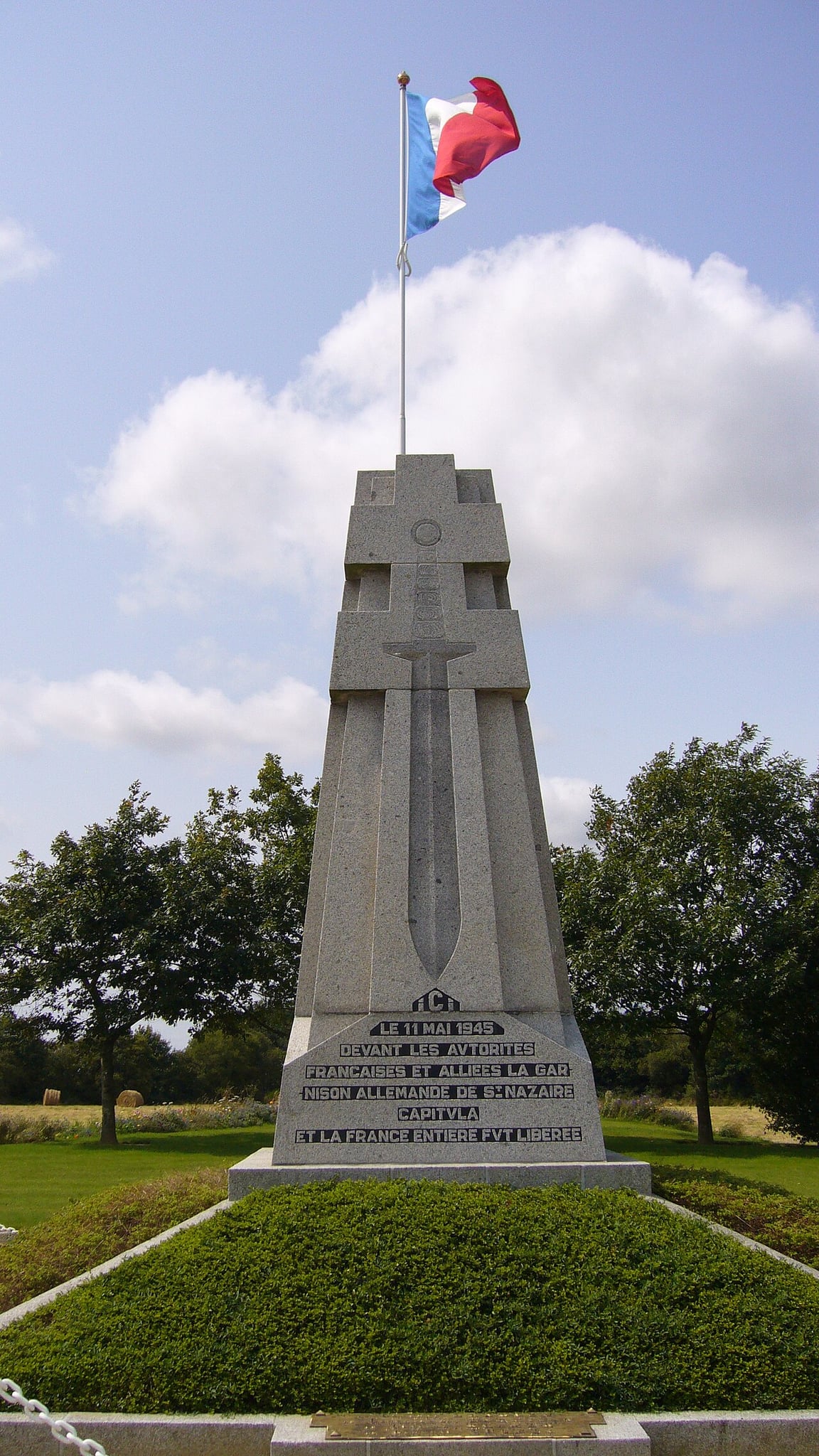
The Saint-Nazaire Pocket (German: Festung St. Nazaire, French: Poche de Saint-Nazaire) was a significant military stronghold during the latter part of World War II, existing from August 1944 until 11 May 1945. This bastioned fortress was formed following the strategic withdrawal of German forces from the surrounding Loire-Inférieure region (now known as Loire-Atlantique) as the Allied armies advanced to liberate the area. The pocket was centered on the crucial port city of Saint-Nazaire on the French Atlantic coast, which housed a large and heavily fortified submarine base constructed by the Germans during the occupation. The Saint-Nazaire Pocket extended geographically from the east near Saint-Omer-de-Blain to the north near La Roche-Bernard, and southwards to Pornic. This area was strategically important due to its access to the Atlantic Ocean and its role as a naval base, particularly for the German Kriegsmarine's U-boat operations. The fortress complex included extensive concrete bunkers, anti-aircraft defenses, and artillery emplacements, all designed to protect the valuable port facilities and submarine pens from Allied attacks. Historical context and military significance The establishment of the Saint-Nazaire Pocket was a direct consequence of the rapid Allied advances following the D-Day landings in June 1944. While much of France was liberated quickly, German forces entrenched themselves in several key Atlantic ports, including Saint-Nazaire, to maintain control over these strategic locations. The Germans fortified these ports heavily, anticipating prolonged sieges rather than outright capture. Saint-Nazaire's port was one of the few deep-water harbors on the Atlantic coast capable of accommodating large warships and submarines. The German-built submarine base at Saint-Nazaire was among the largest and most fortified of its kind, featuring thick reinforced concrete walls and roofs designed to withstand aerial bombardment and naval shelling. This made the pocket a formidable obstacle for the Allies. Architectural and defensive features Submarine base and fortifications The centerpiece of the fortress was the massive U-boat bunker, known as the "Base sous-marine de Saint-Nazaire." Constructed between 1941 and 1942, this bunker was made of reinforced concrete up to several meters thick. It included multiple docks for submarines, repair workshops, fuel storage, and crew facilities. The bunker’s roof was heavily camouflaged and protected by layers of steel and concrete to resist bombing raids. Surrounding the submarine base were extensive bastioned walls and defensive positions. These included anti-aircraft batteries strategically placed to defend against Allied air attacks, as well as artillery batteries covering approaches from land and sea. The fortress also featured a network of trenches, barbed wire, and minefields to deter infantry assaults. Supporting infrastructure Within the pocket, the German garrison maintained barracks, command centers, and supply depots to support the prolonged defense. The port facilities were kept operational to allow limited resupply and communication with German-held territories via the Atlantic. Despite being encircled by Allied forces, the defenders managed to hold out for several months, resisting multiple attempts at capture. The siege and eventual surrender The Saint-Nazaire Pocket was subjected to a siege by Allied forces who aimed to neutralize the German stronghold without a costly frontal assault. The siege involved artillery bombardments, air raids, and blockades to cut off supplies and reinforcements. Nevertheless, the German defenders utilized their fortifications and the natural defensive advantages of the port to prolong resistance. It was not until 11 May 1945, several days after the official German surrender in Europe, that the Saint-Nazaire Pocket finally capitulated. The surrender marked the end of German military presence in the area and the full liberation of the Loire-Atlantique region. Legacy and preservation Today, the remnants of the Saint-Nazaire Pocket, especially the submarine base, stand as a stark reminder of the strategic importance of the Atlantic coast during World War II. The submarine base has been preserved and partially converted into a museum, offering visitors insight into the scale and complexity of the German fortifications and naval operations. The fortress's concrete structures, bunkers, and defensive works remain largely intact, illustrating the engineering capabilities of the era and the intensity of the conflict in this region. The site attracts historians, military enthusiasts, and tourists interested in World War II history and coastal fortifications.

Modern (19th–20th c.)
Details
32.5 km

Ruins of 'Bluebeard's Castle'

Machecoul, France

The ruins of Bluebeard's Castle in Machecoul, France, stand as a chilling testament to one of the darkest chapters in medieval history. This site is famously associated with Gilles de Rais, a wealthy lord and knight who fought alongside Joan of Arc during the Hundred Years' War. The castle itself, now a partially preserved medieval fortress, was once a center of power and opulence in the region of Pays-de-la-Loire. It is here that Gilles de Rais was arrested and later convicted for the horrific crimes that inspired the enduring French folktale of Bluebeard. Historical background of the castle and its lord The Chateau de Machecoul was originally a fortified residence in the medieval period, serving as the seat of Gilles de Rais, who was one of the wealthiest and most powerful lords in Brittany. Born into nobility, Gilles de Rais inherited vast estates and commanded significant military influence. His participation in the Hundred Years' War as a companion to Joan of Arc elevated his status, but his later life descended into infamy due to his involvement in occult practices and heinous crimes. After the war, Gilles de Rais led a life marked by extravagance and financial ruin. His interest in alchemy and the occult drove him to seek supernatural means to restore his fortune, including an infamous attempt at demon summoning. These dark pursuits coincided with the disappearance and murder of numerous children, with estimates suggesting the number could be in the hundreds. His arrest at the castle marked the beginning of a notorious trial that ended with his execution in 1440. Architectural features and castle layout The castle ruins today reveal remnants of a medieval fortress that combined defensive and residential functions. The original structure likely included stone walls, towers, and a moat typical of lowland castles designed to protect against sieges and raids. Although much of the castle has deteriorated over the centuries, archaeological studies have identified foundational walls and fragments of defensive battlements that illustrate its strategic importance during the late medieval period. The castle's location in the flat terrain of Pays-de-la-Loire meant it relied heavily on constructed fortifications rather than natural elevation. The remains suggest a complex with multiple courtyards and living quarters, reflecting the dual role of the castle as a noble residence and a military stronghold. The legacy of gilles de rais and bluebeard folklore Gilles de Rais's gruesome crimes and tragic downfall have left a lasting imprint on French cultural history. His story is widely believed to have inspired Charles Perrault's 17th-century fairy tale Bluebeard (Barbe Bleue), which tells of a wealthy nobleman who murders his wives to conceal dark secrets. While the folktale focuses on spousal murder, the historical Gilles de Rais was accused of the abduction and murder of children, highlighting a more horrific reality behind the legend. The castle ruins serve as a somber reminder of this dark history, attracting visitors interested in medieval history, true crime, and folklore. Interpretive signage and local museums provide context about Gilles de Rais's life, his military achievements, and his descent into infamy. Visiting the ruins today Today, the ruins of Bluebeard's Castle are accessible to the public, offering a glimpse into medieval architecture and the grim history associated with Gilles de Rais. Although the site is largely in ruins, it is a significant cultural landmark in Machecoul and the Pays-de-la-Loire region. Visitors can explore the remains, which include visible foundations and sections of defensive walls, while guided tours and informational materials enhance the experience. The castle's location in a peaceful setting contrasts sharply with its violent past, making it a place of reflection on the complexities of history and legend. The site is typically open during daylight hours and may have seasonal variations in accessibility, so checking local visitor information before planning a trip is advisable.

Late Medieval (14th–15th c.)
Details