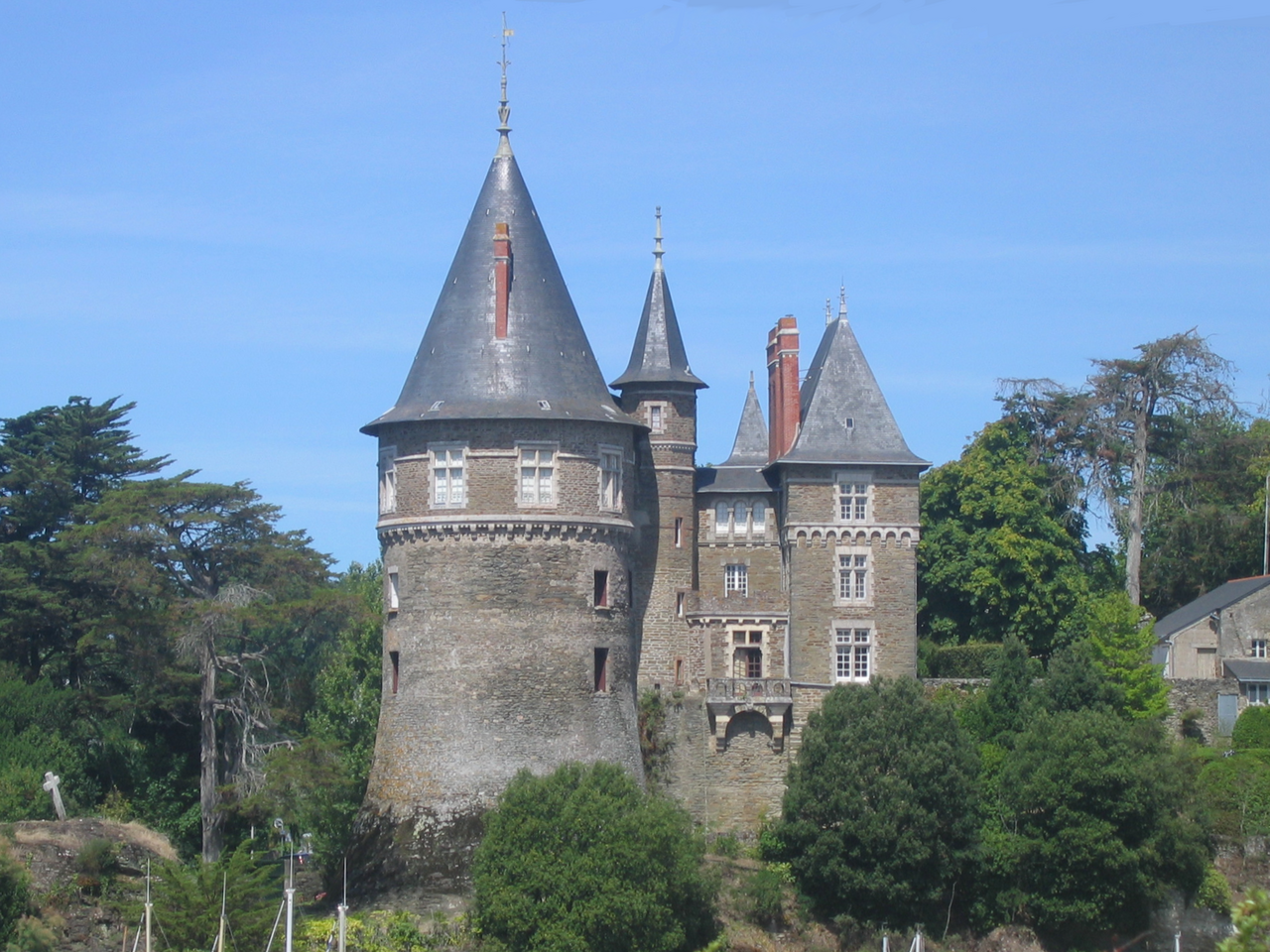
Ruins of 'Bluebeard's Castle'
The ruins of Bluebeard's Castle in Machecoul, France, stand as a chilling testament to one of the darkest chapters in medieval history. This site is famously associated with Gilles de Rais, a wealthy lord and knight who fought alongside Joan of Arc during the Hundred Years' War. The castle itself, now a partially preserved medieval fortress, was once a center of power and opulence in the region of Pays-de-la-Loire. It is here that Gilles de Rais was arrested and later convicted for the horrific crimes that inspired the enduring French folktale of Bluebeard.
Historical background of the castle and its lord
The Chateau de Machecoul was originally a fortified residence in the medieval period, serving as the seat of Gilles de Rais, who was one of the wealthiest and most powerful lords in Brittany. Born into nobility, Gilles de Rais inherited vast estates and commanded significant military influence. His participation in the Hundred Years' War as a companion to Joan of Arc elevated his status, but his later life descended into infamy due to his involvement in occult practices and heinous crimes.
After the war, Gilles de Rais led a life marked by extravagance and financial ruin. His interest in alchemy and the occult drove him to seek supernatural means to restore his fortune, including an infamous attempt at demon summoning. These dark pursuits coincided with the disappearance and murder of numerous children, with estimates suggesting the number could be in the hundreds. His arrest at the castle marked the beginning of a notorious trial that ended with his execution in 1440.
Architectural features and castle layout
The castle ruins today reveal remnants of a medieval fortress that combined defensive and residential functions. The original structure likely included stone walls, towers, and a moat typical of lowland castles designed to protect against sieges and raids. Although much of the castle has deteriorated over the centuries, archaeological studies have identified foundational walls and fragments of defensive battlements that illustrate its strategic importance during the late medieval period.
The castle's location in the flat terrain of Pays-de-la-Loire meant it relied heavily on constructed fortifications rather than natural elevation. The remains suggest a complex with multiple courtyards and living quarters, reflecting the dual role of the castle as a noble residence and a military stronghold.
The legacy of gilles de rais and bluebeard folklore
Gilles de Rais's gruesome crimes and tragic downfall have left a lasting imprint on French cultural history. His story is widely believed to have inspired Charles Perrault's 17th-century fairy tale Bluebeard (Barbe Bleue), which tells of a wealthy nobleman who murders his wives to conceal dark secrets. While the folktale focuses on spousal murder, the historical Gilles de Rais was accused of the abduction and murder of children, highlighting a more horrific reality behind the legend.
The castle ruins serve as a somber reminder of this dark history, attracting visitors interested in medieval history, true crime, and folklore. Interpretive signage and local museums provide context about Gilles de Rais's life, his military achievements, and his descent into infamy.
Visiting the ruins today
Today, the ruins of Bluebeard's Castle are accessible to the public, offering a glimpse into medieval architecture and the grim history associated with Gilles de Rais. Although the site is largely in ruins, it is a significant cultural landmark in Machecoul and the Pays-de-la-Loire region. Visitors can explore the remains, which include visible foundations and sections of defensive walls, while guided tours and informational materials enhance the experience.
The castle's location in a peaceful setting contrasts sharply with its violent past, making it a place of reflection on the complexities of history and legend. The site is typically open during daylight hours and may have seasonal variations in accessibility, so checking local visitor information before planning a trip is advisable.
Frequently asked questions (FAQ)
- How do I get to Bluebeard's Castle ruins in Machecoul?
- Bluebeard's Castle ruins are located in Machecoul, Pays-de-la-Loire, France. The site is accessible by car and local public transportation, with parking available nearby. It is advisable to check local maps and visitor centers for the best routes.
- What is the historical significance of Bluebeard's Castle?
- The castle is historically significant as the residence and arrest site of Gilles de Rais, a medieval lord whose crimes inspired the Bluebeard folktale. It reflects late medieval architecture and the turbulent history of the Hundred Years' War period.
- Can I visit the interior of the castle ruins?
- While much of the castle is in ruins, visitors can explore the visible foundations and some remaining walls. The interior is accessible but may be limited due to preservation efforts and safety concerns.
- When is the best time to visit the castle ruins?
- The best time to visit is during the spring and summer months when the weather is mild and the site is fully accessible. Seasonal events and guided tours may also be available during this period.
- Are there guided tours available at Bluebeard's Castle?
- Guided tours may be offered by local historical societies or the municipality, providing detailed information about the castle's history, architecture, and the story of Gilles de Rais. It is recommended to check in advance for availability.
Information
Sources & official resources
Verify the information above using these authoritative references.
Loading map...
Visitor reviews
No reviews yet. Been here? Write the first review and help other travelers!
Write the first reviewVisited this castle? Share your experience
Your review helps other travelers and adds first-hand knowledge to our encyclopedia.