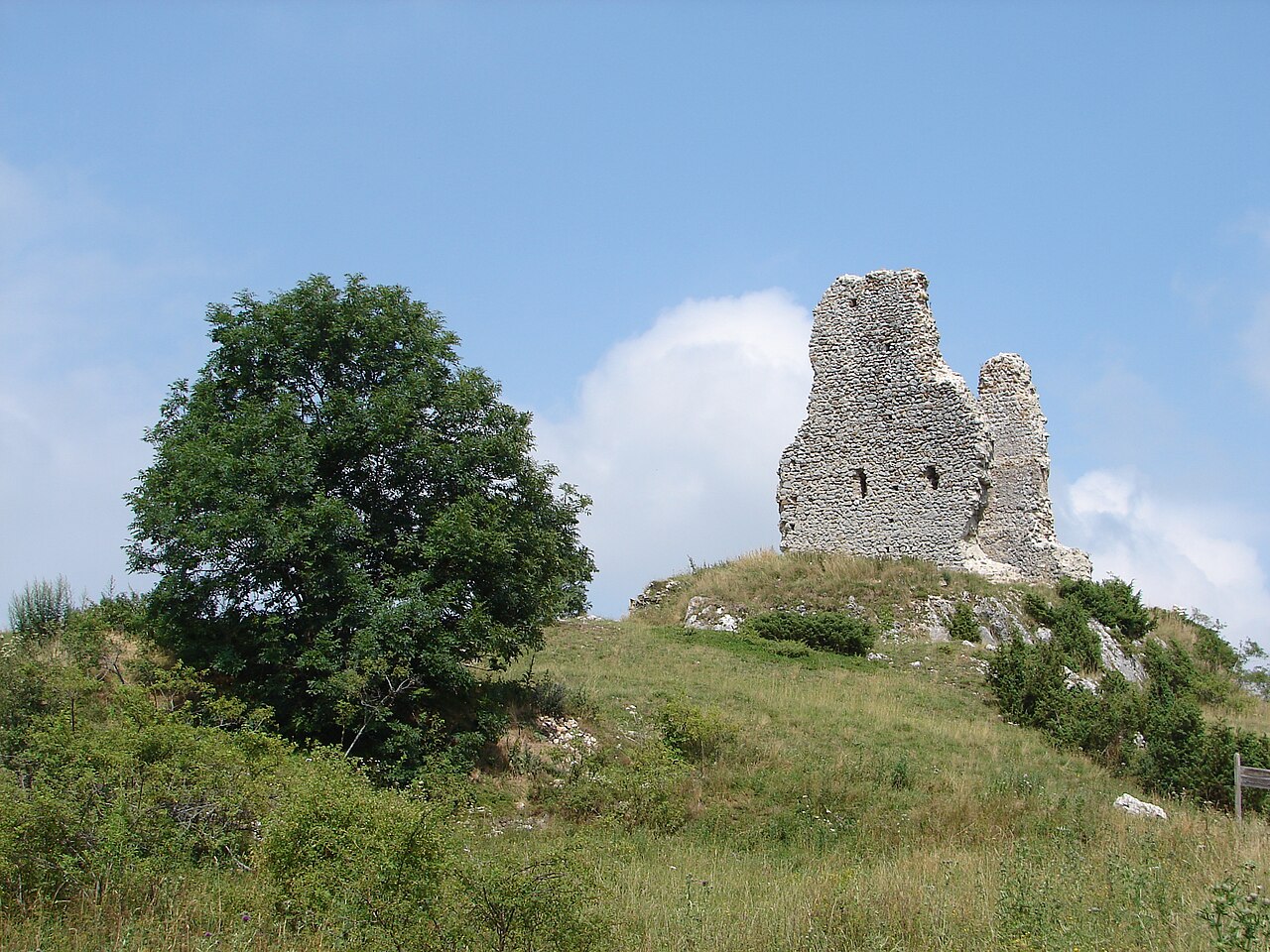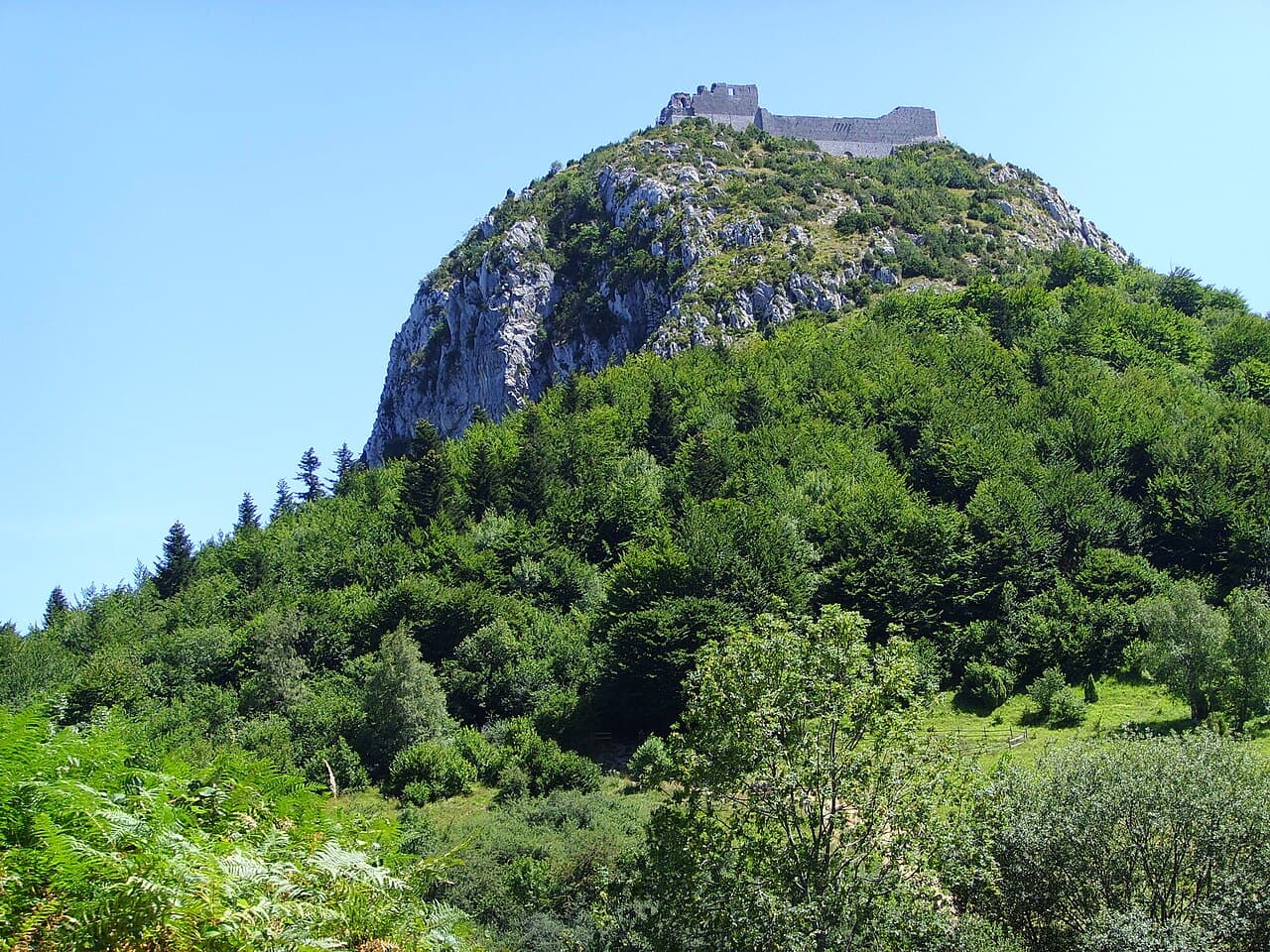
Château de Montségur — France castle

Château de Montségur

Château de Montségur: cathar fortress and historic hill castle in France
Montségur, France
High Medieval (11th–13th c.)
Restored

Château de Montségur stands as a profound symbol of the Cathar religious movement and medieval conflict in southern France. Perched atop a steep, rocky hill known locally as a pog, this hill castle offers commanding views and a formidable natural defense. Its history is marked by resilience, tragedy, and a legacy that continues to captivate visitors and historians alike.

Originally rebuilt in 1204 by Raymond de Péreille, the castle became the spiritual and military center for the Cathars, a Christian sect deemed heretical by the Catholic Church. The fortress was the site of a decisive siege from 1243 to 1244 during the Albigensian Crusade, culminating in the mass execution of over 200 Cathars who refused to renounce their faith. The current visible ruins, however, primarily reflect 17th-century French royal military architecture, as the original Cathar stronghold was demolished after its fall.

Historical context and cathar significance

The Cathars, flourishing in the 12th to 14th centuries across southern France and parts of Europe, espoused a dualistic Christian theology that challenged the authority of the Catholic Church. Montségur was recognized as the seat and head of the Cathar church from 1233, becoming a refuge for Perfects (spiritual leaders) and believers alike.

The Albigensian Crusade, initiated by Pope Innocent III following the assassination of papal legate Pierre de Castelnau in 1208, aimed to eradicate Catharism. Montségur's strategic location and fortifications made it a stronghold of resistance. Despite earlier unsuccessful attempts to capture it, the castle endured a nine-month siege beginning in May 1243 by a royal army commanded by Hugues des Arcis. The defenders, numbering around 70 fighters and 211 Perfects, held out until March 16, 1244.

The surrender led to the tragic mass execution of those who refused to abandon their faith, who were burned alive in a large bonfire at the base of the pog. This event remains one of the most poignant moments of Cathar history and is commemorated today by a stone stele marking the site.

Architectural evolution and site layout

The original cathar fortress (montségur ii)

The original Cathar fortress, often referred to as Montségur II, was situated within a fortified village enclosed by defensive walls. The site included a castellum or lord's residence, a barbacane guarding the main entrance, and a watchtower on the nearby Roc de la Tour cliff for early warning against attackers.

Excavations have revealed terraced foundations of dwellings connected by stairways adapted to the steep terrain. Key defensive features included a shield wall approximately 4.20 meters thick, designed to protect the most vulnerable approaches. The fortress incorporated three layers of defensive walls on the side facing modern access paths.

Defensive and logistical features

The community within the fortress was well-prepared for prolonged sieges, as evidenced by the discovery of a large cistern holding 50 cubic meters of water and a grain silo. These facilities ensured water and food supplies during times of isolation.

Archaeological finds include numerous heavy stone projectiles weighing between 23 and 78 kilograms, used as ammunition for trebuchets by besieging forces. The presence of these projectiles highlights the intensity of the siege warfare experienced at Montségur.

Post-medieval reconstruction (montségur iii)

Following the castle's capture and destruction in 1244, the royal forces under the family of Guy II de Lévis rebuilt and fortified the site over the next three centuries. The current ruins primarily reflect this 17th-century French defensive architecture, which contrasts with the medieval style of the original fortress.

The reconstruction included demolition of the surrounding Cathar village and extensive fortifications typical of the post-medieval period. The castle's design also features a remarkable solar alignment, where sunlight penetrates the structure at the winter and summer solstices through specific arrow slits in the main donjon, an architectural curiosity reflecting sophisticated planning.

Archaeological discoveries and preservation

Archaeological investigations in the 20th century by the Groupe de Recherches Archéologiques de Montségur et Environs (GRAME) have uncovered foundations, stairways, and everyday artifacts such as tools, jewelry, religious items, and lead tokens called méréaux. These tokens served as secret identifiers among Cathar members during clandestine meetings.

Animal bones found on site indicate a diet largely based on cereals, salted or smoked meats, and fish, offering insights into the daily life of the fortress inhabitants. The site has been legally protected as a historic monument since 1862, with specific archaeological remains receiving classification in 1989, ensuring ongoing preservation.

Cultural legacy and modern significance

Beyond its historical and architectural importance, Château de Montségur has inspired numerous legends, particularly concerning the Holy Grail and hidden Cathar treasures allegedly spirited away during the siege. While these tales lack firm historical evidence, they contribute to the site's mystique and attract visitors interested in esoteric history.

In recent years, the local Catholic Church issued a formal apology in 2016 for the violence inflicted on the Cathars, symbolizing a gesture of reconciliation and acknowledgment of the complex religious heritage associated with Montségur.

Today, Montségur remains a powerful symbol of faith, resistance, and tragic sacrifice. Visitors can explore the ruins, walk the steep paths, and reflect on the dramatic history that unfolded on this safe hill—a place where history, legend, and spirituality intertwine.

Frequently asked questions (FAQ)

How do I get to Château de Montségur?
Château de Montségur is accessible by car, with parking available nearby. If you prefer public transport, the nearest train station is in the town of Lavelanet, from where you can take a taxi or walk approximately 9 km to the castle.
What is the historical significance of Château de Montségur?
Château de Montségur is renowned as a symbol of the Cathar resistance during the 13th century. It was the site of the last stronghold of the Cathars, who were persecuted by the Catholic Church, making it a key location in the history of religious conflict in medieval France.
When was Château de Montségur built?
Construction of Château de Montségur began in the early 12th century, around 1204, and it became an important fortress and refuge for the Cathars. The castle's strategic position on a rocky outcrop provided a defensive advantage against attackers.
Can I visit Château de Montségur year-round?
Yes, Château de Montségur is open to visitors throughout the year, although opening hours may vary by season. It’s advisable to check their official website for the most current visiting information before planning your trip.
Why is the architecture of Château de Montségur unique?
The architecture of Château de Montségur features a blend of medieval military design and natural fortifications, with its steep cliffs and rugged terrain enhancing its defensive capabilities. The ruins showcase the remains of towers, walls, and the main keep, reflecting the castle's historical importance and strategic ingenuity.
Is it possible to hike to the castle?
Yes, visitors can hike up to Château de Montségur via a well-marked trail that offers stunning views of the surrounding landscape. The hike is moderately challenging and takes about 30 to 45 minutes, making it a popular activity for nature enthusiasts and history buffs alike.
What are the ticket prices for visiting Château de Montségur?
As of now, the entrance fee to Château de Montségur is approximately €6 for adults, with reduced prices for students and children. It's a good idea to confirm the latest ticket prices on their official website before your visit.
What are the opening hours for Château de Montségur?
Château de Montségur generally opens at 10 AM and closes at 6 PM from April to September, with shorter hours during the winter months. Always check ahead for any seasonal changes in hours or special closures.
What nearby attractions should I visit while in Montségur?
While in Montségur, you can explore the picturesque village and its beautiful hiking trails. Additionally, nearby attractions include the charming town of Foix, with its own historic castle, and the scenic landscapes of the Ariège region, perfect for outdoor activities.

Photo gallery

Château de Montségur
Click to view

Photo by No machine-readable author provided. Gerbil assumed (based on copyright claims).•CC BY-SA 3.0

1 photo • Click any image to view in full screen

Information

Hill Castle

Sources & official resources

Verify the information above using these authoritative references.

Loading map...

Visitor reviews

No reviews yet. Been here? Write the first review and help other travelers!

Write the first review

Visited this castle? Share your experience

Your review helps other travelers and adds first-hand knowledge to our encyclopedia.
Write a review

(5/5)

0/2000 characters

Your review will be visible after admin approval

Nearby castles

9.5 km
Château de Roquefixade — France castle

Château de Roquefixade

Roquefixade, France

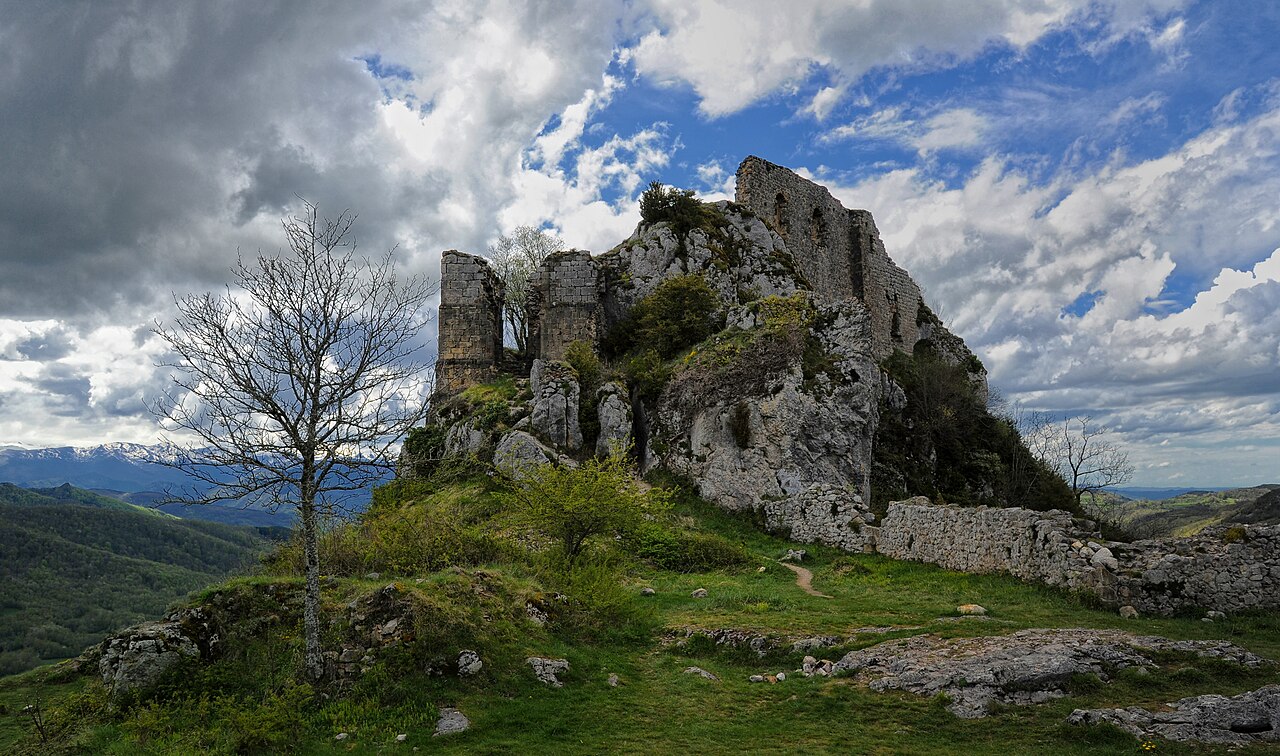
Château de Roquefixade is a remarkable medieval hill castle perched on a dramatic limestone cliff overlooking the village of Roquefixade in southern France. The castle's strategic location atop a natural cleft in the rock, known as "roca fissada" or "split rock" in Occitan, gave the fortress its name and shaped its unique architectural design. Although the earliest records of a castle on this site date back to 1180, the existing ruins primarily reflect construction and modifications from the 13th century onward, situating the castle firmly within the high medieval period. Often associated with the so-called Cathar castles of the region, Château de Roquefixade served as a refuge for the Cathars during the Albigensian Crusade, despite the surviving structures being built slightly later than the height of Cathar presence. The castle's imposing remains, including its ramparts, vaulted arch spanning the cliff fissure, and the once-dominant keep, illustrate its role as a formidable royal fortress guarding the frontier against the Count of Foix's territory. Early history and cathar connections The site of Château de Roquefixade first appears in historical records around 1034, initially held by the local seigneurs of Pailhès. This early medieval fortress was part of a network of fortifications controlling the rugged Corbières hills. The castle gained prominence in the early 13th century when it became a sanctuary for the Cathars, a Christian religious group branded heretical by the Catholic Church. In 1205, a notable marriage between Raimon de Péreilhe, lord of nearby strongholds including Montségur, and Corba de Lanta took place at Roquefixade, highlighting the castle's regional importance. During the Albigensian Crusade, the castle was attacked and seized in 1212 by Simon de Montfort, the crusader leader, shortly after the surrounding village was burned. Despite this, the fortress remained a symbol of resistance and refuge for the Cathars and their sympathizers in the region. Royal fortress and strategic role In the latter half of the 13th century, Château de Roquefixade's strategic significance increased considerably. In 1272, King Philip III of France took control of the castle following the surrender of Roger-Bernard III, Count of Foix. To consolidate royal power and secure the border with the Kingdom of Aragon, a royal garrison was established in 1278, marking the castle's transformation into a key frontier fortress. Throughout the 14th century, the castle underwent significant remodeling, particularly of its keep, to adapt to evolving military technologies and defensive needs. Further alterations in the 15th and 16th centuries reflected the castle's dual role as a military stronghold and noble residence. In 1463, ownership was returned to the Counts of Foix by King Louis XI, with Gaston IV becoming the new lord of Roquefixade. Decline and destruction Despite its robust construction and strategic importance, Château de Roquefixade's fortunes waned in the early 17th century. The castle was involved in the Languedoc uprising against royal authority, which culminated in the capture and execution of Henri II de Montmorency, Duke of Montmorency, a prominent noble who had rebelled against Cardinal Richelieu's policies. In 1632, King Louis XIII ordered the castle's destruction during his campaign to suppress the rebellion. The fortress, deemed obsolete and costly to maintain, was deliberately dismantled, leaving the ruins visible today. Later, the ruined castle passed into private hands, notably acquired by Vital Guilhon de Lestang, Baron de Celles, in 1675. His family retained ownership until the French Revolution, when the property was sold as national estate. Architectural features and landscape integration Château de Roquefixade is distinguished by its dramatic integration with the natural landscape. The castle is built on a limestone ridge approximately 400 meters northwest of the village, with its walls clinging to the rock face and spanning a natural fissure via a vaulted arch. This architectural solution not only enhanced defense but also gave the fortress its distinctive character. The fortress comprises two main enclosures. The outer bailey is accessed through a narrow passage and a discreet postern gate, leading into the inner stronghold. Visitors would have passed through a fortified gatehouse or châtelet before reaching the donjon, the castle's central keep. The donjon's enclosure notably bridges the rock fissure, underscoring the builders' skillful adaptation to the terrain. The castle's highest point featured a large tower remodeled in the 14th century, which dominated the surrounding landscape. From this vantage, sweeping views extend over the village below and the surrounding landmarks, including the Pic de Soularac, Pic de Saint-Barthélemy, Roc de la Lauzade, Roc Marot, and the distant Tabe massif. Preservation and cultural significance Today, Château de Roquefixade stands as a ruined hill castle, its remains evocative of the turbulent history of the region and the complex legacy of the Cathars and French royal power. The surviving masonry, vaulted arches, and ramparts provide valuable insights into medieval military architecture and the adaptation of fortifications to challenging natural environments. The castle was officially listed as a protected monument in 1995, reflecting its importance as a cultural and historical landmark. Visitors to the site can explore the ruins and appreciate the castle's commanding position within the landscape, gaining an understanding of its role in regional conflicts and its architectural evolution from the 13th to the 16th centuries. Château de Roquefixade remains a significant destination for those interested in medieval history, Cathar heritage, and the architectural ingenuity of fortress construction on rugged terrain.

High Medieval (11th–13th c.)
Details
11.1 km
Château de Montaillou — France castle

Château de Montaillou

Montaillou, France

Château de Montaillou stands as a significant medieval archaeological site perched above the village of Montaillou in the Ariège département of southern France. This castle, now largely in ruins, offers a rare glimpse into the turbulent history of the High Medieval period, particularly relating to the Cathar heresy and the complex political landscape of the region during the 12th and 13th centuries. The castle was constructed in the late 12th century by the lords of Alion, who established it as a modest but strategically placed fortress. The site occupies a natural platform approximately 100 meters long and 30 to 40 meters wide, taking advantage of the steep slopes to the south for natural defense. Château de Montaillou was designed with a simple, functional layout consisting of a rectangular keep and a surrounding curtain wall. Today, only three walls of the ruined keep remain, alongside traces of the curtain wall and other defensive earthworks. Architectural features and defensive structures The castle's defensive system was typical of High Medieval hill castles. Access was protected by a dry moat cut into bare rock, which encircled the platform and served as a formidable obstacle to attackers. Additional dry moats fortified the northern and eastern approaches, while the southern slope provided a natural barrier. The curtain wall enclosed the courtyard, with its base still partially visible, indicating the castle's modest scale but effective fortification. The layout included a tower linked to a curtain wall that followed the contours of the hill, maximizing natural topography for defense. The walls were originally thinner but were reinforced at the end of the 13th century when the Count of Foix, who had taken control of the castle, doubled their thickness, reflecting the castle's evolving military importance. Historical context and Cathar connections Château de Montaillou is closely associated with the history of the Cathars, a Christian dualist sect deemed heretical by the Catholic Church. Bernard d'Alion, the castle's lord in the early 13th century, was a notable figure sympathetic to the Cathar cause. In 1226, he paid nominal homage to the King of France, but his true allegiance remained with the Cathars. Bernard's marriage in 1236 to Esclarmonde, daughter of Roger IV, Count of Foix, was witnessed by Cathar parfaits or believers, underscoring the castle's role as a Cathar stronghold. However, this allegiance led to Bernard's condemnation by the Inquisition in 1258, when he was executed by burning in Perpignan for heresy. Following Bernard's death, the castle was seized by his father-in-law, the Count of Foix, and transformed into a frontier fortress. It then marked the boundary between the County of Foix, the French royal domains, and the Kingdom of Aragon, underscoring its strategic significance in regional power struggles. Later history and decline The first documented mention of the castle dates to 1272, when it appeared in a list of fortresses under the Count of Foix's control. Despite surviving the Albigensian Crusade, a major military campaign aimed at eradicating Catharism, the castle's military importance diminished over time. By the late Middle Ages, the castle fell into disrepair, and much of its structure deteriorated, leaving only ruins today. The site remains an important cultural and historical landmark, attracting scholars and visitors interested in medieval fortifications and Cathar history. Archaeological significance and preservation Today, Château de Montaillou is classified as an archaeological ruin, with ongoing efforts to preserve the remaining structures and earthworks. The ruins provide valuable insights into the construction techniques and defensive strategies of High Medieval hill castles in the Pyrenean region. The castle's location on a rocky platform with natural defenses illustrates medieval military architecture adapted to challenging terrain. The surviving walls, moat cuttings, and earthworks help historians reconstruct the castle's original appearance and function. Connection to Montaillou village and cultural heritage The castle overlooks the village of Montaillou, which gained international recognition through Emmanuel Le Roy Ladurie's landmark historical study, Montaillou, village occitan. This work explored the social and religious life of the village during the Cathar period, linking the castle closely to the broader narrative of medieval Occitan culture and religious dissent. Visitors to the site can appreciate the castle's role as both a military fortress and a symbol of the complex religious and political dynamics that shaped the region during the Middle Ages. Visiting Château de Montaillou The ruins of Château de Montaillou are accessible to the public, offering a unique opportunity to explore a site steeped in medieval history. The location provides panoramic views of the surrounding Ariège landscape and the Pyrenees mountains. While the castle is in a ruined state, the remains of its walls and defensive features allow visitors to visualize its former strength and strategic importance. The site is ideal for those interested in medieval architecture, Cathar history, and the history of southern France.

High Medieval (11th–13th c.)
Details
13 km

Château de Lordat

Lordat, France

Château de Lordat is a remarkable example of early medieval military architecture located in the village of Lordat in modern-day France. Dating back to the 9th and 10th centuries, with its first recorded mention in 970 AD, this hill castle stands atop a limestone promontory at 965 meters elevation, overlooking the Sabarthès region. Its strategic position nearly 400 meters above the valley floor afforded commanding views and formidable defense, making it a key stronghold in the upper County of Foix. The castle's origins lie in its role as a ministerium, an administrative center, before evolving into a fortified castrum during the 11th century. In 1034, it passed into the hands of Roger, the first Count of Foix, marking the beginning of its association with one of the most influential noble families in the region. Over the centuries, Château de Lordat played a significant role in the turbulent history of southern France, especially during the Albigensian Crusade in the mid-13th century. Around 1244, the fortress was occupied by the Cathars, a religious group persecuted as heretics by the Catholic Church. The castle's capture by the King of Aragon and subsequent partial destruction in the late 13th century reflect the intense conflicts of the period. Historical significance and ownership The Lordat family, closely allied with the Counts of Foix, maintained control of the castle through the medieval period until the upheavals of the French Wars of Religion in the late 16th century. During this era, the family abandoned the fortress, and in 1582, King Henry IV ordered its dismantling to prevent its use in ongoing conflicts. By the late 17th century, the castle had fallen into ruin and was repurposed as a prison for criminals and other undesirables, highlighting its decline from a noble residence to a site of incarceration. Despite this, the Lordat family retained ownership of the surrounding lands well into the 19th century, preserving a link to their ancestral seat. Architectural features and layout Château de Lordat's design is closely adapted to the natural contours of its limestone hill, covering approximately 5,500 square meters in an elliptical shape measuring about 100 by 65 meters. The fortress is enclosed by massive defensive walls, particularly prominent on the eastern side where remains of a substantial wall built from very large stone blocks survive. This wall is further protected by two concentric curtain walls, a defensive feature typical of medieval fortifications. The first curtain wall stands three to four meters high and is notable for its opus spicatum or herringbone stonework pattern, an uncommon but effective masonry technique. This wall links two eastern towers and connects on the northern side to a second curtain wall that runs along a cliff face over fifty meters high, creating a natural defensive barrier. Both curtain walls incorporate gates within towers, designed with chicanes—zigzagging passageways intended to slow attackers and expose them to defensive fire. Within the northern enclosure, visitors find the remains of a cistern for water storage and several residential buildings abutting the curtain walls. These dwellings feature openings with horseshoe arches, an architectural element influenced by Moorish design, indicating cultural interactions in the region during the medieval period. The donjon and defensive towers At the heart of the castle lie the ruins of four buildings adjacent to the main keep or donjon. This central tower rises four stories high and has walls thicker than any other part of the fortress, underscoring its role as the last line of defense and a symbol of feudal authority. The main entrance is guarded by a square tower that remarkably retains much of its original form despite centuries of decay and dismantling, offering a direct link to the castle's medieval past. Decline, preservation, and modern significance Following its dismantling by royal order in 1582, Château de Lordat gradually fell into ruin. By the 17th century, it was described as deserted and dilapidated, with its function reduced to a prison. However, the castle's historical and architectural value was recognized in the 20th century when it was designated a historic monument in 1923. Since the late 1990s, concerted efforts have been made to stabilize and protect the remaining structures, ensuring the preservation of this important medieval heritage site. Today, Château de Lordat stands as a testament to the complex history of the region, reflecting the military, religious, and political conflicts that shaped southern France. Its ruins offer valuable insights into early medieval fortification techniques, the influence of the Counts of Foix, and the legacy of the Cathar presence during the Albigensian Crusade. The castle's dramatic hilltop location and the surviving architectural elements continue to attract historians, architects, and visitors interested in medieval history and castle architecture. Visitor experience and cultural impact Visitors to Château de Lordat can explore the extensive remains of the fortress, including its imposing defensive walls, towers, and the donjon. The site provides panoramic views of the Sabarthès valley and surrounding Pyrenean landscape, enhancing its appeal as both a historical monument and a scenic destination. Interpretive signage and preservation efforts help convey the castle's story, from its early medieval origins through its role in religious conflicts and eventual decline. The castle's cultural significance extends beyond its physical remains, symbolizing the resilience of regional identity and the enduring fascination with medieval fortifications. It remains an important subject of study for those interested in feudal history, military architecture, and the complex interplay of religious and political forces in medieval France.

Early Medieval (5th–10th c.)
Details