Château de Montaillou
Château de Montaillou stands as a significant medieval archaeological site perched above the village of Montaillou in the Ariège département of southern France. This castle, now largely in ruins, offers a rare glimpse into the turbulent history of the High Medieval period, particularly relating to the Cathar heresy and the complex political landscape of the region during the 12th and 13th centuries.
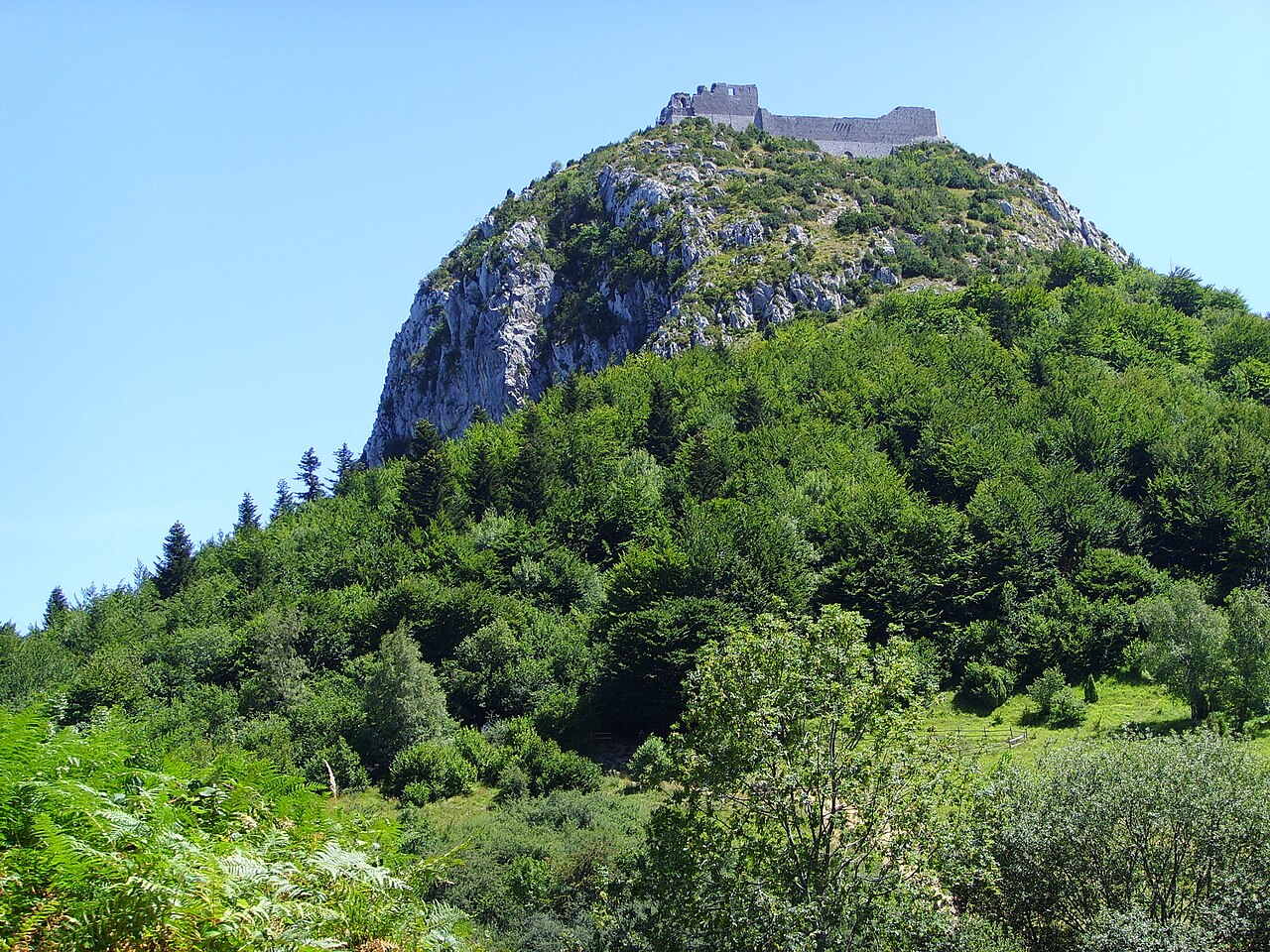
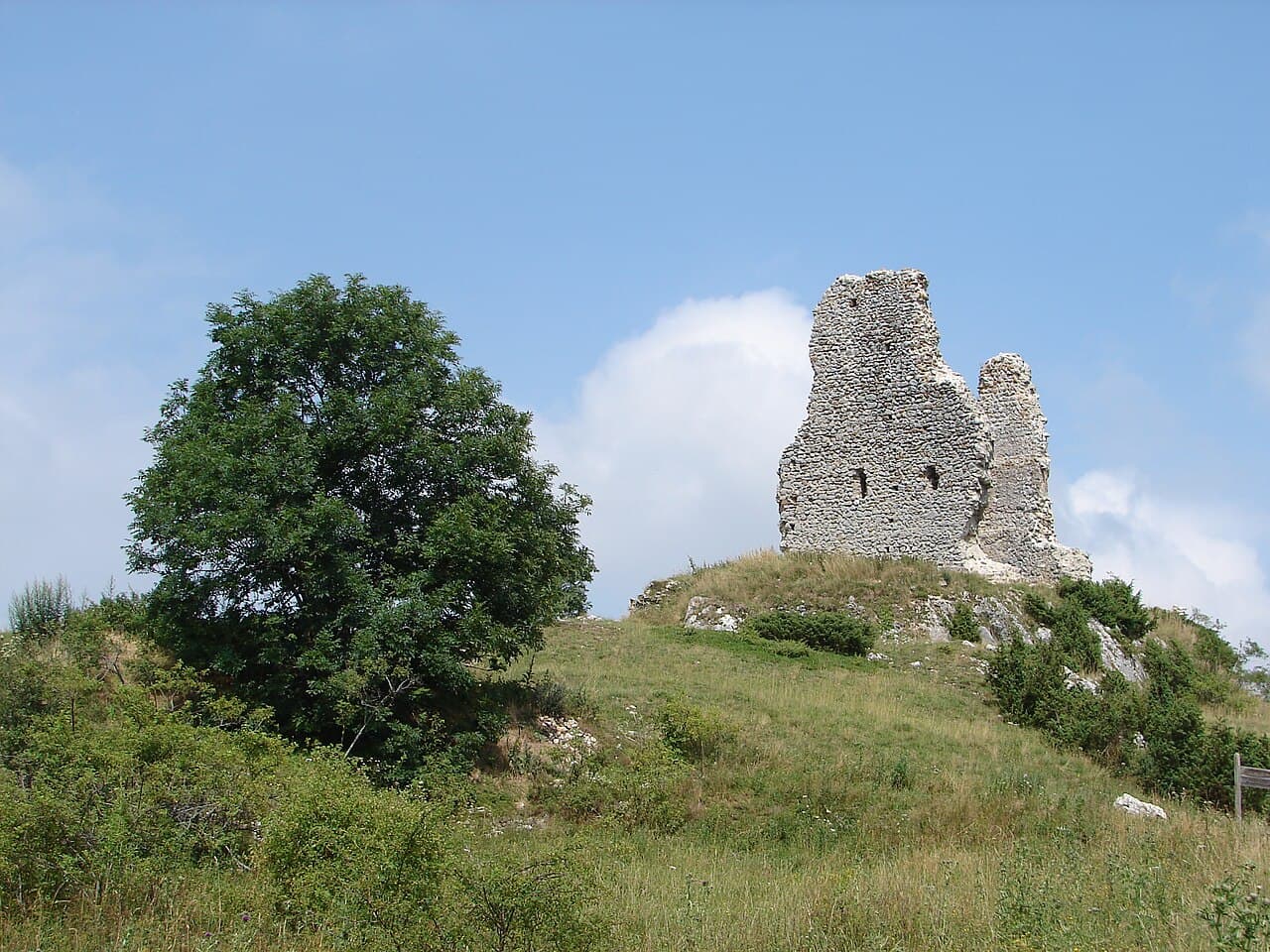
The castle was constructed in the late 12th century by the lords of Alion, who established it as a modest but strategically placed fortress. The site occupies a natural platform approximately 100 meters long and 30 to 40 meters wide, taking advantage of the steep slopes to the south for natural defense. Château de Montaillou was designed with a simple, functional layout consisting of a rectangular keep and a surrounding curtain wall. Today, only three walls of the ruined keep remain, alongside traces of the curtain wall and other defensive earthworks.
Architectural features and defensive structures
The castle's defensive system was typical of High Medieval hill castles. Access was protected by a dry moat cut into bare rock, which encircled the platform and served as a formidable obstacle to attackers. Additional dry moats fortified the northern and eastern approaches, while the southern slope provided a natural barrier. The curtain wall enclosed the courtyard, with its base still partially visible, indicating the castle's modest scale but effective fortification.
The layout included a tower linked to a curtain wall that followed the contours of the hill, maximizing natural topography for defense. The walls were originally thinner but were reinforced at the end of the 13th century when the Count of Foix, who had taken control of the castle, doubled their thickness, reflecting the castle's evolving military importance.
Historical context and Cathar connections
Château de Montaillou is closely associated with the history of the Cathars, a Christian dualist sect deemed heretical by the Catholic Church. Bernard d'Alion, the castle's lord in the early 13th century, was a notable figure sympathetic to the Cathar cause. In 1226, he paid nominal homage to the King of France, but his true allegiance remained with the Cathars.
Bernard's marriage in 1236 to Esclarmonde, daughter of Roger IV, Count of Foix, was witnessed by Cathar parfaits or believers, underscoring the castle's role as a Cathar stronghold. However, this allegiance led to Bernard's condemnation by the Inquisition in 1258, when he was executed by burning in Perpignan for heresy.
Following Bernard's death, the castle was seized by his father-in-law, the Count of Foix, and transformed into a frontier fortress. It then marked the boundary between the County of Foix, the French royal domains, and the Kingdom of Aragon, underscoring its strategic significance in regional power struggles.
Later history and decline
The first documented mention of the castle dates to 1272, when it appeared in a list of fortresses under the Count of Foix's control. Despite surviving the Albigensian Crusade, a major military campaign aimed at eradicating Catharism, the castle's military importance diminished over time.
By the late Middle Ages, the castle fell into disrepair, and much of its structure deteriorated, leaving only ruins today. The site remains an important cultural and historical landmark, attracting scholars and visitors interested in medieval fortifications and Cathar history.
Archaeological significance and preservation
Today, Château de Montaillou is classified as an archaeological ruin, with ongoing efforts to preserve the remaining structures and earthworks. The ruins provide valuable insights into the construction techniques and defensive strategies of High Medieval hill castles in the Pyrenean region.
The castle's location on a rocky platform with natural defenses illustrates medieval military architecture adapted to challenging terrain. The surviving walls, moat cuttings, and earthworks help historians reconstruct the castle's original appearance and function.
Connection to Montaillou village and cultural heritage
The castle overlooks the village of Montaillou, which gained international recognition through Emmanuel Le Roy Ladurie's landmark historical study, Montaillou, village occitan. This work explored the social and religious life of the village during the Cathar period, linking the castle closely to the broader narrative of medieval Occitan culture and religious dissent.
Visitors to the site can appreciate the castle's role as both a military fortress and a symbol of the complex religious and political dynamics that shaped the region during the Middle Ages.
Visiting Château de Montaillou
The ruins of Château de Montaillou are accessible to the public, offering a unique opportunity to explore a site steeped in medieval history. The location provides panoramic views of the surrounding Ariège landscape and the Pyrenees mountains.
While the castle is in a ruined state, the remains of its walls and defensive features allow visitors to visualize its former strength and strategic importance. The site is ideal for those interested in medieval architecture, Cathar history, and the history of southern France.
Frequently asked questions (FAQ)
- How do I get to Château de Montaillou?
- Château de Montaillou is located in the village of Montaillou in the Ariège département of Occitanie, France. It is accessible by local roads, and visitors typically reach the site by car or on foot from the village center.
- What is the historical significance of Château de Montaillou?
- The castle is historically significant for its association with the Cathar heresy and the political struggles of the High Medieval period in southern France. It was the home of Bernard d'Alion, a Cathar sympathizer, and played a role in regional conflicts during the 12th and 13th centuries.
- Can I explore the ruins of Château de Montaillou?
- Yes, visitors can explore the ruins, including the remains of the keep, curtain walls, and defensive moats. While the castle is in a ruined state, the site offers insight into medieval fortifications and the castle's strategic location.
- When is the best time to visit Château de Montaillou?
- The best time to visit is during the warmer months from late spring to early autumn when the weather is favorable for hiking and outdoor exploration of the ruins and surrounding landscape.
- Are there any guided tours available at Château de Montaillou?
- Guided tours may be available through local tourist offices or historical societies in the Ariège region. Visitors should check in advance for tour availability and schedules to enhance their understanding of the castle's history.
Photo gallery

Information
Current owner
Municipality
Loading map...
Visitor reviews
No reviews yet. Been here? Write the first review and help other travelers!
Write the first reviewVisited this castle? Share your experience
Your review helps other travelers and adds first-hand knowledge to our encyclopedia.