Château de Roquefixade
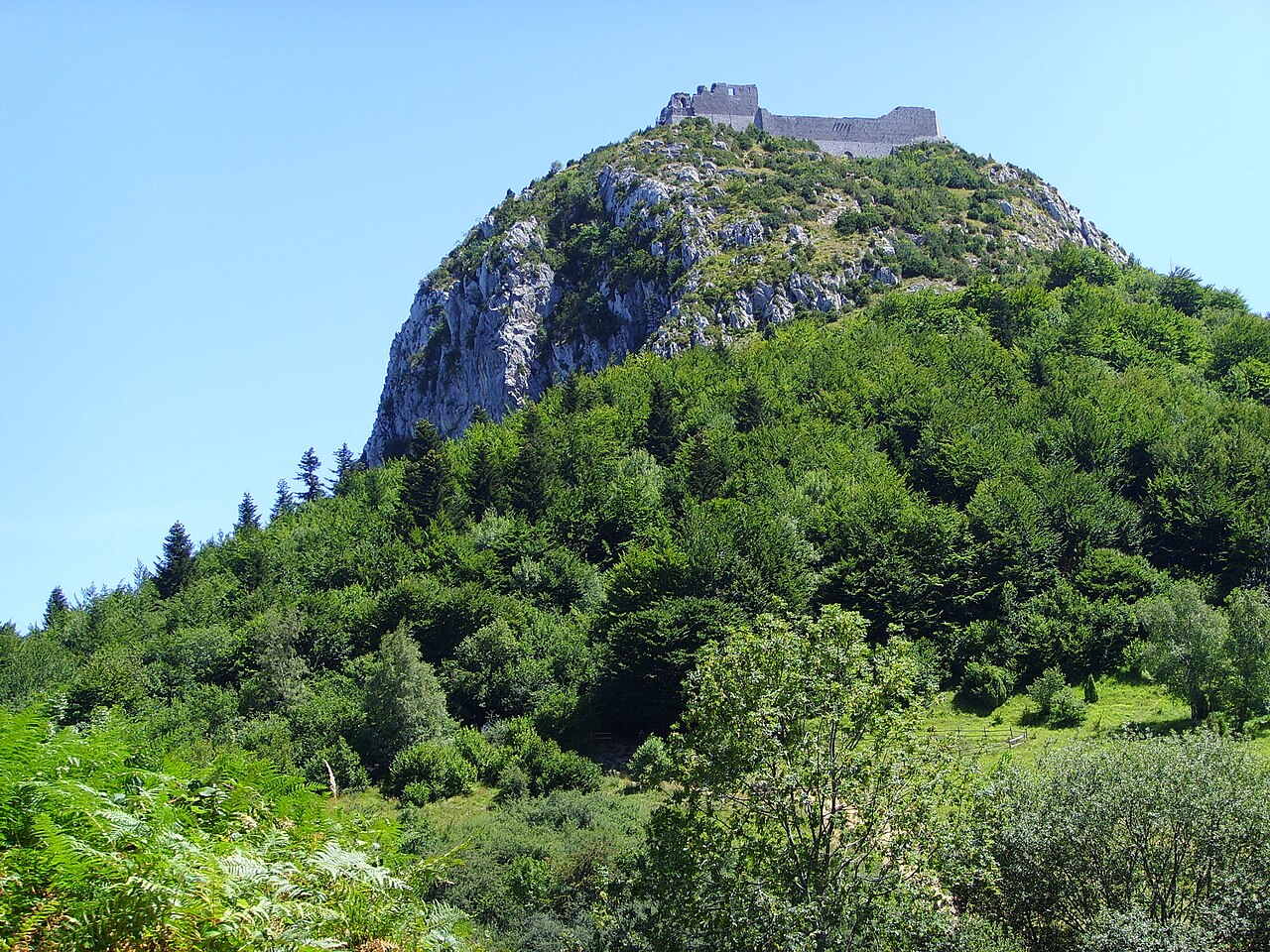
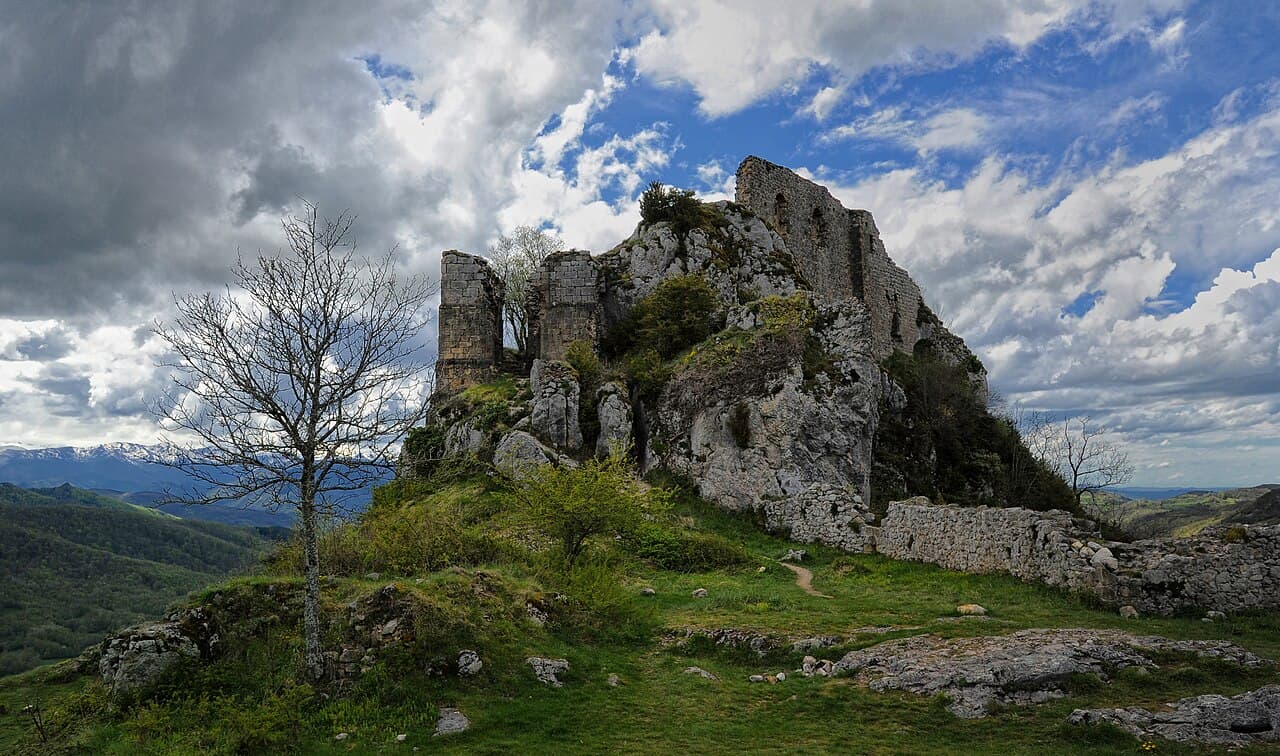
Château de Roquefixade is a remarkable medieval hill castle perched on a dramatic limestone cliff overlooking the village of Roquefixade in southern France. The castle's strategic location atop a natural cleft in the rock, known as "roca fissada" or "split rock" in Occitan, gave the fortress its name and shaped its unique architectural design. Although the earliest records of a castle on this site date back to 1180, the existing ruins primarily reflect construction and modifications from the 13th century onward, situating the castle firmly within the high medieval period.
Often associated with the so-called Cathar castles of the region, Château de Roquefixade served as a refuge for the Cathars during the Albigensian Crusade, despite the surviving structures being built slightly later than the height of Cathar presence. The castle's imposing remains, including its ramparts, vaulted arch spanning the cliff fissure, and the once-dominant keep, illustrate its role as a formidable royal fortress guarding the frontier against the Count of Foix's territory.
Early history and cathar connections
The site of Château de Roquefixade first appears in historical records around 1034, initially held by the local seigneurs of Pailhès. This early medieval fortress was part of a network of fortifications controlling the rugged Corbières hills. The castle gained prominence in the early 13th century when it became a sanctuary for the Cathars, a Christian religious group branded heretical by the Catholic Church. In 1205, a notable marriage between Raimon de Péreilhe, lord of nearby strongholds including Montségur, and Corba de Lanta took place at Roquefixade, highlighting the castle's regional importance.
During the Albigensian Crusade, the castle was attacked and seized in 1212 by Simon de Montfort, the crusader leader, shortly after the surrounding village was burned. Despite this, the fortress remained a symbol of resistance and refuge for the Cathars and their sympathizers in the region.
Royal fortress and strategic role
In the latter half of the 13th century, Château de Roquefixade's strategic significance increased considerably. In 1272, King Philip III of France took control of the castle following the surrender of Roger-Bernard III, Count of Foix. To consolidate royal power and secure the border with the Kingdom of Aragon, a royal garrison was established in 1278, marking the castle's transformation into a key frontier fortress.
Throughout the 14th century, the castle underwent significant remodeling, particularly of its keep, to adapt to evolving military technologies and defensive needs. Further alterations in the 15th and 16th centuries reflected the castle's dual role as a military stronghold and noble residence. In 1463, ownership was returned to the Counts of Foix by King Louis XI, with Gaston IV becoming the new lord of Roquefixade.
Decline and destruction
Despite its robust construction and strategic importance, Château de Roquefixade's fortunes waned in the early 17th century. The castle was involved in the Languedoc uprising against royal authority, which culminated in the capture and execution of Henri II de Montmorency, Duke of Montmorency, a prominent noble who had rebelled against Cardinal Richelieu's policies.
In 1632, King Louis XIII ordered the castle's destruction during his campaign to suppress the rebellion. The fortress, deemed obsolete and costly to maintain, was deliberately dismantled, leaving the ruins visible today. Later, the ruined castle passed into private hands, notably acquired by Vital Guilhon de Lestang, Baron de Celles, in 1675. His family retained ownership until the French Revolution, when the property was sold as national estate.
Architectural features and landscape integration
Château de Roquefixade is distinguished by its dramatic integration with the natural landscape. The castle is built on a limestone ridge approximately 400 meters northwest of the village, with its walls clinging to the rock face and spanning a natural fissure via a vaulted arch. This architectural solution not only enhanced defense but also gave the fortress its distinctive character.
The fortress comprises two main enclosures. The outer bailey is accessed through a narrow passage and a discreet postern gate, leading into the inner stronghold. Visitors would have passed through a fortified gatehouse or châtelet before reaching the donjon, the castle's central keep. The donjon's enclosure notably bridges the rock fissure, underscoring the builders' skillful adaptation to the terrain.
The castle's highest point featured a large tower remodeled in the 14th century, which dominated the surrounding landscape. From this vantage, sweeping views extend over the village below and the surrounding landmarks, including the Pic de Soularac, Pic de Saint-Barthélemy, Roc de la Lauzade, Roc Marot, and the distant Tabe massif.
Preservation and cultural significance
Today, Château de Roquefixade stands as a ruined hill castle, its remains evocative of the turbulent history of the region and the complex legacy of the Cathars and French royal power. The surviving masonry, vaulted arches, and ramparts provide valuable insights into medieval military architecture and the adaptation of fortifications to challenging natural environments.
The castle was officially listed as a protected monument in 1995, reflecting its importance as a cultural and historical landmark. Visitors to the site can explore the ruins and appreciate the castle's commanding position within the landscape, gaining an understanding of its role in regional conflicts and its architectural evolution from the 13th to the 16th centuries.
Château de Roquefixade remains a significant destination for those interested in medieval history, Cathar heritage, and the architectural ingenuity of fortress construction on rugged terrain.
Frequently asked questions (FAQ)
- How do I get to Château de Roquefixade?
- Château de Roquefixade is located in the small village of Roquefixade in France. You can reach the castle by car, with parking available nearby, or by taking local public transport to the nearest town and hiking the scenic trails that lead to the castle.
- What is the historical significance of Château de Roquefixade?
- Château de Roquefixade dates back to the 11th century and is a remarkable example of medieval military architecture. It played a crucial role during the Cathar Wars and served as a refuge for the Cathar community, making it an important site for understanding the region's history.
- When was Château de Roquefixade built?
- The construction of Château de Roquefixade began in the early 11th century, with significant modifications occurring over the centuries. The castle's strategic design reflects the architectural trends of medieval fortifications, showcasing its historical evolution.
- Can I enter Château de Roquefixade?
- Visitors can explore the exterior of Château de Roquefixade, but access to the interior is limited due to safety concerns. Guided tours may be available during peak tourist seasons, so it's best to check in advance for any special events or openings.
- Why is Château de Roquefixade popular among tourists?
- Château de Roquefixade is popular for its stunning panoramic views of the surrounding countryside and its rich history. The castle's dramatic ruins provide a picturesque setting for photography and are a favorite among history enthusiasts and hikers alike.
- Is it possible to hike to Château de Roquefixade?
- Yes, hiking to Château de Roquefixade is a popular activity for visitors. There are marked trails leading to the castle, offering both a physical challenge and the chance to enjoy the natural beauty of the area.
- What are the opening hours for Château de Roquefixade?
- Château de Roquefixade is generally open year-round, but specific opening hours can vary by season. It’s advisable to check the official website or local tourism information for the most current visiting hours before planning your trip.
- What is the best time to visit Château de Roquefixade?
- The best time to visit Château de Roquefixade is during the spring and early autumn months when the weather is mild and the surrounding landscapes are lush. These seasons also feature fewer crowds, allowing for a more enjoyable experience.
- Are there any nearby attractions to visit while at Château de Roquefixade?
- Yes, nearby attractions include the picturesque village of Roquefixade and various hiking trails in the region. Additionally, the town of Foix, with its own castle and charming historical center, is just a short drive away, making it a great complement to your visit.
- What are the ticket prices for Château de Roquefixade?
- Entry to Château de Roquefixade is often free, especially for outdoor exploration. However, if guided tours are available, there may be a nominal fee, so it's advisable to verify the latest information before your visit.
Photo gallery

Information
Website
Visit websiteSources & official resources
Verify the information above using these authoritative references.
Loading map...
Visitor reviews
No reviews yet. Been here? Write the first review and help other travelers!
Write the first reviewVisited this castle? Share your experience
Your review helps other travelers and adds first-hand knowledge to our encyclopedia.