Château de Montrichard
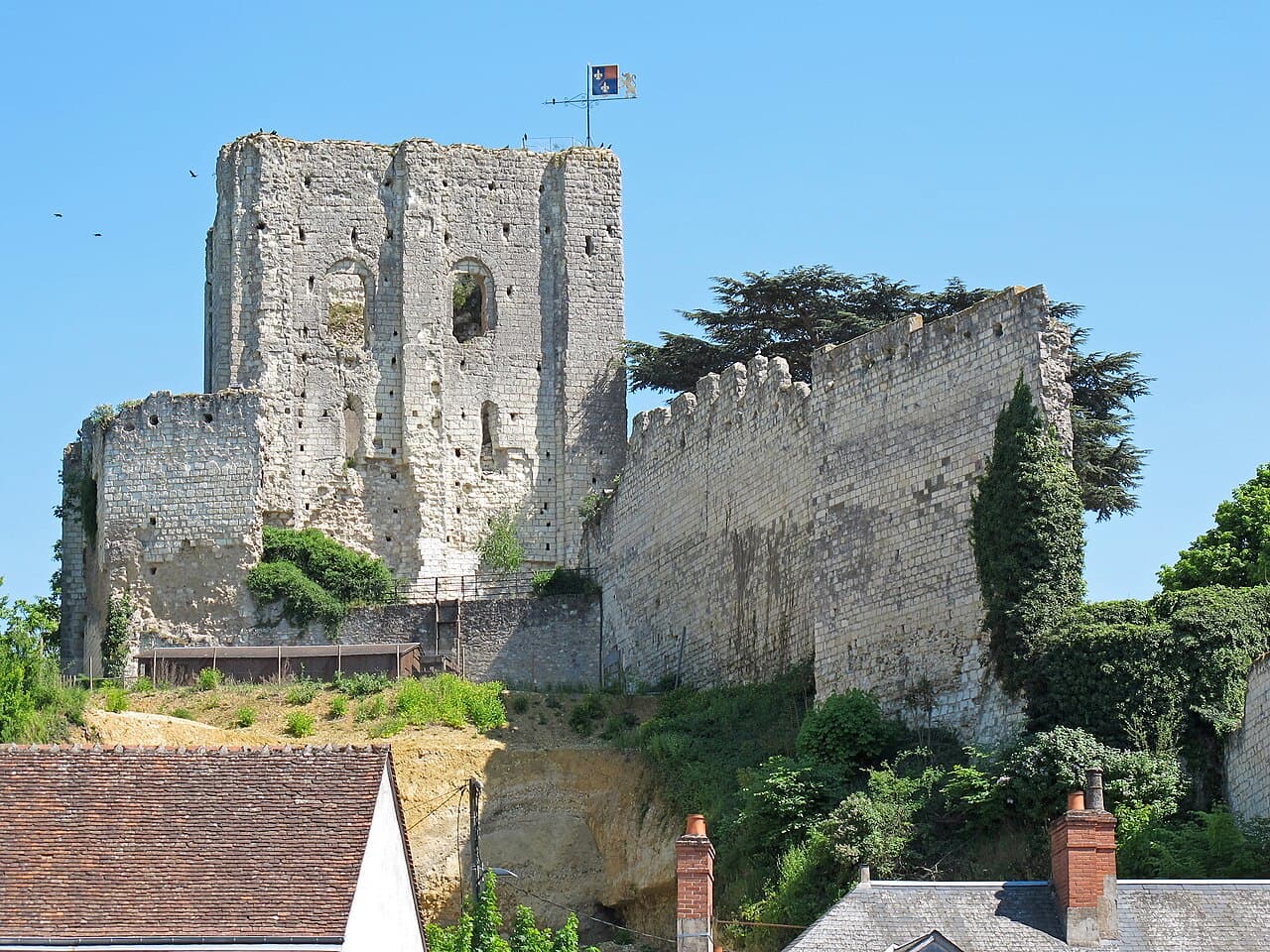
The Château de Montrichard is a ruined medieval hill castle located in the town of Montrichard Val de Cher in the Loir-et-Cher département, central France. Originally constructed in the early 11th century by Foulques Nerra, Count of Anjou, it served as a strategic military fortress overseeing the Cher River valley and key medieval trade routes. The castle was rebuilt in stone during the 12th century under Hugues I d'Amboise, whose architectural contributions shaped much of the surviving structure. Although now in ruins, the castle's prominent donjon (keep) remains a striking example of early medieval military architecture.
Early history and strategic importance
The origins of the Château de Montrichard trace back to the early 11th century when Foulques Nerra established a wooden fortification to assert control in the contested region between the counties of Anjou and Blois. This initial structure was part of broader power struggles during the high medieval period. The castle's location on a ridge overlooking the Cher River allowed it to command a vital crossing point, including a bridge and a ford, facilitating control over trade and military movements between major cities such as Blois, Loches, Bourges, and Tours.
12th-century stone reconstruction and architectural features
In 1109, Hugues I d'Amboise seized the castle and initiated a major rebuilding program, replacing the original wooden structures with durable stone fortifications. The donjon, dating from around 1120, is a square tower reinforced with buttresses and divided internally into three floors: a storage cellar at ground level, living quarters above, and a battlemented rooftop walkway for defense. This design was inspired by the nearby fortress of Loches, reflecting the architectural trends of the period.
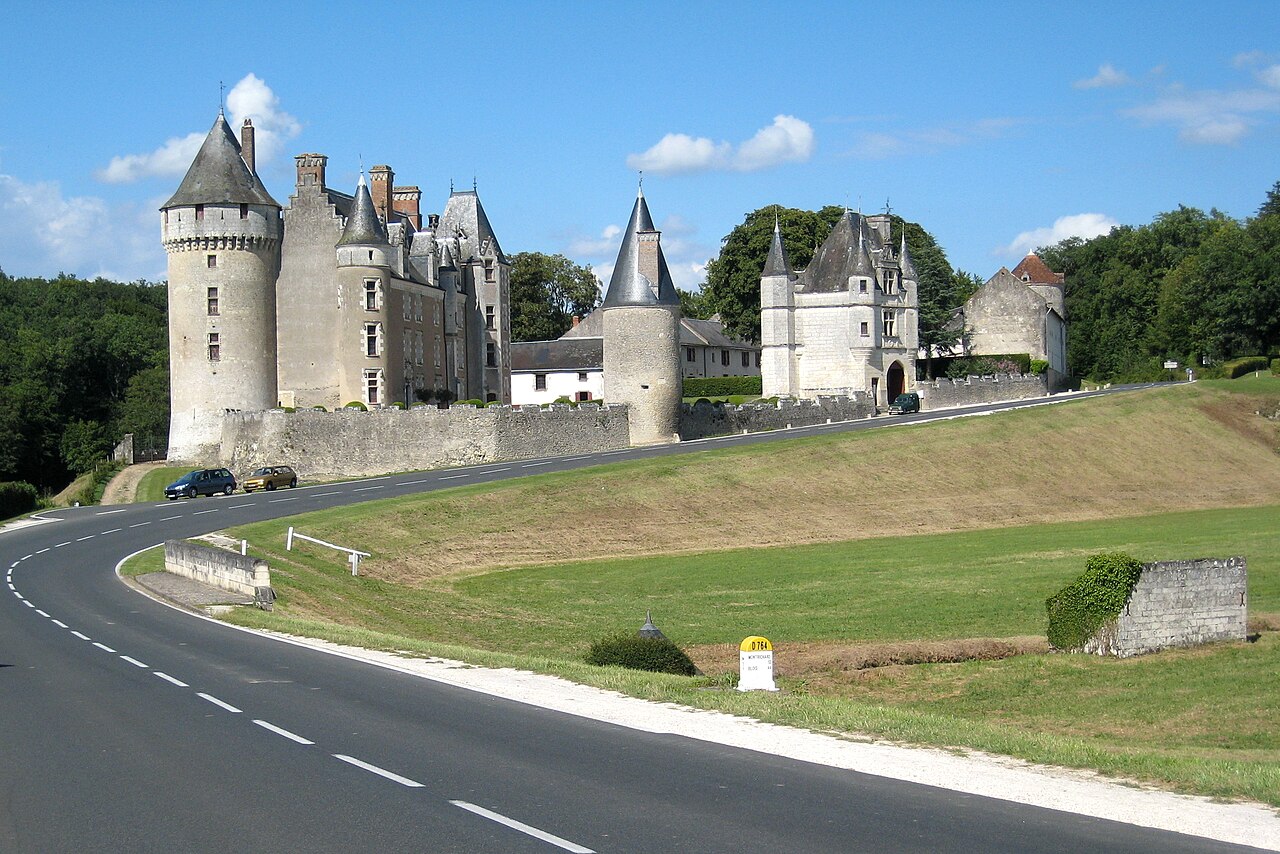
The castle was further protected by an inner curtain wall (chemise) and an outer defensive wall called an enceinte. Over time, additional round towers and a drawbridge were added, enhancing the defensive capabilities. Residential buildings were constructed within the walls, indicating the castle's dual military and domestic functions.
Military history and royal ownership
The castle endured several sieges and changes of ownership throughout the Middle Ages. In 1188, it suffered partial destruction during a siege by King Philip II of France (Philippe Auguste). Later, the castle became a key defensive stronghold for the Amboise family, alongside the nearby Château d'Amboise.
During the Hundred Years' War, the fortress was attacked by English forces led by the Black Prince on September 6, 1356. Ownership passed to the Harcourt family by marriage at the end of the Middle Ages. In 1461, King Louis XI acquired the castle from Guillaume d'Harcourt, exchanging it for other lordships. Under royal control, the castle hosted significant events such as the weddings of Louis XI's daughters, Anne and Jeanne, held in conjunction with the nearby Sainte-Croix church.
In 1589, King Henry IV ordered the dismantling of the upper four meters of the castle's defensive walls to reduce its military importance. This partial demolition marked the beginning of the castle's decline as a fortress.
Decline, preservation, and current state
By the 17th century, the Château de Montrichard had fallen into disuse and was largely abandoned. Its defensive role became obsolete, and the structure deteriorated into ruins. Recognizing its historical and cultural value, the French government designated the site as a monument historique in 1877, providing legal protection.
Today, the castle remains a ruined hill castle with visible remnants of its curtain walls, donjon, and other defensive features. Visitors can climb the keep to enjoy panoramic views over the town of Montrichard and the Cher valley. The adjacent Musées du Donjon displays archaeological artifacts recovered from the site and surrounding area, offering insights into the castle's medieval past.
Architectural significance
The Château de Montrichard exemplifies early high medieval military architecture in France. Its combination of a robust square keep, layered defensive walls, and integration with the natural ridge landscape demonstrates strategic castle design of the 12th century. The castle's evolution from a wooden fortification to a stone fortress reflects broader trends in medieval fortification technology and feudal power consolidation.
Visitor experience and cultural heritage
Visitors today can explore the castle ruins and appreciate the site's historical layers through interpretive signage and museum exhibits. The castle's commanding position offers a tangible connection to the medieval period and the region's feudal history. Its preservation as a protected monument ensures that this heritage remains accessible for future generations.
Frequently asked questions (FAQ)
- How do I get to Château de Montrichard?
- Château de Montrichard is located in the town of Montrichard Val de Cher in the Loir-et-Cher département of France. It is accessible by car and local transport, with parking available nearby.
- What can I see at Château de Montrichard?
- Visitors can explore the ruins of the castle, including the 12th-century donjon, curtain walls, and defensive towers. The site offers panoramic views of the Cher valley and the town of Montrichard.
- When was Château de Montrichard built and by whom?
- The castle was originally built in the early 11th century by Foulques Nerra, Count of Anjou. It was rebuilt in stone in the 12th century by Hugues I d'Amboise.
- Is Château de Montrichard open to the public?
- Yes, the castle ruins are open to visitors year-round. The adjacent Musées du Donjon provides additional historical context with archaeological exhibits.
- Why was Château de Montrichard dismantled?
- King Henry IV ordered the dismantling of the upper parts of the castle walls in 1589 to reduce its military significance during a period of political consolidation.
Photo gallery

Information
Sources & official resources
Verify the information above using these authoritative references.
Loading map...
Visitor reviews
No reviews yet. Been here? Write the first review and help other travelers!
Write the first reviewVisited this castle? Share your experience
Your review helps other travelers and adds first-hand knowledge to our encyclopedia.