Château de Montfort
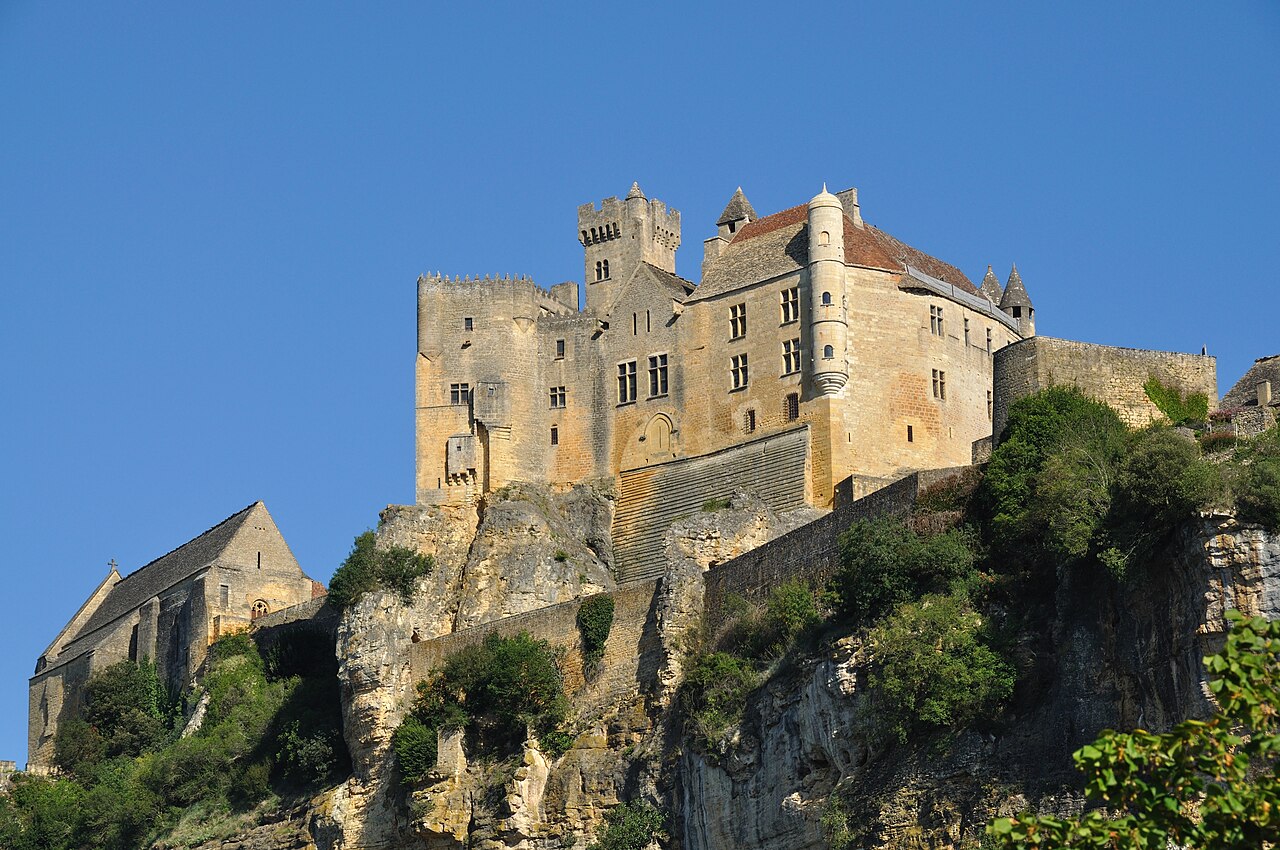
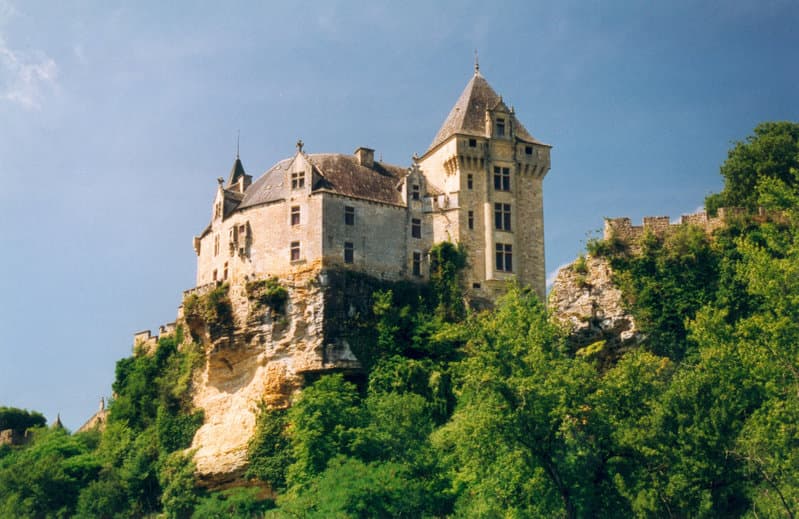
The Château de Montfort is a prominent hill castle situated in the French commune of Vitrac within the Dordogne département, part of the Nouvelle-Aquitaine region. Perched dramatically on a steep promontory overlooking the Cingle de Montfort (Montfort Meander) of the Dordogne River, the castle commands a strategic vantage point that has shaped its turbulent history.
Strategic location and early significance
The castle's position on a rocky outcrop provided natural defenses and sweeping views of the winding river below, making it a coveted stronghold in the medieval period. Its imposing setting "aroused the envy of those who wished to rule Périgord," a reflection of its importance in controlling the surrounding territory. The site likely hosted fortifications since the early Middle Ages, although the exact date of initial construction is uncertain.
Medieval conflicts and repeated destruction
The Château de Montfort endured a series of violent episodes throughout its history, marked by numerous battles and sieges. In 1214, it was seized and deliberately razed on the orders of Simon de Montfort, a key figure in the Albigensian Crusade. The demolition was executed under the supervision of Abbot Guy of Vaux-de-Cernay, who led the destruction party. This event was part of a broader campaign to suppress rebellious lords and consolidate royal authority in the region.
Despite its destruction, the castle was rebuilt, only to face devastation three more times. It suffered damage during the Hundred Years' War, a prolonged conflict between England and France that ravaged much of the French countryside. Later, under the reign of Louis XI in the 15th century, the castle was again targeted, reflecting the king's efforts to strengthen centralized control over fractious nobles.
The final recorded destruction occurred on the orders of Henri IV of France, who ruled in the late 16th and early 17th centuries. This period was marked by religious wars and political upheaval, during which many fortresses were slighted to prevent their use by rebellious factions.
Architectural features and 19th-century restoration
The castle's architecture reflects its turbulent past. Although much of the original medieval structure was lost to repeated destruction, the remnants reveal typical features of a hill castle with defensive walls adapted to the rocky terrain. The castle's layout took advantage of the natural promontory, incorporating battlements, towers, and a gatehouse that controlled access to the stronghold.
In the 19th century, the Château de Montfort underwent renovation work that introduced a romanticized aesthetic. The restoration gave the castle a whimsical appearance, described as resembling a "stage setting for light opera." This reflects the 19th-century fascination with medieval architecture and the Gothic Revival movement, which often emphasized picturesque and theatrical elements over strict historical accuracy.
19th-century romanticism and preservation
The restoration efforts included rebuilding portions of the walls and towers, sometimes with imaginative embellishments. These changes aimed more at creating an evocative atmosphere than replicating the castle's original defensive function. The castle today stands as a blend of authentic medieval ruins and 19th-century additions, offering visitors a glimpse into both its martial past and later cultural reinterpretation.
Historical context and cultural significance
The Château de Montfort played a significant role in the medieval power struggles of the Périgord region. Its repeated destruction and reconstruction illustrate the shifting political landscape of France from the early 13th century through the Renaissance. The castle's association with figures like Simon de Montfort and monarchs such as Louis XI and Henri IV highlights its strategic and symbolic importance.
Today, the castle is valued both as a historical monument and as a picturesque landmark that enriches the cultural heritage of Dordogne. Its dramatic location and layered history attract historians, architects, and tourists interested in medieval fortifications and French history.
Visiting Château de Montfort
Visitors to the castle can explore the ruins set against the striking backdrop of the Dordogne River meander. The site offers opportunities for hiking and photography, with panoramic views from the castle's elevated position. While the castle is partially preserved, it retains enough structural elements to convey its former grandeur and defensive capabilities.
The surrounding region of Nouvelle-Aquitaine is rich in medieval castles and historic sites, making Château de Montfort a valuable part of any cultural itinerary in southwestern France.
Frequently asked questions (FAQ)
- When was Château de Montfort originally built?
- The exact date of Château de Montfort's original construction is uncertain, but it likely dates back to the early Middle Ages, given its strategic location and medieval fortification features.
- What historical events led to the castle's destruction?
- Château de Montfort was destroyed multiple times, notably in 1214 by order of Simon de Montfort during the Albigensian Crusade, and later during the Hundred Years' War, under Louis XI, and by Henri IV due to political and military conflicts.
- Can visitors explore the interior of Château de Montfort?
- The castle is partially preserved with ruins accessible to visitors. While the interior is largely in ruins, the site offers panoramic views and a sense of the castle's original defensive layout.
- What architectural style is Château de Montfort?
- The castle primarily reflects medieval hill castle architecture. Its 19th-century renovations introduced romanticized elements typical of the Gothic Revival, giving it a whimsical, theatrical appearance.
- Is Château de Montfort open to the public year-round?
- Visiting hours for Château de Montfort are not standardized and may vary. It is advisable to check local tourist information for current access details before planning a visit.

Information
Loading map...
Visitor reviews
No reviews yet. Been here? Write the first review and help other travelers!
Write the first reviewVisited this castle? Share your experience
Your review helps other travelers and adds first-hand knowledge to our encyclopedia.