Château de Fénelon

Château de Fénelon: medieval fortress in Sainte-Mondane, France
Sainte-Mondane, Nouvelle-Aquitaine, France
Late Medieval (14th–15th c.)
Restored

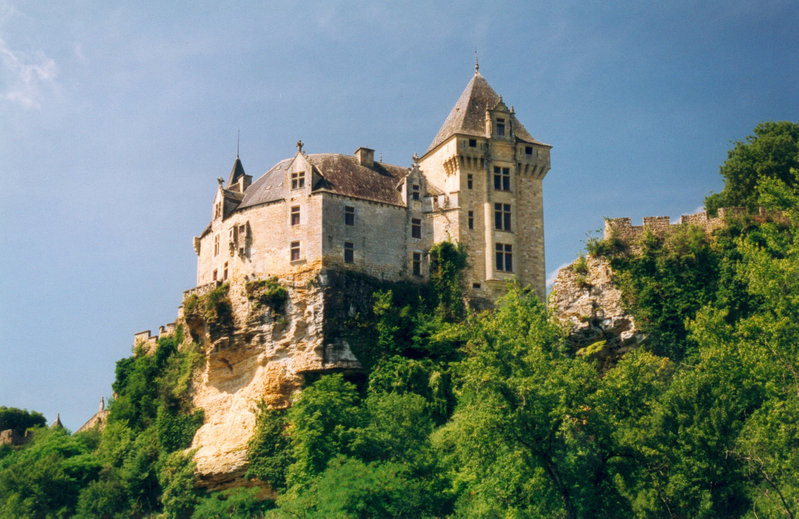
The Château de Fénelon stands as a remarkable example of a late medieval hill castle in the Dordogne region of France, specifically near the village of Sainte-Mondane. Its origins trace back to the early medieval period, with the noble Fénelon family establishing the site around the year 1000. While the earliest visible remains date from the 12th century, the castle’s architecture and historical significance span several centuries, reflecting the turbulent history of the region from medieval times through the early modern era.

Strategically perched on a hilltop overlooking the Dordogne valley, the castle commands a vast landscape and was designed primarily as a fortress. Its location provided both defensive advantages and control over local trade and communication routes. The castle’s extensive fortifications include three concentric walls, multiple fortified gates known as châtelets, and numerous round towers topped with traditional stone slate roofs (lauzes), characteristic of the region’s architectural style.

Medieval origins and cathar stronghold

The castle’s early history is closely tied to the religious and military conflicts of the 12th and 13th centuries. During this period, the Château de Fénelon served as a significant stronghold for the Cathars, a religious group deemed heretical by the Catholic Church. This association highlights the castle’s role not only as a military fortress but also as a center of religious dissent during the medieval era.

In the context of the Hundred Years’ War, the castle’s ownership and control shifted in response to broader political changes. Following the Treaty of Brétigny in 1360, the estate was ceded to the English crown. However, it was reclaimed by French forces under the Duke of Anjou in 1375, demonstrating the castle’s strategic importance in the ongoing conflict between England and France.

Renaissance transformations and the salignac family

The early 15th century marked a new chapter for the Château de Fénelon when ownership passed to the Salignac family. This transfer established the Salignac de La Mothe-Fénelon branch, who maintained the castle as their family seat until the late 18th century. During their tenure, the castle underwent significant architectural modifications, particularly in the late 15th and 16th centuries, reflecting Renaissance influences.

The residential wings constructed during this period feature distinctive mullioned windows and dormers, elements typical of Renaissance domestic architecture. These additions softened the fortress’s martial character, introducing greater comfort and aesthetic refinement while preserving its defensive capabilities.

Among the notable figures born at the castle was François de Salignac de La Mothe-Fénelon (1651), who rose to prominence as the Archbishop of Cambrai and became an influential theologian and writer. His legacy adds cultural and intellectual significance to the château’s history.

Architectural features and defensive design

The Château de Fénelon is defined by an elaborate defensive system. The three concentric walls create successive layers of protection. The first enclosure is accessed through a western fortified gate or châtelet, while a second châtelet on the eastern side leads to the next enclosure. Both gates are fortified with machicolations, a bretèche, and cannon embrasures, architectural features designed to defend against attackers by exposing their vulnerable right side.

A third fortified boundary protects the southern side, enclosing a lower courtyard known as the basse-cour. The castle’s towers are predominantly round and capped with lauze roofs, which are both durable and emblematic of the region’s traditional roofing techniques.

The main entrance to the castle is via a north-east drawbridge, which replaced an earlier earthen ramp in the 17th century. This drawbridge is approached by a distinctive double staircase, enhancing both access control and the castle’s imposing appearance.

Interior spaces and notable rooms

Inside the castle, the courtyard contains a 13th-century chapel integrated into one of the towers, exemplifying the fusion of religious and military architecture. A Merovingian well nearly 98 meters deep remains a remarkable feature, having served as the castle’s water source until the mid-20th century.

The central buildings form a small honor courtyard bordered on three sides by living quarters, with the fourth side closed by a gallery topped with a roof terrace. The residential areas include a ground-floor room exhibiting historical weapons and the chapel. The cellar contains a kitchen partly carved from natural rock, underscoring the castle’s adaptation to its environment.

The first floor houses a great hall and a suite of rooms such as a waiting room, bedroom, and study. The second floor displays interior decorations from the Louis XVI and Empire periods, including a cabinet of curiosities, reflecting the castle’s continuous occupation and evolution through different historical eras.

Post-medieval use and preservation efforts

During the French Revolution, the castle’s function shifted dramatically when it was converted into a magnanerie or silkworm farm. This change illustrates the broader social and economic transformations affecting noble estates in revolutionary France.

Recognizing its historical and architectural value, the Château de Fénelon was listed as a historic monument in 1927 and later classified as a monument historique in 1962. That year, three associated outbuildings—the Ferme de la Condamine, the nurse’s house, and the métairie of Fraysange—were also granted protection, preserving the estate’s agricultural heritage alongside the castle itself.

The castle has endured various damages over the 20th and 21st centuries. Notably, a 15th-century artillery tower collapsed in 1966 after the shockwave from a supersonic plane passed overhead. More recently, severe storms in June 2022 damaged the traditional stone roof of the former donjon (keep), causing water infiltration through multiple floors. Despite these challenges, the castle remains privately owned and has undergone restoration to maintain its structural integrity and historical character.

Associated structures and estate features

The Ferme de la Condamine and other outbuildings like the dovecote provide insight into the castle’s role as a self-sufficient estate. These agricultural buildings complement the fortified residence, illustrating the dual military and economic functions of the property.

Overall, the Château de Fénelon stands as a well-preserved example of a fortified noble residence that evolved through centuries of religious conflict, war, and social change. Its combination of military architecture, Renaissance domestic features, and historical associations with prominent families and figures make it a significant cultural landmark in the Dordogne region.

Frequently asked questions (FAQ)

What is the historical significance of Château de Fénelon?
Château de Fénelon is a stunning example of medieval architecture located in the Dordogne region of France. It played a crucial role in the local history and has been associated with notable figures, including the philosopher François de Salignac de la Mothe-Fénelon. The castle offers visitors a glimpse into the past and the rich heritage of the area.
When was Château de Fénelon built?
The origins of Château de Fénelon date back to the 12th century, making it one of the oldest castles in the region. Over the centuries, it has undergone various renovations and restorations, reflecting the architectural styles of different eras. Its long history adds to its charm and significance.
What are the opening hours of Château de Fénelon?
Château de Fénelon is typically open to visitors from 10 AM to 6 PM during the tourist season, which runs from April to October. It's advisable to check their official website for any updates or changes to the schedule, especially during the off-peak months. Guided tours are often available, enhancing the visitor experience.
Can I visit Château de Fénelon with limited mobility?
Yes, Château de Fénelon strives to accommodate visitors with limited mobility. While some areas may be challenging due to the castle's historical structure, the staff is knowledgeable about accessibility options and can assist where possible. It’s best to contact them in advance to ensure a smooth visit.
What are the ticket prices for visiting Château de Fénelon?
Tickets for Château de Fénelon are reasonably priced, with discounts available for children and seniors. As of the latest information, adult tickets are around €8, while children under 12 often enter for free. Group rates are also available, making it an affordable outing for families and friends.
When is the best time to visit Château de Fénelon?
The best time to visit Château de Fénelon is during the spring and early autumn months when the weather is pleasant and the gardens are in bloom. These seasons attract fewer crowds compared to the peak summer months, allowing for a more enjoyable experience. Additionally, the stunning scenery surrounding the castle is particularly vibrant during these times.
Is it possible to take guided tours of Château de Fénelon?
Yes, guided tours are available at Château de Fénelon, providing in-depth insights into its history and architecture. These tours are often led by knowledgeable guides who can share fascinating stories and details that enhance the visit. It's recommended to book in advance, especially during the busy tourist season.
What nearby attractions should I consider visiting while at Château de Fénelon?
While visiting Château de Fénelon, consider exploring other nearby attractions such as the picturesque village of Domme and the stunning cliffs of La Roque-Gageac. The Dordogne River offers opportunities for canoeing and boat trips, providing a unique perspective of the region's breathtaking landscapes. Additionally, the area is rich in prehistorical sites and delightful local markets.

Information

Hill Castle

Sources & official resources

Verify the information above using these authoritative references.

Loading map...

Visitor reviews

No reviews yet. Been here? Write the first review and help other travelers!

Write the first review

Visited this castle? Share your experience

Your review helps other travelers and adds first-hand knowledge to our encyclopedia.
Write a review

(5/5)

0/2000 characters

Your review will be visible after admin approval

Nearby castles

8 km
Château de Montfort — France castle

Château de Montfort

Vitrac, France

The Château de Montfort is a prominent hill castle situated in the French commune of Vitrac within the Dordogne département, part of the Nouvelle-Aquitaine region. Perched dramatically on a steep promontory overlooking the Cingle de Montfort (Montfort Meander) of the Dordogne River, the castle commands a strategic vantage point that has shaped its turbulent history. Strategic location and early significance The castle's position on a rocky outcrop provided natural defenses and sweeping views of the winding river below, making it a coveted stronghold in the medieval period. Its imposing setting "aroused the envy of those who wished to rule Périgord," a reflection of its importance in controlling the surrounding territory. The site likely hosted fortifications since the early Middle Ages, although the exact date of initial construction is uncertain. Medieval conflicts and repeated destruction The Château de Montfort endured a series of violent episodes throughout its history, marked by numerous battles and sieges. In 1214, it was seized and deliberately razed on the orders of Simon de Montfort, a key figure in the Albigensian Crusade. The demolition was executed under the supervision of Abbot Guy of Vaux-de-Cernay, who led the destruction party. This event was part of a broader campaign to suppress rebellious lords and consolidate royal authority in the region. Despite its destruction, the castle was rebuilt, only to face devastation three more times. It suffered damage during the Hundred Years' War, a prolonged conflict between England and France that ravaged much of the French countryside. Later, under the reign of Louis XI in the 15th century, the castle was again targeted, reflecting the king's efforts to strengthen centralized control over fractious nobles. The final recorded destruction occurred on the orders of Henri IV of France, who ruled in the late 16th and early 17th centuries. This period was marked by religious wars and political upheaval, during which many fortresses were slighted to prevent their use by rebellious factions. Architectural features and 19th-century restoration The castle's architecture reflects its turbulent past. Although much of the original medieval structure was lost to repeated destruction, the remnants reveal typical features of a hill castle with defensive walls adapted to the rocky terrain. The castle's layout took advantage of the natural promontory, incorporating battlements, towers, and a gatehouse that controlled access to the stronghold. In the 19th century, the Château de Montfort underwent renovation work that introduced a romanticized aesthetic. The restoration gave the castle a whimsical appearance, described as resembling a "stage setting for light opera." This reflects the 19th-century fascination with medieval architecture and the Gothic Revival movement, which often emphasized picturesque and theatrical elements over strict historical accuracy. 19th-century romanticism and preservation The restoration efforts included rebuilding portions of the walls and towers, sometimes with imaginative embellishments. These changes aimed more at creating an evocative atmosphere than replicating the castle's original defensive function. The castle today stands as a blend of authentic medieval ruins and 19th-century additions, offering visitors a glimpse into both its martial past and later cultural reinterpretation. Historical context and cultural significance The Château de Montfort played a significant role in the medieval power struggles of the Périgord region. Its repeated destruction and reconstruction illustrate the shifting political landscape of France from the early 13th century through the Renaissance. The castle's association with figures like Simon de Montfort and monarchs such as Louis XI and Henri IV highlights its strategic and symbolic importance. Today, the castle is valued both as a historical monument and as a picturesque landmark that enriches the cultural heritage of Dordogne. Its dramatic location and layered history attract historians, architects, and tourists interested in medieval fortifications and French history. Visiting Château de Montfort Visitors to the castle can explore the ruins set against the striking backdrop of the Dordogne River meander. The site offers opportunities for hiking and photography, with panoramic views from the castle's elevated position. While the castle is partially preserved, it retains enough structural elements to convey its former grandeur and defensive capabilities. The surrounding region of Nouvelle-Aquitaine is rich in medieval castles and historic sites, making Château de Montfort a valuable part of any cultural itinerary in southwestern France.

Details
13.2 km

Château de Temniac

Temniac, France

Château de Temniac stands as a remarkable example of a hill castle located in the commune of Temniac, within the Nouvelle-Aquitaine region of southwestern France. This castle, now in a state of ruins, reflects a rich history that spans from the 11th century through to the 17th century, showcasing architectural evolution across the High Medieval period and beyond. Historical context and significance The origins of Château de Temniac date back to the 11th century, a time when feudal lords constructed fortified residences to assert control over their territories and protect against invasions. Situated strategically on a hilltop, the castle's location provided natural defensive advantages, allowing surveillance over the surrounding landscape and control of important routes in the region. Throughout the centuries, the castle witnessed numerous historical events and changes in ownership, reflecting the turbulent history of southwestern France. Its long period of construction and modification, extending into the 17th century, indicates its sustained importance and adaptation to changing military and residential needs. Architectural features and layout As a hill castle, Château de Temniac was designed to maximize defensive capabilities afforded by its elevated position. The castle's remains suggest a complex layout typical of medieval fortifications, including stone curtain walls that once enclosed the inner ward, providing protection against attackers. Key architectural elements likely included towers positioned at strategic points along the walls for enhanced defense and observation. The presence of a gatehouse would have controlled access to the castle, often reinforced with defensive mechanisms such as portcullises and murder holes. Within the walls, the castle would have contained residential quarters, a great hall for gatherings and administrative functions, and possibly a chapel reflecting the religious practices of its inhabitants. The long construction period suggests that Renaissance influences may have been integrated into later modifications, although the predominant style remains rooted in High Medieval military architecture. Decline and current condition Like many medieval fortresses, Château de Temniac fell into decline as military technology and political circumstances evolved, reducing the strategic necessity of hilltop castles. The castle suffered damage over time, including possible destruction during regional conflicts or neglect during periods of peace. Today, the site is classified as ruins, with surviving fragments of walls and foundational structures providing valuable insights into medieval fortification techniques. The ruins attract visitors interested in history, archaeology, and the picturesque landscape of Nouvelle-Aquitaine. Cultural heritage and tourism Château de Temniac holds cultural significance as a testament to medieval feudal society and architectural ingenuity. Efforts to preserve the ruins contribute to understanding the region's heritage and promote historical tourism. Visitors to the site can explore the remains and enjoy panoramic views from the hilltop, gaining a tangible connection to the past. The castle's location within Nouvelle-Aquitaine places it among other notable historical sites, enriching the cultural landscape of the area. Access and visitor information While the castle is in ruins, it is accessible to the public, typically without an entrance fee. Visitors are advised to wear appropriate footwear due to uneven terrain and to respect preservation guidelines to protect the fragile remains. Nearby towns and villages offer additional amenities and historical attractions, making Château de Temniac a worthwhile destination for those exploring the rich medieval heritage of southwestern France.

High Medieval (11th–13th c.)
Details
13.8 km

Treyne Castle

Lacave, France

Treyne Castle, located in the picturesque village of Lacave in the Occitanie region of southern France, is a remarkable example of a 17th-century Renaissance hill castle. Perched strategically on elevated terrain, this castle embodies the architectural and historical richness typical of the Renaissance period in this part of France. Historical context and significance The castle was constructed during the 17th century, a time when Renaissance architecture flourished in France, blending medieval defensive features with more refined residential aesthetics. Treyne Castle reflects this transition, combining the practicalities of a fortified hilltop stronghold with the elegance and symmetry characteristic of Renaissance design. Its location in Lacave, within the historic province of Occitanie, situates it amidst a region rich in medieval and early modern history, known for its many castles and fortified structures. While the castle's origins are firmly rooted in the Renaissance period, it is likely that the site had earlier fortifications or dwellings, as hill castles were often built on strategic points reused across centuries. However, the standing structure primarily dates to the 1600s, reflecting the architectural and social trends of that era. Architectural features and design Treyne Castle is classified as a hill castle, a type of fortress built on elevated ground to maximize defensive advantage and visibility over the surrounding landscape. The castle's design incorporates typical Renaissance elements such as balanced proportions, classical motifs, and an emphasis on comfort alongside defense. The castle features sturdy stone walls that have been restored to preserve their structural integrity and aesthetic appeal. Its layout likely includes a central courtyard, surrounded by residential buildings and defensive walls, though specific details about the internal arrangement remain less documented. The presence of towers or turrets, common in Renaissance hill castles, would have served both as lookout points and as symbols of status. The castle’s restoration has helped maintain its historical character, allowing visitors to appreciate the blend of military architecture and Renaissance elegance. The restoration work respects the original materials and construction techniques, ensuring authenticity. Location and surroundings Situated in Lacave, a commune known for its natural beauty and historical sites, Treyne Castle benefits from a scenic setting overlooking the Dordogne valley. The castle’s elevated position offers commanding views of the surrounding countryside, which was essential for defense in the past and now enhances its appeal as a cultural landmark. The region of Occitanie is renowned for its rich heritage of castles, caves, and medieval villages, making Treyne Castle part of a broader network of historical tourism attractions. Visitors to the castle can also explore nearby natural landmarks and other historic sites, enriching their understanding of the area's cultural landscape. Preservation and current status Treyne Castle is currently in a restored condition, indicating that significant efforts have been made to conserve and rehabilitate the structure. This status ensures that the castle remains accessible and visually impressive for visitors and scholars alike. The restoration preserves both the defensive elements typical of a hill castle and the Renaissance stylistic features, offering a valuable window into 17th-century castle architecture in southern France. The castle's upkeep contributes to the cultural preservation of the Occitanie region and supports local tourism. Visiting Treyne Castle While specific visiting hours and ticket prices are not widely documented, Treyne Castle’s restored state suggests it may be accessible to the public either as a museum, cultural site, or private heritage property with visiting arrangements. Visitors interested in Renaissance architecture and French history will find Treyne Castle a noteworthy destination in the Occitanie region. Exploring the castle and its surroundings provides insight into the lifestyle, defensive needs, and architectural tastes of the 17th century, set against the backdrop of one of France’s most historically rich regions.

Renaissance (15th–17th c.)
Details

